
Topic
Network-resource Evidence
Within the Topic facet, Network-resource Evidence topic intelligence connects articles that share a specific subject, signal focus, or monitoring theme. The page gives readers a richer path through related reporting, source evidence, market actors, and infrastructure implications, with enough context to understand why the topic matters across company movements, governance decisions, regional exposure, and operational risk. Readers can compare recurring signals, affected organisations, public evidence, market context, service continuity, procurement, competition, compliance, and strategic planning questions behind the subject instead of stopping at a thin list of matching articles. It explains what the topic covers, which infrastructure actors or policies are involved, what evidence supports the coverage, and why the subject may matter for operators, customers, investors, and policy readers.
Global Institutional
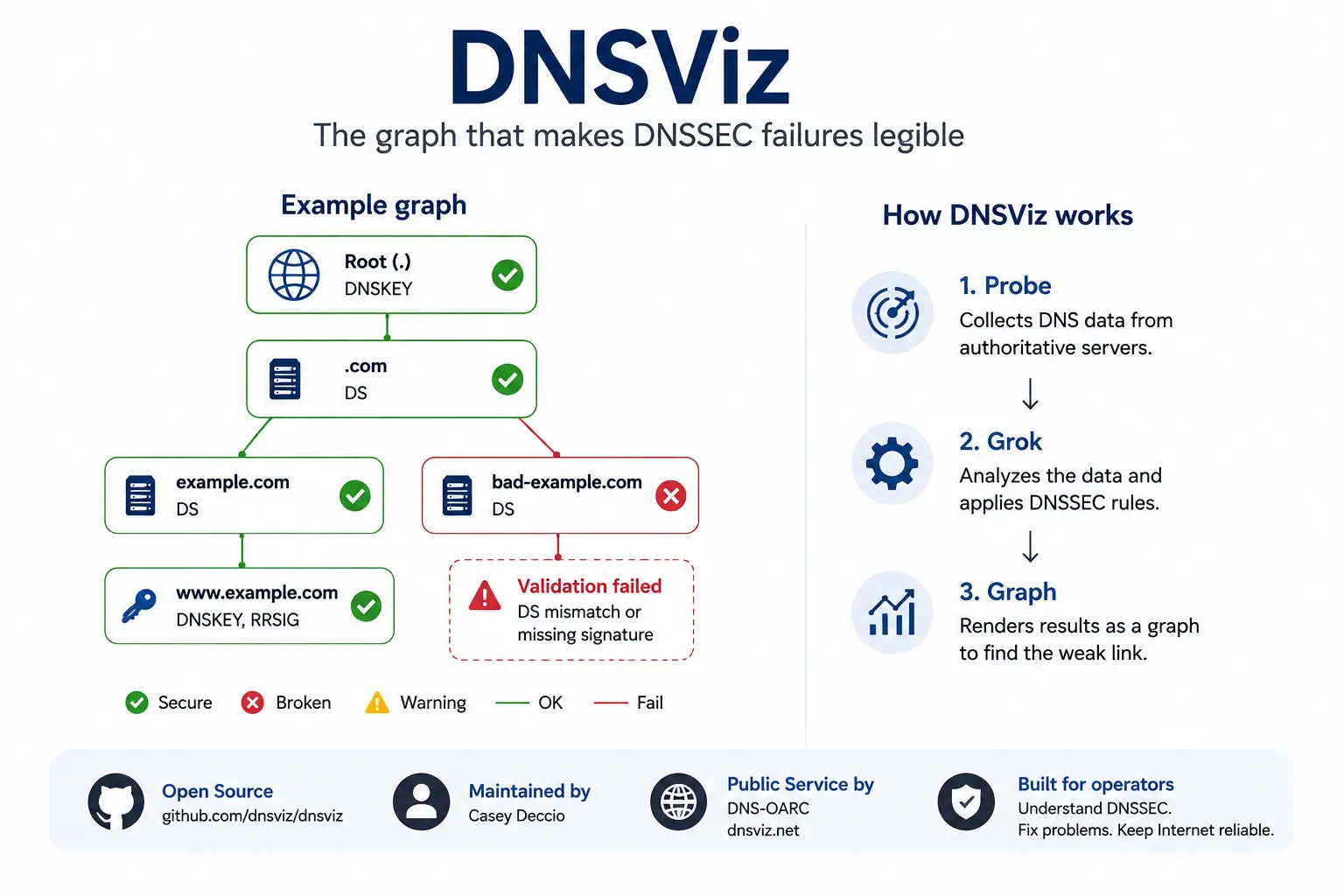
DNSViz and the graph that makes DNSSEC errors understandable
DNSViz turns one of the internet’s most difficult-to-fathom error types into a picture that operators can examine. The open-source project, developed by Casey Deccio and publicly operated by DNS-OARC, links delegations, keys, signatures and authenticated non-existence proofs into…
Global Institutional
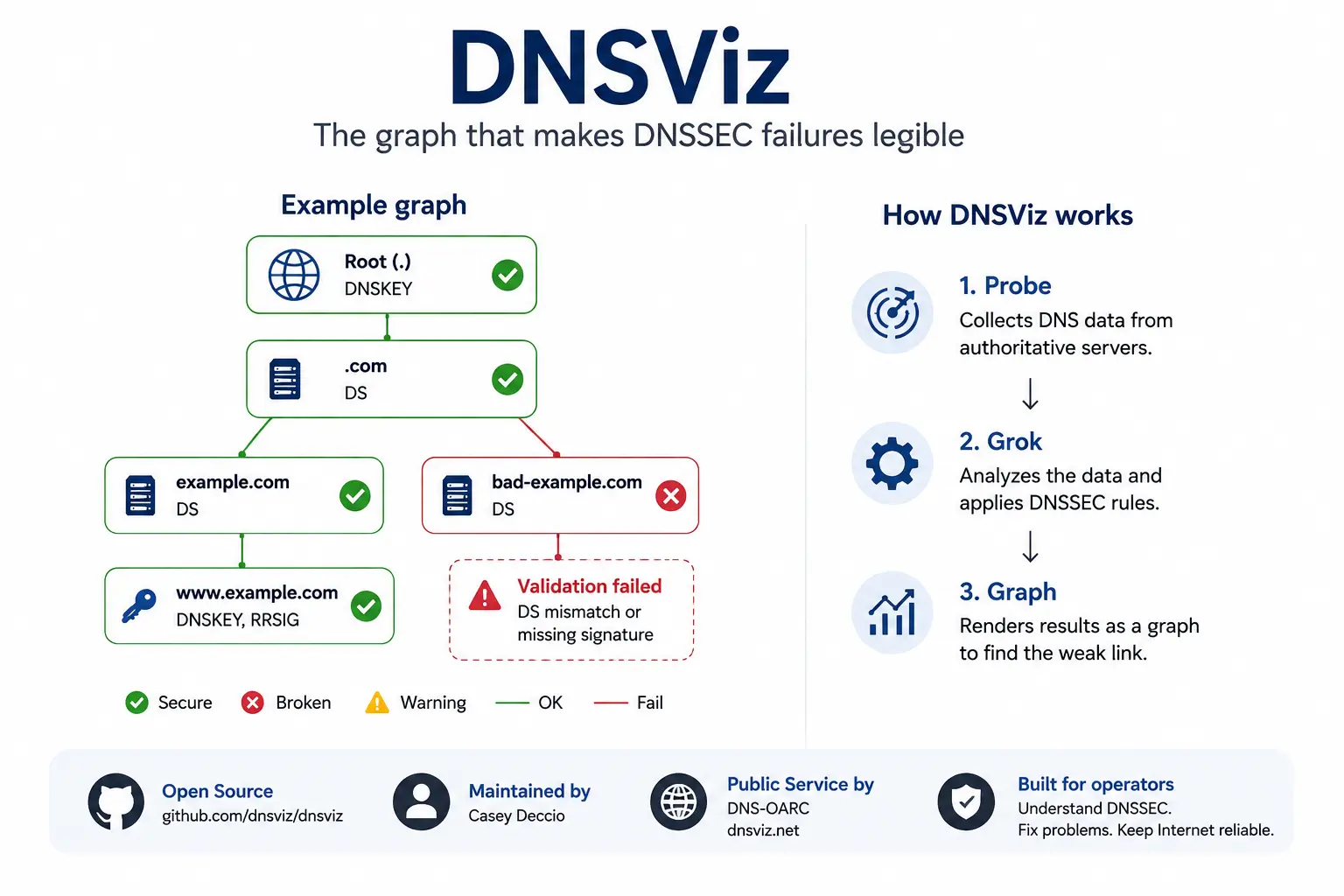
DNSViz and the graph that makes DNSSEC failures understandable
DNSViz turns one of the most opaque Internet failures into a picture operations teams can investigate. The open-source project, created by Casey Deccio and operated publicly by DNS-OARC, links delegations, keys, signatures and authenticated denial-of-existence proofs into an…

Story
RIPE NCC postmortem traces NRTM desynchronisation to invalid RPSL handling
RIPE NCC’s latest postmortem narrows an August NRTM mirroring failure to a pair of software behaviours: an invalid RPSL object could enter the database, and the stream stopped rather than passing that entity with an error record.

Europe and Middle East Institutional Trends
Reading AS209467 in Layers: What the Remstal-Bote-AS Records Show
Reading AS209467 in Layers: What the Remstal-Bote-AS Records Show intelligence summary explains the development, the public evidence available to readers, the organisations involved, the regional context, market exposure, and the infrastructure consequences that may follow. The…

Story
RIPE NCC puts routing intent on the agenda with a live IRR webinar
RIPE NCC’s 13 August Internet Routing Registry Webinar makes a small but consequential point for network operations: an intended route is useful only when other networks can inspect and turn it into a decision.

Story
AFRINIC renewed six fixed deposits in 2023. Its audit verifies the money, not who authorised the decision
AFRINIC's newly released 2023 accounts put US$6.38 million of strategic reserves on the balance sheet and say six fixed deposits were automatically renewed during the year. The audit confirms the closing value, interest-rate range and maturity window. It does not publish the…

Story
AFRINIC says outside sponsors funded 39 travel records in a no-budget year. Twenty-two name NRO
AFRINIC's newly published 2023 finance summary says it used none of its own funds for outreach or travel because no budget had been approved. Yet its travel register lists 39 third-party-sponsored records—37 for staff and two for others—and 22 sponsor fields mention NRO. The…

Global Institutional
DNSViz and the graph that makes DNSSEC failures legible
DNSViz turns one of the internet’s least intuitive failure modes into a picture that operators can investigate. Created by Casey Deccio and publicly operated by DNS-OARC, the open-source project links delegations, keys, signatures and authenticated denial records into an…

Creators
Eric Dumazet: Linux server economics through small queues
A busy server can look excellent on throughput charts while still wasting time, memory and processor resources behind its own packets. Eric Dumazet's work on TCP Small Queues, fair queueing, pacing and cache-friendly data structures has made Linux account more strictly for these…

Creators
Eric Dumazet and the small queues inside the economics of Linux servers
A very busy server can display excellent throughput and still waste time, memory and CPU behind its own packets. Eric Dumazet's work on TCP Small Queues, fair queueing, pacing and cache-locality-oriented structures helped Linux account for those hidden costs better. It is not the…

Story
One firm accounted for 93.9% of AFRINIC's 2023 legal-fee line. The audit does not show the authority trail
AFRINIC's newly published 2023 finance summary assigns US$1,064,309 of US$1,133,630 in legal fees to C&A Law and says US$1,260,250 was owed to the firm at year-end, excluding VAT. The accounts now carry an unmodified audit opinion. What members still cannot see is the…

Story
The Meaning of “End”: AFRINIC’s Draft 3 and the Discipline of Negative Routing Assertions
One sentence added to an AFRINIC policy proposal in April 2021 drew a vital line: reclaimed number resources should enter the registry’s AS0 coverage only after reclamation ends. That line can protect routing security, but only if “the end” is made into a state that outsiders can…

Creators
Eric Dumazet and the small queues shaping Linux server economics
A heavily loaded server can show excellent throughput while wasting time, memory and processor behind its own packets. Eric Dumazet’s work on TCP Small Queues, fair queueing, pacing and in-memory structure layout has helped Linux account for these hidden costs more accurately. It…

Creators
Eric Dumazet and the small queues that underpin the Linux server economy
Servers under heavy load can look healthy on throughput graphs while still wasting time, memory and CPU behind the packets they are about to send. Eric Dumazet's work on TCP Small Queues, fair queueing, pacing and cache-aware data structures has helped Linux account for those…
Creators
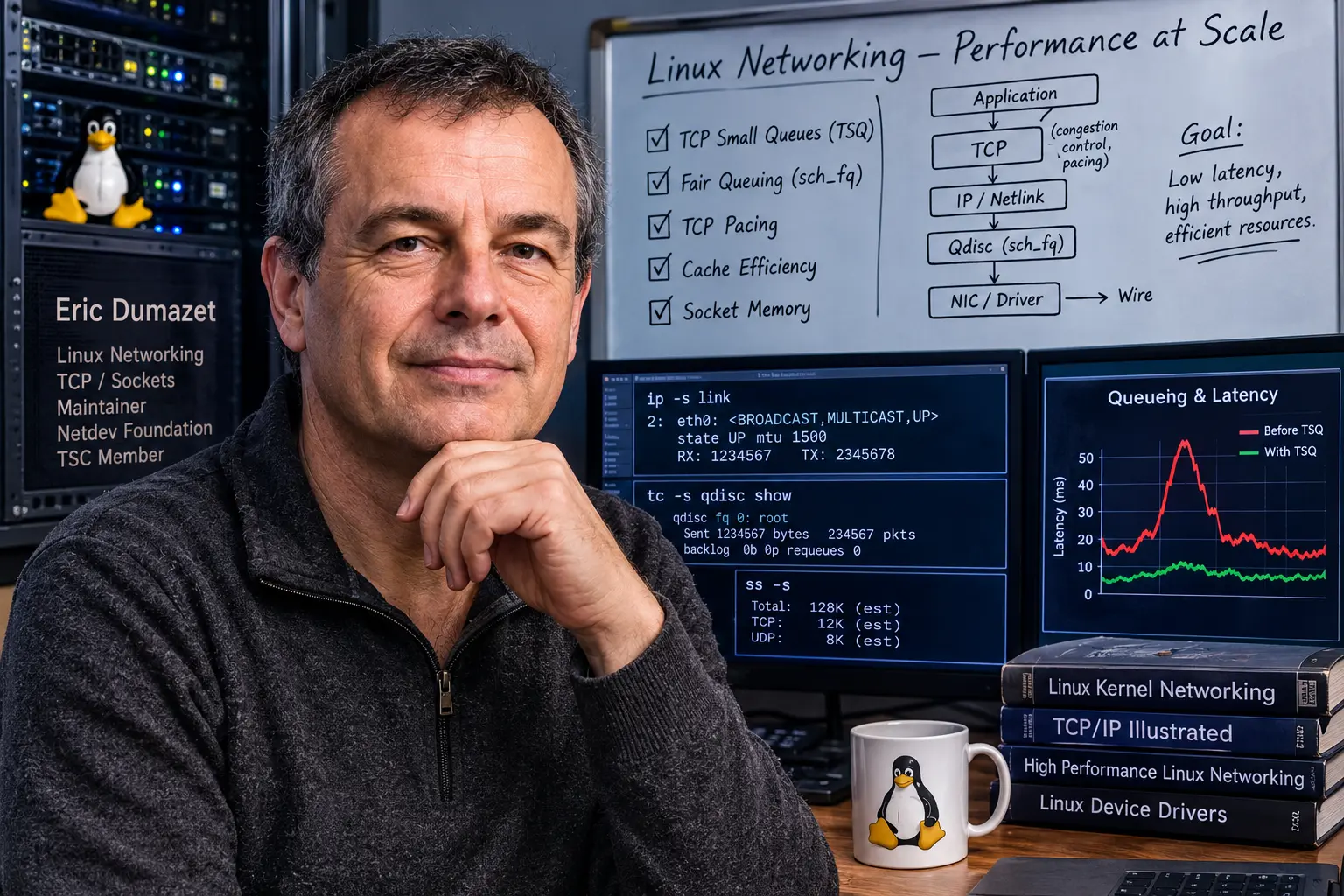
Eric Dumazet and the small queues that support the Linux server economy
A busy server can deliver excellent performance figures while still losing time, memory and CPU capacity behind its own packets. Eric Dumazet's work on TCP Small Queues, fair queueing, pacing and cache-sensitive structures helped Linux account for those hidden costs with more…

Creators
Eric Dumazet and the small queues in Linux server economics
A heavily loaded server can look excellent on a throughput chart and still waste time, memory and CPU behind its own packets. Eric Dumazet's work on TCP Small Queues, fair queueing, pacing and cache-conscious data structures helped Linux account for these hidden costs more…

Creators
Eric Dumazet and the small queues inside the Linux server economy
A busy server can look excellent on a throughput plot while wasting time, memory and processor capacity behind packets that have not yet left the machine. Eric Dumazet's work on TCP Small Queues, fair queueing, pacing and cache-aware data-structure layout has helped Linux account…

Creators
Eric Dumazet and the small queues inside Linux server economics
A busy server can appear healthy on a throughput chart while wasting time, memory and processor capacity behind its own packets. Eric Dumazet’s work on TCP Small Queues, fair queueing, pacing and cache-aware data structures helped Linux account for those hidden costs more…

Creators
Stephen Hemminger and the commands that make Linux networking operable
Stephen Hemminger’s long stewardship of iproute2 sits between Linux kernel capability and operational control. The suite’s commands make routes, queues, bridges, sockets and devices inspectable, while carrying decades of compatibility and maintainer obligations.

Academics
Kathleen Nichols and the queue delay a fast link cannot hide
Kathleen Nichols’ best-known work changed the variable used to judge a network queue: time, rather than packet count. CoDel made persistent waiting measurable, while leaving deployment dependent on bottleneck placement, responsive senders and maintained implementations.