
Primary Domain
Internet Infrastructure
Within the Primary Domain facet, Internet Infrastructure intelligence groups reporting by primary domain so readers can follow a focused area of internet infrastructure, governance, connectivity markets, or digital capital. The page brings together related articles, public evidence, institutions, companies, people, regional exposure, operating dependencies, and market context that may otherwise sit across separate category pages. It explains the domain, the likely actor class, the market or governance context, and the source material readers should use when comparing signals. Operators, analysts, and governance readers can see how the same domain appears across events, profiles, market shifts, public-source evidence, regional dependencies, and longer-cycle infrastructure decisions over time.

History
Dynamic Routing Nearly Consumed Portugal’s X.25 Bandwidth, 1991
Portugal’s 1991 RCCN project did more than put IP on an international line. Its engineers found that routine dynamic-routing updates nearly consumed the bandwidth of public X.25, then chose static routes for a network whose shape was already close to a star.

History
TCP/IP Shared FUNET’s Backbone with DECnet, 1992–94
For Finnish universities, the Internet did not arrive by erasing every network already in use. FUNET’s 1992 move to Frame Relay belonged to a longer engineering transition; a 1994 account still lists both TCP/IP and DECnet on the research backbone. The record shows a…

History
ThaiSarn’s May 1992 Surge Was Recorded, Not Measured
A line in NECTEC’s history says political unrest in May 1992 brought a surge in email use and Usenet circulation between Thailand and the wider world. The record gives no traffic count. What it preserves is a small but revealing sign of what people asked an academic network to…

History
The Access Point Was Ready; Colombia Still Needed the Circuit, 1993–94
By 1993, entities recalled that a U.S. Internet access point for Latin America was available, but Colombia still lacked the costly communications circuit needed to use it as a service. The later connection did not arrive as one clean flag day: an attempt failed, public histories…

Africa National Telecom Trends
Egypt’s resilience award needs an IPv6 usage receipt
Egypt’s telecom regulator has been recognized for an IPv6 policy. The next test is whether the policy reaches users and improves continuity—and those are separate questions requiring separate evidence.

History
The Internet Put 1900 on the Wire: RFC 868’s Time Limit, 1983
A machine could ask another host for one number and receive a date it could compare with its own clock. In 1983, RFC 868 made that exchange deliberately small: seconds counted from 1900, carried in 32 bits, with a horizon the document itself placed in 2036.
History
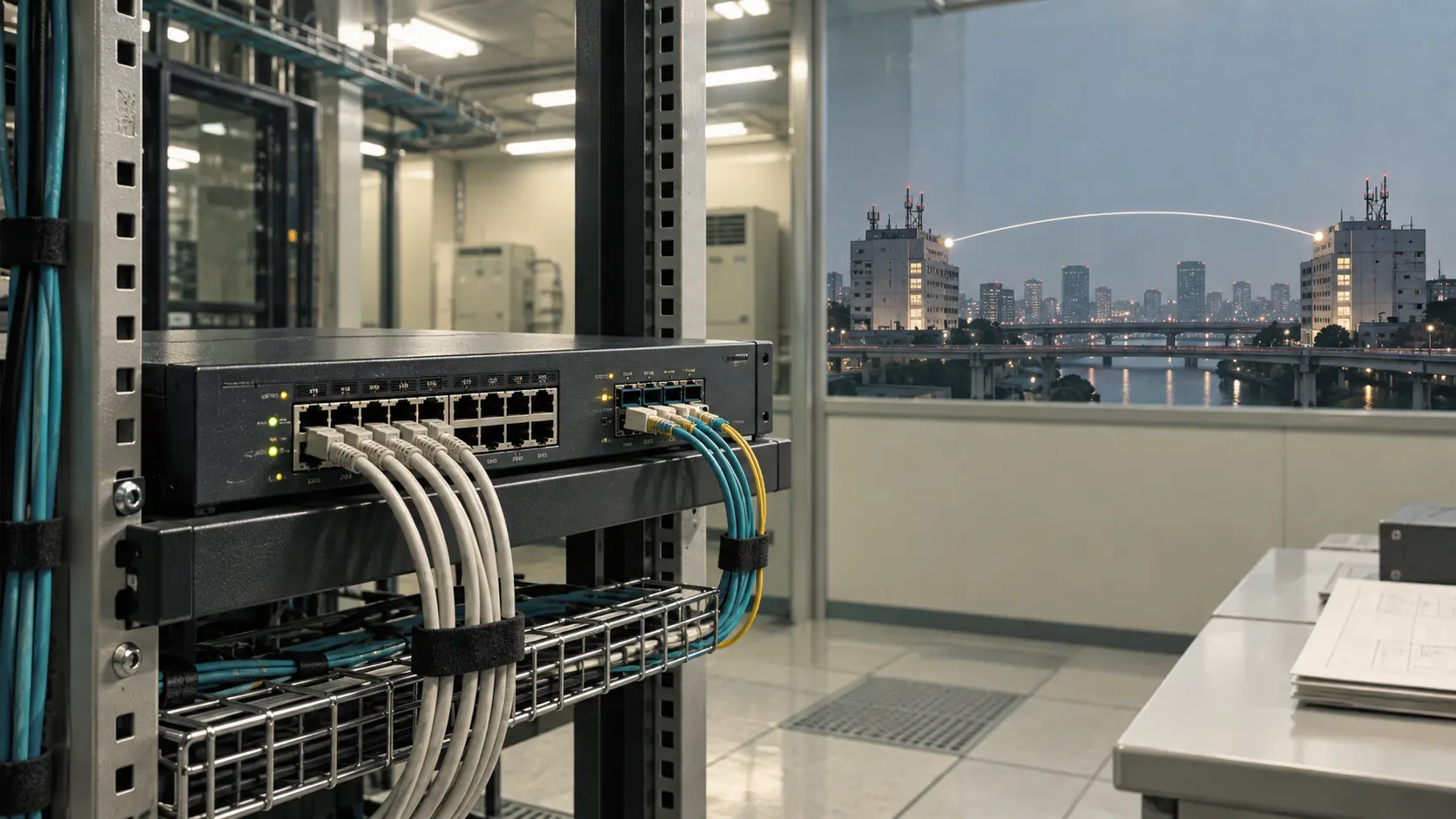
When the Exchange Became a Service: JPIX and Japan’s Commercial Peering Turn, 1997
Japan’s first commercial exchange was announced with an unusual promise: reliability would be built into a company, a customer service and a second site, while the experimental network it followed would remain a partner. JPIX’s founding shows how the Internet’s shared…

History
The Gateway Was a Consortium: PHNET’s 64 Kbps Link, 1994
PHNET did not begin as one campus plugged into a line. Its record describes two stages: UUCP mail relayed through an Australian university, then a 64 Kbps route to the United States shared by a Philippine institutional consortium.
History
The Patch List Became a Server: Apache’s First Year, 1995
Apache’s first year turned fixes made by separate webmasters into a tested public release, then replaced patch aggregation with a modular redesign. The change shows how shared maintenance can coordinate independent operators without making announcement itself the measure of…

History
A Root Server Moved to London; the Root Zone Did Not: K-root, 1997
On 19 May 1997, one experimental root server left its temporary home at Network Solutions and was placed at the London Internet Exchange. The change added a new operating location for K-root and a new operator, RIPE NCC. The accompanying record still pointed to the same unique…

History
Botswana Had an ISP; SADC Still Used UUCP Mail
In late 1996, a commercial provider in Gaborone reported a full 64K Internet link, while the SADC Secretariat still used a 9,600-baud UUCP mail route to Pretoria and was planning Internet access. The records show two operating choices in one place, not one shared network.

History
A Category Became a Suffix: Symbolics and the First .com, 1985
On 15 March 1985, Symbolics.com entered a namespace still being organized for network administration. The significance of that first `.com` is easier to see when it is separated from the website and commerce stories later attached to it: the record named a company inside a…

Story
APNIC’s public uptime figure excludes its maintenance window
APNIC warned that 15 status-page components could face interruptions of up to five minutes during a three-hour security update in Brisbane. A StatusIQ setting excludes planned maintenance from uptime calculations, so the percentage cannot show what users experienced during the…

History
Sierra Leone Web Put War News into an Archive, 1996–2002
When conflict reports disappeared in wire-service queues or sat behind subscriber feeds, Sierra Leone Web gave them a different afterlife: dated pages that readers could find again. Its history is less a story of a country coming online than of a small web publication turning…
History
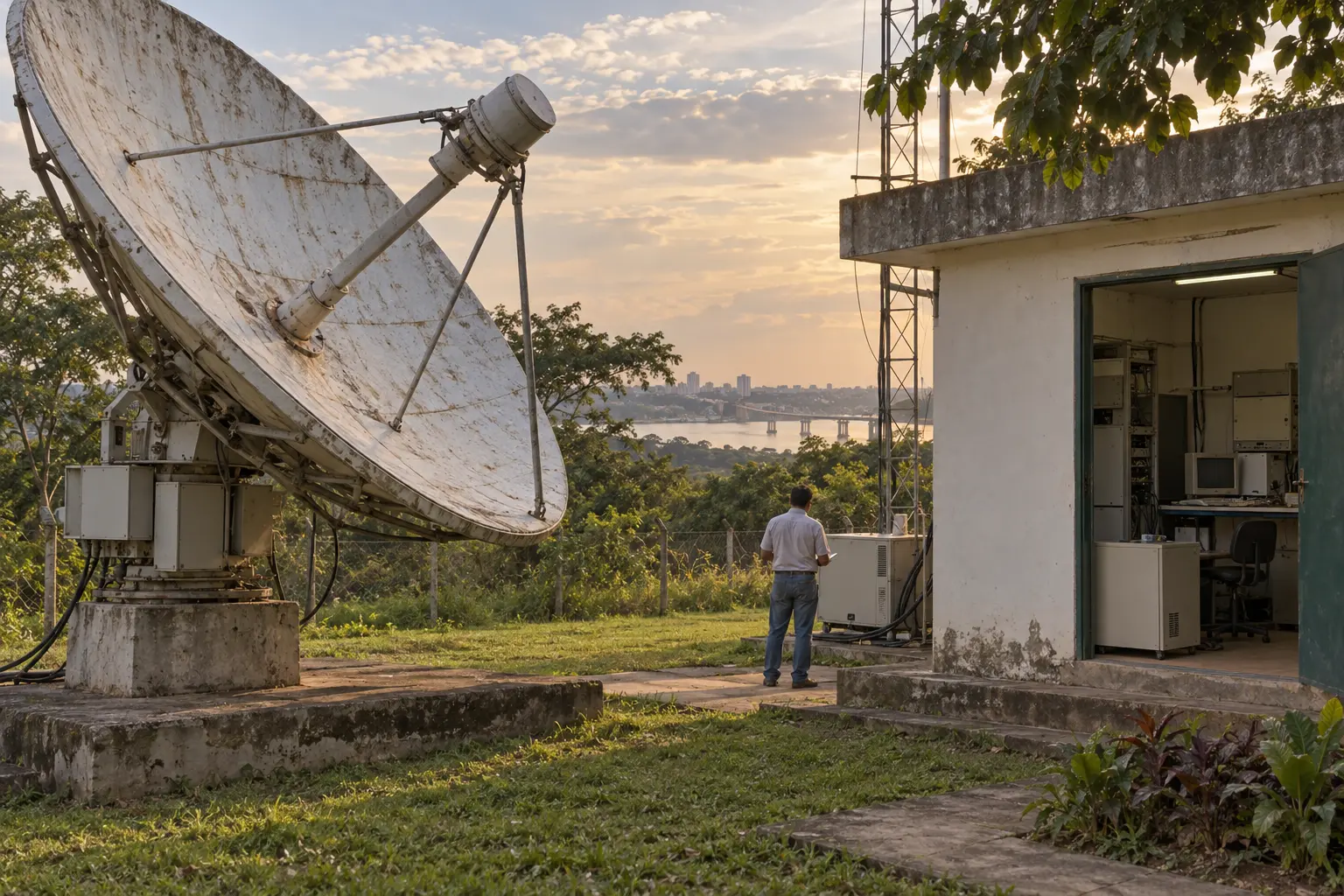
Three Payers Built Paraguay’s First Interactive Internet Gateway
A satellite earth station, a recurring international circuit and an upstream Internet port came from different budgets. That division explains how a university project in Paraguay crossed the gap between scheduled email and an interactive Internet connection.

History
Nicaragua Reached the Internet through Costa Rica’s Old Microwave Link
Before Nicaragua had its own direct international Internet exit, its academic network could reach the wider Internet by crossing a neighboring country. A decades-old analog microwave path carried the regional link; Costa Rica’s satellite gateway supplied the route outward.

History
Three Sequence Numbers Brought Down ARPANET: The 1980 Routing Update Loop
A fault in a single switching neighborhood left the ARPANET’s control messages repeating three six-bit sequence numbers—8, 40 and 44. Their ordering rule made each one look newer than another, and a routing process consumed the buffers needed to keep links alive.

History
Dakar’s Web Server Was Online Before Senegal’s Permanent Link
A November 1995 network message already listed Senegal Contact at refer.sn. A later history describes a Dakar server carrying IP over X.25, months before SONATEL’s permanent national link. The records mark different kinds of “online” and cannot tell us who successfully reached…

History
Lynx Was More Than a Web Browser: Its 1992 Links Reached Into Campus Systems
In 1992, Lynx could take a reader from a campus information menu into a library login or a live events database. That small jump reveals a broader early-Internet idea: a link could be a doorway into software and services already running elsewhere.

History
Before Linux Had a Release, Linus Torvalds Asked MINIX Users What They Needed
The 1991 origin story is often compressed into one famous Usenet post. The surviving record shows a slower sequence: technical questions, a request for MINIX users’ advice, a limited source snapshot, and then a wider FTP announcement.