
Primary Domain
Infrastructure
Within the Primary Domain facet, Infrastructure intelligence groups reporting by primary domain so readers can follow a focused area of internet infrastructure, governance, connectivity markets, or digital capital. The page brings together related articles, public evidence, institutions, companies, people, regional exposure, operating dependencies, and market context that may otherwise sit across separate category pages. It explains the domain, the likely actor class, the market or governance context, and the source material readers should use when comparing signals. Operators, analysts, and governance readers can see how the same domain appears across events, profiles, market shifts, public-source evidence, regional dependencies, and longer-cycle infrastructure decisions over time.

History
When Both Sides Knocked at Once: TCP's Simultaneous Open
The standard picture of TCP begins with a client knocking and a server listening. The protocol itself has never required that casting. Its original 1981 specification described what happens when two endpoints knock at once: their SYN segments cross, each side becomes both…

AFNOG
AIS’s Shortlist Rule Turns Agenda Time Into Editorial Authority
The AIS 2025 presentation call invited a wide technical community, then made clear that limited programme time would place only shortlisted abstracts on the agenda.

IETF
QUIC PTO Is a Progress Probe, Not a Packet-Loss Verdict
A Probe Timeout asks QUIC to seek acknowledgment progress; it does not turn an unanswered packet into a proven loss.

History
The Host That Had to Wait Before Speaking: TCP's Quiet Time After Restart
A restarted machine may look clean precisely because it has forgotten too much. TCP's original quiet-time rule addressed that paradox: if a host lost the sequence numbers used before a crash, it was told to emit nothing for one maximum segment lifetime. Silence was not a repair…
IETF
Route Flap Damping Converts Churn into Suppression—and the Threshold Decides Who Disappears
A route can be reachable and still vanish from local use because its recent history crossed a configured penalty threshold. Route flap damping protects BGP peers from repeated updates, but it also turns a stability estimate into a reachability decision. RFC 7196 makes that…

AFNOG
AfNOG’s Host-Selection Rules Turn Infrastructure Capacity Into Convening Power
An archived Africa Internet Summit hosting call shows that choosing a host is both an operational-risk decision and a distribution of institutional attention.

IETF
QUIC ACK Delay Is Not Network Latency
ACK Delay is a receiver’s report of intentional waiting for one acknowledged packet. It is useful to RTT estimation, but subtraction alone cannot turn it into a network-only measurement.
IETF
A Route Reflector Scales IBGP by Centralizing Dissemination, Not Route Authority
The full mesh disappears, but the decision point does not. RFC 4456 lets a route reflector redistribute an IBGP-learned route to selected internal peers, replacing a session-count problem with a governed dissemination hierarchy. The reflector can scale reachability, yet its…
History
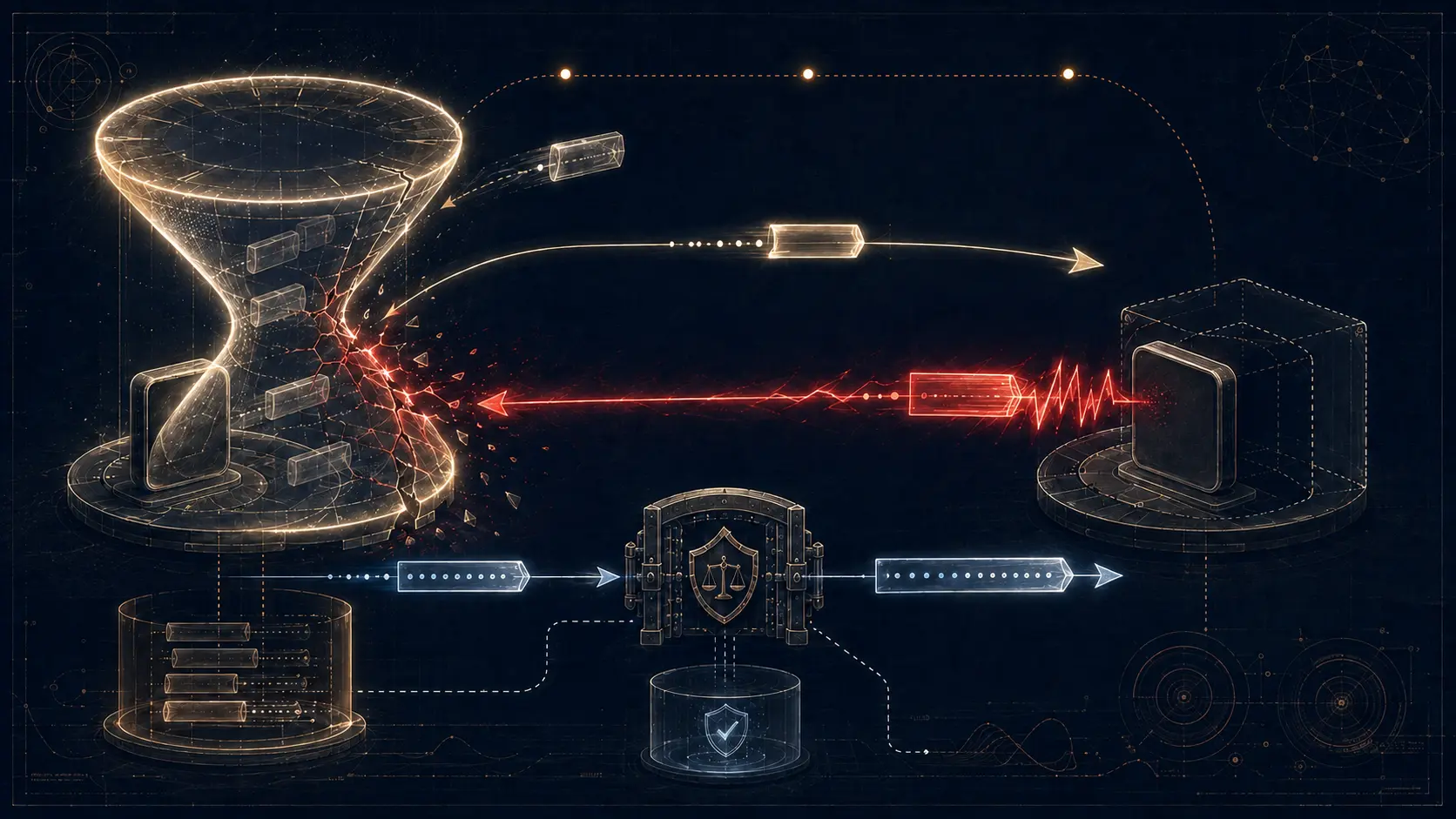
The Reset That Ended Waiting Too Soon: TCP's TIME-WAIT Assassination Hazard
TIME-WAIT looks passive: a closed connection remains in a table while a clock runs down. In 1992, RFC 1337 showed that the state could be destroyed by active protocol behavior. One old segment provoked an acknowledgment; that acknowledgment provoked a reset; the reset erased the…

AFNOG
AfNOG’s NII Service Award Turns Recognition Into a Governance Signal
AfNOG’s published award language does more than celebrate individuals. It identifies service, sustained technical contribution and mentorship as conduct the institution wants its community to value.

IETF
The Ports That Outlived Their Protocols: RFC 9900 and the Discipline of Giving Numbers Back
Ports 831, 832, and 833 can persist in diagrams, service files, and filters even after the NETCONF transports once attached to them never reached known production deployment. RFC 9900 therefore retires the number bindings without erasing their semantic history.

IETF
QUIC Coalescing: Efficient Wire Use, Separate Delivery
Putting several complete QUIC packets into one UDP datagram can reduce carriage overhead during the handshake. It does not turn those packets into one protected entity, one acknowledgment event, or one application result.
IETF
Four-Octet ASNs Expand the Namespace While Compatibility Still Rewrites the Path
Four-Octet ASNs Expand the Namespace While Compatibility Still Rewrites the Path intelligence summary explains the development, the public evidence available to readers, the organisations involved, the regional context, market exposure, and the infrastructure consequences that…

AFNOG
AfNOG’s Bursary Criteria Turn Travel Funding Into a Knowledge-Sharing Mandate
A dated AfNOG-hosted bursary application ties individual travel support to the ability to reuse and share meeting knowledge within an African country and region.

IETF
One Name, Many Rules: RFC 9899 and the Control Surface of Reusable ACL Sets
A security team changes one named prefix set once, and every ACL that references it can inherit the change without rewriting each parent rule. That mechanism is the promise—and the control problem—behind RFC 9899’s reusable policy entities.

History
The Deadline That Was Not a Retransmission Timer: TCP User Timeout
TCP can decide to retransmit a segment and still decide, on a different clock, that the connection has waited too long. The first decision schedules another attempt. The second ends the connection. RFC 5482 made that persistence preference visible to a peer without turning it…

IETF
Shrink the Trust Domain: RFC 9898 and the IPv6 Neighbor-Discovery Isolation Choice
On one IPv6 access segment, three different root causes can surface together: multicast load, implicit trust of every on-link node, and router Neighbor Cache Entries created on demand. The practical question is therefore not which symptom to patch, but which part of the Neighbor…

IETF
QUIC Handshake Confirmation Is Not Application Readiness
A green dashboard can hide an important distinction: HANDSHAKE_DONE marks a transport and cryptographic transition, not a completed application transaction. Confirmation retires Handshake keys, but it does not certify early-data acceptance, backend health, durable storage, or…
IETF
A BGP Shutdown Message Explains the Decision Without Delegating the Restart
A session can disappear before an email thread catches up. RFC 8203 lets an operator place a short UTF-8 explanation inside an Administrative Shutdown or Administrative Reset notification. The explanation can connect a protocol event to a maintenance record, but it is not an…

AFNOG
AfNOG’s Sponsor-Visibility Gate Is a Governance Firewall, Not a Branding Rule
AfNOG’s hosting rules make sponsor advertising conditional on advance approval and the event’s non-commercial purpose. That gate is an allocation of authority, not a cosmetic branding choice.