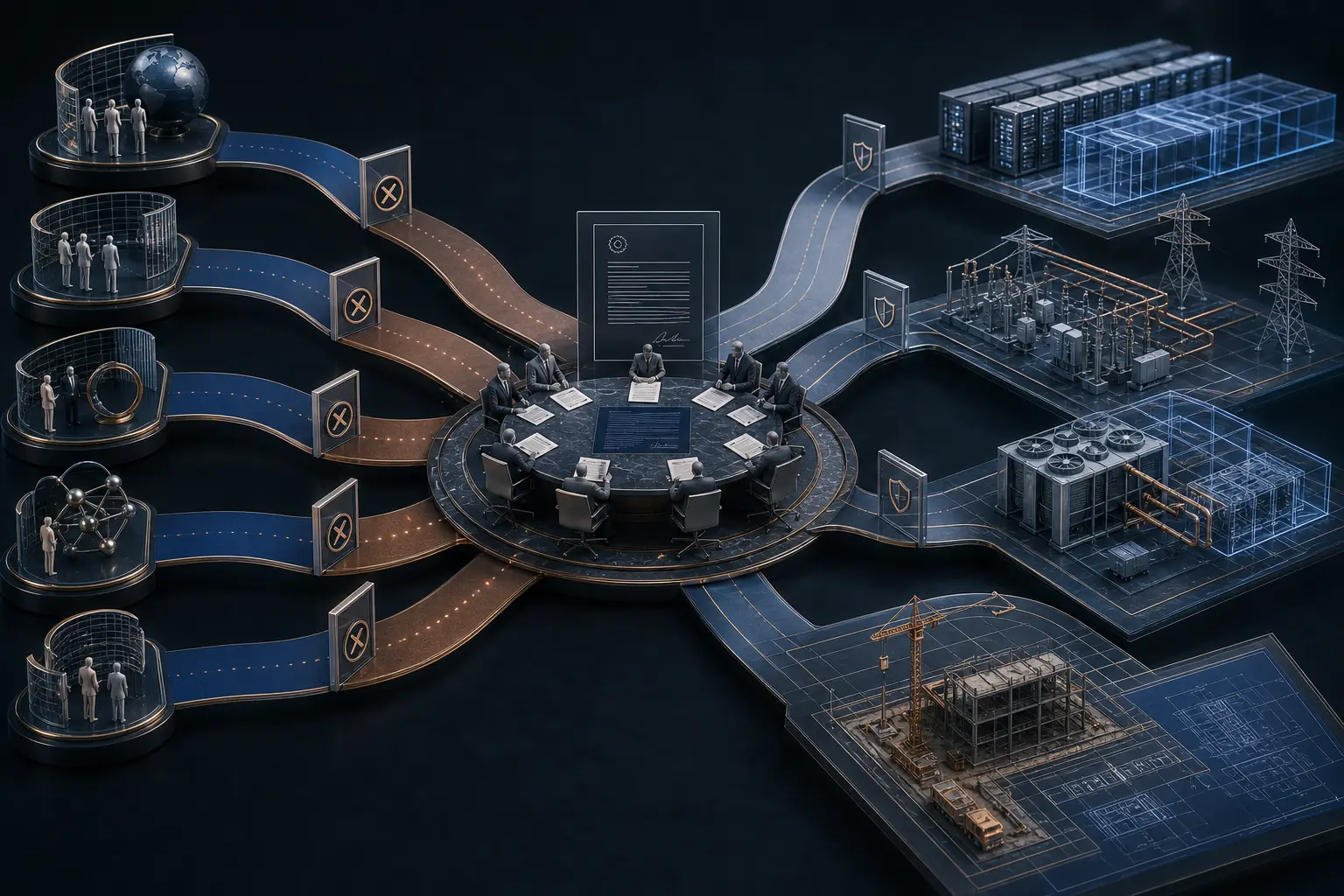
- PwC projects $31.6tn of global data-centre capital spending through 2050, with annual investment rising from about $800bn in 2026 to $1.8tn
- ICT equipment is expected to rise from 70% of data-centre capex in 2026 to 93% by 2050 as servers and AI hardware are replaced repeatedly
The fact
PwC projects that global data-centre capital expenditure will total $31.6tn between 2026 and 2050 under the central scenario in its Global Data Centre Outlook. Annual spending is forecast to rise from about $800bn in 2026 to $1.1tn in 2030 and $1.8tn in 2050.
The forecast covers 46 countries and territories. PwC expects the US to account for $15.1tn, or 48% of the total, while Asia Pacific is projected to receive $8.2tn. PwC estimates that ICT equipment will account for 70% of data-centre capex in 2026 and 93% by 2050. Servers, GPUs and other computing equipment are typically replaced every four to six years. Its modelling puts cumulative spending between about $22tn and $50tn depending on the pace of AI adoption.
PwC also identifies power availability, chip access, connectivity, regulation and community consent among the factors that could affect where the investment is made.
The assessment
PwC's forecast is so large partly because data centres do not stop absorbing capital once they open. The buildings, grid connections and cooling systems may last for decades, but the servers and AI accelerators inside them are replaced much more often. PwC assumes a typical hardware cycle of four to six years, which means the same facility could go through several expensive upgrades over its lifetime.
PwC estimates that, across the market, about $12 will be spent on ICT equipment for every dollar spent on construction. If that relationship holds, much of the industry's future spending will happen inside data centres that have already been built. Those sites will still need enough power, cooling and network capacity to accommodate newer generations of hardware.
The numbers could move sharply in either direction. PwC's central estimate is $31.6tn, but its scenarios range from roughly $22tn to $50tn depending largely on how quickly AI demand develops. For BTW readers, the long-term spending story is therefore not only about building more data centres. Existing sites will also need repeated hardware upgrades, and each new generation will have to work within the power and cooling infrastructure already in place.
What to watch
Watch whether annual data-centre capex moves towards PwC's $1.1tn estimate for 2030, and whether four-to-six-year hardware replacement cycles hold as AI systems mature. Power connections and advanced-chip availability will also show how much of the forecast can turn into deployed infrastructure.
Member Briefing
Deeper Profile Context
Sign in with the right membership level to unlock the full briefing and source notes.
Only for Strategic Circle
Strategic Circle
Open to all readers. Unlock profile briefings after joining and signing in.
Join Strategic CircleOnly for Leadership Alliance
Leadership Alliance
For qualified IP-asset owners and management; sign in to unlock alliance briefings.
Join Leadership Alliance