Summary
- PayPal estimated that 71% of eBay auctions explicitly accepted PayPal at the end of 2001, against 25% accepting eBay's Billpoint. Those were sampled listing choices, not completed-payment shares.
- eBay bought out Billpoint's remaining partner in early 2002, acquired PayPal in October, and told investors it would phase out Billpoint in the first half of 2003.
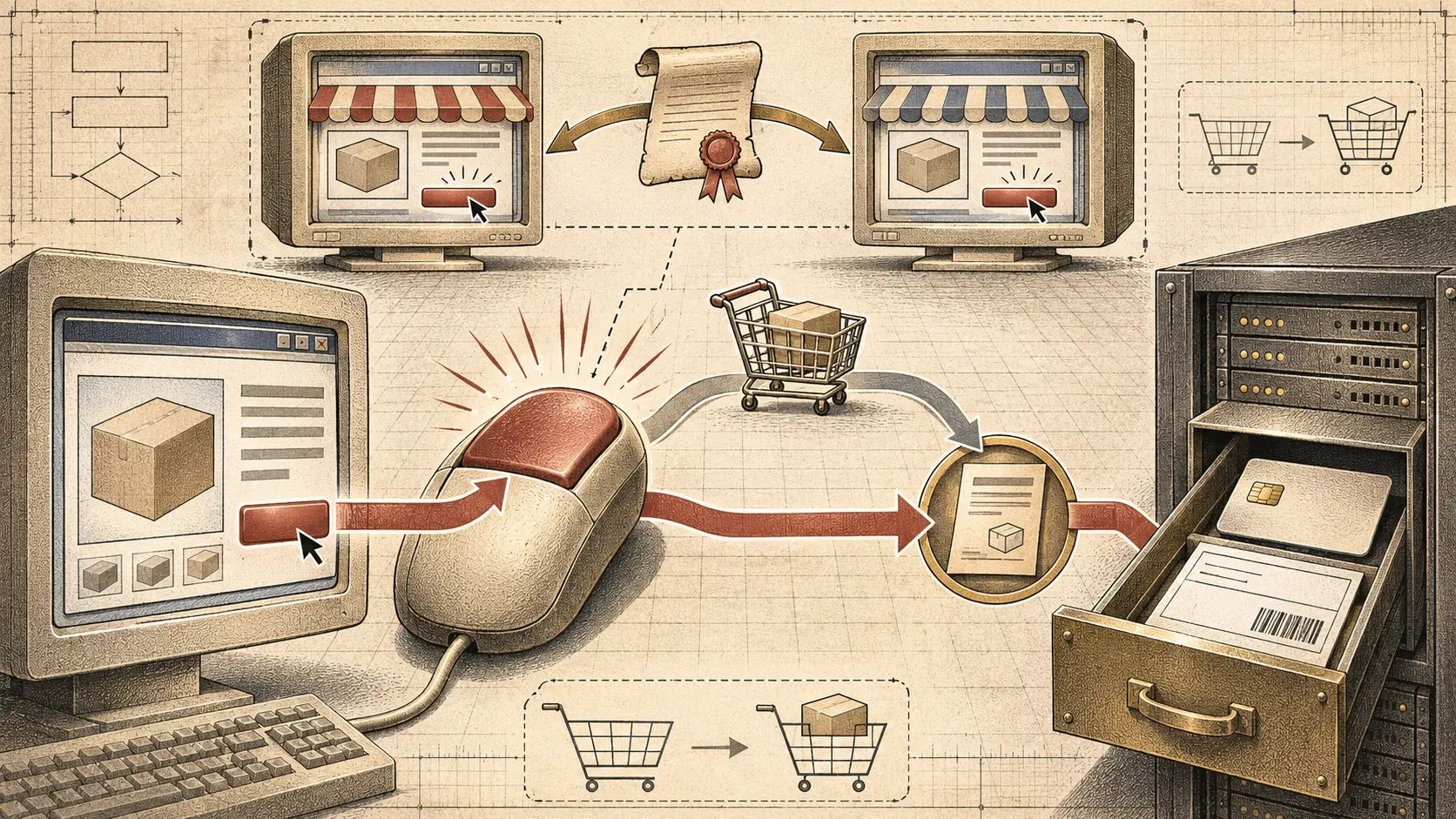
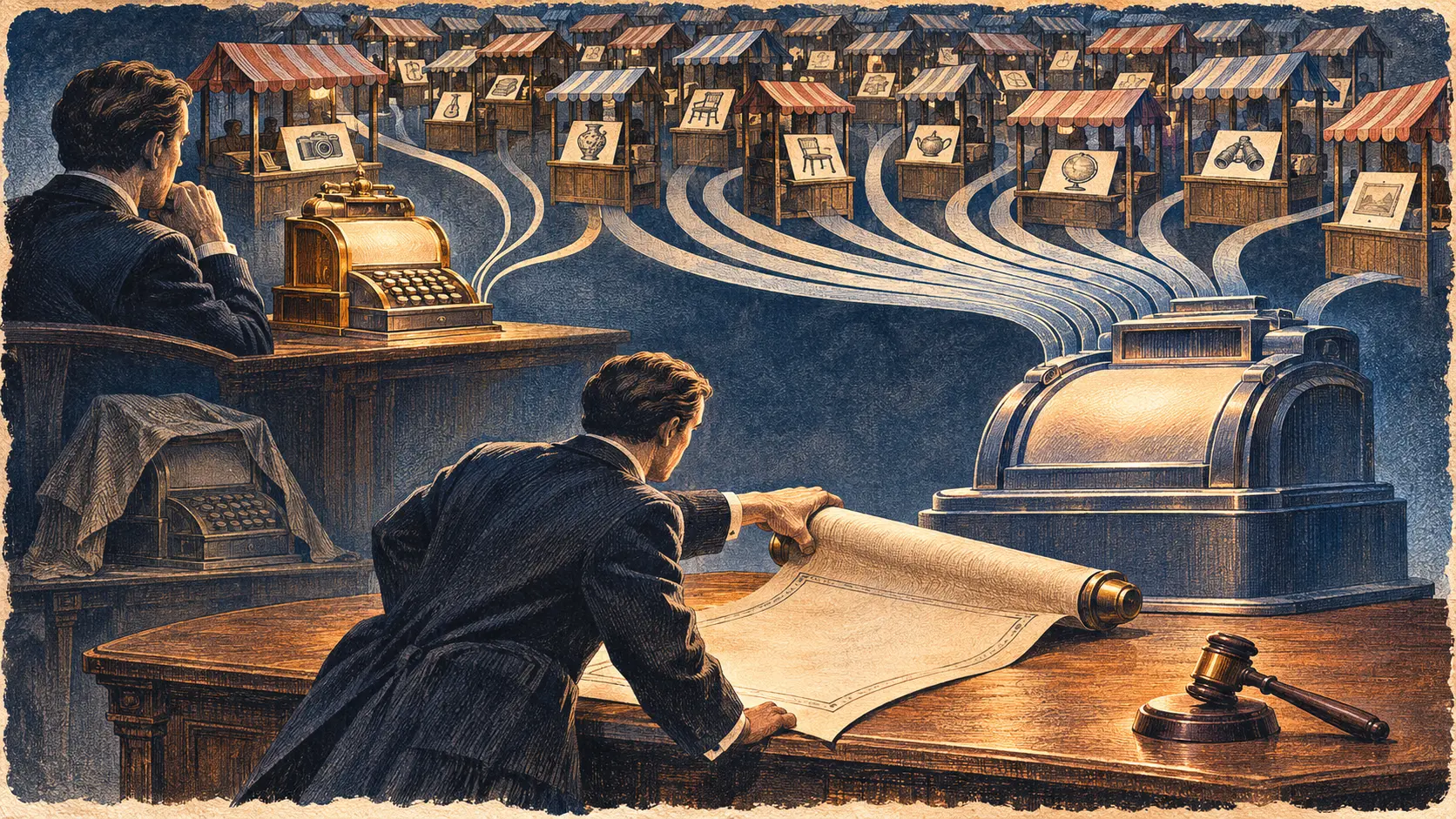
The auction page belonged to eBay. So did Billpoint, its payment service. The seller, however, could put another name in the payment instructions. In its 2001 Form 10-K, PayPal estimated that about 71% of eBay auctions explicitly accepted PayPal on 31 December 2001. About 25% accepted eBay Payments, formerly Billpoint. PayPal said it used periodic random and weighted samples of listings. This measured what sellers said they would accept, not which rail actually carried the money. A listing could offer more than one method. Still, a marketplace owner staring at those signs had a problem: the checkout it owned was not the checkout most sellers chose to advertise.
PayPal's independence made that preference commercially sharp. The same filing said it had no contract with eBay. PayPal warned that the site could restrict sellers from advertising PayPal or require its own payment option. That was a disclosed risk, not evidence that eBay imposed the feared rule. The asymmetry was real without the hypothetical: eBay governed the auction venue, while PayPal's payment accounts followed buyers and sellers into the transaction. PayPal also reported that customers classified 66.9% of its 2001 dollar payment volume as settlements from online-auction purchases, especially on eBay.
That figure covered auction sites as a group; it was not an eBay transaction share.
eBay had paid for the internal alternative. Its FY2002 Form 10-K says it acquired Billpoint in May 1999, then sold a roughly 35% interest to Wells Fargo Bank in February 2000. In January 2002 eBay bought that minority interest back for approximately $43.5 million in cash. The merger prospectus says full ownership removed a consent obstacle to a transaction with PayPal. Billpoint was no flimsy experiment that could be swept off a desk without cost. There was a partner, equity and a bill to clear before eBay could change course.
The course change was not one effortless boardroom handshake. The prospectus records an eBay offer in January 2002 valued at $825 million of eBay stock. PayPal rejected it. Negotiations broke off, resumed and broke off again before the companies reached their later agreement. The chronology matters because it shows two businesses with separate bargaining positions, not a product team quietly switching a checkout button. eBay controlled the venue. PayPal had grown inside it without belonging to it.
On 3 October 2002, eBay acquired PayPal in a stock-for-stock transaction. Its 10-K put PayPal and Billpoint together in a Payments segment and said Billpoint operations would be phased out during the first half of 2003. That is eBay's documented plan at filing time. The same report says Billpoint's transaction revenue had grown in 2001, while the 2002 growth of the Payments segment came primarily from the PayPal acquisition. For 4 October through 31 December 2002, PayPal contributed $72.6 million of transaction net revenue.
The post-acquisition quarter is not a full-year comparison with Billpoint; it shows which operation now carried the segment's future.
The usual shortcut for this story is that eBay bought the winner. The filings give the sharper mechanism. A marketplace could create a captive payment service, display it to its users and still watch sellers form a habit around an outside network. Once payment accounts and counterparty expectations gathered there, control of the auction page was only one piece of the transaction. eBay's answer was to buy the network and plan the retirement of its own rail. The thing for sale was not simply software. It was the route sellers expected buyers to take after the auction ended.
Original records
- PayPal, FY2001 Form 10-K: sampled listing acceptance, auction-linked payment volume and platform-access risk.
- eBay and PayPal, 2002 merger prospectus: Billpoint minority buyout and acquisition talks.
- eBay, FY2002 Form 10-K: acquisition close, Payments segment and Billpoint phase-out plan.
Member Briefing
Deeper Profile Context
Sign in with the right membership level to unlock the full briefing and source notes.
Only for Strategic Circle
Strategic Circle
Open to all readers. Unlock profile briefings after joining and signing in.
Join Strategic CircleOnly for Leadership Alliance
Leadership Alliance
For qualified IP-asset owners and management; sign in to unlock alliance briefings.
Join Leadership Alliance