Summary
- A GAO report released on 14 October 2026 says ICE has manual and supervisory checks on body-camera activation but lacks an automatic control of the kind CBP uses when, for example, a firearm is drawn or emergency lights come on. ICE policy requires an explanation for missed activation; GAO found it difficult to monitor compliance across many encounters.
- DHS disagreed with GAO's recommendation for additional ICE activation controls, such as automatic triggers. It cited accidental recording of sensitive encounters and protected bystanders. GAO said the response identified neither settings where automation could work nor another control that would assure required footage is captured.
The camera on the chest is only the beginning
CBP had deployed about 11,500 body-worn cameras as of June 2026. ICE had deployed about 4,800 as of April. Those are separate snapshots, but together they show how far the agencies moved from pilot projects into everyday equipment. In its full audit, GAO found a smaller decision still unsettled inside the much larger program: who makes sure an ICE camera starts when policy says an encounter should be recorded?
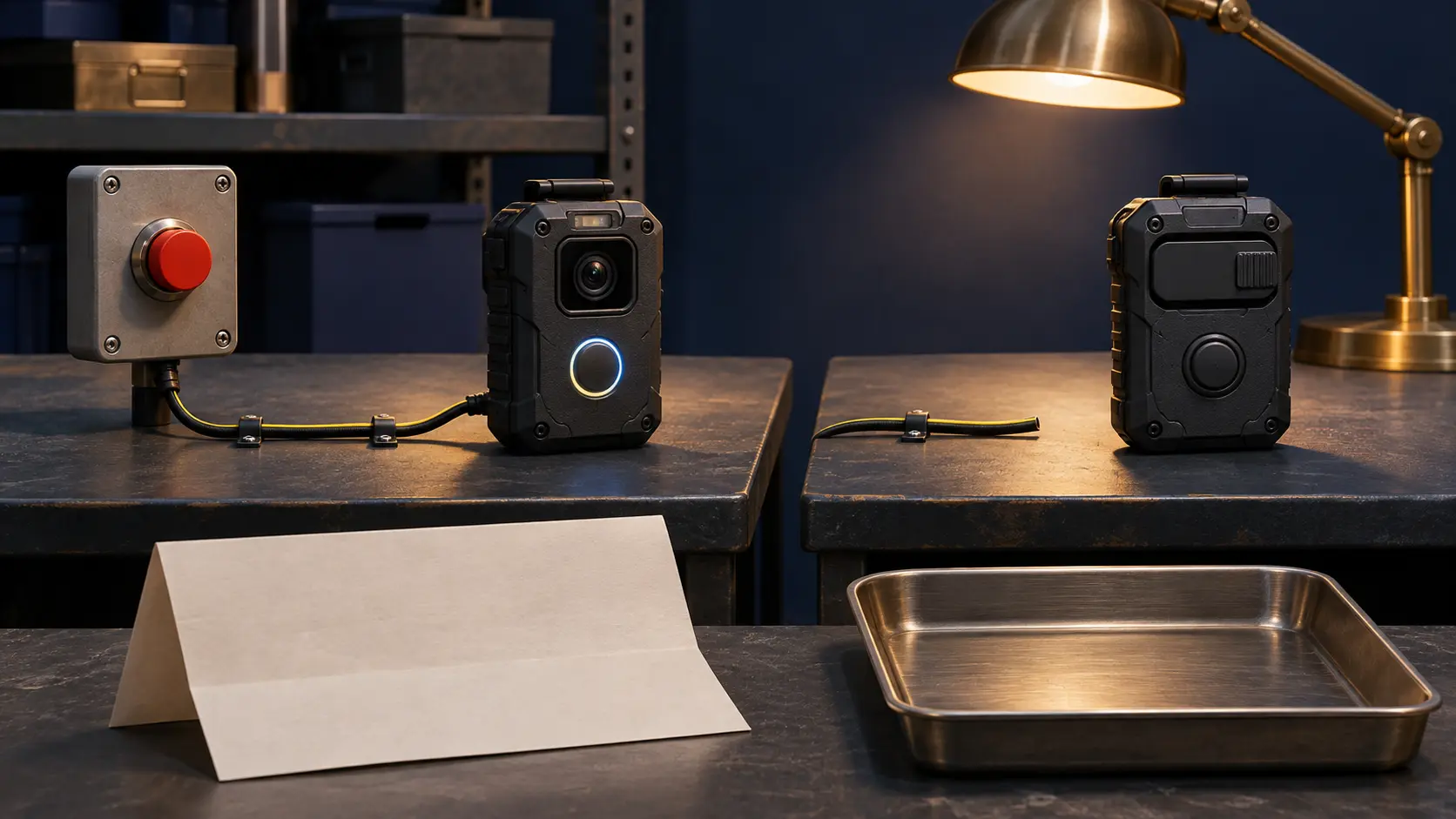
The two agencies already have directives, training and supervisory reviews. ICE personnel are required to explain a failure to activate. CBP, however, also uses automatic triggers in selected circumstances, including a drawn firearm or activated emergency lights. GAO found no comparable automatic control at ICE. Its report describes the limits of manual oversight: video systems do not always connect cleanly to case systems, the volume of encounters is high, and supervisors cannot watch every event as it occurs. A missing clip can be discovered only after the moment it could have recorded has passed.
GAO's recommendation did not prescribe continuous recording. It asked ICE to add controls that make required activation more reliable, with automation as one example. DHS refused that recommendation. Its response argued that false triggers could record informants or victims without authorization, or capture bystanders engaged in protected activity where filming is restricted. These are operational costs of a blunt trigger, and they belong in the design.
GAO's point was narrower and harder to dismiss: the response did not identify contexts where a trigger might be safe, and it did not offer a different control for ensuring that required footage exists. CBP's use of triggers in some comparable settings makes the empty alternative especially visible.
The camera program has other unfinished management work. CBP and ICE had not updated their program plans since 2022 and 2024, respectively, despite changes in deployment needs and a 2025 pause. Neither had results-oriented measures for promised gains in public trust or accountability. Most program offices lacked operational guidance tailored to their work. DHS agreed with six of GAO's seven recommendations and disputed only the activation-control item. That makes the disagreement unusually crisp: the department accepted the need to plan, measure and guide, but declined a backstop for the first event on which any footage depends.
Privacy and accountability meet at the trigger. A recording that should never happen can expose a protected person. A recording that policy required but never began cannot later illuminate a contested encounter. The public record lacks a count of missed required recordings; a reconciled case-and-video audit would establish it. DHS also owes a bounded design: which events activate a camera, which contexts suppress that trigger, what a missed activation must record in an audit trail, and how the agency tests whether the arrangement works. DHS can answer with automation, a strong manual substitute, or a mix.
As of this audit, it had not supplied that answer.
Sources
Member Briefing
Deeper Profile Context
Sign in with the right membership level to unlock the full briefing and source notes.
Only for Strategic Circle
Strategic Circle
Open to all readers. Unlock profile briefings after joining and signing in.
Join Strategic CircleOnly for Leadership Alliance
Leadership Alliance
For qualified IP-asset owners and management; sign in to unlock alliance briefings.
Join Leadership Alliance