
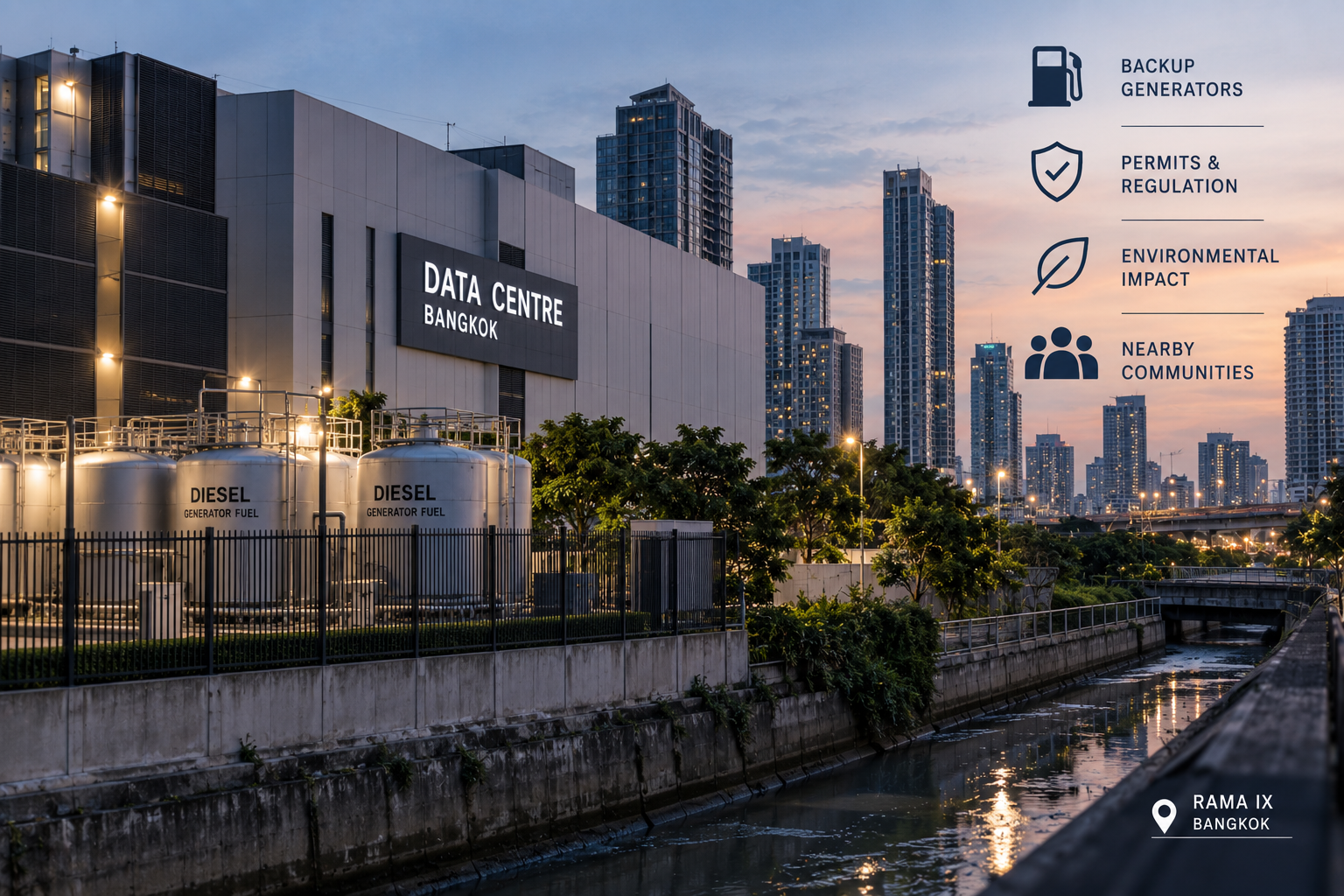
- Officials found more than 200,000 litres of diesel stored without a permit at a data centre in Bangkok's Rama IX area
- Pollution officials later found oil-contaminated wastewater and sediment in the site's drainage system and a public drain
The fact
Thailand's Department of Energy Business found more than 200,000 litres of diesel stored without a permit at a DAMAC Digital Thailand data centre in Bangkok's Rama IX area. The fuel was intended for emergency generators. Officials ordered it removed, and a later inspection confirmed that the tanks had been emptied. The department said it would take legal action over the unlicensed storage.
Pollution officials later found oil-contaminated wastewater and sediment in the site's drainage system and a nearby public drain. Preliminary tests also detected volatile organic compounds in the water. The operator was ordered to clean the drainage system and remove the contaminated water for treatment. The inspections followed complaints from nearby residents and workers about an oil-like smell and symptoms including irritation, dizziness and vomiting, although no medical finding has established that the data centre caused those symptoms.
Bangkok has separately suspended three proposed standalone data-centre projects for reassessment, while the Energy Ministry has paused new permits for emergency fuel tanks at data centres until updated guidance is issued. City officials have said that data centres previously lacked a clear legal definition and that some projects had been submitted under broader building categories such as warehouses.
The assessment
A data centre may rely on diesel generators only when the grid goes down, but storing enough fuel to keep them running can shape the site long before an outage happens. In a dense part of Bangkok, that means fuel storage, drainage, fire safety, and the effect on nearby communities all have to be considered alongside the building's electrical systems.
Those checks are split across several authorities. Bangkok handles building approvals, the Department of Energy Business oversees fuel storage, and environmental agencies deal with pollution. Developers therefore have to make sure these separate requirements fit together before a facility can operate safely.
For BTW readers, backup power is becoming part of the planning decision, not just equipment added later. If Thailand requires developers to disclose generator capacity, fuel volumes, and storage arrangements earlier, some projects may have to change their designs or even reconsider whether a particular urban site is suitable.
What to watch
Watch for Bangkok's new data-centre definition and zoning rules, along with the Energy Ministry's conditions for restarting emergency-fuel permits. The outcome of the Rama IX case, follow-up pollution measurements and inspections at other facilities will show how the new approach is applied to operating and planned sites.
Member Briefing
Deeper Profile Context
Sign in with the right membership level to unlock the full briefing and source notes.
Only for Strategic Circle
Strategic Circle
Open to all readers. Unlock profile briefings after joining and signing in.
Join Strategic CircleOnly for Leadership Alliance
Leadership Alliance
For qualified IP-asset owners and management; sign in to unlock alliance briefings.
Join Leadership Alliance