Summary
- APNIC's member directory gives three things about ASIX: a name chosen by the member, a SMALL membership tier, and the country code HK. It states nothing about switches, ports, members or customers, because a member listing is not an audit of architecture.
- The company's own site, captured on 1 November 2026, describes a teleport operator founded in 2005 that sells satellite and wireless capacity to ISPs, broadcasters, mobile operators and satellite operators. Dedicated carriers, hub-scheduled shared carriers and video uplink are all star-shaped products: the hub sits in the path by design.
- That difference is the invoice. A fabric multiplies the destinations reachable per port and spreads switching cost across members. A teleport sells a carrier through one gateway, prices it per carrier, and concentrates the risk in the ground segment. A buyer who reads "exchange" and budgets for cheap many-to-many reach is pricing a mesh; what is described for sale is a spoke.
Three fields and a name
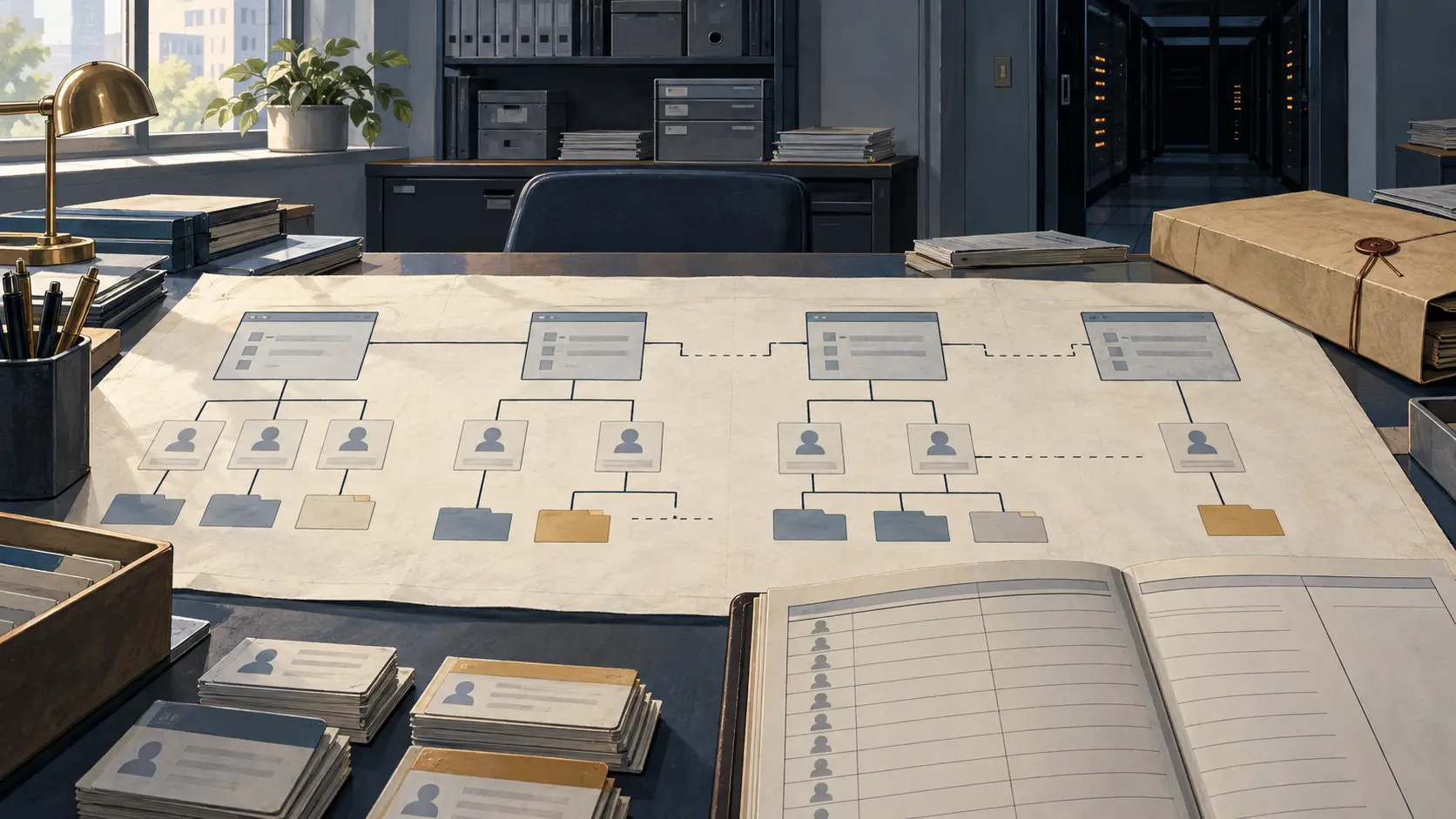
The row is unremarkable, which is the point. In APNIC's public member directory the entry reads ASIX Asia Satellite Internet eXchange Ltd, tier SMALL, country HK, with the name linked to the company's own site. Three fields: a registrant's chosen name, a fee-and-resource class, a country code. Nothing in that row describes a switch, a port, a member list, a route server, a building or a customer.
What the row does attest is worth stating precisely, because it is easy to over-read. It attests that a Hong Kong organisation holds APNIC membership at the SMALL tier, and that it chose to be listed under a name containing the words "Internet eXchange". Registry directories display the name the member supplies. They do not verify that the member operates what the name implies; there is no architectural test at registration, and no reason for one, since the registry's business is number resources, not switching platforms. A name in a member list is a label with a link attached.
What a teleport actually is
The link goes to the company's own description, captured the same morning: asix.hk. The page states the company was founded in 2005, aims to be "one of the most reliable, yet cost effective Teleport Operator in the Asia Pacific Region", and provides "high quality wireless and satellite-based solution". It names the customers it wants to be "the best choice" for: ISPs, broadcasters, mobile operators, satellite operators and governmental, corporate and organisational entities in Asia Pacific.
A capture-time summary of the same page lists the services behind those phrases: IP bandwidth, dedicated SCPC, shared and dedicated TDMA, video broadcast, satellite accessibility, ground support, teleport and co-location hosting, rural broadband and wireless, aimed at Asia Pacific and the Middle East. That list is an index written at capture time, not the page's exact sentences, so treat it as a map of the offer rather than a quotation.
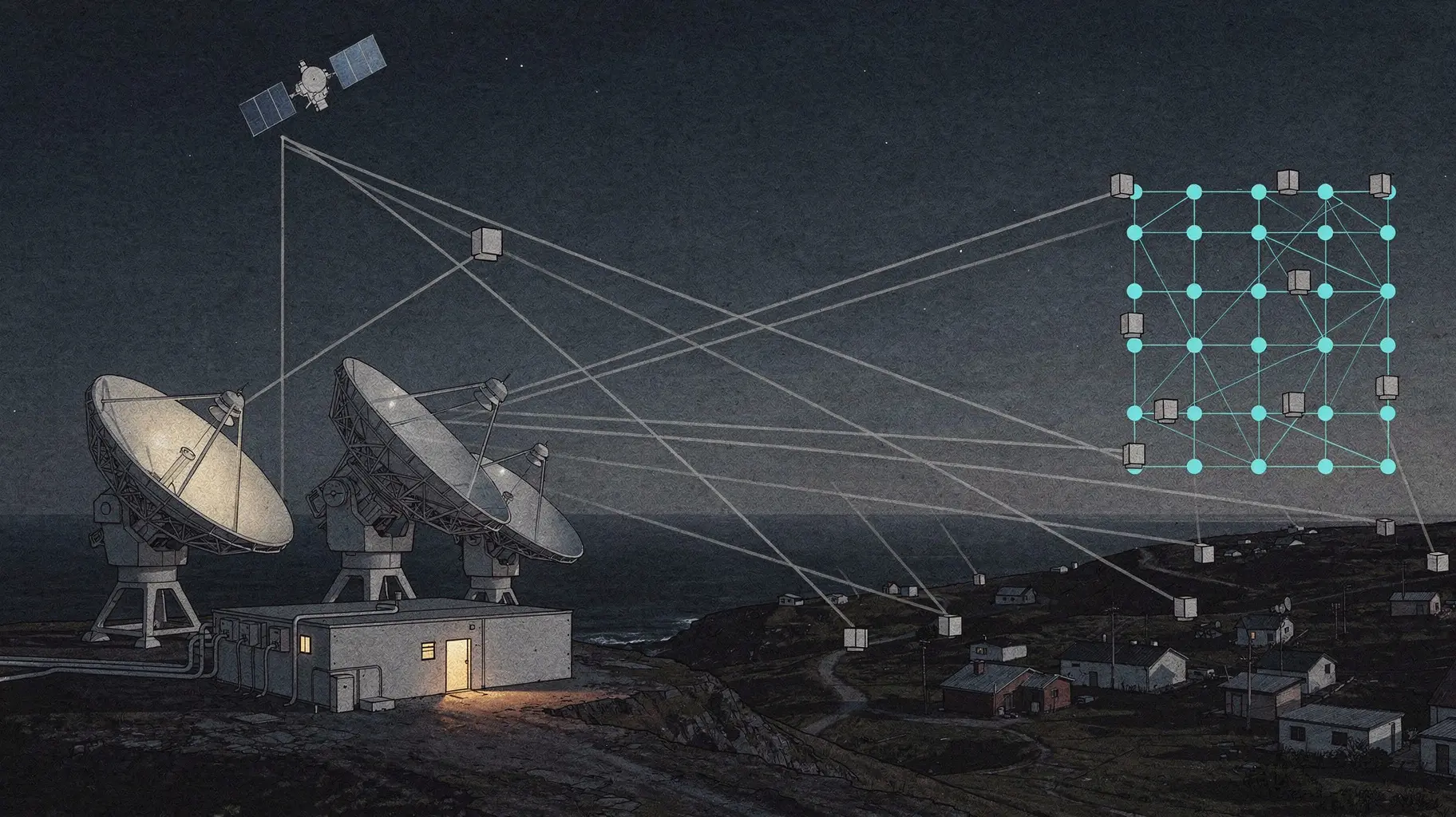
Read the physics of that offer and the shape is unambiguous. A teleport is a gateway earth station: antennas pointed at satellites, a hub that terminates carriers, terrestrial backhaul running from the hub out to customers. Every product on that list passes through the hub. SCPC — single channel per carrier — gives one customer a dedicated carrier with capacity reserved end to end; the buyer gets a pipe of fixed width and pays for it whether or not it fills. TDMA shares an outbound carrier among many terminals, with the hub scheduling who transmits when; the sharing happens under the hub's clock, not between customers directly.
Video broadcast is one uplink to many downlinks, the textbook definition of point-to-multipoint. Ground support and co-location are the antennas and the rack space at the earth station itself.
Nothing there is a criticism. Teleports do necessary work: they put a remote site on a satellite link where no fibre reaches, they carry broadcast contribution feeds, they serve maritime and rural customers, and they are often the only path into a region where terrestrial build is uneconomic. The business is real and the mechanics are sound.
It is, however, a star. And the second half of the company's name is the one word in networking that means the opposite.
Why the two words are not synonyms
An internet exchange is a shared switching platform, usually in one or a few buildings, where each member connects a port once and can reach every other member on the fabric. The member does not buy a circuit to each peer; it buys a port, and the port's value is the number of destinations behind it. Traffic crosses the fabric directly. Nobody in the middle decides who is allowed to talk to whom.
A teleport puts a hub in the middle by design, because the satellite is the middle. Every carrier terminates at the ground segment, every packet in a TDMA network is scheduled from it, and every video feed is uplinked from it. Capacity is sold per carrier rather than per port, reach is bounded by the satellites the operator can see and the beams it has contracted, and the ground segment is a single point of failure for every customer behind it. That concentration is the product, not a defect: it is how a broadcaster reaches a continent from one antenna.
Both structures serve overlapping customers — ISPs, mobile operators, broadcasters — and both are legitimate businesses. They are not the same promise. A fabric multiplies destinations per port and divides the switching cost across members. A teleport sells a path through one facility and prices it by carrier. A procurement officer who reads "exchange" and expects to peer at low cost with dozens of counterparties is buying something the brochure does not offer.
The layer that is missing
The evidence that would settle the question sits below both the registry row and the marketing copy. An autonomous system number attributed to the name would show the company originates address space. Announced prefixes in a routing table would show what it actually carries. A record in an interconnection directory would show ports assigned at a fabric, and session counts would show whether counterparties peer with it or buy transit from it. That is the layer where a fabric becomes observable instead of asserted.
It was not retrieved on 1 November 2026. This publication made four attempts to pull routing and interconnection data for the name. All four failed, and they failed differently: capacity was unavailable on the first attempt, and its fallback returned a completed-looking result that had run no retrieval at all and carried an empty candidate list; two further attempts were refused at an authorisation boundary before any page was read; a fourth was refused the same way on its first leg and then failed on its second for want of an attached document context. Four attempts, four distinct failure classes, one of them repeated.
Those failures are a hole in the record, not a finding. They do not show that ASIX holds an autonomous system, announced prefixes or interconnection ports, and they do not show that it holds none. No conclusion about exchange operation is drawn from routing here, in either direction. Anyone who reads a paragraph like this one and concludes "so there is no exchange" has made the error the paragraph exists to prevent: an empty retrieval is not an empty world.
Our own directory entry Only for Strategic Circle carries the same shape of gap. It records the APNIC membership and nothing else — no autonomous system number, no address allocation, no relationship edges, no contacts — and its own notes ask for delegation and routing evidence before any routing claim. That is a limit of our record, not a fact about the company.
How to read a name
The method that survives this case is a fixed order of trust. Running evidence first: what the network does, visible in delegation, routing and interconnection records. Self-description second: what the operator says it sells, to whom, in its own words. The name third. Inference last, and only when the first three agree.
Under that order, the name is the weakest item in the file. "Exchange" in a company name costs nothing to adopt and confers the vocabulary of a shared fabric — the prestige of many-to-many interconnection — on a business that may be a gateway. Registries do not audit it. Readers do not check it. The word does work in a procurement conversation that the network behind it may not support.
That is the practical stake, and it lands on whoever is deciding. An ISP weighing a backhaul option should ask for the carrier terms, the satellite and beam, the committed information rate and the hub's redundancy, because those are what it is buying. An investor sizing a "fabric" should ask how many ports are lit and how many counterparties peer, because a fabric's value is a function of its membership while a teleport's is a function of its antennas. A regulator counting exchanges in a jurisdiction should not count a member-directory row as one.
The question is identical in each case: not what the entity is called, but what it operates, and what a customer can actually reach through it.
What would change the reading
The reading is not a verdict and it is not final. Four observations would move it.
If the operator's own pages began offering a switching fabric, member ports or a route server, the exchange reading would strengthen materially, and the burden would shift to whoever doubted it. If delegation or routing data attributed an autonomous system to the name and interconnection records showed many sessions across a shared fabric, the exchange reading would close in favour of a fabric operator. If routing visibility showed few sessions, all of them traversing a single gateway, the hub-and-spoke reading would be confirmed rather than merely indicated by marketing copy.
And if corporate or registry records showed the "Exchange" label reflected a historic fabric that has since closed, the name would be a fossil rather than a claim, and this reading would need that qualification written into it.
None of those four was available on 1 November 2026. What was available was a three-field registry row, a page that describes a star in detail, and a routing layer that would not load. That is enough to say what the name is not evidence of, and not enough to say what the company's network is.
Member Briefing
Deeper Profile Context
Sign in with the right membership level to unlock the full briefing and source notes.
Only for Strategic Circle
Strategic Circle
Open to all readers. Unlock profile briefings after joining and signing in.
Join Strategic CircleOnly for Leadership Alliance
Leadership Alliance
For qualified IP-asset owners and management; sign in to unlock alliance briefings.
Join Leadership Alliance