Summary
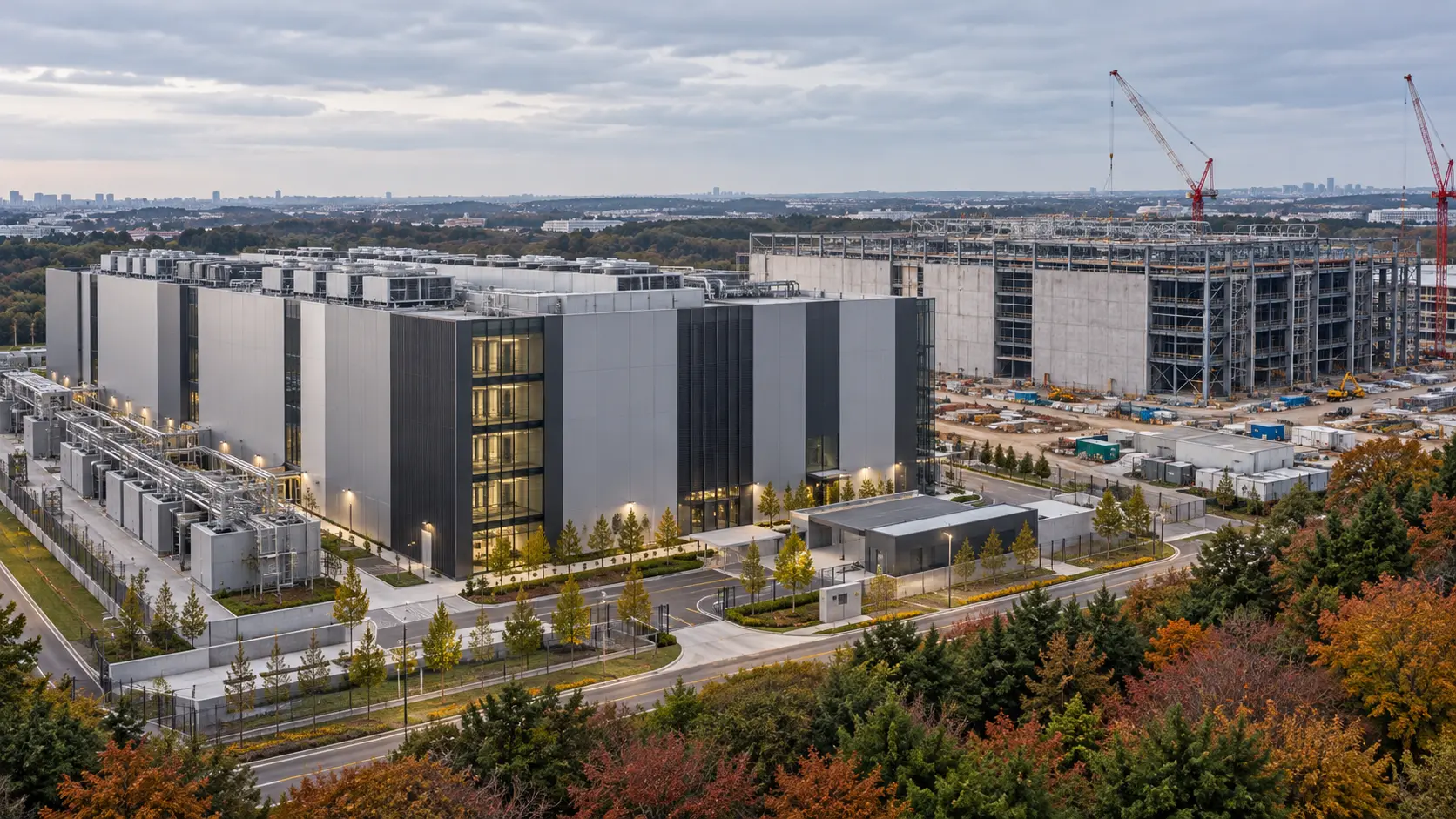
- A Sina Finance brief reports Alibaba Cloud's claim that fully modular design has cut delivery of a large AI data centre (AIDC) to 100 days.
- The same brief benchmarks that against six to 12 months for conventional delivery in China and 12 to 18 months in the United States.
- Alibaba Cloud also claims overall construction cost fell by more than 10% while the schedule shortened.
- The company reportedly plans to more than double global modular data-centre capacity during the year.
- No site, building count, megawatt, rack, GPU, capital figure, contractor, grid connection, energisation date, occupied load or named customer was disclosed.
- A captured follow-on page explicitly labels itself AI-generated, so none of its market predictions or supplier conclusions is used here as evidence.
A hundred days is a beautiful number. It fits on a slide, it embarrasses a rival's 12 to 18 months, and it sounds like a sprint rather than a construction programme. What it does not yet have is a starting line, a finishing tape, or an address. Alibaba Cloud's modular AI data-centre claim is the most interesting delivery number out of Asia-Pacific this year — and, as published, it is a stopwatch nobody has been allowed to start.
What Alibaba Cloud actually claimed
Strip the adjectives and the claim set is narrow and specific. A fully modular design, the company says, has compressed delivery of a large AI data centre to 100 days. Conventional builds take six to 12 months in China and 12 to 18 months in the United States. Overall construction cost fell by more than 10% at the same time. Global modular data-centre capacity is expected to more than double this year.
Four claims, one source, one attribution. That is not a criticism — it is the accounting. Everything below is about what would have to be true for those four sentences to become engineering rather than marketing.
The 100-day clock has no visible starting line
A delivery period is a measurement, and a measurement needs two gates. The brief does not say whether day one is land readiness, contract award, module fabrication start, site mobilisation or the construction notice. Nor does it say whether day 100 is shell completion, electrical commissioning, grid energisation or customer acceptance.
The gap between those definitions is not academic. On a modular site, the factory and the field run in parallel: modules are welded, wired and pressure-tested indoors while civil works crawl across the plot. If the clock starts at fabrication and stops at shell handover, it silently excludes the part of the job that historically ruins schedules — the ground, the grid and the last 5% of integration.
Compare like with like or do not compare. A 100-day modular number measured from fabrication start against a 12-month conventional number measured from groundbreaking is not a comparison; it is a change of subject.
Modularity moves risk. It does not delete it
Factory-built electrical rooms, cooling skids and data halls genuinely do something valuable: they turn bespoke site labour into repeatable manufacturing, cut weather exposure, and let the dirt work and the metal work proceed simultaneously. Anyone who has watched a substation build stall through a monsoon understands the appeal.
But modularity is a relocation of risk, not an annihilation of it. Design freeze arrives earlier and hurts more. Manufacturing defects surface 1,000 kilometres from the engineer who could fix them. Transport gauges, crane lifts, module-to-module interfaces and final integrated systems testing all become new critical paths. The brief identifies none of these boundaries, which means the reported gain cannot yet be attributed to any specific engineering decision.
A 10% cost cut needs a baseline, not a percentage
"More than 10%" is a relative reduction, not a reduction of 10 percentage points, and it is meaningless without the number it is relative to. The source gives no before-and-after currency values and does not define what "overall" includes.
Does overall mean land, grid connection, power equipment, cooling, building work, servers and financing? Or does it mean the modular package alone? A programme can cheerfully cut 10% off the part it controls while pushing cost into interconnection, civil works or a longer commissioning tail. A credible comparison holds site, capacity, resilience tier and equipment scope constant — then shows whether total cost fell or merely migrated between line items.
"More than twofold" is a multiplier without a base
Alibaba Cloud reportedly intends to more than double global modular data-centre capacity this year. Double what? The phrase does not disclose the starting base or the unit. It could mean manufacturing output, floor area, project count, power capacity, or an internal index that exists only inside a planning deck.
Nor does "more than twofold" mean the capacity is finished. A plan still has to clear site, power, construction, commissioning and occupancy gates. Without megawatts, buildings or locations, no reader can size the target against the existing fleet — and a multiplier with no base is a rumour with a decimal point.
The bottleneck is the substation, not the crane
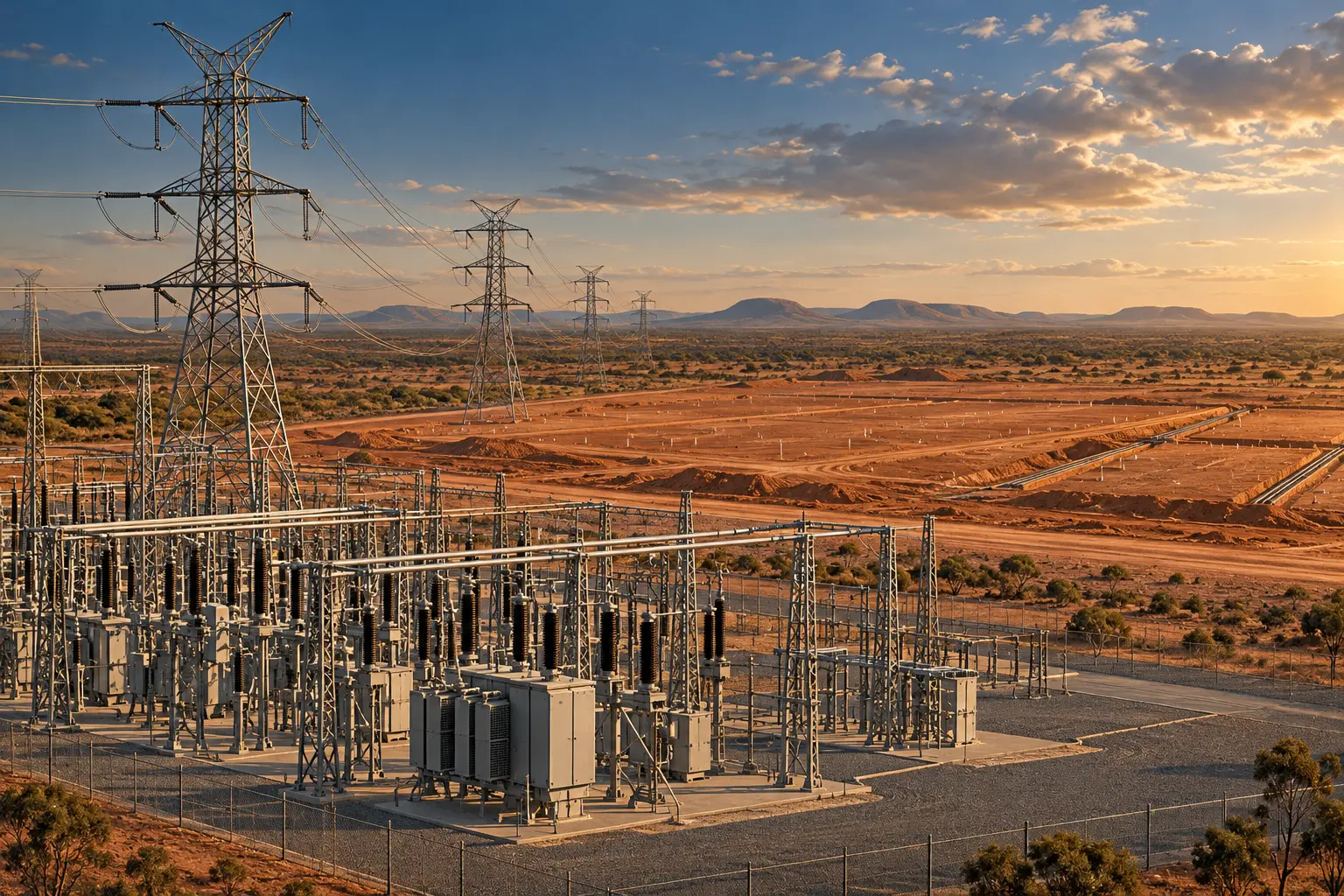
Here is the part of AI infrastructure economics that modular construction cannot compress: the electrons. A data hall can be assembled in a factory in weeks. The high-voltage interconnection, the large power transformers, the switchgear and the utility's queue are governed by lead times measured in years and by a grid operator who has never once been impressed by a slide.
That is why a shorter build schedule does not automatically produce usable AI compute. Grid interconnection, transformer supply, cooling equipment, servers, network fabric and customer acceptance can each become the limiting step in sequence. Compress the building and the constraint simply moves to the next queue — and the next queue is usually the one with the longest wait.
The decisive measure is therefore not when modules arrive on site. It is when energised capacity passes acceptance and carries sustained customer workload at the contracted availability. Capacity that has not been energised is a promise, not a product. A schedule that does not constrain delivery is narrative, not engineering — and narrative, as this industry keeps rediscovering, yields to arithmetic.
Why this matters beyond one company's press brief
Asia-Pacific's AI build-out is now an exercise in physical logistics dressed up as a software story. Every operator in the region is quoting shorter delivery cycles, and every one of them is quietly competing for the same transformers, the same gas turbines, the same skilled commissioning crews and the same provincial grid slots. A 100-day claim that cannot be audited is not just one company's problem; it becomes the benchmark everyone else is measured against, and the excuse everyone else uses.
Modularity is real and it is useful. But the industry's credibility problem is not that it builds slowly — it is that it reports vaguely. The number that matters is the one with a date on both ends and a meter at the finish.
One brief, disciplined attribution
The quantitative claims rest on a single current Sina Finance brief and are attributed to Alibaba Cloud. They have not been matched to a named first-party project sheet or an independent project record, so every figure should stay explicitly attributed rather than promoted to audited industry fact.
A second captured page repeats the claims but labels itself AI-generated. Its assertions about prices, suppliers and competitive effects are excluded here. Repetition by a machine-generated derivative does not create source independence — it creates the illusion of it, which is worse.
A named project would make the claims auditable
Alibaba Cloud can close the gap cheaply: name a facility and publish comparable start, fabrication, site-work, commissioning and handover dates. State building or module count, designed and energised power, equipment scope, the construction cost baseline and whether grid works are inside the fence.
Then, after handover, publish occupied load and customer use. That chain would show whether modularity shortened the whole route to usable compute or merely one segment of it. Until then, the 100-day figure deserves the respect due to any good number: it should be quoted with its source, its scope and its missing gates attached.
Sources
Member Briefing
Read the full trend briefing
Members read the full briefing with the source notes behind every finding.
Strategic Circle
A daily briefing in your language, built from changes we have verified.
Join for USD 20/monthCancel anytime.
Members also get the full research library, a daily briefing on the networks they follow and the private forum.