
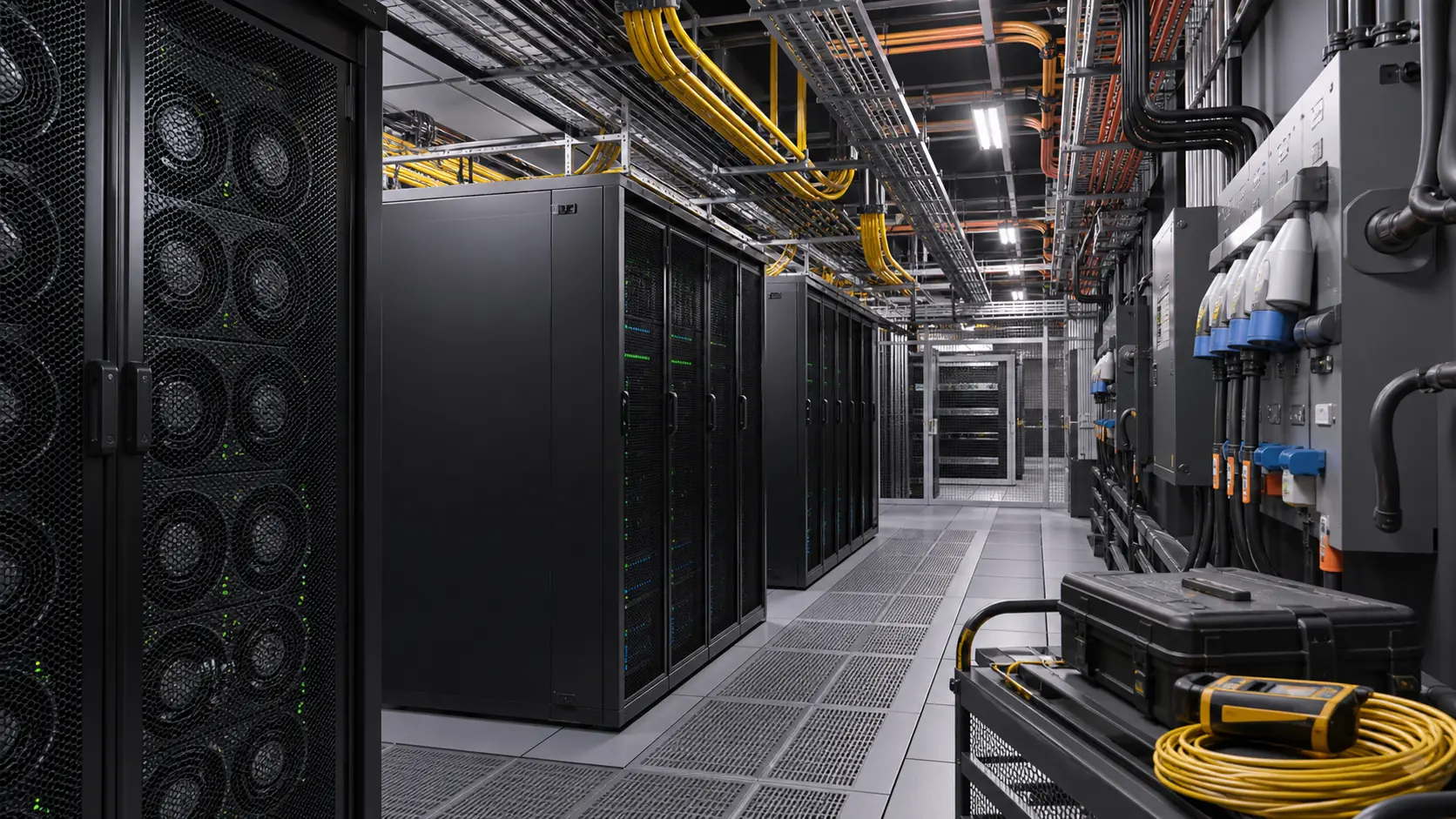
Summary
- Westgate has a real, public infrastructure footprint. ARIN's AS399262 record names WESTGATE-DATA-CENTER and lists Westgate Computers Data Center, LLC in Amarillo; ARIN's 208.52.171.0/24 record shows a direct allocation to the same organisation; RIPEstat's AS overview marked the AS as announced at the 2026-07-12 query time.
- The visible network is small but not empty. RIPEstat routing status reported one IPv4 prefix, 256 IPv4 addresses, no IPv6 prefixes and two observed neighbours; RIPEstat neighbours identified AS7018, AT&T Enterprises, and AS54650, Pathwayz Communications, as the observed upstream-side neighbours.
- Westgate's own public pages support the data-centre reading. The Westgate Computers home page presents Westgate Data Center as an Amarillo facility offering cloud services and co-location, while the terms of service discuss hosted data servers and IT equipment, a Data Center Addendum, a Westgate Data Center network acceptable-use policy, IP and DNS controls, service suspension, and no high-risk use.
- The evidence grade is capped because public records do not prove installed or usable capacity. The RPKI validation view returned unknown status for 208.52.171.0/24, PeeringDB's AS399262 lookup returned no public network profile, and public Westgate pages reviewed did not name the power feed design, generator runtime, cooling redundancy, fibre meet-me room, maintenance windows, customer backup design or incident history.
- The central diligence question is therefore not whether Westgate exists. It does. The question is whether a customer that depends on the Amarillo data-centre offer can keep operating through a utility fault, cooling problem, upstream failure, fibre cut, maintenance outage, abuse-related suspension, hardware replacement or local weather disruption.
The Specific Westgate Signal Is A Small Routed Network Attached To A Local Data-Centre Promise
The most useful way to read Westgate Computers Data Center, LLC is to start with a mismatch. The public sales language is physical and local. The public network footprint is real but narrow. Westgate Computers' main site says the broader Westgate business has served Amarillo since 1999, provides managed IT services, networking, data backup, computer repair and support, and points readers to Westgate Data Center as an Amarillo facility for cloud services and co-location. That is more specific than a generic web-hosting landing page.
It ties a local IT-services business, a data-centre offer, a named city and a customer support posture into one proposition.
The route table, however, is not the footprint of a large multi-region colocation platform. RIPEstat's announced-prefixes endpoint showed one current prefix, 208.52.171.0/24, during the July 2026 observation window. RIPEstat routing status showed all 327 relevant RIS IPv4 peers seeing it and no visible IPv6 space. CAIDA ASRank also represented the visible cone as one AS, one prefix and 256 addresses, with two providers and no customer or peer degree. In plain infrastructure terms, Westgate has a live routed edge, but the public edge is a small one.
That does not make the offer unserious. A local data centre can be valuable with one public /24 if its customer base is mostly managed IT clients, private cloud users, backup customers, local businesses, point-of-sale systems, accounting workloads, line-of-business servers, small virtual environments or co-located appliances. The question is whether the operational claims scale with the customer's dependency. A 256-address public IPv4 block can support a lot of small services, especially when private addressing, VPNs, NAT, virtualisation and managed backup are involved.
It cannot, by itself, prove spare rack space, dual power paths, spare UPS modules, generator fuel contracts, carrier diversity, cross-connect policy, switching redundancy or fast hardware replacement.
Westgate's own terms page helps define the boundary. It says a data center may host data servers and IT equipment for a customer under a Data Center Addendum, and it separates that from managed IT services under a different addendum. It also includes an acceptable-use policy for the Westgate Data Center network, refers questions to a support address at westgatecomputersdc.com, restricts abuse, vulnerability testing and high-risk use, and says Westgate may block traffic, suspend services or terminate services for certain AUP breaches. That is contract language around a real hosted environment. It is also a reminder that the public page is not a resilience engineering dossier. The contract text tells customers that the service has rules. It does not tell them how much power is installed, which carriers are in the room, or how a failover would be executed.
The article's operating hypothesis is therefore cautiously positive but not fully validated. Westgate has a named company, a named local site claim, a live ASN, a direct IPv4 block, published customer-facing terms and a parent IT brand with a longer local history. Those are meaningful signals. The grade cannot be strong because the public evidence stops just before the details that matter most in a facility failure.
What The Company Records Actually Establish
ARIN's AS399262 record is the cleanest anchor. It lists AS399262 as WESTGATE-DATA-CENTER, registered on 2020-11-19 and associated with Westgate Computers Data Center, LLC. The organisation address in the AS record is 7606 SW 45th, Suite 400, Amarillo, Texas 79119. ARIN's entity reference for WCDCL records the organisation with the same Amarillo address and shows the ARIN organisation was registered on 2020-11-12 and updated on 2024-11-25. The AS record also shows named NOC, DNS, technical and abuse contacts using Westgate-related email domains and a shared 806 phone number.
That is not merely decorative registry text. For a data-centre buyer, the party named in registry records is the party responsible for routing contacts, abuse escalation, network number administration and technical coordination. When a local managed-services provider also operates a network, customers need a way to distinguish between the help-desk brand, the data-centre legal entity, the routed AS and any third-party upstreams. ARIN gives that first layer of accountability. It does not validate service levels, but it makes the public network attributable.
The direct IPv4 allocation is similarly important. ARIN's 208.52.171.0/24 record shows NetName WCDCL, NetType Direct Allocation, and a range from 208.52.171.0 to 208.52.171.255 registered to Westgate Computers Data Center, LLC on 2020-12-15. A direct allocation is not the same as owning a data hall, but it is stronger than a provider whose entire visible address base is a subassignment from another host. It gives Westgate a portable address resource that can, in principle, be announced through more than one provider if routing policy, contracts and filters are set up correctly.
The domain picture adds a second layer. RDAP for wg-dc.com shows a domain registered in 2021, using AWS Route 53 nameservers and GoDaddy as registrar. Public DNS review placed wg-dc.com at 208.52.171.28, inside Westgate's direct /24. The data-centre web front therefore sits on the same public address resource that AS399262 announces. That is a useful alignment: the data-centre domain, the routed prefix and the ARIN organisation all point in the same direction. By contrast, RDAP for westgatecomputers.com and public DNS show the parent Westgate Computers web presence using a third-party website platform and separate mail handling. That split is normal. It also means the parent brand can remain reachable even if the data-centre route has problems, while the data-centre domain is a more direct test of Westgate's own routed block.
The records do not establish the ownership boundary inside the building. Westgate's public pages and ARIN records identify an Amarillo address. They do not prove whether the data-centre equipment is in the same suite, in a separate room at the same property, in a nearby facility, or in another local structure. They do not name a landlord, utility meter, floor loading, fire suppression system, fuel supplier, battery plant, generator model, cooling topology or carrier meet-me room.
The proper reading is narrow: Westgate has a public Amarillo data-centre entity and a routed block; the exact physical implementation still needs direct confirmation from the company or customer documents.
That caution matters because a data centre's failure modes are not solved by registry coherence. A company can have a valid AS and still depend on one upstream router, one building entrance, one utility feeder, one generator, one cooling unit, one field technician or one backup process. Conversely, a small public network can be backed by a carefully maintained local facility. The public record tells us where to ask the questions, not the answers to every physical question.
The Westgate Promise Is Local Control, Not Hyperscale Abstraction
Westgate's broader public story is rooted in Amarillo support rather than global cloud scale. The home page describes a Texas Panhandle managed IT services provider, says Westgate Computers was founded in 1999, and lists service areas such as data backup and disaster recovery, remote technical support, network security, business and residential networking, wireless networking and cabling. The about page repeats the Amarillo history, computer repair, custom-built computers and data-backup positioning. The contact page lists 7606 SW 45th, Suite 400 in Amarillo and the same 806-352-4243 telephone number that appears in ARIN-related records.
That local support story is not a side issue. It shapes what customers are likely buying. A Westgate data-centre customer is probably not choosing the company because it wants a hyperscale availability-zone abstraction. It is more likely choosing Westgate because it wants a nearby team that can combine managed IT support, backup, servers, network configuration, cabling, firewall work, hosted equipment and local account management.
That kind of buyer may care less about global regions and more about whether someone in Amarillo answers the phone during a storm, replaces a failed disk, helps restore a backup, brings a server back after a bad patch, or coordinates a VPN outage with the customer's office.
The data-centre claim fits that pattern. Westgate's main site identifies Westgate Data Center as an Amarillo facility offering cloud services and co-location. Its terms of service describe customer servers and IT equipment hosted by the data center under an addendum. The terms also discuss managed IT services under a separate addendum, which suggests the business distinguishes between hosted infrastructure and ordinary managed-services work. That distinction is useful because it prevents the data-centre offer from being read as mere website phrasing.
The same terms, however, show why the support promise needs operational backing. They require customers to maintain valid domain-registration information for hosted domains, use IP addresses assigned by Westgate only in connection with the service, and accept that Westgate may modify, transfer or delete DNS records on Westgate-managed DNS under certain conditions. They prohibit activities that can harm the network, including abuse, malicious code, excessive use of shared systems, unauthorised vulnerability testing and high-risk uses where service failure could lead to bodily injury or physical or environmental damage.
These are normal controls for a small provider, but they also show that customer continuity depends on Westgate's judgement, enforcement and communications during trouble.
A customer running local workloads in Westgate's environment therefore needs two kinds of evidence. The first is commercial: what is included, what is excluded, what support is bundled, what response times apply, which services are covered by the data-centre addendum, and what happens if the customer breaches the AUP. The second is physical: where the equipment runs, which power and cooling systems support it, which carriers are active, which paths are diverse, which backups are immutable or off-site, which maintenance windows are planned, and how Westgate proves recovery.
The public site answers the commercial existence question better than the physical resilience question. It tells readers Westgate sells the kind of service that can affect real business operations. It does not publish enough infrastructure detail to let a third party treat that service as verified resilient capacity.
One IPv4 /24 Is Enough To Be Real But Too Small To Hide Weak Redundancy
The BGP evidence is compact. RIPEstat AS overview identifies the holder as WESTGATE-DATA-CENTER - Westgate Computers Data Center, LLC and shows the AS as announced at 2026-07-12T16:00:00. RIPEstat announced-prefixes lists 208.52.171.0/24 as the current announced prefix in the review window. RIPEstat prefix overview shows that prefix as announced by AS399262 with no related more-specific prefixes in the returned view. RIPEstat routing status reports first seen on 2021-03-02, last seen on 2026-07-12, all 327 relevant IPv4 RIS peers seeing the route, and no IPv6 visibility.
That is enough to say the AS is live and globally visible. It is not enough to say the data-centre service has broad external redundancy. The public route table has one origin prefix. If that /24 is withdrawn, filtered, misconfigured, blackholed or trapped behind a provider fault, public services using those addresses can disappear quickly. If Westgate has private backup links, NAT-based recovery or out-of-band paths, those are not visible in the public data used here. Public BGP sees what is announced, not every contingency inside the facility.
The upstream picture is better than a single-homed edge, but still needs careful reading. RIPEstat neighbours identifies two observed neighbours: AS7018 and AS54650. RIPEstat's AS7018 overview names AT&T Enterprises, LLC as the holder. RIPEstat's AS54650 overview names Pathwayz Communications, Inc. ARIN's AS7018 record and AS54650 record provide corresponding registry context, with Pathwayz itself also based in Amarillo.
Two visible providers are a positive sign. They suggest Westgate is not visible solely behind one upstream AS in the review snapshot. But two BGP neighbours do not automatically prove two physical entrances, two independent ducts, two diverse last-mile paths, two carrier devices, two routers on separate power, or customer failover that has been tested under load. The visible path data in RIPEstat's looking-glass view for 208.52.171.0/24 included paths ending through AT&T and through Pathwayz, but public collectors cannot tell whether those paths share a building entrance, a riser, a fibre splice, a power dependency or a router chassis.
The RPKI gap is also material. RIPEstat's RPKI validation endpoint returned unknown status for the AS399262 origin on 208.52.171.0/24, with no validating ROAs in the returned data. Unknown is not invalid. It does not say the route is unauthorised. It does mean route-origin security is not giving third-party networks a cryptographic signal that this exact origin is authorised. For a small data-centre AS with only one visible public prefix, publishing a correct ROA would be a simple way to reduce one avoidable routing risk.
The absence of a public PeeringDB AS399262 profile is another cap on confidence. Many small regional networks do not maintain PeeringDB records, and absence does not prove weakness. It does remove a standard place where the operator might disclose facilities, traffic levels, peering policy, NOC contacts, looking-glass tools, IX connections or route-server policy. In Westgate's case, the public network story is carried by ARIN and RIPEstat, not by an operator-maintained public network profile.
The right conclusion is measured. Westgate's network is live, attributable and visible. It has two observed upstream neighbours and a direct /24. Its public evidence still leaves a buyer needing to verify carrier diversity, route-origin security, router redundancy, IPv6 plans, customer address portability and failover procedures.
Data-Centre Capacity Depends On Power, Cooling And Hands, Not Just Address Space
Westgate's strongest public claim is not the size of its AS. It is the promise of a local data-centre facility. A data centre is a physical service before it is a routed service. Servers need utility power, UPS ride-through, generator support, cooling, humidity control, fire detection, access control, spare parts, remote hands, clean cabling, maintenance discipline and carrier paths. A local customer may experience all of those as one managed service, but each layer can fail separately.
The public Westgate pages reviewed do not publish the design basis for those layers. They do not state whether utility service is single-feed or dual-feed. They do not state generator runtime, fuel priority, UPS architecture, battery age, cooling redundancy, air containment, fire suppression, water detection, access logs, camera coverage, spare-parts stocking, remote-hands hours, remote-console design, maintenance notification practice or power-density limits. They do not disclose whether the public 208.52.171.0/24 edge sits in the same facility as hosted customer servers or whether some services are delivered elsewhere.
That does not mean Westgate lacks those systems. Small and regional operators often keep design details private and share them only with customers under agreement. The issue is that public evidence does not prove them. In data-centre underwriting, the gap between installed capacity and usable capacity is often where failures hide. A room may have racks, but customer capacity can be constrained by available branch circuits, UPS headroom, generator fuel, cooling margins, address allocation, cabinet space, cross-connect delays, firewall throughput or staffing.
A provider can say it offers co-location, but if a customer cannot validate power path, cabinet access, spare parts, remote hands and maintenance windows, the customer is buying trust rather than evidence.
Power is the first test. The Westgate contact and registry address is in Amarillo, a market outside the largest US data-centre hubs but still exposed to the same data-centre economics: electricity availability, tariff structure, utility interconnection, distribution reliability and generator permitting decide how much capacity can actually be sold. Xcel Energy's Texas regulatory materials identify the Southwestern Public Service regulatory context for Xcel's Texas operations; Westgate customers should confirm the actual serving utility, service class, metering arrangement and backup-power design for the facility rather than assuming the public business address settles the matter. The general LBNL United States Data Center Energy Usage Report is not about Westgate, but it explains why data-centre power demand has become an industry constraint. For Westgate, that general pressure matters only after the specific site design is known.
Cooling is the second test. Amarillo's weather profile includes hot periods, severe storms, wind, hail, winter-weather risk and sudden heavy rainfall events. NWS Amarillo is the public weather office for the area and publishes local warnings, severe-weather information, flash-flood products, fire-weather information and climate products. A regional data-centre operator does not need to publish every mechanical detail, but a customer should ask how cooling behaves during utility transfer, generator operation, high outside-air temperatures, blocked condensers, hail damage, smoke or dust events, and preventive maintenance. The practical question is not whether Amarillo can host servers. It can. The question is whether the specific Westgate environment has enough mechanical margin for the workloads being placed there.
Hands are the third test. Westgate's local managed-services history can be an advantage if the same organisation can dispatch staff quickly, diagnose network and server faults together, and coordinate with the customer. But the public terms also make clear that services can be blocked or suspended for security and acceptable-use reasons. That means customer resilience depends on communication and escalation as much as on hardware. If a customer's hosted server is disabled because of a suspected abuse issue, a route filter, a vulnerability-test misunderstanding or a DNS dispute, the technical path and the contract path intersect.
For a small facility, strong operations can offset modest scale. What public readers cannot do is infer strong operations from the word data centre alone. Westgate's public record earns the benefit of continued diligence, not an automatic resilience pass.
The Parent IT Brand Helps, But It Also Changes The Buyer Risk
Westgate Computers presents itself as a long-running local IT provider. That matters because many data-centre buyers in a regional market are not only buying cabinets. They are buying a relationship: backups, firewalls, endpoint support, server repair, cloud migration, email, remote support, cabling, desktop work and emergency help. Westgate's home page and services page place managed IT, network security, backup and support alongside the data-centre offer. The SOC 2 announcement says Westgate completed a SOC 2 report with A-LIGN and would make the report available to current or potential customers under a nondisclosure agreement.
That is a positive governance signal, especially for a local provider. SOC 2 does not prove that a generator starts, that a chiller has N+1 capacity, that BGP failover works, or that backups are recoverable. It does indicate that Westgate has invested in formal security and control documentation, and the announcement says the report addresses controls around data handling and access, including areas such as access control, vendor management, system backup, business continuity and disaster relief. A customer should request the actual report and confirm the scope.
The scope is the key point: if the SOC 2 report covers only managed IT systems, it may say less about data-centre operations; if it covers hosted systems and supporting infrastructure, it becomes more relevant.
The parent brand also creates a concentration question. A customer might use Westgate for endpoints, backups, firewall management, hosted servers and co-location at the same time. That can be efficient during normal operations because one provider sees the whole environment. It can also concentrate operational risk. If the same company manages the customer's backups and hosts the customer's production server, then a provider-wide outage, administrative error, support backlog, cyber incident or billing dispute can affect both primary and recovery paths.
The customer needs to know whether backups are stored in the same facility, whether credentials are separated, whether off-site copies are immutable, and whether a customer can recover independently if Westgate systems are unavailable.
The public terms point to this issue indirectly. They require customers to provide access and cooperate with Westgate, and they reserve rights around content, traffic, DNS and abuse handling. Those rights are normal for a provider operating a shared network, but they make documentation important. A customer should know who can suspend which service, who approves vulnerability tests, who controls DNS zones, who holds admin credentials, and how evidence is shared during a disputed incident.
Westgate's local position may be exactly why a customer chooses it. A national cloud can be impersonal; a local provider can send someone to the office, understand the customer's applications and work with regional carriers. But local proximity should not replace technical proof. The stronger the relationship, the more important it is to separate trust from single-provider dependency.
The Address, The Route And The Facility Are Related But Not Identical
Several public data points point to 7606 SW 45th, Suite 400 in Amarillo. The Westgate contact page lists that address. ARIN's AS399262 and 208.52.171.0/24 records list the same address for Westgate Computers Data Center, LLC. That gives the reader a concrete local anchor. It should not be overread as a verified rack location.
A business address can be a corporate office, a customer-facing storefront, a suite in a multi-tenant commercial building, the same premises as a server room, or the mailing address for an entity that operates equipment elsewhere. Public ARIN records use organisation contacts, not facility floor plans. The Westgate site says the data centre is located in Amarillo, but it does not publish a verified data-hall address, a building photo tied to the facility, a meet-me-room description or an engineering report. For security and commercial reasons, some small providers avoid publishing exact facility layouts. That is understandable.
It still leaves a customer needing direct confirmation before placing critical equipment.
The distinction is not pedantic. If customer servers are in the same suite as the managed-services office, then building access, local fire systems, office-hours staffing and commercial-building utilities matter. If the servers are in a separate local facility, then cross-connect arrangements and remote-hands coverage matter. If some cloud services are outsourced or replicated elsewhere, then data-location, supplier and failover clauses matter. If the public AS edge is in one location and the customer compute is in another, then the interconnection between those locations becomes a dependency.
The domain split also reinforces the point. The data-centre domain wg-dc.com resolved into 208.52.171.0/24 during review, while the parent Westgate Computers domain resolved to Squarespace-hosted addresses and used separate mail handling. That means the company can have several external service surfaces: its own routed data-centre address space, third-party web hosting, third-party email or security filtering, and possibly customer infrastructure behind private arrangements. Resilience depends on the role of each surface. If wg-dc.com is down, customer servers might still run. If AS399262 is down, public services in the /24 are affected.
If the parent website is down, support channels might still work through phone, email or ticketing. The customer needs a map of which systems are critical.
The right due-diligence request is not "prove the address." It is "show the dependency map." The map should identify the facility or facilities used for customer workloads, the utility and generator path, the cooling plant, the carrier entrances, the upstream routers, management access, backup location, support systems, DNS and mail dependencies, and the customer escalation path. Westgate's public record is strong enough to justify asking. It is not detailed enough to answer without Westgate's participation.
Carrier Diversity Is Visible At The AS Level But Not Yet Proven At The Physical Layer
From a public routing perspective, Westgate's two observed neighbours are the best resilience signal. AT&T is a large national carrier. Pathwayz is an Amarillo communications provider, and ARIN's AS54650 record lists Pathwayz Communications in Amarillo with a support contact and a 2012 registration. Combining a major carrier path with a local communications path can make sense for a regional data-centre edge. It can reduce dependence on one commercial provider and give customers a better chance that traffic remains visible during a partial upstream issue.
But AS-level diversity is not the same as physical diversity. A data-centre customer should ask whether the AT&T and Pathwayz paths enter the facility through separate conduits, separate street routes, separate demarc rooms, separate routers and separate power sources. The customer should ask whether Westgate runs BGP sessions to both providers on redundant equipment, whether the /24 is accepted by both with correct filters, whether failover has been tested, and whether the customer can receive a maintenance notice when one provider path is degraded.
The looking-glass evidence shows the route is reachable from many vantage points, but it also shows the limits of public observation. RIPEstat looking-glass data included many global AS paths terminating in AS399262 through AT&T or Pathwayz-related paths. That proves propagation. It does not prove what happens inside the building after the BGP session. A route can remain visible while a top-of-rack switch, firewall, storage network or customer server is down. Conversely, customer workloads can run while a public route is impaired if private backup or VPN paths exist. Public BGP is necessary evidence for public reachability, not a full service-availability audit.
The lack of visible IPv6 is also worth attention. Some small business customers may not care about IPv6 today, but many carriers, cloud services, security tools and modern operating systems increasingly assume dual-stack reachability. RIPEstat routing status showed no IPv6 prefixes for AS399262 in the review snapshot. That does not make the service unusable. It does mean a customer with IPv6 requirements should ask whether Westgate can provide IPv6, whether it is native or tunnelled, whether firewalls and monitoring support it, and whether IPv6 failover is tested with the same care as IPv4.
The RPKI unknown status is another fixable routing issue. For a one-prefix AS, a correct ROA would be easy for customers to ask about and easy for Westgate to explain. If the route remains unknown, customers should make sure upstream filters and route objects are maintained. They should also ask how Westgate handles accidental route withdrawal, upstream route damping, prefix filtering and emergency blackhole requests.
For a company of Westgate's apparent scale, the goal is not to demand hyperscale network disclosure. The goal is to avoid confusing a live route with a fully validated resilience story. The public evidence says Westgate routes. It does not yet say how much carrier failure it can absorb.
Who Is Affected When The System Fails
The affected parties are broader than "data-centre customers" in the abstract. Westgate's public positioning suggests several customer groups: local businesses using managed IT services, customers relying on data backup and disaster recovery, organisations using co-location, customers using cloud services, customers whose DNS or IP assignments depend on Westgate-managed systems, and any downstream users who reach applications hosted on 208.52.171.0/24.
For a local business, the most damaging outage may not be a public website outage. It may be loss of a line-of-business application, accounting system, hosted desktop, backup repository, VPN endpoint, file server, point-of-sale support service, camera system, firewall management portal or email-related control plane. If Westgate manages both the customer's office network and hosted environment, a data-centre incident can become a full business-continuity incident. The customer may need Westgate to diagnose both ends while also keeping communications open.
For co-location customers, the risk is more physical. They may own the server but depend on Westgate for power, cooling, cabinet access, remote hands, upstream connectivity and building security. If power fails and generator transfer is delayed, their hardware is affected. If cooling fails, their equipment may throttle or shut down. If a carrier path fails, their server may be healthy but unreachable. If remote hands are unavailable, a simple reboot or disk replacement can become a prolonged outage.
For cloud or managed-hosting customers, the risk is more operational. They may not know which physical server holds their workload, how backups are stored, how snapshots are retained, whether there is cluster failover, or whether hardware replacement requires manual intervention. The public Westgate pages do not state a service-level objective, backup retention schedule, restore test cadence or customer portability commitment. Customers should ask for those details before placing production systems.
For Westgate itself, the risk is reputational and contractual. A small provider can build trust through local service, but outages are judged by evidence: status notices, root-cause analysis, repair time, recovery proof and honest capacity disclosure. Westgate's SOC 2 announcement can support that trust if the report scope covers the systems customers rely on and if Westgate can show customers how continuity controls are tested. Without that scope, the SOC 2 claim is a governance signal rather than a physical-facility guarantee.
The public terms also show who may be affected by enforcement. If Westgate blocks traffic or suspends services because of abuse, vulnerability testing, content, domain information, IP-address use or shared-system interference, the customer impact may look like an outage even when the facility is fine. That is why escalation and notice language matter. A good data-centre relationship defines not only what happens when hardware fails, but what happens when the provider believes the customer is creating risk for the network.
The Main Failure Paths To Test
The first failure path is utility interruption. The customer should ask whether Westgate has dual utility feeds or a single service, UPS runtime under actual load, generator capacity, fuel runtime, refuelling agreements, transfer-test frequency and maintenance records. If the facility depends on one utility feed and one generator, the customer should know the consequence. If the facility has stronger design, Westgate can document it.
The second failure path is cooling. A local server room can have ample power but still fail if air conditioning is undersized, if filters clog, if a condenser is damaged, if a maintenance mistake closes airflow, or if generator-backed power does not support the full cooling plant. Customers should ask whether cooling is redundant, whether temperature and humidity are monitored, whether alarms are staffed, and what happens during a high-load summer incident. Amarillo's NWS office is a reminder that local weather can bring severe thunderstorms, heavy rain, wind, hail, fire-weather concerns and winter events; the facility design should be resilient to the conditions that can cut utility service or damage exterior equipment.
The third failure path is carrier meet-me interruption. Public data shows two observed neighbours. Customers should ask whether those paths are physically diverse and whether route failover has been tested. They should ask whether Westgate can provide a test window showing that 208.52.171.0/24 remains reachable if one provider session is taken down. They should also ask whether critical customer VPNs, firewall policies and monitoring endpoints behave correctly during failover.
The fourth failure path is routing hygiene. One visible public /24 gives little margin for route-origin mistakes. The RPKI status was unknown in RIPEstat. Customers should ask whether Westgate will publish and maintain a ROA, whether upstreams filter the prefix correctly, whether route objects are current, whether emergency contact information is tested, and whether blackhole communities are used for DDoS response. A small network can do these things well; the public record does not show enough to assume it has.
The fifth failure path is customer recovery. Westgate's managed-services and backup positioning is valuable only if restores work when the hosting environment is impaired. Customers should ask where backups sit, whether off-site copies are separate from Westgate's primary facility, whether backups are immutable, whether restore tests are documented, whether encryption keys are held by the customer or provider, and whether a customer can export data quickly. A local provider can be excellent at hands-on recovery, but that has to be tested before the bad day.
The sixth failure path is contract and communication. The terms give Westgate broad protections around prohibited use and service enforcement. Customers should know how notices are delivered, what response time applies, who has authority to suspend or restore services, what happens during law-enforcement or abuse escalation, and whether service credits apply to different outage causes. The most frustrating outages are often ambiguous ones, where the hardware team, network team, customer application team and contract team disagree about the cause. Clear escalation reduces that risk.
The Best Reading Of The Evidence
The best reading is that Westgate Computers Data Center, LLC is a real Amarillo infrastructure operator with a small public network and a local IT-services context. It should not be dismissed as an empty data-centre name. ARIN, RIPEstat, the Westgate website, public terms and domain records all point to an actual service surface. The public record supports a Medium evidence grade because it confirms the company, the AS, the direct /24, the local data-centre proposition and two observed upstream neighbours.
The same record does not support a strong grade. Strong would require public or customer-shareable proof of power design, generator runtime, cooling redundancy, facility location or boundary, carrier diversity at the physical layer, RPKI hygiene, IPv6 readiness, status history, tested failover and customer recovery. Westgate may have some or all of those; they are not publicly established in the reviewed evidence.
This matters because regional data centres are often judged unfairly at both extremes. One extreme assumes that small means fragile. That is not always true. A well-run local provider with a focused customer base can deliver practical resilience, fast human support and better fit than a distant cloud platform. The other extreme assumes that the phrase data centre proves resilience. That is also not true. Data-centre reliability is built from power, cooling, network, people, procedures and proof.
Westgate sits in the middle. Its local identity is a strength. Its direct routed block is a strength. Its two visible upstream neighbours are a strength. Its SOC 2 announcement may be a strength if the report scope includes the systems customers use. Its public gaps are equally concrete: one visible IPv4 prefix, no public IPv6, no ROA in the RIPEstat validation view, no PeeringDB network profile, no public facility design, no public maintenance or incident archive, and no public evidence of tested customer failover.
For customers, the conclusion is simple. Westgate is worth evaluating as a local data-centre and managed-infrastructure provider, but not by accepting the headline alone. A serious buyer should ask for the facility dependency map, power and cooling evidence, carrier-failover test results, RPKI plan, backup and restore proof, SOC 2 scope, maintenance policy, service-level terms and emergency contacts. If Westgate can answer those questions, the small public route table may be enough for the intended regional service. If it cannot, the public evidence says the customer should treat the marketed capacity as useful but unproven.
What Would Upgrade The Evidence
Several public or customer-shareable steps would materially improve confidence without requiring Westgate to reveal sensitive details. The first is route-origin security: publish a correct ROA for 208.52.171.0/24 and keep upstream route filters aligned. For a one-prefix AS, this is low-friction evidence of operational care.
The second is a concise network disclosure. A PeeringDB profile or public network page could state the AS number, NOC contact, upstreams, IPv6 status, traffic policy and general facility market without exposing private customer information. Even if Westgate does not peer at exchanges, a public profile would reduce ambiguity for customers and networks that need to contact the operator.
The third is a facility resilience statement. It does not have to publish floor plans. It can state whether the facility has generator-backed power, UPS coverage, cooling redundancy, fire detection and monitored access; it can describe maintenance notifications and incident communications; it can tell customers which details are available under agreement. That would move the data-centre claim from sales language toward verifiable operations.
The fourth is customer recovery proof. Westgate's managed-services, backup and data-centre offers are strongest when they work together. Publishing a general restore-test practice, customer export path and off-site backup separation would help customers understand whether Westgate is a single point of recovery or part of a broader continuity plan.
The fifth is clarity on installed versus usable capacity. Westgate does not need to publish cabinet counts or customer names. It can still explain how it prevents overselling power, cooling, address space and support time. A small provider earns trust by being precise about limits.
Until those details are visible, the public assessment remains cautious: Westgate Computers Data Center, LLC appears to be a real Amarillo data-centre and network operator, but the capacity that matters most to customers is not proven by the public route table alone. The company has enough evidence to be taken seriously and enough unanswered questions to require disciplined diligence before critical workloads depend on it.