Summary
- Jon Postel's RFC 807 records a January 1982 meeting of multimedia-mail researchers using different computers, fax machines, vocoders and displays. When a receiver lacked the equipment to portray part of a message, the group's general feeling was simple: tell the user that the data was there and identify its type.
- The meeting agreed on CCITT T.4 encoding for black-and-white bitmap exchange and a modest bitmap-text experiment: move a complete RFC 759 document as a file, with text in RFC 767 paragraph format. Pointer-based negotiation, relay behavior and finely interleaved media remained open problems; for the initial experiment, they would send the whole thing.
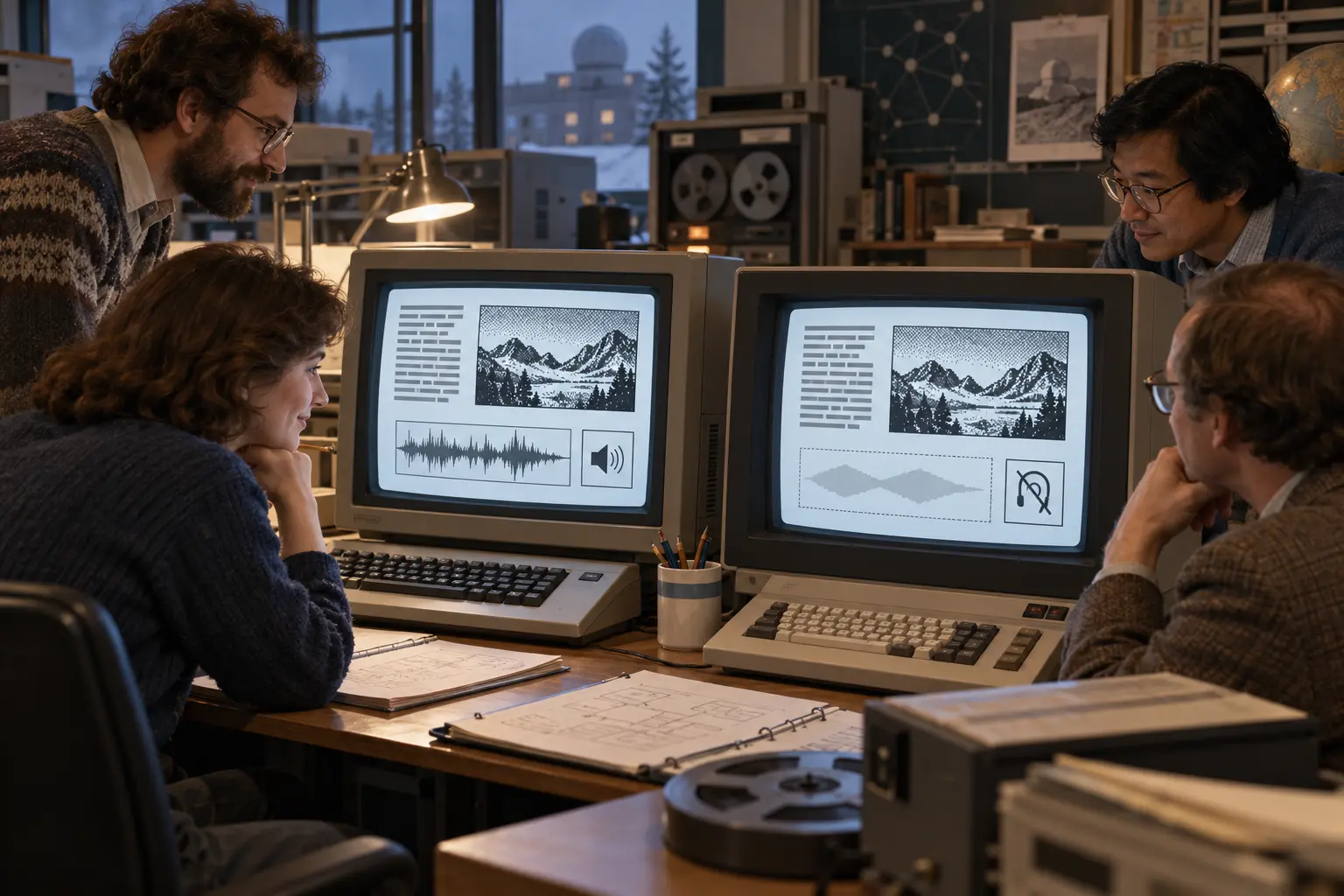
Imagine opening a letter that contains a paragraph, a picture and a voice recording. The paragraph reads. The picture appears. The voice is present, but your machine has no way to play it. What should the machine say? In January 1982, researchers gathered at USC Information Sciences Institute to work on multimedia mail and arrived at a wonderfully plain answer: tell the user that some data cannot be portrayed and say what kind it is. Jon Postel recorded the meeting in RFC 807, published the following month. The letter is a sketch of their problem; the answer is in the minutes.
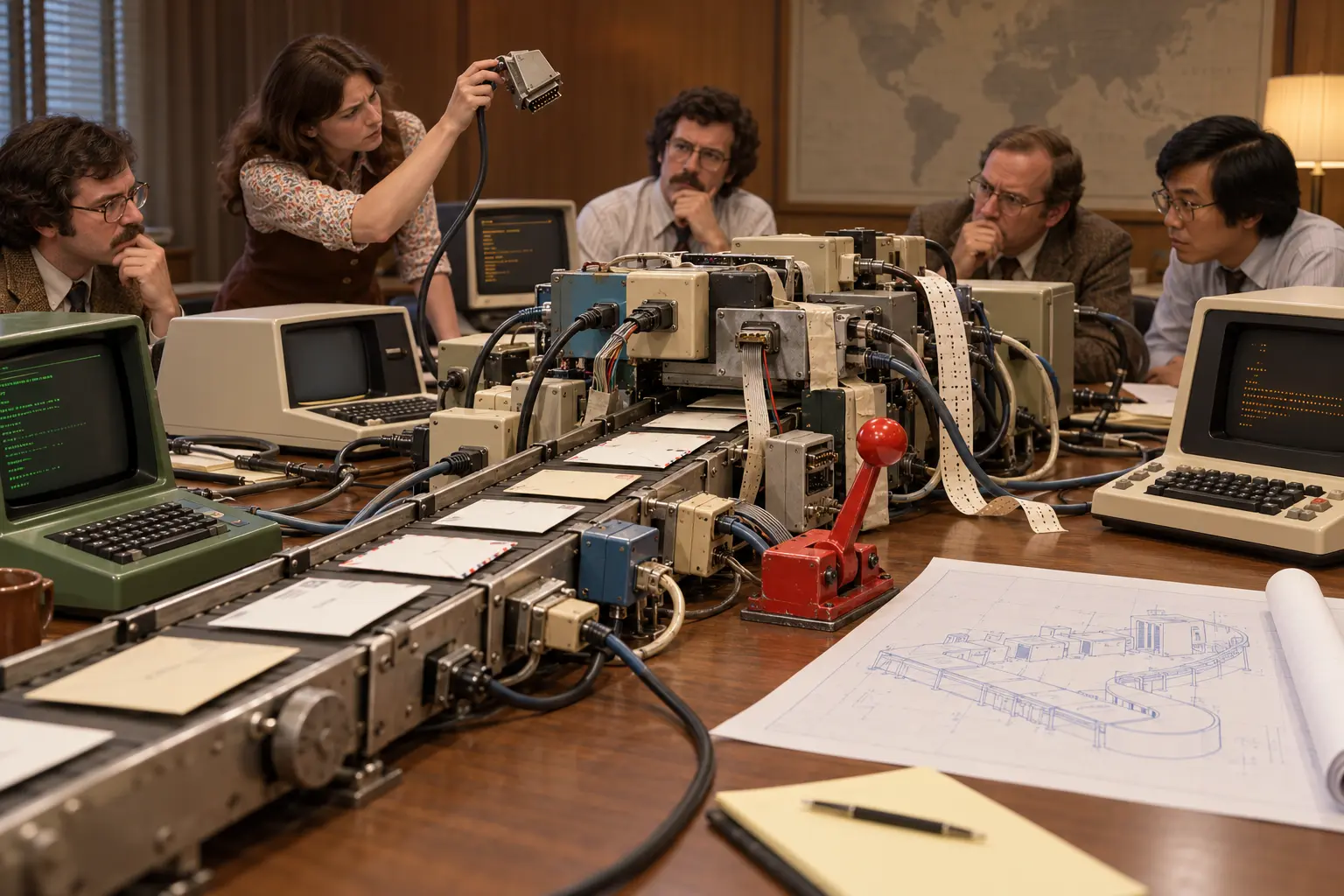
This was not a room full of interchangeable machines. CMU discussed a PERQ, a fax device and an LPC vocoder. ISI used TOPS20, began work on PERQ and had a Rapicom 450 fax machine. MIT's Apollo work was slowed by an unfinished language implementation and a missing network interface. COMSAT worked on Rapicom and CCITT fax encoding. BBN had an IP-based file transfer experiment and a prototype concerned with distribution and privacy. UCL combined fax, bitmap display and image manipulation. SRI explored security, negotiation and mixed text-and-graphics workstations.
Seven sites could agree on a heading while still disagreeing with one another's power sockets.
The equipment question put a limit on what transmission alone could accomplish. A sender might encode a medium correctly and deliver its bytes, while a receiver lacked the device to turn those bytes into anything a person could hear or see. The notes use the absence of an LPC vocoder as the example. Their proposed user message did not make the missing voice disappear. It acknowledged that data was present, identified its type and left the other readable parts of the message intelligible. The group also asked how many standard forms should be allowed and how memory, CPU time and portrayal time would affect the choice of medium.
Those costs were left for further study.
They did settle one shared technical choice. Black-and-white bitmap exchange would use the encoding specified in CCITT T.4. A common wire representation gave different sites a better chance of interpreting image data. It did not equip every recipient with every display, speaker or vocoder. The distinction mattered because the meeting was designing across real differences, not filling boxes in a format diagram.
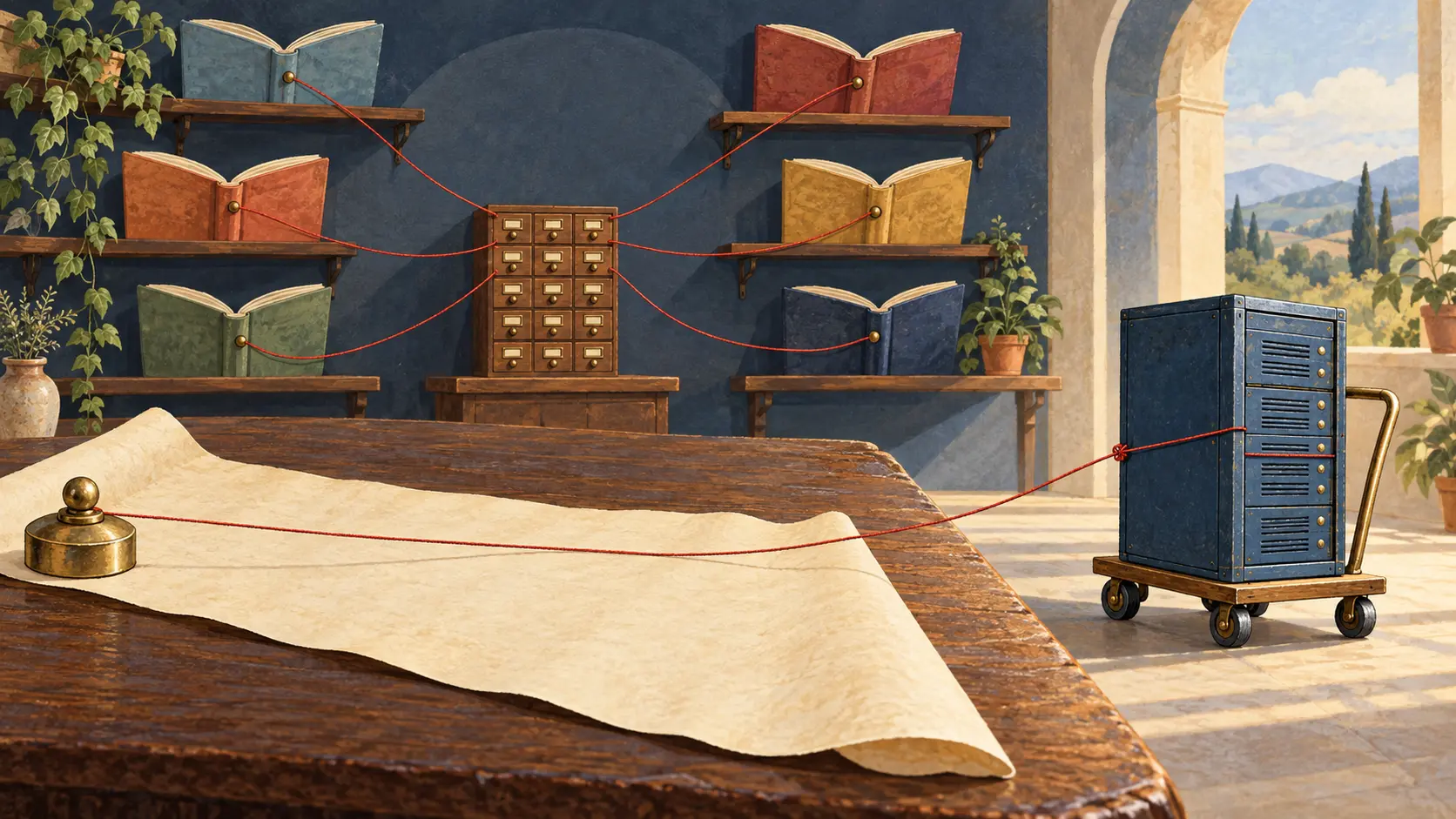
One seductive answer was to negotiate before transferring the heavy parts. The sender could first transmit pointers to message sections; the receiving system would ask only for what it could portray. Then the questions multiplied. How would requests work through a relay? What about a document where text, image and voice were interleaved every few lines? The meeting left negotiation for further study. Enclosures, pointers and cross-references were too complex to settle there as well. For the initial exchange, the notes say, send the whole thing. A less clever first experiment had a better chance of reaching the next room.
The experiment was specific enough to test. Sites would move a complete RFC 759 document as a file by any available file-transfer method. Bitmap data would use a revised COMSAT image format, either raw bitmap or CCITT encoding; text would use RFC 767 paragraph format. The action list assigned a fax-text document exchange demonstration to all sites for 19–20 April 1982. That was a due date in meeting notes, not a report of a successful demonstration. It also assigned revisions to the document and paragraph RFCs and a study of whether the National Bureau of Standards mail format might offer another route.
The unresolved list is almost as instructive as the agreed one. Each group would develop its own multimedia editing techniques and compare them later. Bitmap rotation, scaling and cut-and-paste needed shared experience. Addressing and controls had to work across time-sharing hosts, personal computers, append-to-file delivery and database mailboxes. Storage, CPU and transmission costs demanded actual measurements. Interfaces to existing text-only mail systems had to be worked out. These were not footnotes to a finished standard; they were the work that would make any standard useful.
The meeting's sharpest idea was a boundary of honesty. Transport can bring a data type to a machine. A bitmap convention can make the bytes interpretable. Only the receiving equipment can portray the medium to its user. When that last step fails, the system should say exactly what it has and what it cannot show. In 1982, that was a better product decision than silently dropping the voice or pretending every research lab had bought the same hardware. The message had arrived. The computer needed the manners to admit where it could go no further.
Member Briefing
Deeper Profile Context
Sign in with the right membership level to unlock the full briefing and source notes.
Only for Strategic Circle
Strategic Circle
Open to all readers. Unlock profile briefings after joining and signing in.
Join Strategic CircleOnly for Leadership Alliance
Leadership Alliance
For qualified IP-asset owners and management; sign in to unlock alliance briefings.
Join Leadership Alliance