
Summary
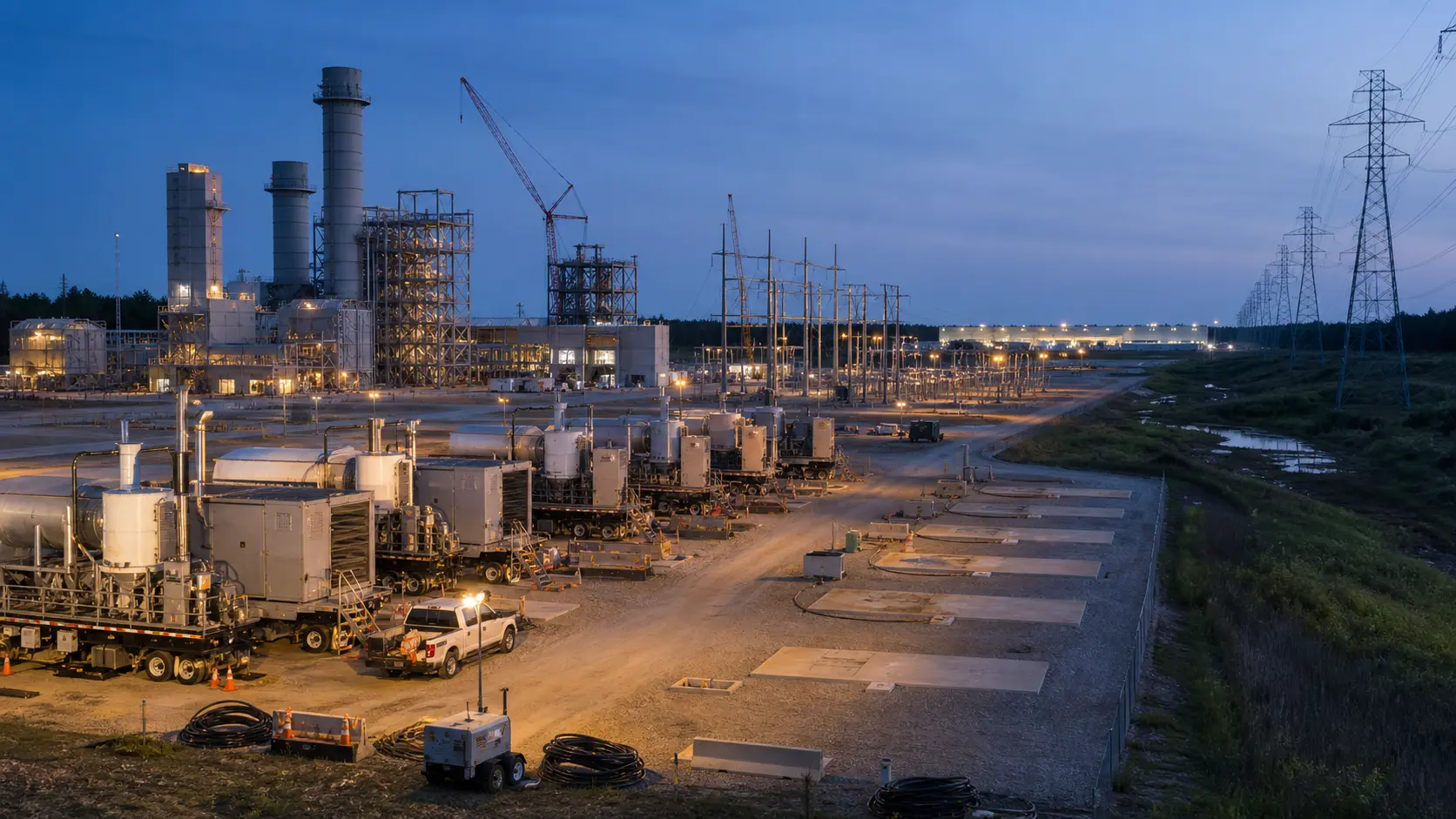
- SpaceXAI says it entered an agreed order with the Mississippi Department of Environmental Quality establishing a timetable to remove 69 temporary mobile turbines at Southaven.
- The company says removals may begin as early as August 2026 and all temporary turbines are scheduled to be gone by July 2027; it has not said that removal has begun.
- SpaceXAI says a permitted permanent plant designed for 1.2GW with 41 turbines is under construction, not complete or proven to be operating at that output.
- The regulator’s agreed order was not located on the public site during verification, so its exact milestones, enforcement provisions and definitions remain unavailable here.
- Reuters reported an earlier 59-turbine snapshot in July; that observation and the company’s later figure of 69 describe different evidence at different times and should not be silently reconciled.
- Environmental and community challengers dispute the legal and health treatment of the turbine site, while their Clean Air Act claims remain allegations rather than adjudicated findings.
A calendar changes the claim from temporary to testable
Temporary infrastructure is easy to describe and difficult to audit when there is no retirement date. A mobile turbine can be presented as a bridge to a later connection or facility, yet continue supplying power because the replacement is late, demand grows or the supposed emergency becomes normal operation. The new Southaven statement matters because SpaceXAI has attached an end date to that bridge.
The company says removals can begin in August 2026 and must be completed by July 2027. Those dates create a first and last checkpoint, but they do not reveal the path between them. There is no published sequence showing which units leave first, how much capacity each represents, whether removal proceeds in monthly blocks, or what happens if construction of the permanent plant slips.
The agreed order itself would define how firm the calendar is. A public copy could show whether “remove” means disconnected, physically transported off site or merely unavailable for routine service. It could identify reporting intervals, inspection rights, cure periods, penalties and circumstances in which dates may change. SpaceXAI describes the arrangement as an agreed order with the Mississippi Department of Environmental Quality, but the document was not found on the regulator’s public site during this review.
That absence does not erase the company’s commitment. It limits what can be said about enforceability. The useful standard is now evidence against the calendar: serialised inventory, disconnection records, removal dates, site photographs, regulator inspections and a remaining-capacity total. By July 2027, “temporary” should be a closed list, not a label.
The capacity bridge is the central operating question
Sixty-nine mobile turbines and 41 permanent turbines are equipment counts, not interchangeable measures of electricity. Machines can differ in nameplate rating, efficiency, availability and dispatch. Some may be installed but idle; others may be operating below rating. A falling number of mobile units therefore cannot by itself show whether the site’s total generation is falling, stable or rising.
SpaceXAI says the permanent plant is designed for 1.2GW. That is a permitted or design scale, not evidence that 1.2GW is available today. Construction must be completed, fuel and electrical systems commissioned, emissions controls demonstrated and individual units placed into service before nameplate capacity becomes usable generation. Even then, actual output depends on availability and dispatch.
The transition is safest to understand as two changing curves. One shows verified permanent capacity commissioned and available. The other shows temporary capacity disconnected and physically removed. If the second curve moves faster than the first, the data centre must reduce load, buy more electricity elsewhere or use another source. If the permanent curve rises first, both fleets may overlap, increasing on-site generation during the transition.
The company has not supplied the values needed to draw either curve. It gives no unit ratings, operating roster, monthly retirement plan, commissioning sequence, grid imports or computing load. The timetable is consequently a governance advance rather than a completed energy plan. Reporting output in megawatts alongside equipment counts would show whether the bridge is actually being crossed.
Permanent generation resolves a status problem, not an impact question
A purpose-built plant under a Clean Air Act permit sits on a different regulatory footing from mobile units deployed as temporary equipment. The Mississippi permit board approved an application for 41 permanent turbines in March 2026, according to reporting from the public meeting. That approval establishes an authorised design and its conditions; it does not prove construction, compliance or environmental performance.
Permanent equipment may use different turbines, controls, stacks, silencers and monitoring. SpaceXAI says it will use selective catalytic reduction on mobile turbines and invest in sound walls, silencers and quieter technology. Those measures could alter emissions or noise, but the company update publishes no before-and-after measurements with which to quantify the change.
Permanence can also increase exposure if a larger, more efficient plant operates more hours or supports a larger computing load. A lower emissions rate per megawatt-hour does not automatically mean lower total annual emissions. The relevant calculation combines pollutant rate, generation and operating hours. The same distinction applies to sound: quieter equipment can still create a sustained neighbourhood burden if more units run continuously.
The transition should therefore not be narrated as temporary pollution disappearing into a clean permanent solution. It is a change in plant design, legal status and operating architecture. Whether impact falls must be established separately for nitrogen oxides, other regulated pollutants, greenhouse gases, noise and any local monitoring commitments.
The two turbine counts are snapshots, not a solved discrepancy
Reuters reported on 14 July that 59 turbines were associated with Colossus 2 and that at least 57 were in Mississippi. SpaceXAI’s 31 July update refers to removal of 69 temporary mobile turbines at Southaven. It is tempting to subtract one figure from the other and infer that ten units appeared in between. The sources do not support that conclusion.
The Reuters number came from an earlier evidence set involving regulatory communications and site observation. The company’s later number may use a broader inventory, a different date, a different definition of association or information unavailable to outside observers. Neither source supplies a unit-level register that maps serial numbers, locations and operating status across both dates.
Good accountability retains both snapshots and asks for reconciliation from the party controlling the equipment. A register should distinguish equipment present on site, connected, permitted, capable of operation, actually dispatched, disconnected and removed. Without those categories, a single count can conceal more than it reveals.
The removal programme offers an opportunity to improve the record. A starting inventory of 69 units, followed by dated changes and regulator confirmation, would transform a disputed stock count into an auditable flow. Until that exists, 59 and 69 should remain separately attributed rather than merged into a false history.
Environmental claims require measurements outside the company statement
SpaceXAI says the site has not materially affected local air quality and presents its mitigation investments as evidence of responsible operation. Community and environmental groups dispute that account. A February notice from challengers alleges that the temporary character of the equipment does not eliminate Clean Air Act obligations and signals intended litigation.
The notice is important evidence of the dispute, not a court ruling. Its allegations should not be converted into adjudicated violations. Equally, the company’s reassurance should not be treated as independent proof. The fact boundary lies between claims and measurements.
A credible record would include unit-level operating hours, fuel consumption, continuous or periodic emissions data, stack-test results, ambient monitoring locations, meteorological assumptions and the methodology used to attribute concentrations. For noise, it would include baseline and operating readings at relevant property boundaries, time of day, spectral characteristics and conditions during measurement.
Publication timing matters. Results should be released while the mobile fleet is still operating so that a before-and-after comparison remains possible. If the first complete public dataset arrives only after removal, communities and regulators may lose the chance to compare temporary and permanent configurations under similar loads.
The order’s public text is part of the control surface
Regulation works not only through a deadline but through definitions, evidence and remedies. The public needs to know who reports what, how often, and which authority decides whether a milestone has been met. A company announcement can summarise an agreement; it cannot substitute for the governing text.
The Mississippi Department of Environmental Quality could make the order, amendments, inspection reports and compliance submissions easy to locate under one docket. SpaceXAI could publish the same materials beside its progress updates. A shared record would reduce disputes over wording and allow changes to be traced rather than remembered.
The most consequential provisions may sit behind the headline dates: whether individual turbines can return after removal, whether replacements count as temporary equipment, whether a minimum number must leave before permanent units start, and what relief is available for construction delays. None can be inferred from the company summary.
This is also why a July 2027 end date should not become the only performance measure. A programme can technically meet its last day after running late throughout, or it can retire most capacity early and leave a small residual fleet. Intermediate milestones reveal the operating path and any period in which temporary and permanent fleets overlap.
A monthly transition ledger would make the promise useful
Southaven now has the outline of an infrastructure handover. The next step is a simple public ledger that joins retirement, construction, output and environmental evidence without treating them as the same thing.
For the mobile fleet, it should report the opening count, units disconnected during the month, units removed from the site, remaining installed capacity and operating hours. For the permanent plant, it should identify construction completion by major system, units mechanically complete, units commissioned, available nameplate capacity and actual generation. Grid imports and material curtailment would explain gaps between the two.
For environmental performance, the ledger should publish mitigation installed, emissions tests completed, monitored pollutant results, noise readings and any exceedance or corrective action. Regulator inspections, submitted reports and enforcement notices should be linked directly. Each figure needs a date and definition so that counts do not migrate between categories.
The calendar then becomes more than a promise of a future clean-up. It becomes a way to observe how a large AI data-centre campus replaces an improvised power source while attempting to keep computing capacity online.
July 2027 is the deadline; August 2026 is the first proof point
The company’s announcement narrows the uncertainty around the mobile turbines. It names 69 units, a possible starting month and a final removal month. It also ties the exit to a permanent plant with disclosed design scale and turbine count. Those are materially more testable facts than an open-ended claim of temporary use.
They remain forward commitments. No source reviewed here shows that removal has started or that the permanent plant is complete. The 1.2GW figure cannot be used as current production, and a permit cannot be used as an operating certificate. The environmental result is similarly open.
August provides the first opportunity to see whether the schedule produces action and evidence. July 2027 will determine whether the mobile fleet has actually left. Between those dates, the decisive information will be the rate of removal, the verified commissioning of replacement capacity, the duration of overlap and independently interpretable emissions and noise data.
The strongest reading is therefore neither dismissal nor vindication. Southaven’s temporary power bridge has acquired a dated exit. The quality of the transition will be judged by whether the turbines leave on schedule, whether replacement generation is honestly measured, and whether a permanent industrial plant is made more transparent than the temporary arrangement it replaces.
Sources
- SpaceXAI Memphis updates
- SpaceXAI announces removal of temporary turbines from Southaven data center
- 60-day notice of intent to sue concerning the Southaven turbine facility
- Pollution from Musk’s unpermitted xAI power project hits hardest in Black communities
- Mississippi Permit Board grants xAI’s request for 41 Southaven gas turbines