Summary
- At RIPE 93, Sávyo de Morais of NIC.br separated an IPv6-capable network from an application that can work when IPv4 disappears.
- He cited client adoption approaching 60%, while the measured national content he described remained between 10% and 50%; government services sat around 10–11% and companies around 15–16%.
- His open-source v6bench builds a test lab around four client environments and controlled DNS views so an application can be forced through IPv4-only, dual-stack, NAT64 and strict IPv6-only paths.
An IPv6 address proves that a packet can leave a network. It says nothing about whether the application can complete a transaction once an IPv4 dependency is removed.
De Morais began with a split in the deployment graph. APNIC measurements were approaching 60% IPv6-capable clients. The content side, by his measurement, moved more slowly: national content availability ranged from roughly 10% to 50%, with government services around 10–11% and companies around 15–16%. These figures describe the populations in his study, not a universal census.
The gap matters most where a service is composed of several systems. A government portal can offer AAAA records and still send users through an IPv4-only payment provider. A bank can publish an IPv6 endpoint while an internal authentication service, logging collector or API dependency remains reachable only through IPv4. De Morais used the banking case to make the operational point: one stubborn component keeps the whole service tied to the old address family.
That is why “works on a dual-stack host” is such a weak certificate. A developer machine may quietly reach the server through IPv4 while the browser, operating system stack or DNS response selects an address family the production environment will not share. Testers can also miss an application-level object that stores 192.0.2.1 in a field, a table that accepts only 15 characters for a source address, a library configured to prefer IPv4, a firewall ACL that never gained IPv6 rules, or a monitoring system that treats an IPv6 source as malformed input.
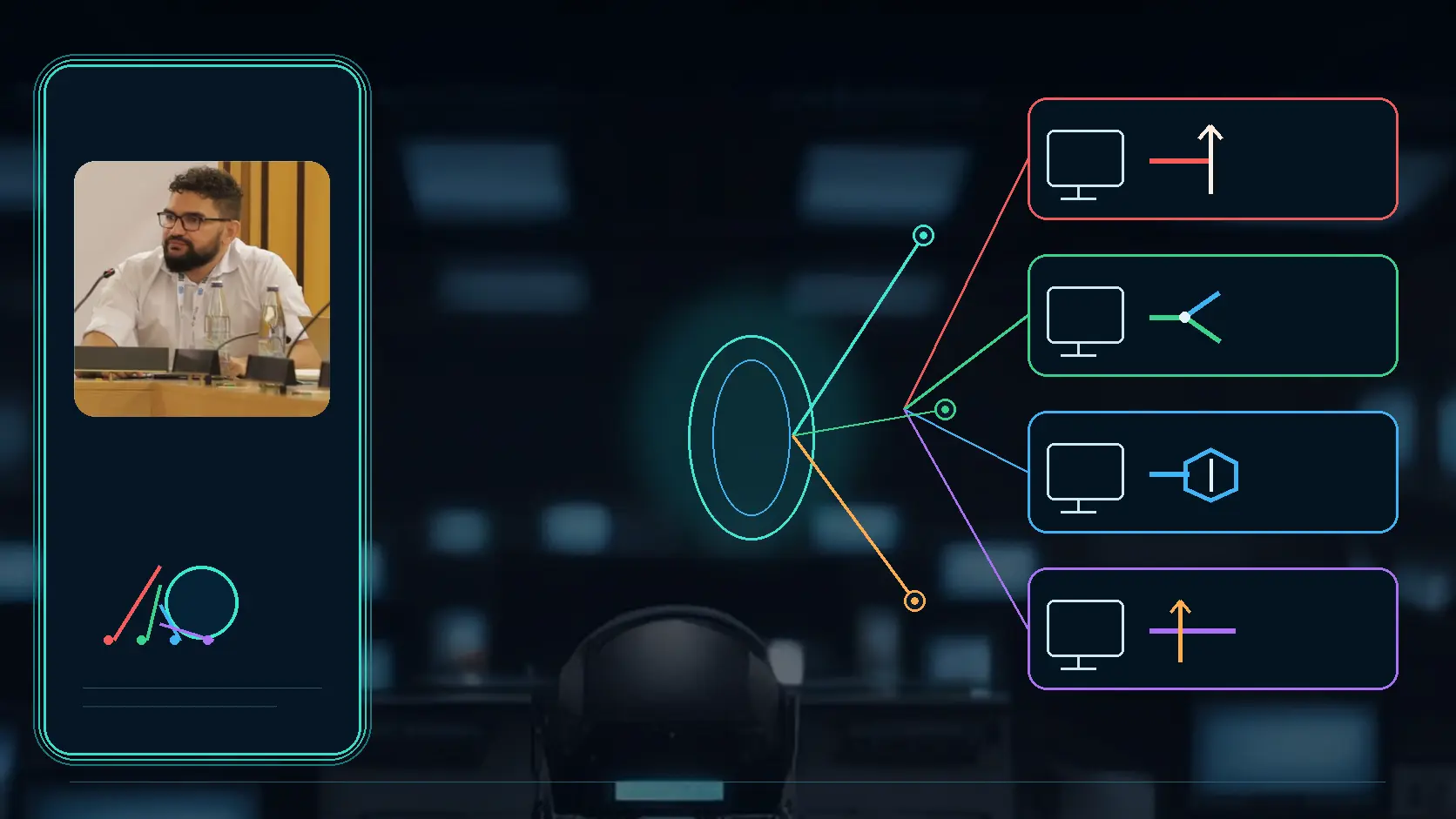
V6Bench turns the checklist into network conditions. The public repository says the lab uses Docker and a Kathará topology with DNS, NAT64 and SIIT nodes plus four client nodes. A dual-stack client can exercise either family. An IPv4-only client removes IPv6 from its reach. An IPv6-only client keeps NAT64 available. A strict IPv6-only client loses translation to relevant IPv4 endpoints as well. Controlled DNS views decide which addresses the service presents to each test.
The target server needs dual-stack connectivity; the client host needs enough privilege to create the isolated topology. Inside that boundary, the tool can test an API described by an OpenAPI file in ScanAPI mode or open four manual terminals. The workflow generates zone files and an initial test plan, lets the QA team encode real transactions, runs the laboratory and removes it. That disposable topology is the useful part: the address-family map is written down and can be replayed.
The design follows the current IETF application-testing draft. Section 3.1 defines five base combinations that cover the major fallback paths: dual-stack to IPv4-only, dual-stack to strict IPv6-only, IPv4-only to dual-stack, NAT64 to IPv4-only, and strict IPv6-only to dual-stack. A separate IPv6-only data-centre case maps an IPv4-only client through NAT46-style translation. Other combinations are extended tests.
The IETF text also rejects the common assumption that an operating system or library erases the problem. Address strings become data, logs, policy and test fixtures. A connection can fall back only after a timeout, leaving a service technically reachable but operationally useless. A proxy can hide broken endpoints on one side while preserving them on the other. A green status page can therefore report the wrong layer.
The public record does not provide a broad compatibility matrix, a false-positive rate or an independent survey showing that v6bench-labelled applications stayed up during an IPv4 outage. The repository labels the project early-stage and warns that bugs remain. Those facts set the evidence boundary: the lab can reproduce a dependency graph; only repeated runs against the deployed revision and its external services establish readiness.
The strongest proof is a receipt, not a slogan. It should name the client scenario, target, DNS answer set, application revision, transaction, dependency logs and result. A strict IPv6-only pass proves more than a dual-stack pass because it removes the quiet rescue route. A failure is useful too: it identifies the component that still owns the old world.
De Morais’s proposition is narrow and uncomfortable. The network team can show IPv6 traffic; only the application test can show whether the service will still exist when that traffic is the only route left.
Sources: RIPE 93 session · official transcript · speaker slides · IETF draft · v6bench repository.
Member Briefing
Read the full trend briefing
Members read the full briefing with the source notes behind every finding.
Strategic Circle
A daily briefing in your language, built from changes we have verified.
Join for USD 20/monthCancel anytime.
Members also get the full research library, a daily briefing on the networks they follow and the private forum.