Summary
- Oracle and OpenAI stopped pursuing a separate 600 MW expansion beside the Stargate campus in Abilene, Texas; the committed eight-building, roughly 1.2 GW programme was not cancelled.
- OpenAI said it chose to place the additional capacity at other US locations. Reports attributed the abandoned lease talks to financing and changing compute needs, but the contract terms were not public.
- On 27 March 2026, Crusoe announced Microsoft as the customer for two adjacent AI-factory buildings, showing that adjacent construction continued under a separate customer and power plan rather than ending across the tract.
The headline covered an extension, not the live campus
Bloomberg reported on 6 March 2026 that Oracle and OpenAI had ended negotiations for additional space at the flagship Stargate site. The essential boundary was missing from the earlier article: two buildings serving OpenAI through Oracle Cloud Infrastructure were already operating, and Crusoe was still completing six more. Industry reporting put that committed programme at about 1.2 GW.
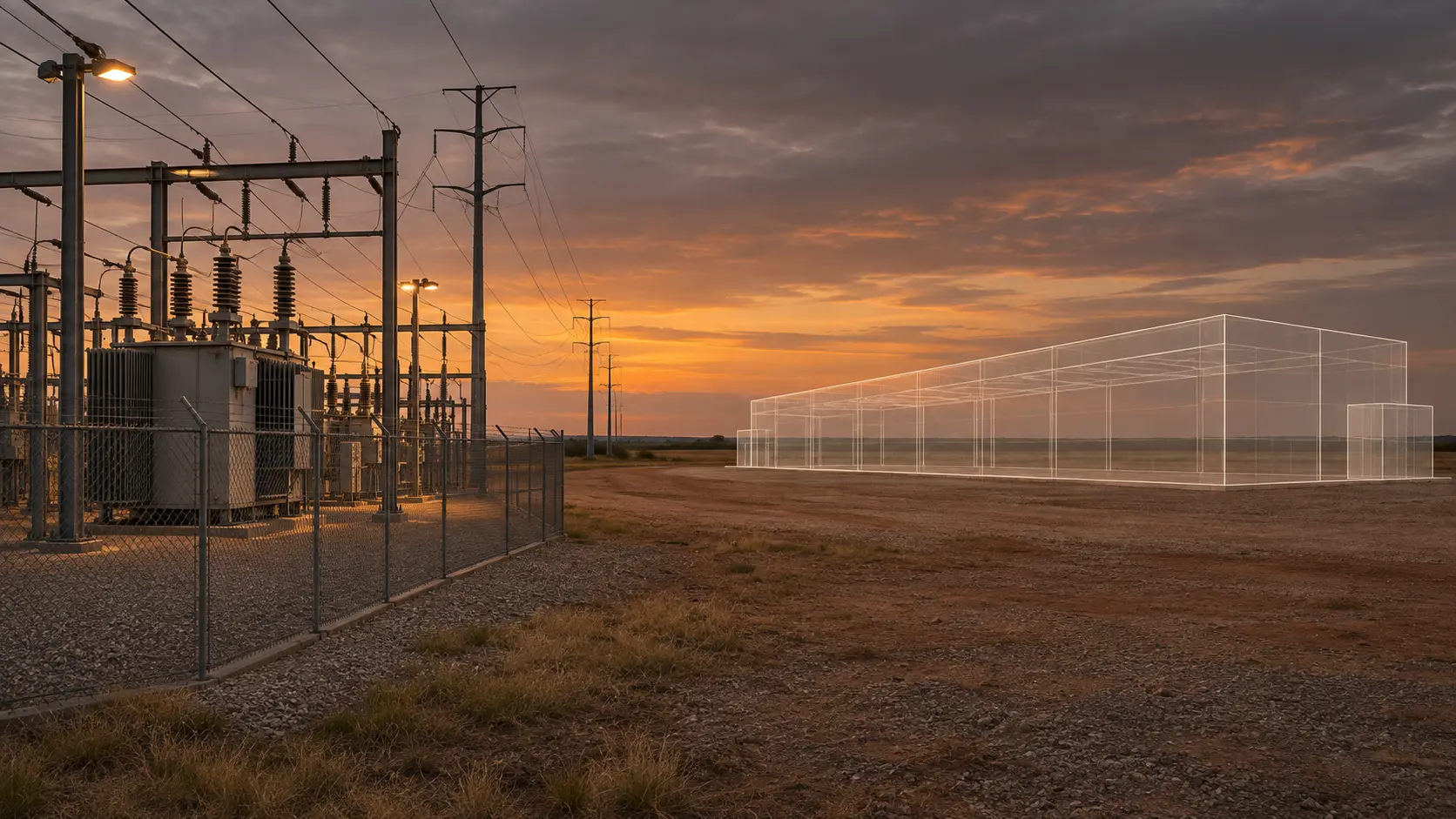
The abandoned proposal was a separate 600 MW option near the Abilene campus. OpenAI had described that option in its September 2025 Stargate site announcement. Dropping it did not erase the deployed buildings, cancel the six under construction or terminate Oracle's operation of the committed capacity.
OpenAI moved prospective capacity across a portfolio
OpenAI infrastructure executive Sachin Katti said the company considered a further Abilene expansion but chose other locations instead. That is narrower than saying Oracle and OpenAI stopped expanding AI infrastructure. In July 2025, the companies had announced a 4.5 GW US capacity partnership; the later multi-site plan included projects in Texas, New Mexico and the Midwest alongside Abilene.
Data Center Dynamics, summarising the original reporting, cited financing challenges and changing OpenAI demand forecasts. It also reported a winter-weather cooling outage and power timing as context. Those explanations should remain attributed: no public lease, financing schedule or internal capacity forecast was available for independent inspection.
Microsoft became the adjacent customer
The uncertainty around the unused expansion did not last. Associated Press reported on 27 March that Crusoe was working with Microsoft on two new AI-factory buildings and an on-site power plant next to the Oracle/OpenAI campus. AP said the two buildings would bring the tract to ten data-centre buildings and an expected 2.1 GW in total.
This later development changes the analytical reading. The physical site opportunity was not necessarily uneconomic or stranded; the intended tenant, compute programme and power arrangement changed. Microsoft and OpenAI would occupy neighbouring capacity, while the original two operating and six planned Oracle/OpenAI buildings remained a distinct programme.
Why the distinction matters
AI data-centre announcements combine several contracts: land and development, power, cooling, financing, cloud operation, chip deployment and an anchor customer's capacity commitment. A change in one lease can be described inaccurately as cancellation of an entire campus unless those layers are separated.
Abilene therefore offers evidence of portfolio and counterparty risk, not proof that AI compute demand collapsed. The useful questions are where OpenAI moved the 600 MW-equivalent demand, whether the eight-building schedule and service levels held, and how Crusoe's Microsoft build changed grid, generation and network requirements.
What remains unverified
The reviewed public sources do not disclose the abandoned lease price, duration, financing allocation, liability for the winter outage or the precise workload mix. They also do not establish that every announced megawatt was energised or available to customers on schedule.
Future updates should compare operating buildings and delivered power with announcements, track the Microsoft facilities separately, and avoid combining the 600 MW option, the 1.2 GW committed campus and the broader 4.5 GW Oracle partnership into one number.