Summary
- Nvidia told manufacturing partners — reported to include Dell and Super Micro Computer — to pause shipments of servers carrying its chips to Malaysia, Singapore, Thailand and Indonesia, per Reuters citing the Financial Times and three people.
- The US remote-access rule took effect on 19 November 2026 and licenses advanced-semiconductor shipments to five destinations. The reported hold covers four. Brazil is the one nobody explains.
The Bureau of Industry and Security's interim final rule does something subtler than ban chips: it restricts exports, reexports and in-country transfers to overseas data centres that supply significant remote compute to companies headquartered in Country Group D:5 or Macau, and it adds licence requirements for advanced semiconductors heading to Indonesia, Malaysia, Singapore, Thailand or Brazil. A US-headquartered firm — or a foreign company with a qualifying US ultimate parent — can keep shipping under an exception, with reporting attached. The rule's own summary excludes commercial recommender systems from the remote-compute licensing requirement (Federal Register, effective 19 November 2026).
Read those clauses as a map of who may sit behind which rack, and the shipment pause stops looking like a shortage. It looks like an audit conducted at the dock.
Seven days, four countries, five licences
Reuters, citing the Financial Times and three people, reported the pause on 26 November (Investing.com). The Wall Street Journal carried it the same day, attributing it to a person familiar with the matter and putting the policy logic in its own subtitle: "Washington closes loophole that helped Chinese companies tap in to computing power in region" (WSJ). The FT's original account sits behind a subscription wall, so that attribution is second-hand (FT).
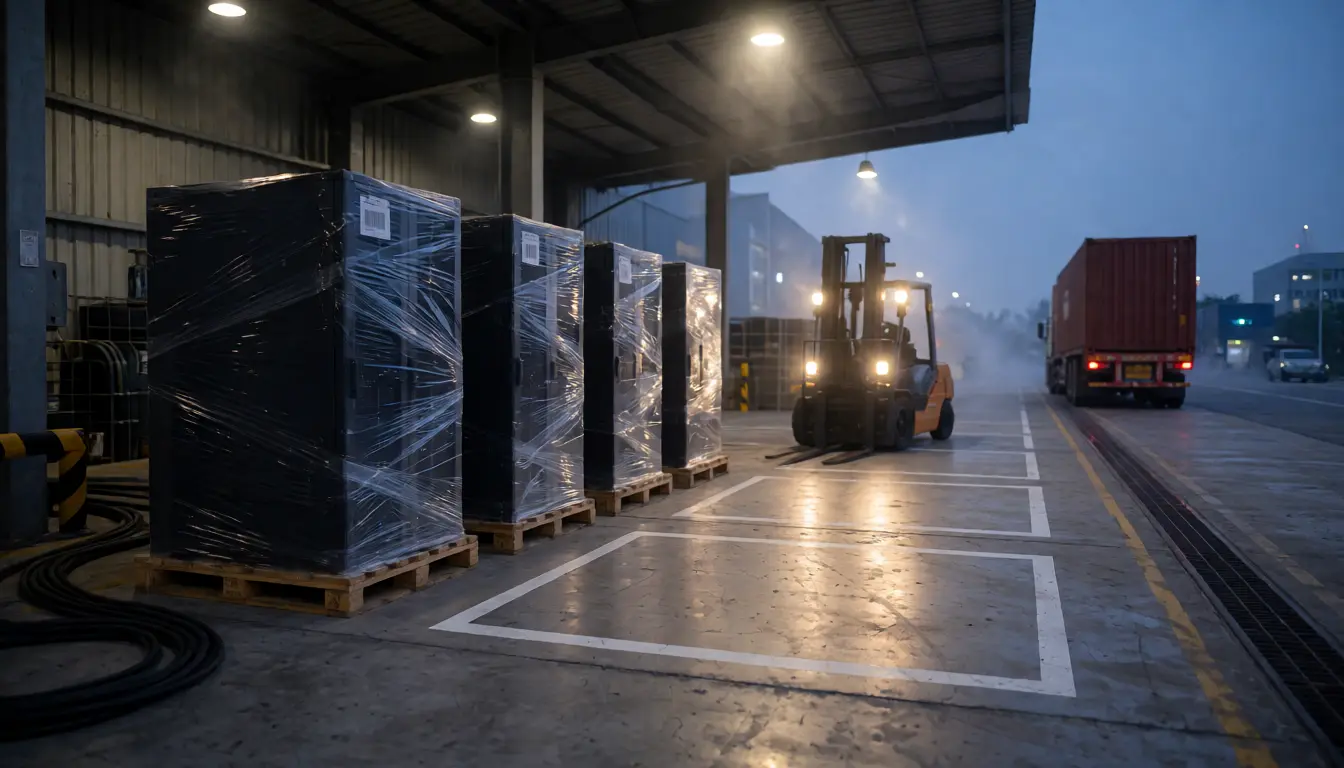
No inspected report names a GPU model, an order volume, an instruction date or a restart date. What they name is a unit: finished servers containing Nvidia chips. That is the tell. When the regulated thing is remote access to compute, the object under control is not a silicon SKU but a boxed system with a rack already waiting for it — billing power and lease while it waits.
Now the arithmetic, which is the only part of this story that cannot be lobbied. Five licensed destinations, four paused ones, one left over: Brazil. No inspected document says why, and a compliance gap with no explanation is a better lead than a statement with one. A separate BIS action published on 25 November added seven entities to the Entity List under Malaysia, Singapore and Thailand (public inspection copy). That is a different instrument, one day older than the pause report, and the documents do not establish that it caused anything.
The alternative nobody ordered — yet
In the same news cycle, Huawei was reported to be preparing a high-bandwidth-memory design for a February conference paper in San Francisco: twice the data-pin density of mass-produced Samsung and SK Hynix parts, with manufacturing progress described as unclear (The Next Web, citing Bloomberg). A conference paper is not a production line. It is, however, the sentence that shows where a closed dock ends: buyers who cannot get the box eventually fund the box they can get.
What the pause really costs
A held shipment is not a subtraction from the world's compute. It is a repricing of who waits, and the invoice lands on whoever holds the rack, the power contract and the lease. The four markets named here are exactly where Chinese-linked demand met Southeast Asian capacity; that meeting is what the rule now inspects. If the gate reopens next week, this was scheduling. If shipments resume everywhere except the destination that asks the wrong question about ownership, this was structure — and the procurement department has quietly acquired a compliance officer.
Member Briefing
Read the full trend briefing
Members read the full briefing with the source notes behind every finding.
Strategic Circle
A daily briefing in your language, built from changes we have verified.
Join for USD 20/monthCancel anytime.
Members also get the full research library, a daily briefing on the networks they follow and the private forum.