Summary
- Telecom Niue moved international traffic onto a lower-capacity backup after a known fault in the Manatua submarine cable system worsened off Samoa on 4 August, restoring reachability but not the primary link's carrying capacity.
- The fault had been logged since a brief June interruption and was awaiting a planned repair window; permanent restoration required a specialist cable vessel and crew, and the public record at the 21 August cutoff never confirmed that full primary capacity had returned.
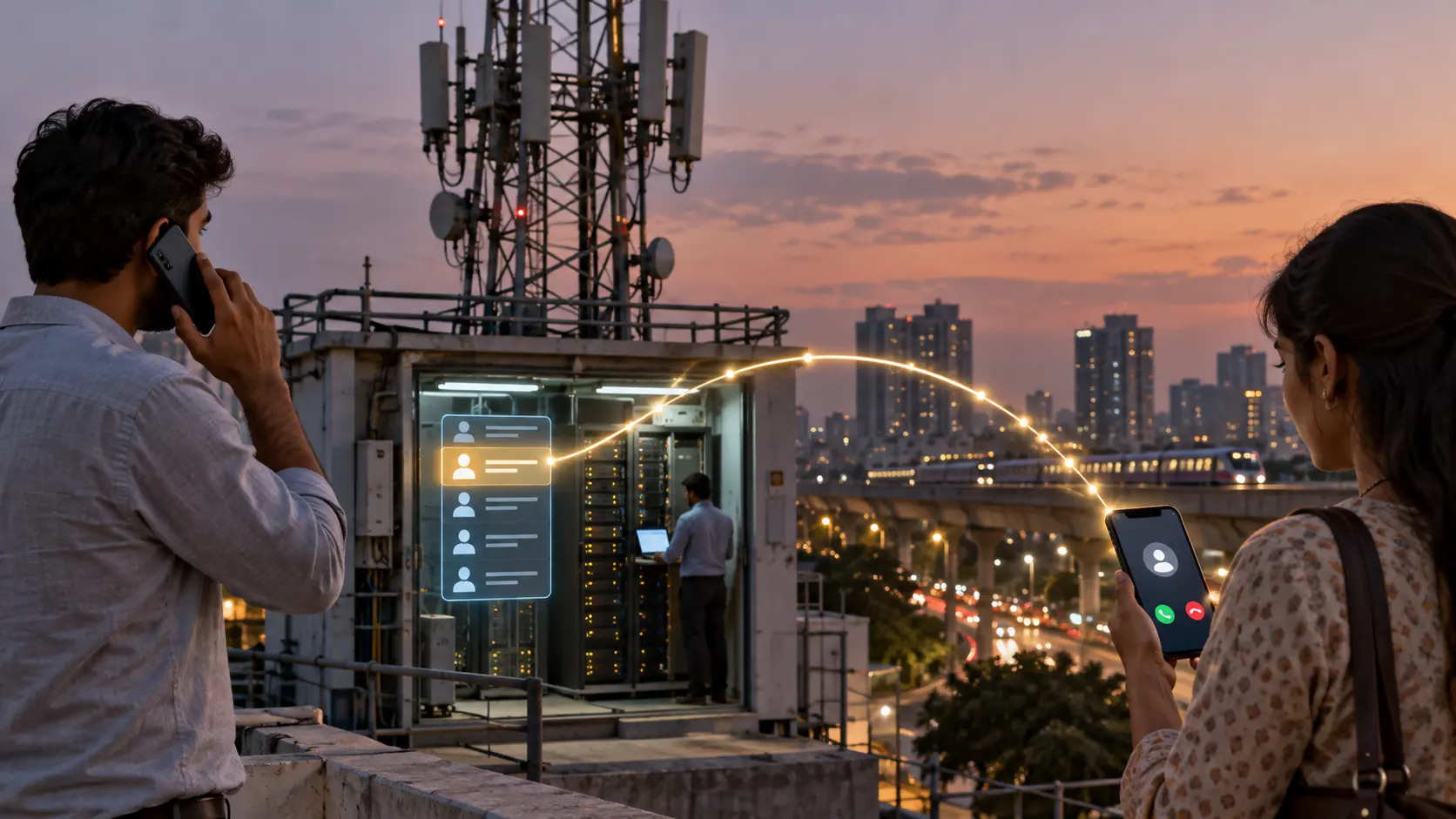
Reachability is not restoration. On 4 August, Niue — a South Pacific island whose international traffic rides a single submarine cable — learned the difference the hard way. A fault in the Manatua cable system, already known and already parked in a repair queue, grew worse offshore Samoa. Telecom Niue shifted the country onto a backup link and got the island back online. What it could not get back was the bandwidth. The operator told customers to expect slower, intermittent service, because the fallback carried less than the primary path. That is the story in one line: the light came back on, but the pipe got thinner.
A fault with a paper trail
None of this arrived out of a clear sky. Avaroa Cables Limited, the Cook Islands member of the Manatua Consortium, recorded a brief unplanned interruption of about 30 seconds on 11 June. Investigations put the problem 140–147 kilometres off Samoa, at or near one of the cable's powered repeaters. Avaroa described a known shunt fault and said an alternative powering arrangement from French Polynesia had kept the system running in the meantime. Repair work was scheduled for August.
That is the anatomy of a slow-burning cable fault: a thirty-second hiccup in June, a workaround from a neighbouring territory, a repair slot pencilled in for later. The system stayed up. It did not stay healthy.
Two clocks, one afternoon
According to Avaroa, the fault developed further at about 4:02 p.m. on 4 August and began affecting cable operation. Telecom Niue logged its own service disruption at about 14:30 local time, placing the problem outside Niue and in Samoa. These are two observers in two operational contexts, and the public record does not justify welding them into a single exact onset timestamp. Precision invented is precision lost.
What the switch actually bought
Telecom Niue's response changed the shape of the failure. It said it had successfully moved services to a backup connection, which kept the initial fibre disruption from becoming a total loss of international reachability. The trade-off was stated plainly: reduced speed or intermittent service, because the fallback link carried less capacity than the primary path.
Then the service surfaces split. On 5 August, Telecom Niue said its public website would stay unavailable while the backup was in use — yet its app and web self-care portal kept working. That divergence is the useful evidence. Under constrained international capacity, a network can remain connected while particular applications, routes or traffic classes meet very different fates. What the notices never disclose is a prioritisation policy, a traffic volume, a latency figure, a packet-loss figure or a customer-impact denominator.
What the government's account rules out
The Government of Niue subsequently said the disruption had reduced service for homes, businesses and government agencies across the island. It traced the issue to equipment in the submarine network offshore Samoa and said the technical assessment pointed at the cable system itself, with no indication at that stage of an external event.
Read that wording carefully, because it quietly retires a whole genre of speculation. It does not support claims of a cable cut, an anchor strike, sabotage or a cyberattack. The fault was internal to the plant, not visited upon it.
The ship that software cannot summon
The government also defined the harder recovery step. Permanent repair, it said, required a specialised cable repair vessel and technical crew, with planning under way through the Manatua Cable partners. Telecom Niue could reroute local traffic and post service updates all day. It could not, by itself, mobilise a ship, lift an offshore section, run the system tests or return consortium traffic to the normal route.
This is the part of submarine cable economics that cloud slideware never draws. A software switch is instant and free. A vessel is neither. It is a scarce physical resource with a schedule that no amount of local engineering heroism can compress.
One cable, four countries, four different contingency plans
Manatua is a 3,600-kilometre system linking Samoa, Niue, the Cook Islands and French Polynesia. The fault was shared. The contingency arrangements were not. Avaroa said Cook Islands connectivity was secured through French Polynesia over Manatua East pending repair. Vodafone Cook Islands reported first using an O3b satellite link able to carry one quarter of its demand, before rerouting via Tahiti.
Those disclosures map the regional architecture, but they do not reveal Niue's incident route. Telecom Niue's standing company page says a satellite backup facility exists; its 4 August notice never says that satellite was the connection in use. Assigning the Cook Islands route or its capacity figure to Niue would manufacture precision the record does not contain.
The 12 August notice, and the limits of silence
The last captured Telecom Niue notice draws another boundary. On 12 August the company said its website was back online, and separately reported a problem delivering power tokens by email. It did not say the Manatua primary path, full capacity or the submarine repair had returned.
Equally, the absence of a later completion notice is not proof that degradation persisted through the 21 August evidence cutoff. The correct status is unresolved in the public record — which is not the same as unresolved in the network. Those two things are routinely confused, and the confusion always flatters whoever is doing the announcing.
Why one island's bad afternoon matters
Niue's own policy documents explain why this distinction travels well beyond a single outage. The National ICT Policy records the Manatua landing at Namoui as completed in 2020, calls for an ICT disaster-recovery plan and treats increased Manatua gateway bandwidth as an indicator worth tracking. The National Digital Strategy sets 2030 goals to increase Manatua capacity and explore additional submarine connectivity, while also weighing low-earth-orbit and other satellite providers.
These are plans, not evidence. Nothing in them proves that capacity-equivalent redundancy existed on 4 August. A second route that shares the same hidden bottleneck, or that carries a quarter of peak demand, produces the appearance of diversity without an independent failure domain — and an appearance of diversity is precisely what fails quietly when the first path goes down.
The public account therefore supports a narrow but consequential finding. The backup restored a connection; it did not reproduce the primary link's carrying capacity. Permanent repair sat in a shared fault domain with its own vessel, crew and testing cycle. The record names no ship, no mobilisation date, no repair completion, no Niue backup capacity, no exact fault component and no post-event performance measurement. Those missing facts are the entire distance between a service notice and a resilience account.
Member Briefing
Read the full trend briefing
Members read the full briefing with the source notes behind every finding.
Strategic Circle
A daily briefing in your language, built from changes we have verified.
Join for USD 20/monthCancel anytime.
Members also get the full research library, a daily briefing on the networks they follow and the private forum.