
Creators
Creators
Creators people intelligence profiles the leaders, operators, researchers, creators, investors, and policy actors shaping internet infrastructure strategy. The category connects interviews, public profiles, company links, role changes, governance exposure, affiliation context, and related articles so readers can follow decision-makers by operating role rather than by isolated article chronology.

Latest Coverage
Latest from Creators
80 articles

Creators
Eric Dumazet: Linux’s hidden queues
TCP can make a reasonable sending decision and still lose time after packets leave its direct control. Eric Dumazet’s work on TCP Small Queues, fair flow scheduling, pacing and cache-aware data structures changed how Linux accounts for this hidden packet backlog, although user…

Creators
Sage Weil: the engineer who made distributed storage computable
Sage Weil’s most enduring contribution was not a storage device but an architecture. CRUSH calculates data placement, while RADOS distributes storage, repair and movement across the cluster. Ceph enabled ordinary machines to operate as one system, then had to learn to continue…
Creators
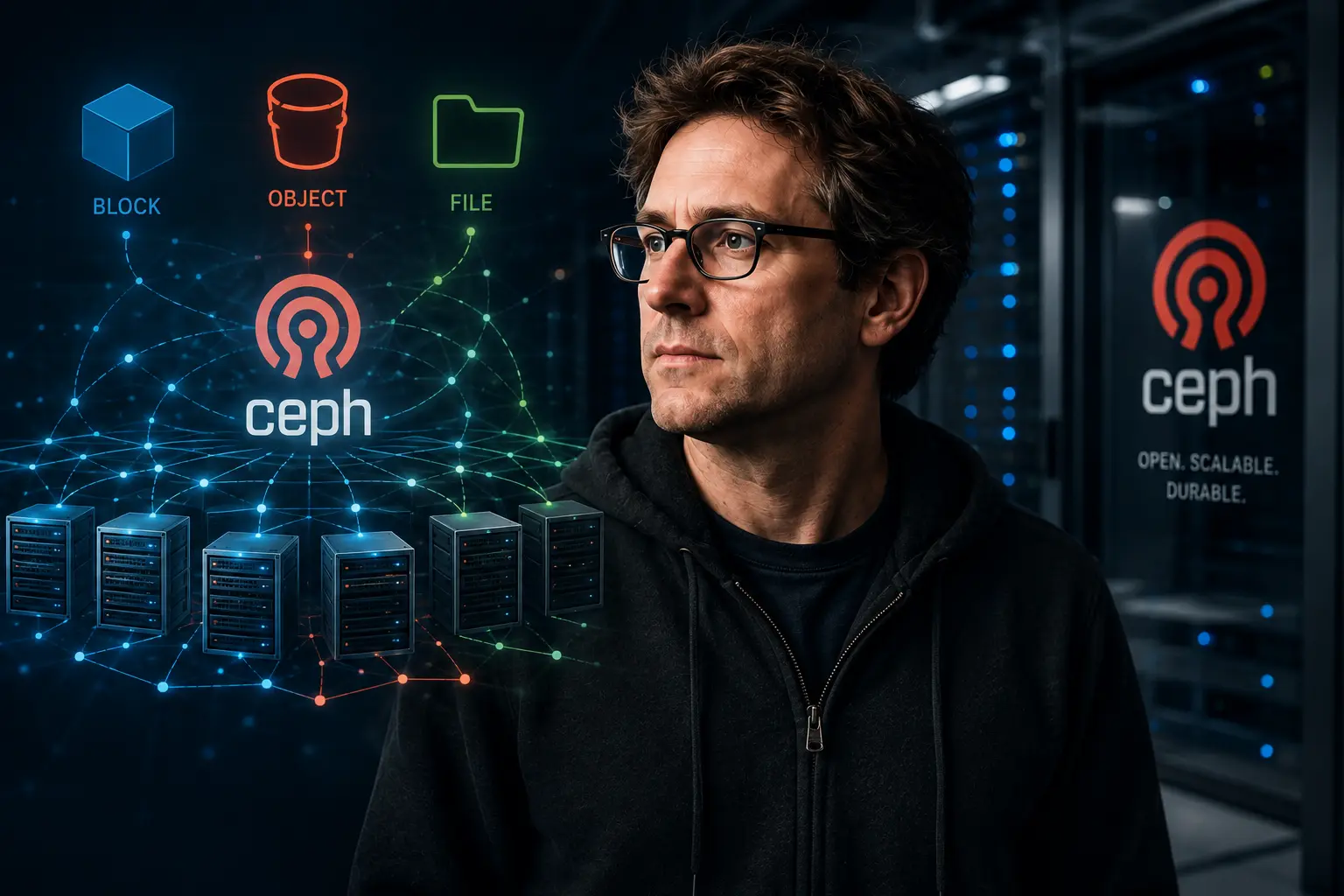
Sage Weil: The Architect Who Made Distributed Storage Calculable
Sage Weil’s most durable contribution to internet infrastructure was not a storage appliance but an architecture. Ceph used CRUSH to calculate where data belongs and RADOS to spread storage, repair and movement across a cluster. The design helped commodity machines behave like…

Creators
Steven Bellovin and the security questions that escaped the network
Steven M. Bellovin began by testing the claims computers accepted from packets: source addresses, routes, sequence numbers and names. His later work applied the same suspicion to institutions, asking what systems make the public trust when governments demand access, companies…

Creators
Ion Stoica and the abstractions behind distributed computing
Distributed systems fail when software assumes machines are interchangeable. Ion Stoica’s work repeatedly moves complexity behind a narrower abstraction—from packet-carried state and Chord to Mesos, Spark, Ray and cross-cloud placement—then tests how much operational, economic…

Creators
Richard Barnes and the protocols that made trust routine
Richard Barnes has worked on the protocols that make trust routine enough to disappear into operations: automated certificates, recipient encryption, changing group membership and protected media. Their value lies in open, composable mechanisms; their limits appear when services…

Creators
Bruce Maggs and the algorithms that turned distance into an infrastructure business
Akamai did not shorten the internet; it built a system that made distant content behave as though it were nearby. Bruce Maggs helped turn placement, mapping, caching and failure algorithms into commercial infrastructure, while the scale of that achievement belongs to the team and…

Creators
Eric Dumazet: Linux server economics through small queues
A busy server can look excellent on throughput charts while still wasting time, memory and processor resources behind its own packets. Eric Dumazet's work on TCP Small Queues, fair queueing, pacing and cache-friendly data structures has made Linux account more strictly for these…

Creators
Eric Dumazet and the small queues inside the economics of Linux servers
A very busy server can display excellent throughput and still waste time, memory and CPU behind its own packets. Eric Dumazet's work on TCP Small Queues, fair queueing, pacing and cache-locality-oriented structures helped Linux account for those hidden costs better. It is not the…

Creators
Eric Dumazet and the small queues shaping Linux server economics
A heavily loaded server can show excellent throughput while wasting time, memory and processor behind its own packets. Eric Dumazet’s work on TCP Small Queues, fair queueing, pacing and in-memory structure layout has helped Linux account for these hidden costs more accurately. It…

Creators
Eric Dumazet and the small queues that underpin the Linux server economy
Servers under heavy load can look healthy on throughput graphs while still wasting time, memory and CPU behind the packets they are about to send. Eric Dumazet's work on TCP Small Queues, fair queueing, pacing and cache-aware data structures has helped Linux account for those…
Creators
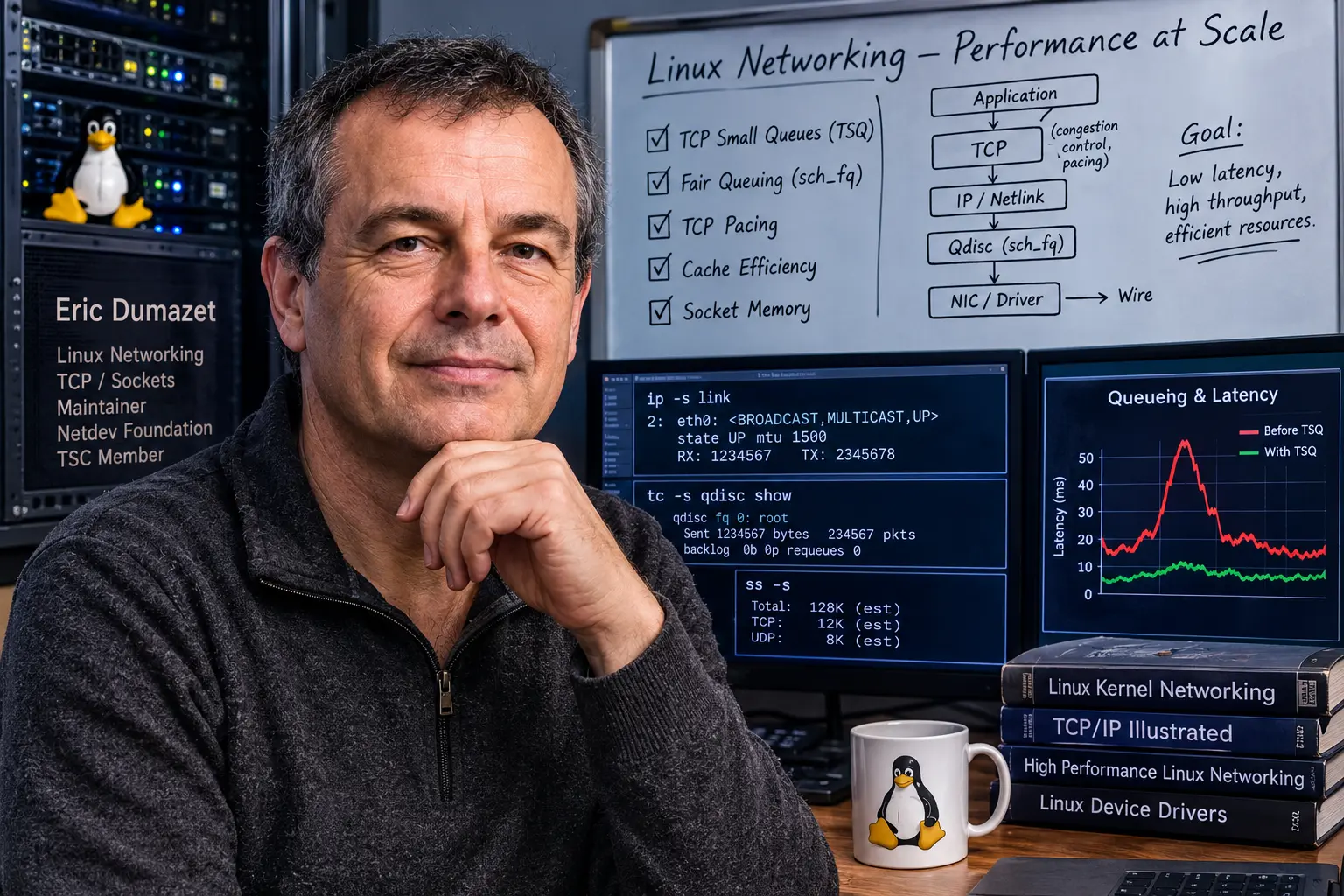
Eric Dumazet and the small queues that support the Linux server economy
A busy server can deliver excellent performance figures while still losing time, memory and CPU capacity behind its own packets. Eric Dumazet's work on TCP Small Queues, fair queueing, pacing and cache-sensitive structures helped Linux account for those hidden costs with more…

Creators
Eric Dumazet and the small queues in Linux server economics
A heavily loaded server can look excellent on a throughput chart and still waste time, memory and CPU behind its own packets. Eric Dumazet's work on TCP Small Queues, fair queueing, pacing and cache-conscious data structures helped Linux account for these hidden costs more…

Creators
Eric Dumazet and the small queues inside the Linux server economy
A busy server can look excellent on a throughput plot while wasting time, memory and processor capacity behind packets that have not yet left the machine. Eric Dumazet's work on TCP Small Queues, fair queueing, pacing and cache-aware data-structure layout has helped Linux account…

Creators
Eric Dumazet and the small queues inside Linux server economics
A busy server can appear healthy on a throughput chart while wasting time, memory and processor capacity behind its own packets. Eric Dumazet’s work on TCP Small Queues, fair queueing, pacing and cache-aware data structures helped Linux account for those hidden costs more…

Creators
Stephen Hemminger and the commands that make Linux networking operable
Stephen Hemminger’s long stewardship of iproute2 sits between Linux kernel capability and operational control. The suite’s commands make routes, queues, bridges, sockets and devices inspectable, while carrying decades of compatibility and maintainer obligations.

Creators
Poul-Henning Kamp and the performance discipline of doing less
Poul-Henning Kamp’s systems work is held together by a suspicion that software becomes slow and fragile when several layers keep the same state or repeat the same task. His record shows what doing less can gain—and which responsibilities it transfers.

Creators
Massimo Candela and the interfaces that turn routing data into action
From BGPlay and RIPE Atlas interfaces to BGPalerter and geofeed monitoring, Massimo Candela has built tools that turn partial internet measurements into something operators can investigate. Their value depends on preserving the sources, thresholds and maintenance ownership behind…

Creators
Paolo Lucente built the junction between traffic and routing data
Paolo Lucente’s pmacct sits where packet and flow records acquire routing context. By joining traffic with BGP, BMP, RPKI and operator-defined pipelines, it can support peering and capacity decisions—provided the network preserves sampling, timing and business provenance.

Creators
Claudio Jeker: Maintaining a small, auditable BGP daemon for serious routing
Claudio Jeker has spent more than two decades keeping OpenBGPD small enough to audit and capable enough for serious routing roles. The project’s restraint reduces some software risks, but it cannot simplify BGP policy, routing-security dependencies or the consequences of a bad…