
Intelligence
Latest Articles
Latest intelligence on infrastructure operators, policy decisions, market moves, and digital power shifts.

CASE FILE
The Agent Timed Out. That Does Not Mean Its Budget Came Back.
A procurement agent sends a bounded order to a supplier. The call disappears into a timeout. No confirmation returns, but the supplier may already have accepted the order. At that moment, refunding the agent’s authority is not customer service; it is permission to spend twice. A…

CASE FILE
Who Pays to Retire an Experimental Number?
A successful network trial leaves more than working software. It leaves a dictionary of errors, tools that read it and people who depend on it. RFC 9756 makes the route to a permanent assignment clearer; someone still has to pay for the move.

History
The Security Label That Needed Its Own Specification
One IPv4 option could appear more than once in the same datagram, yet no occurrence was self-explanatory. Its one-byte format code pointed outward to another specification that defined what the remaining bytes meant and whether a system should accept them.

History
The Parent Named the Server. The Server Still Had No Zone: RFC 1912 and Lame Delegation
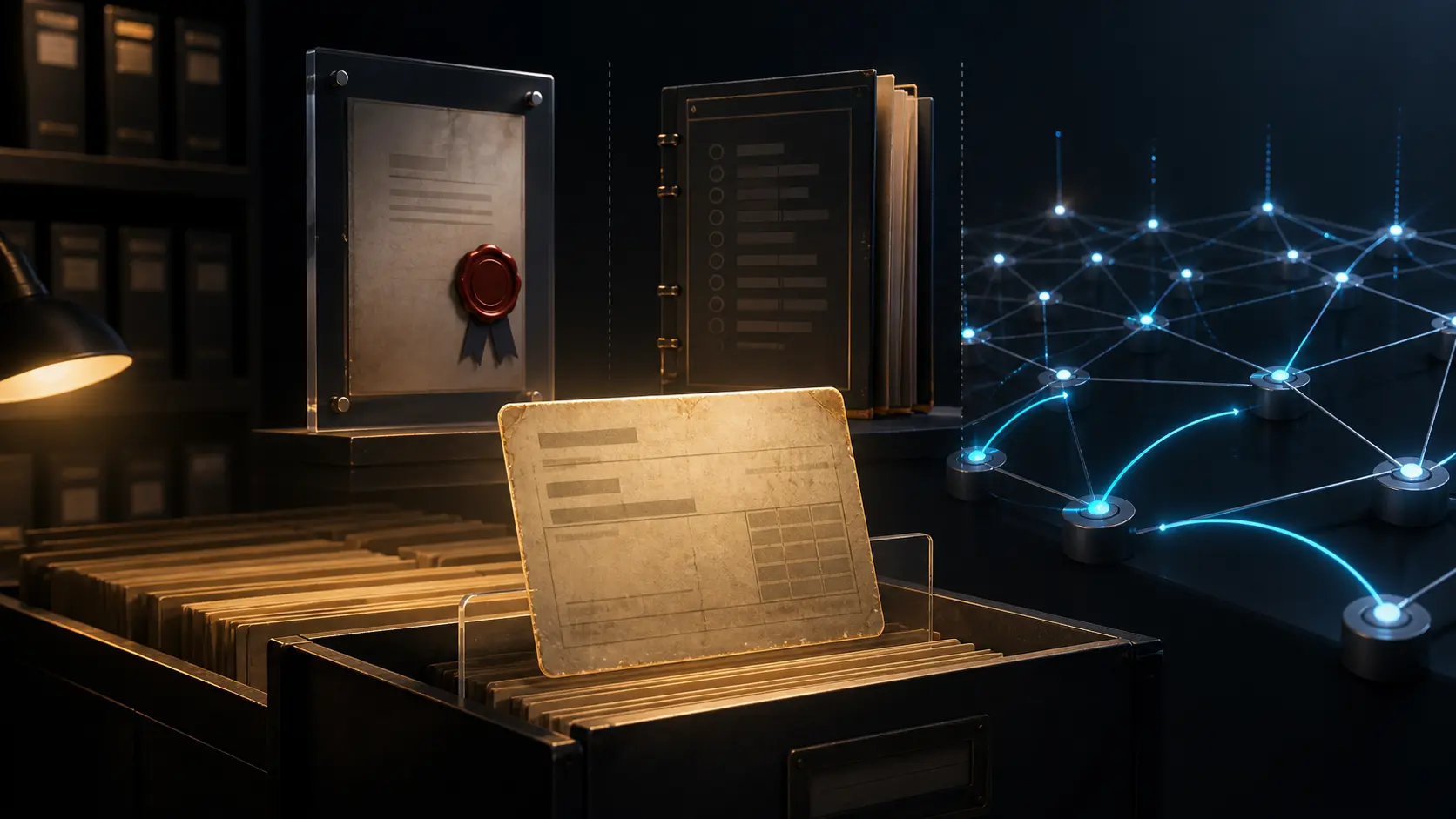
The referral worked exactly as configured. A resolver asked the parent where to find a child domain, received two name-server names and sent a query to one of them. Only then did the system reveal its mistake: the selected machine had no child zone to serve. The directory entry…
Story
ARIN's Retired Origin AS Field Recorded a Possibility, Not a Live Route
Old registration exports can preserve an `Origin AS` value long after ARIN removed the field. The label looks authoritative, but ARIN defined it as an optional holder-supplied list of ASNs from which a block might originate. It was neither a cryptographic authorization nor a…

Academics
Colin Perkins: How Real-Time Media Learned to Share the Internet
Colin Perkins did not invent RTP, WebRTC or Internet congestion control. His more defensible contribution is also more revealing: over three decades, he helped develop the repair, feedback, signalling, safety and governance mechanisms that allow voice and video to remain useful…

IETF
Sara Dickinson and the Resolver Promise Encryption Cannot Prove
The padlock beside a DNS resolver name is reassuring because it proves something useful: the client has protected its conversation on the way to a particular service. It is also dangerously easy to ask that icon to prove the rest. Sara Dickinson’s co-authored RFC 8932 follows the…

CASE FILE
The Alarm Needs a Way Home
Multipoint BFD can detect a broken branch close to the receiver. Turning that local knowledge into a dependable decision at the source is a separate service—with its own paths, capacity and owner.
Leaders
Nurani Nimpuno and the Accountability Layer Behind Number Governance
Internet number governance is often described through institutions and acronyms. Nurani Nimpuno’s public record reveals a more useful operating question: how can a community preserve technical discretion while making delegated authority reviewable?

CASE FILE
An AI Safety Sidecar Is Not a Boundary If the Old Credential Still Works
The fastest way to test an AI control plane is to ignore its architecture diagram and try the connection it was meant to replace. If the old credential still completes the same join or send, the new sidecar is advice—not authority.
Story
LACNIC Whois created Dates the Registry Record, Not the Network's Launch
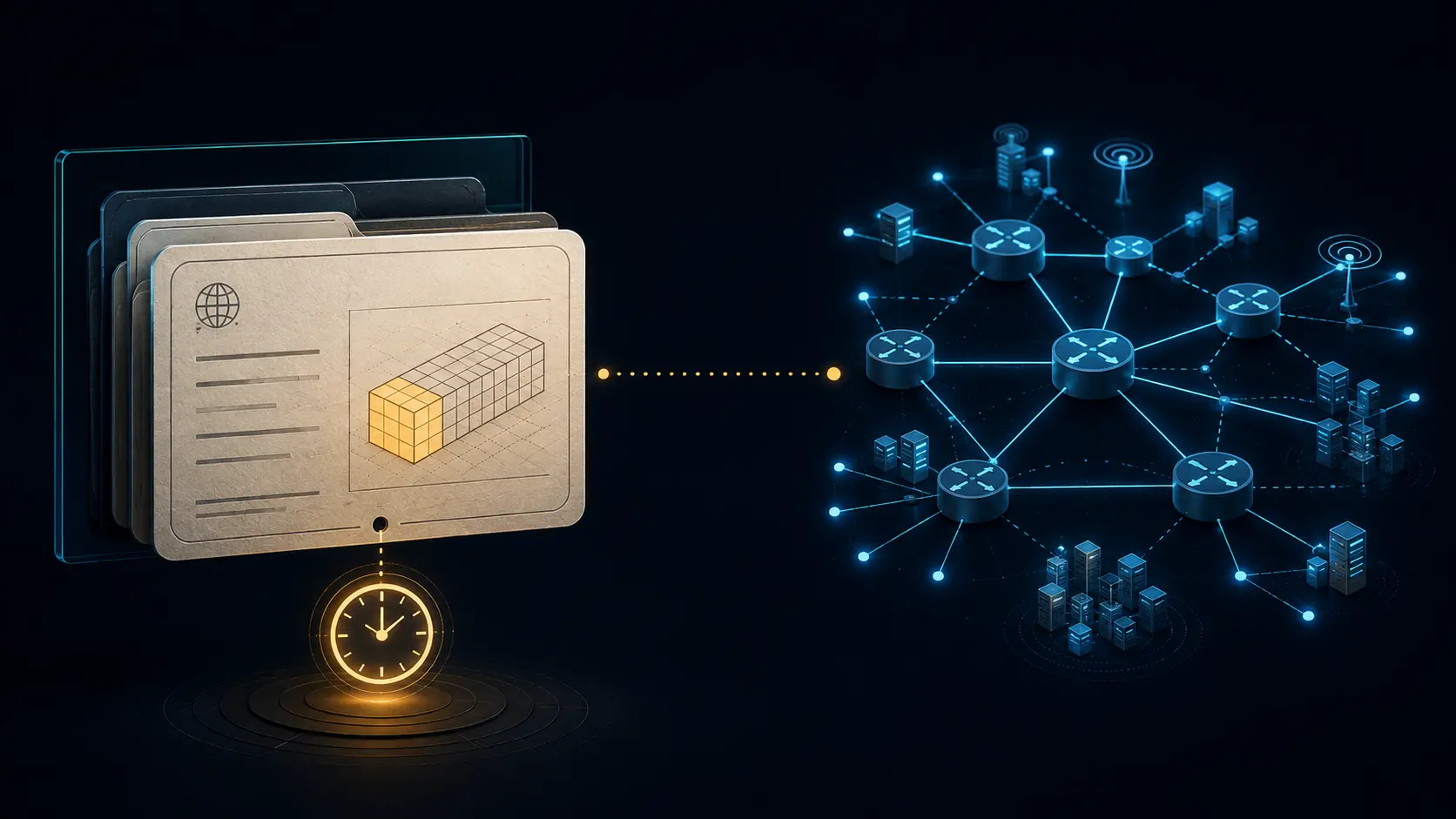
A timestamp precise to the second can look like a birth certificate. In LACNIC registration data, however, `created` dates the record for an address block. It does not reveal when the holder was founded, when engineers switched on a network, when the addresses were first used, or…

History
The Label the Packet Had to Carry
RFC 1108 imagined a network in which a datagram did not merely carry data and an address. It also carried a compact declaration of the protection rules that had to follow it through the route.

Story
AFRINIC’s 5% Early-Payment Discount Runs on Two Invoice Clocks
AFRINIC's renewal calendar begins with an invoice released in November and rewards payment received by the end of December. Its accompanying prose sets the reward against a different entity: the date of the invoice. Those statements can belong to a perfectly coherent billing…

History
The Mesh Had No Root. The Client Paid for Completeness: RFC 1914
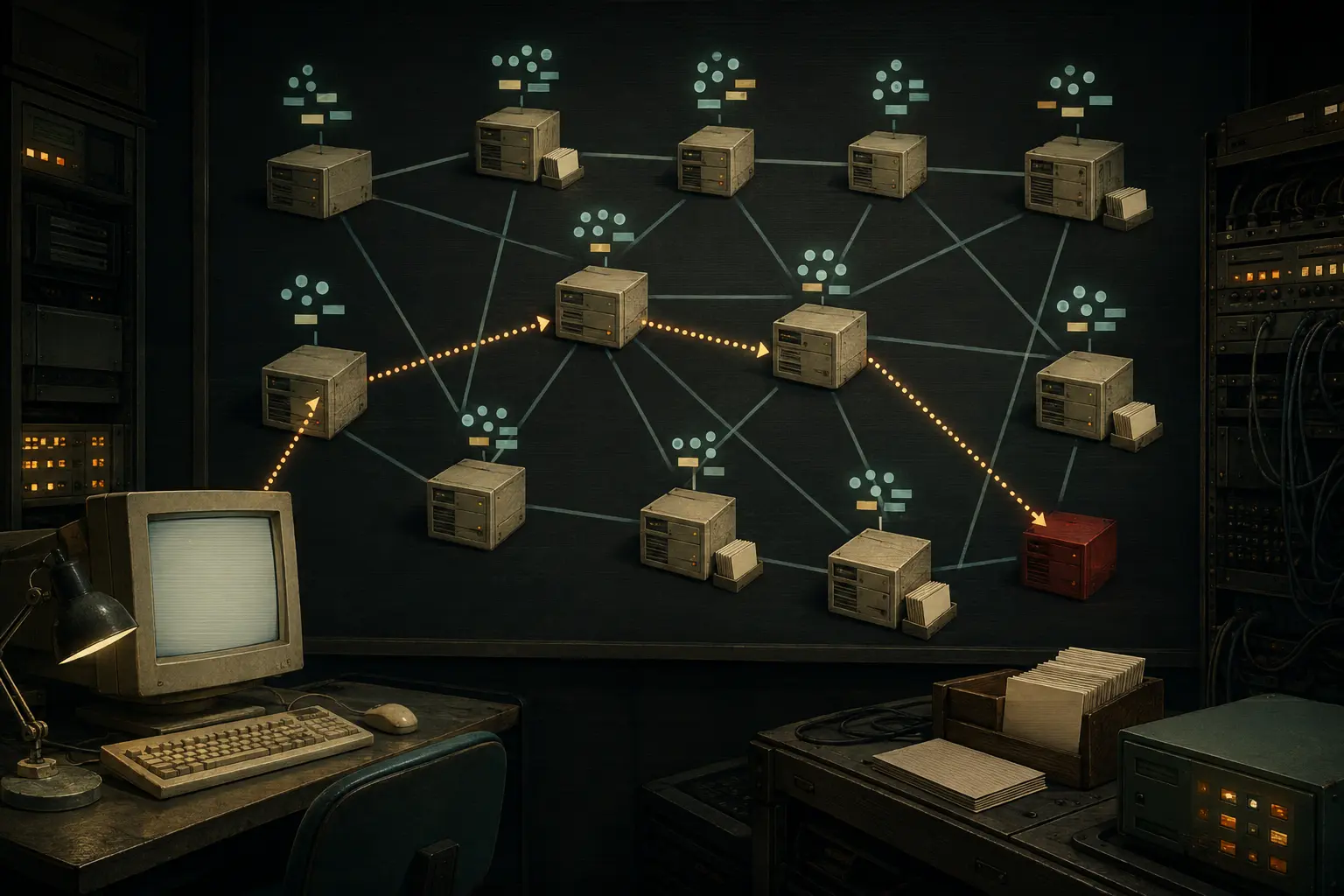
Two clients could ask the same question and return with different directories. One stopped after a nearby server answered; the other followed referrals through a larger graph. RFC 1914 made that divergence legible: completeness was not a property printed on the first reply. It…
History
The Index Knew the Word Existed. It Still Did Not Know the Answer.
Put three directory records through a Whois++ centroid and something peculiar happens. The word “Smith” survives, but the two people who carried it disappear. So do frequency, co-occurrence, order and the path by which either record was maintained. In 1996, that deliberate loss…

Global Cloud Services
Kentik and the data engine that turns network flows into evidence
Kentik’s network-intelligence platform depends on a proprietary analytical engine designed to retain large volumes of telemetry, add routing and business context, and return historical answers quickly enough to guide operations. Kentik Data Engine gives network teams a searchable…

Story
AFRINIC Whois org-type Classifies a Registry Relationship, Not Legal Corporate Form
AFRINIC’s `org-type` field looks deceptively familiar: a short label attached to an organisation record. Its proper use is narrower. It helps describe how that record sits inside the registry’s resource and membership system; it does not answer the legal, ownership or operational…

History
The Traceroute That Asked Every Hop to Write Back
Conventional traceroute makes the sender knock on the network’s doors one distance at a time. RFC 1393 proposed a more ambitious bargain: send one marked packet, and ask every router it crosses to mail back a report.

IETF
Ole Trøan and the Three Decisions NAT Used to Hide
A laptop has two globally usable IPv6 addresses, two routers and two DNS resolvers. Nothing is missing, yet the first packet can still fail: the chosen source may belong to one provider, the chosen door to another, and the chosen name answer to a third context. Ole Trøan’s…

CASE FILE
RMRP Can Sign Its AI Audit Log. It Still Cannot Count the Calls It Never Saw
A new model-routing draft turns silent omission into a signed assertion that can be challenged. That is a serious control improvement—but completeness still begins with a witness outside the router.