
Intelligence
Latest Articles
Latest intelligence on infrastructure operators, policy decisions, market moves, and digital power shifts.

History
The Window That Learned Restraint: How TCP Stopped Congestion Collapse Without a Traffic Authority
The Internet's answer to its first congestion crisis was not a controller above the network. It was a new discipline inside every sender: learn the path from acknowledgements and loss, increase carefully, and retreat before retransmissions turn shared capacity into useless…

Story
APNIC Put Contactability and Judgment on the Same Agenda
One proposal asks whether an abuse report can reach the operator able to act. Another asks whether the reported conduct counts as abuse. APNIC 62 will discuss both on 10 September, but the route for a contested decision is still missing.

CASE FILE
Mozilla’s Hidden Security Boundary: How the Public Suffix List Becomes Running Code
Mozilla began the Public Suffix List, and Firefox still turns a version of it into browser behaviour. The DNS can tell software that `whatwg.github.io` exists beneath `github.io`, but not whether those names belong to one organisation or mutually untrusting tenants. This article…

History
The Worm That Needed a Switchboard: How the 1988 Internet Built CERT Without Giving It Command
When the Internet’s first great emergency arrived, its most effective institutional answer was neither a central operator nor a security sovereign. It was a small, trusted point of contact built to make independent operators faster and better informed while leaving their…

Story
AFRINIC's Certificate Deadline Split Into Four Clocks
The 18 August notice described one cutoff. Operations produced four different clocks: the announced date, the upstream source, the portable release and the validator runs that networks could actually observe. They did not strike together.

Global Institutional
Slurm: The Scheduler That Decides Who Gets the GPU
Slurm allocates scarce compute across HPC and AI clusters, turning queue policy into a practical decision about who gets GPUs and when. NVIDIA’s 2025 acquisition of SchedMD gave the project more resources while making vendor-neutral stewardship a question that now has to be…

Creators
Eric Dumazet: Linux’s hidden queues
TCP can make a reasonable sending decision and still lose time after packets leave its direct control. Eric Dumazet’s work on TCP Small Queues, fair flow scheduling, pacing and cache-aware data structures changed how Linux accounts for this hidden packet backlog, although user…

Creators
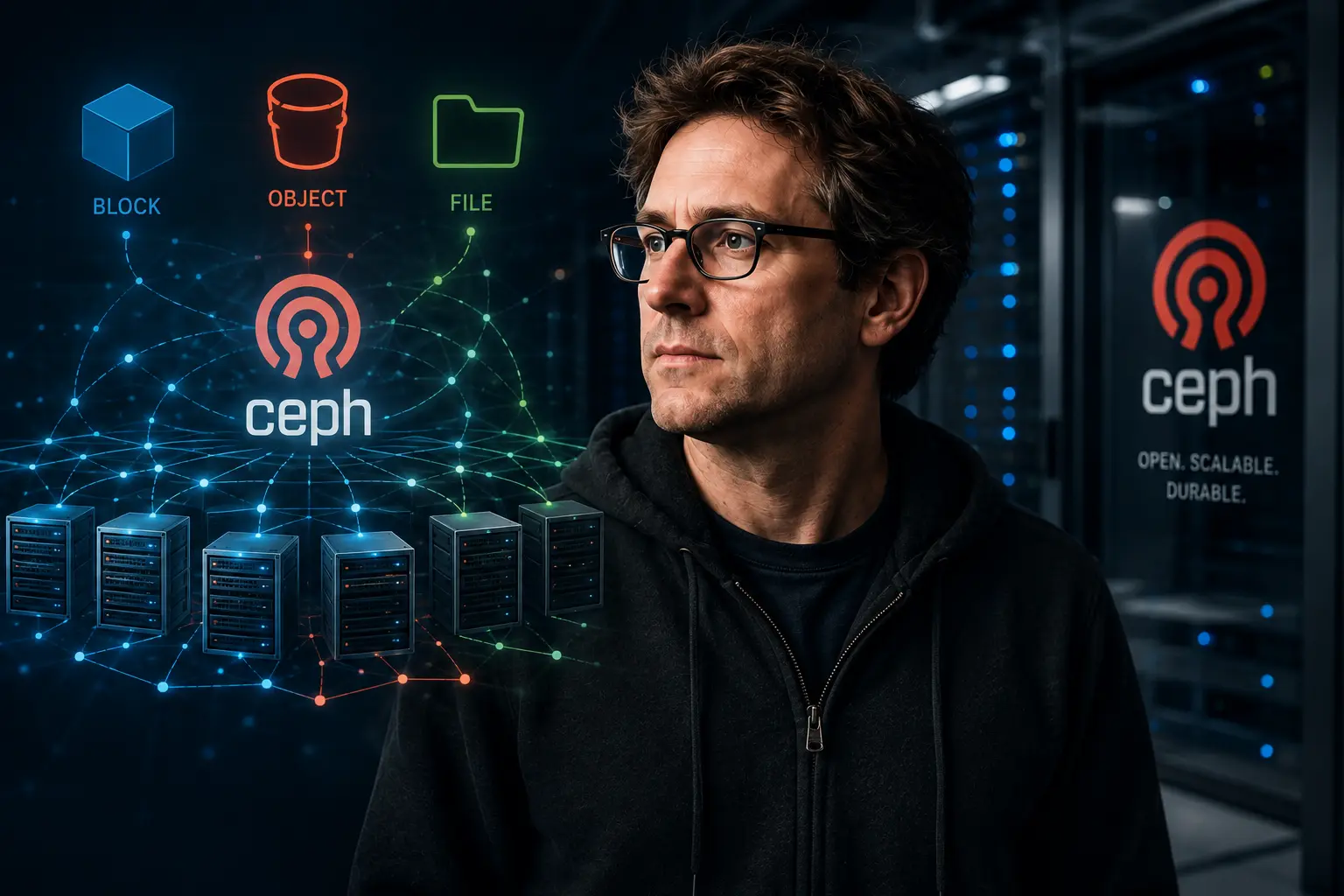
Sage Weil: the engineer who made distributed storage computable
Sage Weil’s most enduring contribution was not a storage device but an architecture. CRUSH calculates data placement, while RADOS distributes storage, repair and movement across the cluster. Ceph enabled ordinary machines to operate as one system, then had to learn to continue…
Creators
Sage Weil: The Architect Who Made Distributed Storage Calculable
Sage Weil’s most durable contribution to internet infrastructure was not a storage appliance but an architecture. Ceph used CRUSH to calculate where data belongs and RADOS to spread storage, repair and movement across a cluster. The design helped commodity machines behave like…

Global Institutional
NVM Express: how storage became a network protocol
NVMe began as a more efficient way to talk to the flash memory installed in a server. It has become a family of protocols capable of carrying the same command queues and namespaces over PCIe, TCP or RDMA. That continuity has made storage composable, while moving part of its…

Global Institutional
NVM Express: how storage became a network protocol
NVMe began as a more efficient way to communicate with flash memory installed inside a server. It became a family of protocols capable of carrying the same queue, controller and namespace model over PCIe, TCP or RDMA. That continuity enabled capacity to be disaggregated, but…

Global Institutional
NVM Express: How storage became a network protocol
NVMe began as a more efficient language for flash storage in the server. It became a protocol family that carries the same model of queues, controllers and namespaces over PCIe, TCP or RDMA. That continuity made storage composable but shifted complexity into the fabric, firmware…

Global Institutional
The UCIe promise for chiplets depends on what lies beyond the link
UCIe has defined a die-to-die interface that reaches 64 GT/s and now spans 3D packaging, raw traffic and whole-package management. The decisive test will be whether these rules sustain multi-vendor products when power, thermals, manufacturing yield, software, security and…

Global Institutional
NVM Express: How storage became a network protocol
NVMe began as a more efficient protocol for accessing flash inside servers and developed into a family of standards that carries consistent queue, controller and namespace semantics over PCIe, TCP and RDMA. It makes storage easier to pool and compose while shifting complexity…

Global Institutional
NVM Express: How Drives Became a Network Protocol
NVMe began as a queue architecture for flash drives attached over PCI Express. Over time it grew into a modular protocol family that can reach storage over TCP and RDMA networks, supports resource discovery and multiple paths, describes specialised storage media models and…

Global Institutional
UCIe's chiplet promise depends on engineering and accountability beyond the link
UCIe has pushed the die-to-die interface to 64 GT/s and added 3D packaging, raw data transport and whole-package management. The real test is whether these rules can support multi-vendor products when power delivery, thermals, yield, software, security and accountability still…
Global Institutional
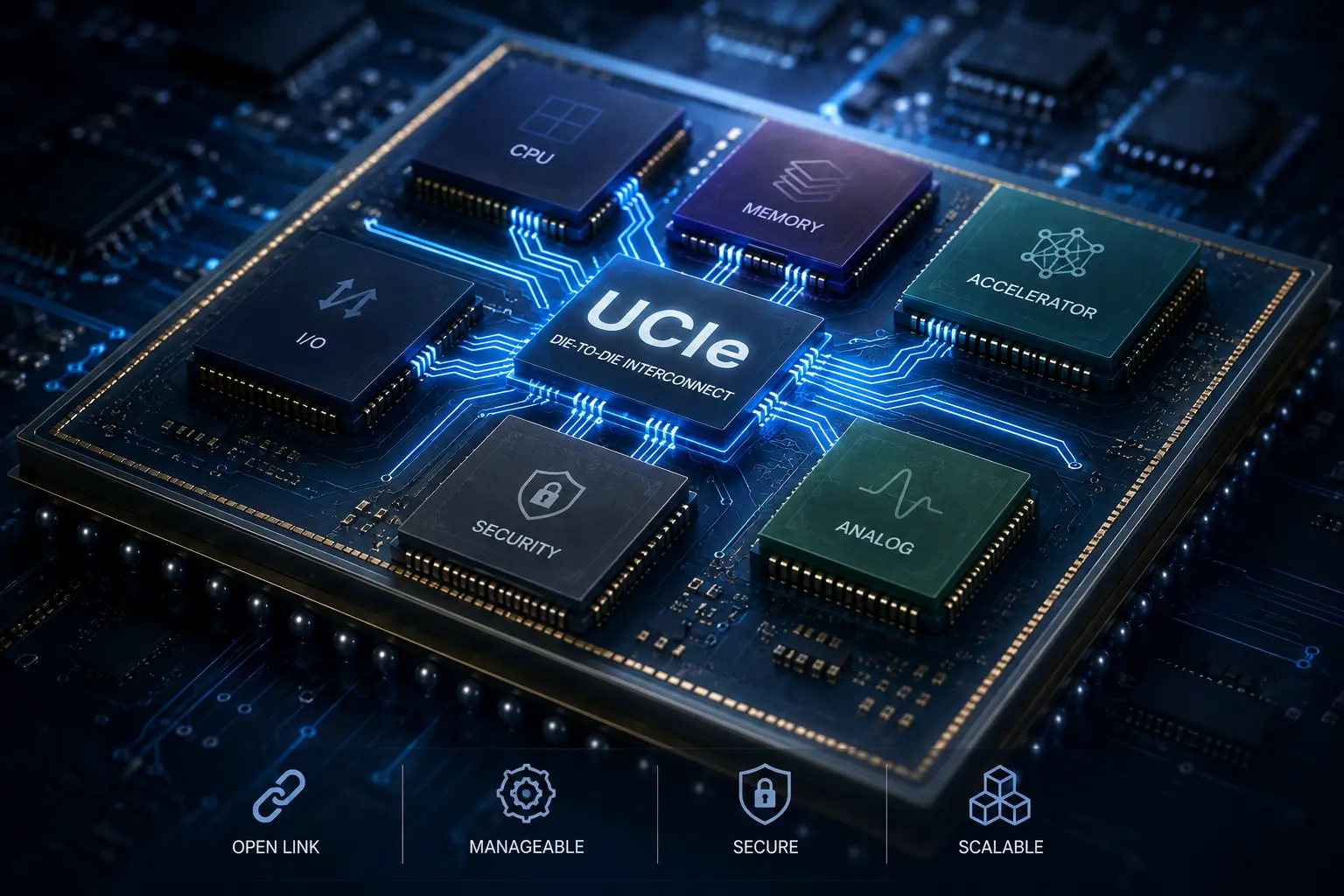
UCIe’s chiplet promise will be decided beyond the link
UCIe now defines a die-to-die interface reaching 64 GT/s and covering 3D packaging, raw traffic and package-wide management. Its market value depends on whether these rules can support multi-vendor products while power, thermal design, yield, software, security and liability…

Global Institutional
UCIe’s chiplet vision will be decided beyond the link
UCIe defines die-to-die links reaching 64 GT/s and now covers 3D packaging, raw traffic and package-wide management. Its real test is whether multi-vendor products can succeed while power, heat, yield, software, security and responsibility remain outside the standard.

Global Institutional
UCIe’s chiplet promise extends beyond the link
UCIe has defined a die-to-die interface capable of 64 GT/s, 3D stacking, raw traffic and package-wide management. The decisive test is whether those rules enable multi-vendor products while power, thermal design, manufacturing yield, software, security and contractual…
Global Institutional
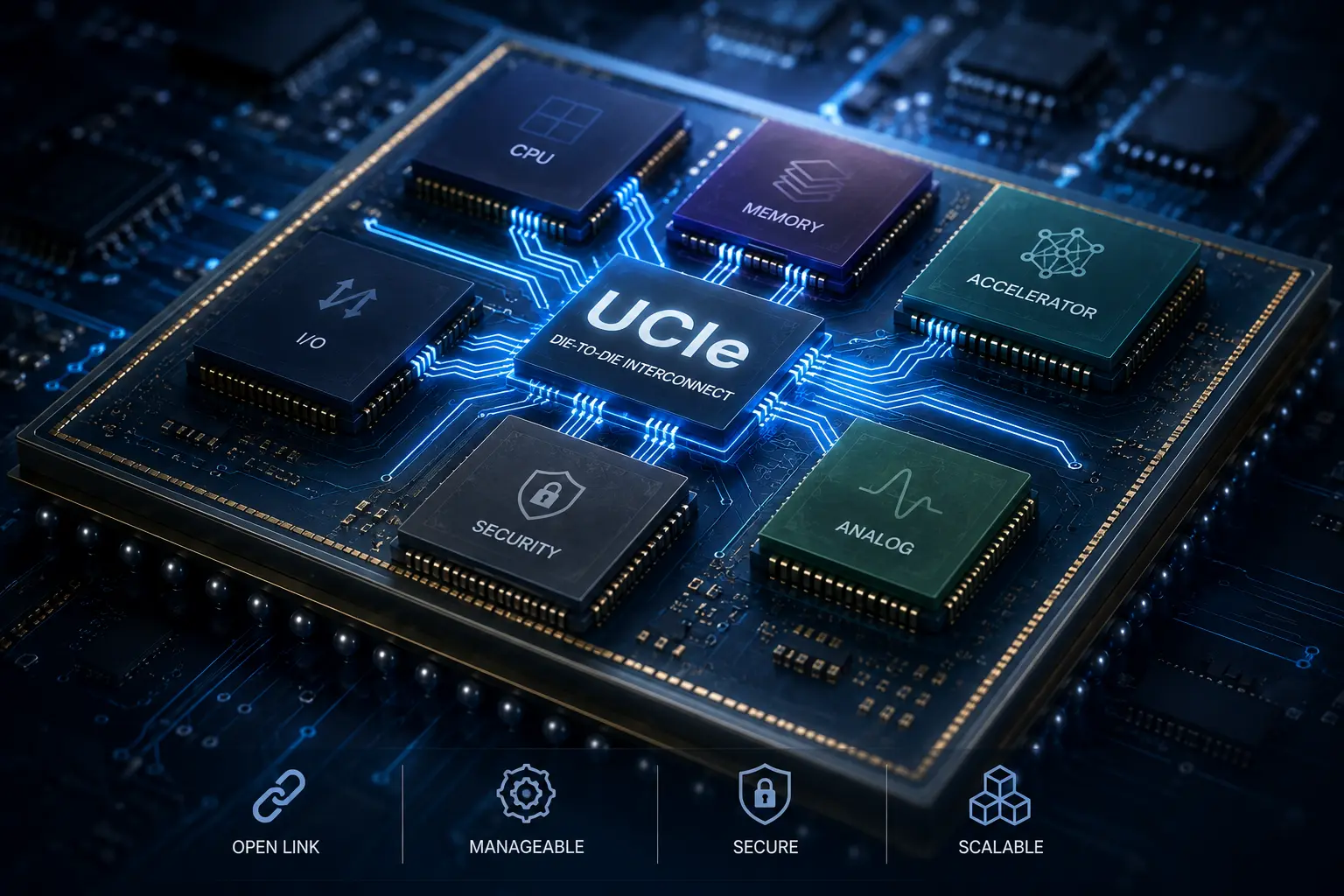
The promise of UCIe depends on what happens beyond the link
UCIe has defined an inter-chip interface that reaches 64 GT/s and already covers 3D packaging, raw traffic and whole-package management. The decisive test will be whether those rules can sustain multi-vendor products when power, thermals, manufacturing yield, software, security…