
Intelligence
Latest Articles
Latest intelligence on infrastructure operators, policy decisions, market moves, and digital power shifts.

History
The KWIC Output Matched. The Change Cost Did Not
Run two programs against the same lines and both print the same alphabetized circular shifts. The acceptance test is green. Now change how a line is stored. In one design, the decision leaks through several work assignments; in the other, it remains behind one boundary. David L.…

History
Paul Baran’s Survivability Curve Had Conditions
Remove a number of nodes from a network. Two endpoints are still standing. Can they still find a path to one another? That was the hard, bounded question inside Paul Baran’s work at RAND—not whether a communications system could pass through nuclear war untouched, and not whether…

History
The mailbox had been deleted. One client could still read it: RFC 2180
In 1997, IMAP documented an awkward but useful truth: two clients could be attached to the same mailbox and temporarily inhabit different operational realities. Interoperability did not require every server to erase that difference in the same way. It required clients to survive…

IETF
Babel’s Hidden Key and the Authority Behind a Boolean Answer
An operator barred from reading a Babel MAC key may still, with effective authorisation, ask the device to use it in a local comparison. That separation can support maintenance without distributing secret material. It also requires a decision about who controls the test and how…

Leaders
Cristiano Amon and the Two FY2029 Clocks Behind Qualcomm's Expansion
Qualcomm put FY2029 on two investor-day charts, twenty months apart. The date stayed fixed; the businesses inside the target did not. Reading that change as accomplished growth would turn a management plan into a historical result.

Academics
Nancy Leveson and the Accident With No Broken Part
A system can do exactly what its components were built to do and still put people in danger. Nancy Leveson's work asks who was meant to keep that system within safe bounds, what they knew when they acted, and which feedback failed to correct a mistaken picture of the world.

Global Cloud Services Trends
Rocket Lab sold the shares and retired the bridge; Iridium is still unbought
A US$1.944 billion share sale and a lender consent have made the proposed Iridium purchase financeable without Rocket Lab's US$3.6 billion bridge. They have not transferred the satellite operator, and the four ledgers now move on different clocks.

IETF
Composite ML-KEM for CMS Cleared the IESG — Its Operational Dependency Chain Did Not
The IETF’s 18 September 2026 approval of `draft-ietf-lamps-cms-composite-kem-03` is an important standards milestone, but it is not the end of the delivery chain. The CMS companion is now in the RFC Editor queue while its normative Composite ML-KEM/X.509 dependency remains under…

History
The Cheque Was Not the Ballot: What ISOC’s 1996 By-Laws Actually Allocated
An organization could finance the Internet Society at a level far above an individual subscription and still not acquire the trustee franchise described in its 1996 by-laws. RFC 2135 preserved a dated corporate arrangement in which money opened membership categories, regular…

History
Mary Shaw and the Protocol Between the Boxes
In 1994, Mary Shaw argued that software design had become fluent about the boxes and strangely inarticulate about the lines. Calling one procedure from another was useful machinery, but it was too small a language for the flows, events, shared representations, synchronization and…

History
Susan Eggers and the Core That Learned to Share Its Empty Slots
A wide processor can look powerful on a block diagram while leaving execution units idle whenever one instruction stream runs out of independent work. Susan Eggers and her collaborators asked a sharper question: what if several independent threads could compete for those…

History
RFC 2169: An HTTP Route Is Not a Resource Authority
In 1997, RFC 2169 made an intentionally modest proposal: use ordinary HTTP requests to ask a resolver about a URN. Its value was not that HTTP could settle identity. It was that a familiar transport could carry a narrowly defined question while leaving authority, access and…

History
Version 3 Stayed. The Service Changed: RFC 2126’s Compatibility Trap
An old peer could return a perfectly parseable Class 0 confirmation to a Class 2 request that offered no alternative. The TCP connection was open, the TPKT version was familiar, and the reply was still unacceptable. RFC 2126 made that difference explicit.

CASE FILE
RFC 9647 and the Missing Evidence Chain Between Babel State and Network Behaviour
A Babel route row can report that a path is selected while the operational proof behind that selection remains incomplete: the YANG datastore may show intent, the interface may appear enabled, the neighbour may exist, and the route may be marked feasible, yet the chain from…

History
Betsy Ancker-Johnson and the Plasma That Remembered the Path
In 1964, Betsy Ancker-Johnson mapped a semiconductor plasma whose stability could not be described by one switching point. Its state depended on how the electric and magnetic fields had been approached—a precise lesson in history-dependent systems, and in the danger of turning a…

History
Permission Came Before the Call: RFC 2125’s Two-Stage Bandwidth Decision
Two peers could agree that another line should be tried and still have no new bandwidth. RFC 2125 made that gap explicit: BAP first obtained a response to the proposed action, then a separate Call-Status message reported what happened when somebody actually placed the call.

History
Irene Greif and the Atomic Commit That Could Not Preserve an Author’s Intent
The Collaborative Editing System made shared document changes serializable and recoverable. Its design also exposed a limit that still matters: a transaction can protect bytes from half-finished change without knowing what a writer meant, whether collaborators noticed, or whose…

IETF
WebAuthn’s 2026 Rejoin Handoff: The Governance Receipt Behind a New Participation Cycle
The Web Authentication Working Group’s 11 September 2026 recharter begins a new institutional phase for WebAuthn. The central challenge is not simply continuing technical discussion; it is preserving a reliable record of how an approved charter becomes active participation and…

History
The Verdict Left the FAS. The Switch Still Had to Make It Real
RFC 2124 put connection policy in an external service, but it never made the service’s answer identical to the connection that followed. Its message chain preserved a more useful truth: a decision, an execution and an accounting record are different events.
History
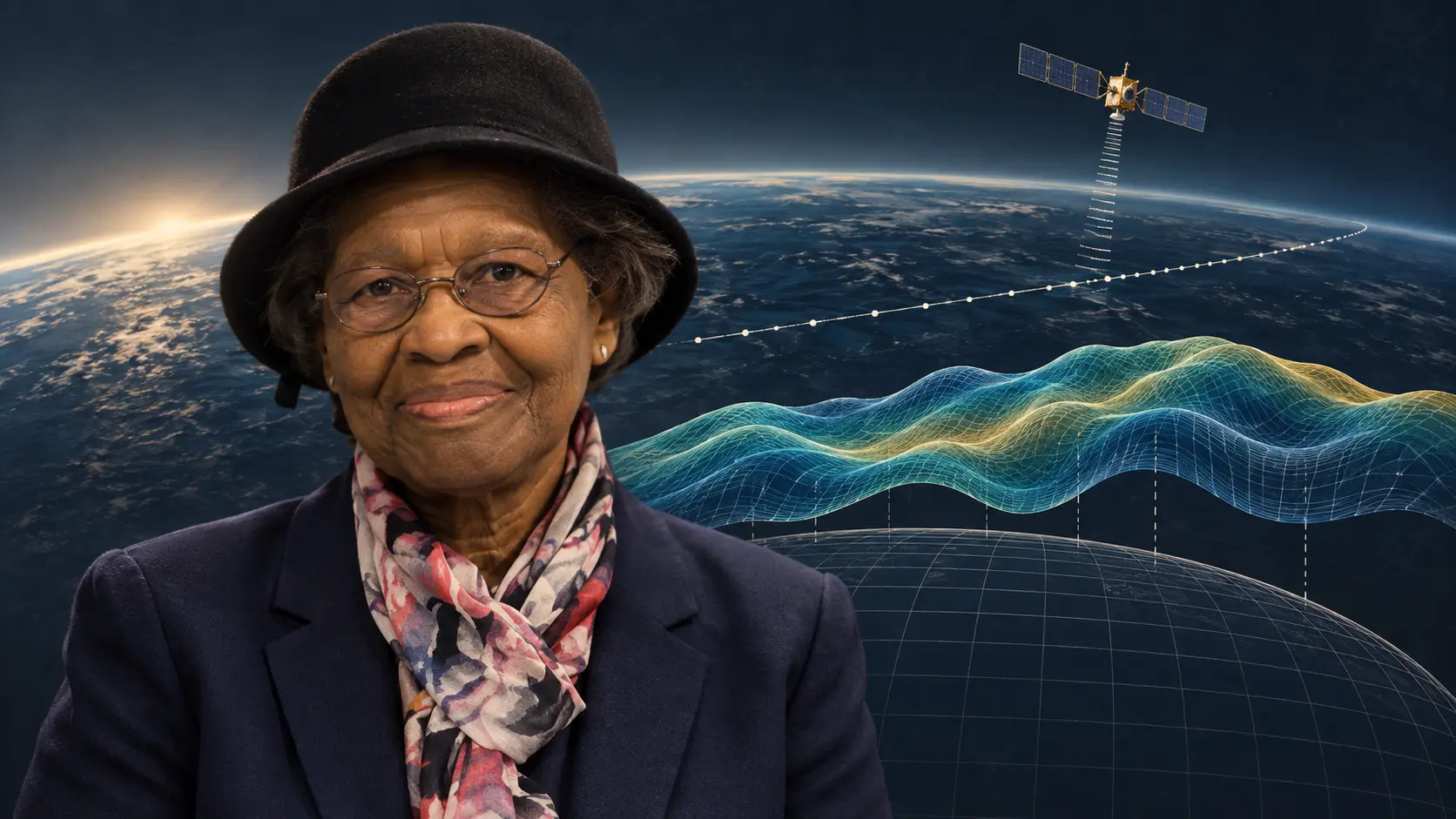
Gladys West’s 1982 Earth Ellipsoid Was a Geodetic Receipt, Not a GPS Blueprint
When Gladys B. West died on January 17, 2026, Virginia’s General Assembly memorialized a career whose satellite-geodesy work had become shorthand for the foundations of GPS. That shorthand is useful only if its evidentiary limits remain visible. West’s 1982 paper, “Mean Earth…