Summary
- RFC 1177, an August 1990 IETF User Services Working Group guide, answered recurring questions from new Internet users. It opened with access to resources each user was authorized to use, then supplied separate routes to guides, documents, people and services.
- Its Internet Resource Guide could arrive by email or anonymous FTP, while a paper copy had a reproduction fee and a phone number for help. Its mail-address directories were incomplete. Usenet access required software and an existing site willing to connect.
The most revealing line in the 1990 welcome pack is the answer to “I just got on the Internet. What can I do now?” The authors do not start with a grand tour. They start with the user's own host, other hosts where the user has an account, and information a host has chosen to make public. A connection moved packets between machines. Permission to use a machine still belonged to its operator. RFC 1177 built its beginner's tour around that ordinary fact.
Gary Malkin, April Marine and Joyce Reynolds wrote the guide as FYI 4 for the IETF User Services Working Group. The introduction explains the labor it was meant to save: mailing-list subscribers were reading the same beginner questions again and again. The group set up one mailbox to discuss drafts, another for subscription requests and a third to receive and store questions. Even the effort to automate welcome advice had an inbox schedule and people on duty.
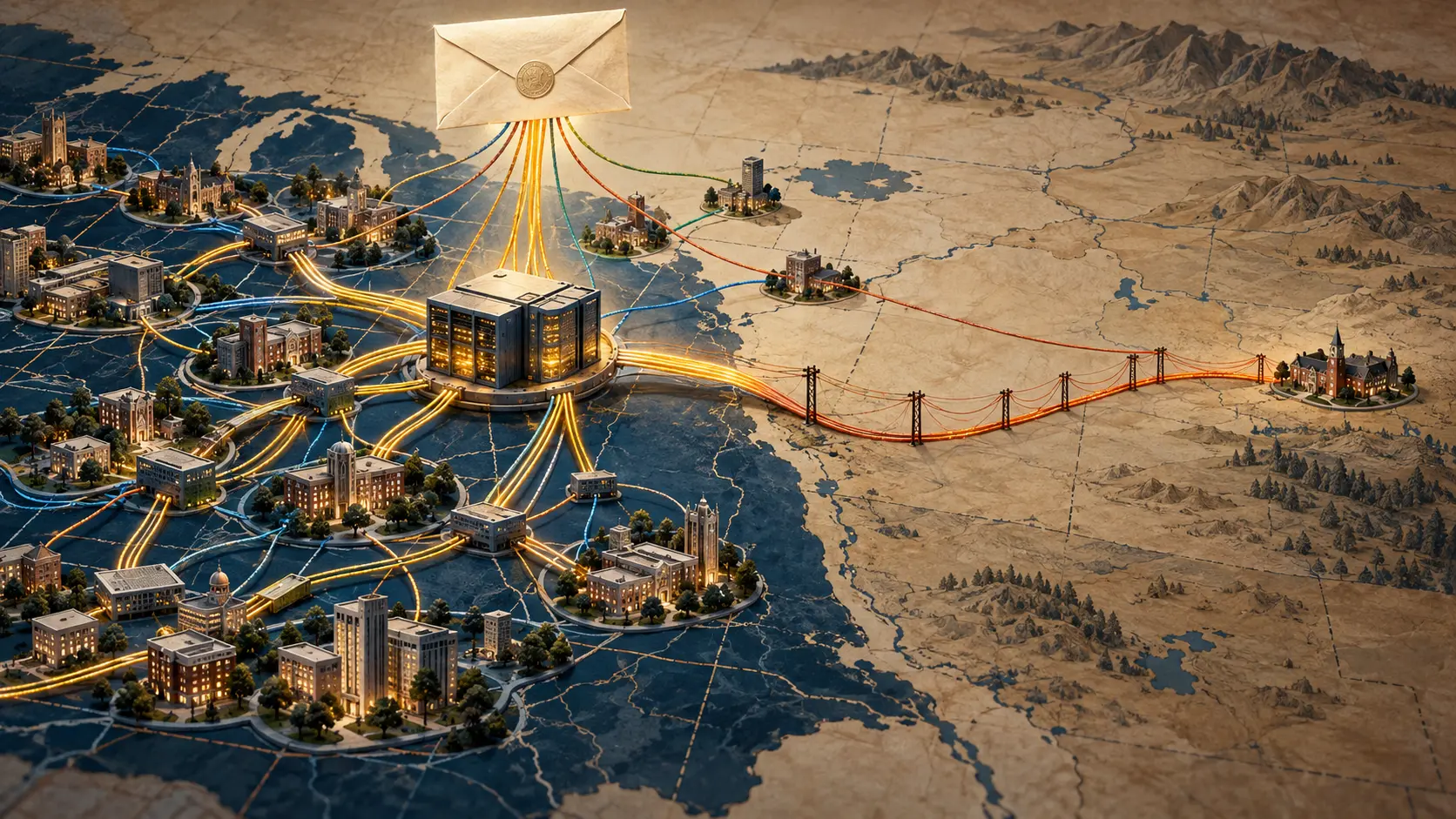
The answer to “what can I do?” then points to the Internet Resource Guide from the NSF Network Service Center. It listed facilities such as supercomputer centers, library catalogs and specialized collections. A reader could request free delivery by email or retrieve it through anonymous FTP. For a paper copy, the guide quoted a nominal reproduction fee. For more information, it gave the center's telephone number. This was not quaint decoration around a supposedly self-explanatory network. The guide, its distribution channels and a person answering the telephone were the navigation system.
Finding a host required another small expedition. RFC 1177 named three published directories and a DDN NIC WHOIS lookup. It told the reader to open a Telnet session to NIC.DDN.MIL, type whois and ask for help at the prompt. The warning followed immediately: WHOIS might omit a site registered with the NIC because of how the program searched its database. A record could exist while a newcomer failed to find it. That gap was a real design constraint for someone trying to make contact, not an exotic edge case saved for engineers.
Finding a person was harder. The guide called the DDN NIC WHOIS database and PSI's White Pages the two largest email-address directories, then said both were far from complete. Its practical advice was to ask the person for their address. PSI's service was a pilot fed by participating organizations; its directory could be searched by Telnet, but its population had an admission rule. The question “where is everyone?” had no single computer answer.
The NIC entry process put maintenance work on the newcomer too. To appear in WHOIS, a person first needed an Internet-accessible mailbox, fetched a user template by FTP or email, filled it out and returned it to a registrar. Ordinary listed users were told to send corrections when their contact details changed because the NIC would not regularly poll them. The registry offered discovery only as long as people kept its facts alive. A stale address could make a perfectly connected network feel vacant.
RFC retrieval had its own two-lane road. At the NIC, anonymous FTP used one filename pattern; automated email used an RFC number in the subject line. At NIS.NSF.NET, FTP used another filename pattern and the mail robot required SEND RFCnnnn.TXT-1 as the first body line. The packet network was shared. The instructions for getting a document still depended on which desk the reader approached.
Usenet made the social bargain blunt. The guide described a distributed bulletin-board system with participants beyond the Internet. The newcomer needed software and an existing Usenet site willing to support a connection. There was no universal “join” switch in the answer sheet. Someone had to agree to be the neighbor.
The document's scattered addresses, commands and phone numbers map the Internet's early operating bargain more clearly than a network diagram could. Common protocols connected hosts. Local hosts chose access, directories offered partial maps, registrants maintained their own entries, and adjacent sites decided whether to take on another feed. In 1990, onboarding was a series of handoffs among people and institutions. The FAQ reduced the repeated questions; it could not make those handoffs disappear.
Member Briefing
Deeper Profile Context
Sign in with the right membership level to unlock the full briefing and source notes.
Only for Strategic Circle
Strategic Circle
Open to all readers. Unlock profile briefings after joining and signing in.
Join Strategic CircleOnly for Leadership Alliance
Leadership Alliance
For qualified IP-asset owners and management; sign in to unlock alliance briefings.
Join Leadership Alliance