Summary
- Digital Realty's 7 September 2026 release opens the 6.4-megawatt Nairobi Two data centre, describes it as built alongside Nairobi One, and ties the opening to iColo's transition to the Digital Realty brand in Kenya and Mozambique; it prints no capital cost, no contracted share and no area for that facility. https://investor.digitalrealty.com/news-releases/news-release-details/digital-realty-strengthens-nairobi-east-africa-digital-gateway
- iColo's own undated pages print 0.9 MW of “IT power” for Mombasa One, 1.75 MW of “IT load” for Mombasa Two and 0.2 MW for Maputo One, while Nairobi One prints 280 racks, 624 sqm of customer space and four internet exchanges and no megawatts anywhere. https://www.icolo.io/ https://www.icolo.io/location/nbo1/
What the September release fixes, and what it leaves open
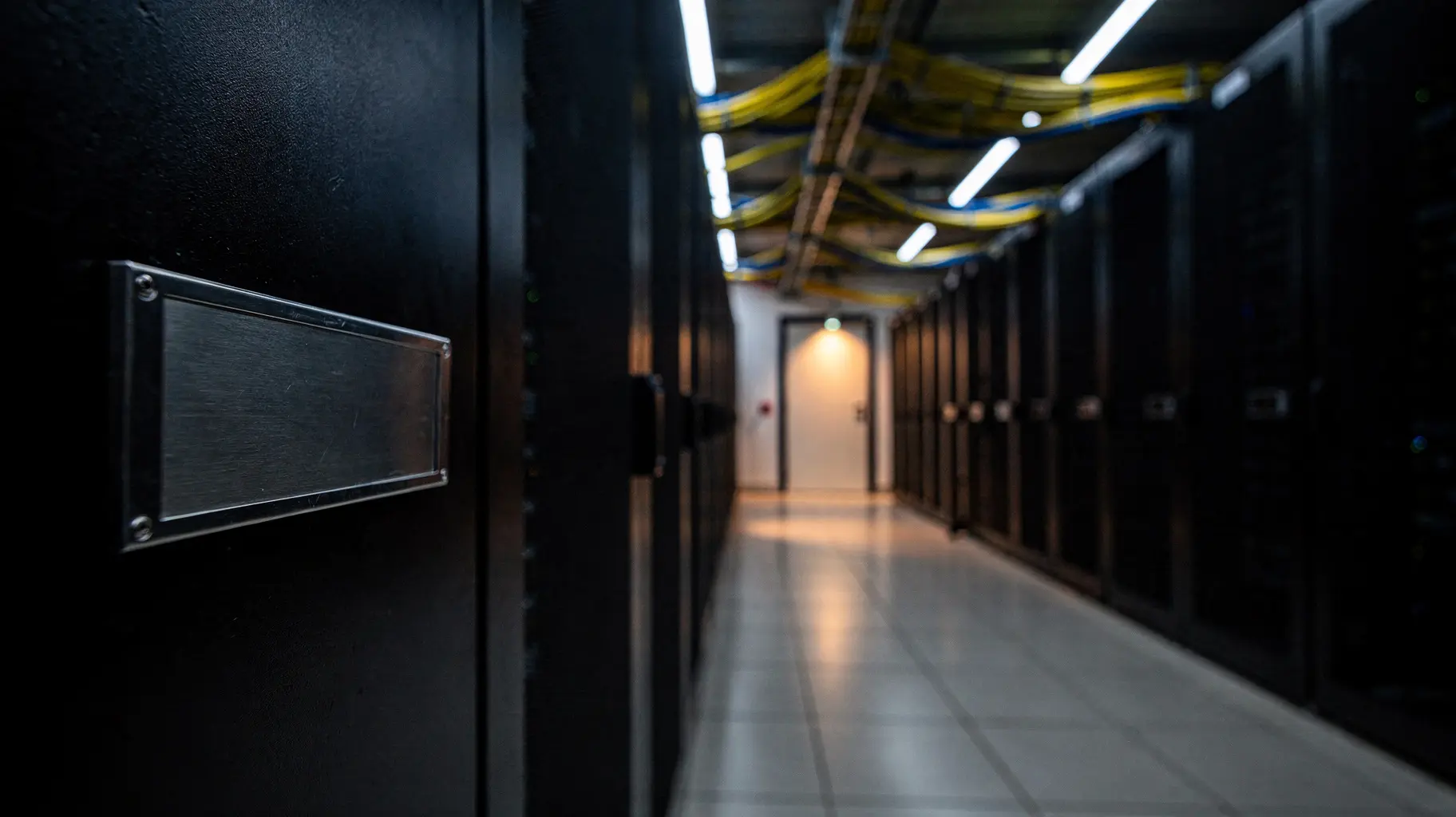
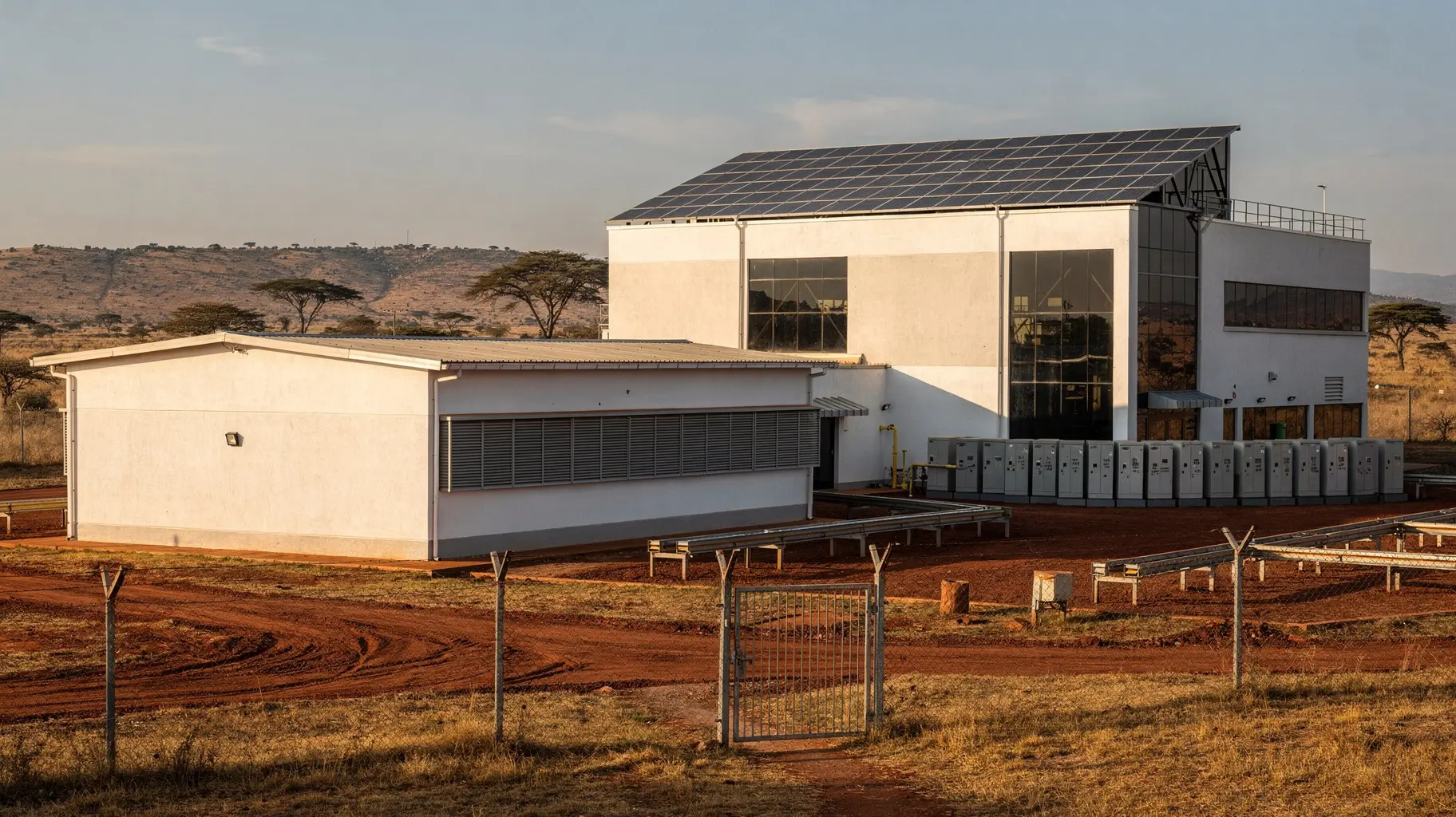
Digital Realty's release dated 7 September 2026 announces the opening of the 6.4-megawatt Nairobi Two Data Center, described as built alongside Nairobi One, and states that the opening coincides with iColo's transition to the Digital Realty brand in Kenya and Mozambique. The campus is described as offering access to more than 100 networks, two internet exchange points and a satellite teleport. The quotes belong to Wanja Muriithi, Country General Manager for Kenya, and Marcel Louw, Managing Director for Africa, and the company describes a footprint of 300+ facilities in 55+ metros across 30+ countries. https://investor.digitalrealty.com/news-releases/news-release-details/digital-realty-strengthens-nairobi-east-africa-digital-gateway
What the release does not print is just as precise: no capital cost for Nairobi Two, no contracted share, no square metres. https://investor.digitalrealty.com/news-releases/news-release-details/digital-realty-strengthens-nairobi-east-africa-digital-gateway The secondary account published the same day reaches the same boundary, attributing both the 2019 stake date and the 2020 combination date to securities filings while noting that the specific filing pages were not all inspected, and stating that neither the capital cost nor the contracted share of the 6.4 MW was disclosed. https://tech.africa/digital-realty-nbo2-nairobi/
Four power figures, three labels, no dated table
The homepage that carries the brand message is undated, and it is the page that puts numbers on the estate. It states that iColo is now Digital Realty and places campuses in Mombasa and Nairobi in Kenya and in Maputo in Mozambique: Mombasa One at Miritini with 0.9 MW of IT power and 4,000 m2, Mombasa Two at Nyali with 1.75 MW of IT load and 4,000 m2, and Maputo One at COOP with 0.2 MW of IT power and 5,000 m2. The business is described as carrier-neutral data centres with colocation plus a Tier 3 teleport, and the page uses the labels “IT power” and “IT load” side by side. https://www.icolo.io/
Add the four printed power figures — 0.9, 1.75, 0.2 and the 6.4 MW opening — and the sum is 9.25 MW. That is my arithmetic, not a portfolio figure the company prints, and it is a floor rather than a total: Nairobi One contributes nothing to it, and the four numbers carry three different labels.
The Mombasa One page shows how the phases blur. It says the Miritini site has been operational since 2017, prints 250 racks and 580 sqm of total customer space currently, 80+ connectivity providers and three internet exchanges, and then describes a future Miritini campus of three data centres on 18,000 m2 with 13 MW of total IT load and 1,800 racks. Current and planned capacity share a page. https://www.icolo.io/location/mba1/
Mombasa Two's page says the Nyali facility launched in 2022 and prints up to 600 customer racks, two data halls, 1,200 m2 of IT space, a 4,000 m2 campus, 20+ networks and 2 km from the nearest beach manhole, with a connected-parties list spanning Kenyan mobile, local ISP, international carrier and global content networks. It carries no critical-power figure at all; the 1.75 MW lives on the homepage instead. https://www.icolo.io/location/mba2/
Nairobi One prints racks, square metres and exchanges — not megawatts
The Nairobi One page says the facility launched in September 2019 in Karen, calls it the first truly carrier-neutral data centre in Nairobi, and prints 280 racks, 624 sqm of total customer space, 60+ connectivity providers and four internet exchanges. No megawatt figure appears anywhere on it. https://www.icolo.io/location/nbo1/
Digital Realty's Nairobi market page prints the group's own measures instead: Nairobi One at 15,500 ft2 (1,450 m2) and Nairobi Two at 12,000 ft2 (1,100 m2), total colocation space of 27.5k ft2 (2.5k m2), 60+ cloud and network service providers, 70+ customers, N+2 cooling for both sites, and again no megawatt figure for Nairobi One. The per-site figures are not labelled as customer space. https://www.digitalrealty.com/data-centers/emea/nairobi
Two identities are worth printing. 15,500 plus 12,000 equals 27,500 ft2, which matches the printed 27.5k ft2 exactly. 1,450 plus 1,100 equals 2,550 m2 against a printed 2.5k m2, a rounding difference rather than a missing area. Neither identity makes those per-site areas comparable with iColo's 624 sqm of total customer space, because customer space and colocation space are different measures with different labels. https://www.digitalrealty.com/data-centers/emea/nairobi https://www.icolo.io/location/nbo1/
Two exchange counts, three provider populations
The Nairobi One page counts four internet exchanges; the September release describes the Nairobi campus as offering two internet exchange points. Presence at a facility and access from a campus are different bases, and no document in this set reconciles them. https://www.icolo.io/location/nbo1/ https://investor.digitalrealty.com/news-releases/news-release-details/digital-realty-strengthens-nairobi-east-africa-digital-gateway
The provider counts behave the same way: 60+ connectivity providers on the Nairobi One page, 60+ cloud and network service providers plus 70+ customers on the group market page, and more than 100 networks across the campus in the release. Three populations. None of them is a customer count for the others, and the 100+ is not a customer figure at all. https://www.icolo.io/location/nbo1/ https://www.digitalrealty.com/data-centers/emea/nairobi https://investor.digitalrealty.com/news-releases/news-release-details/digital-realty-strengthens-nairobi-east-africa-digital-gateway
Racks finish the job. 280 installed at Nairobi One, 250 current at Mombasa One and up to 600 as a design maximum at Mombasa Two add to 1,130 — my sum of three different claims, installed and design mixed together, and never a statement of installed capacity.
The ownership chain is five documents, not one number
InterXion's interim report for the three months ended 31 March 2019 records the acquisition, during the second quarter of 2019, of 40 per cent of the share capital of Icolo Ltd together with certain convertible loans previously granted to Icolo Ltd by the sellers, at a transaction price for both the shares and the loans of USD 5.7 million, accounted for as an investment in an associate under IAS 28. The report also says “In April”, so the document does not pin the completion date on its own, and the price covers shares plus convertible loans rather than the stake alone. https://www.sec.gov/Archives/edgar/data/1500866/000119312519142251/d730777dex991.htm
The 19 December 2019 release announces an agreement to acquire a controlling interest in Icolo and a strategic partnership with Pembani Remgro Infrastructure Fund. On closing, taking into account the PRIF investment, Interxion would own approximately 70 per cent of Icolo's common shares, with the remainder held by PRIF and Icolo management; closing was expected in the first quarter of 2020 and financial terms were not disclosed. At announcement Icolo had two data centres operating in Kenya and was acquiring 25,000 sqm of land in Mombasa and Nairobi, with total Kenya capacity expected to grow to approximately 20 MW. https://www.nasdaq.com/press-release/interxion-enters-into-agreement-for-controlling-interest-in-icolo-and-establishes
Digital Realty's Form 10-K for FY2020 states that, in addition to Interxion, the company acquired controlling interests in Icolo, Altus IT and Lamda Hellix in 2020, and that those business combinations were immaterial to its consolidated financial statements both individually and in the aggregate. The same filing records control of InterXion obtained on 9 March 2020 and the InterXion combination completed on 12 March 2020, total equity consideration of approximately USD 7.0 billion including cash assumed, and three data centers in Africa as at 31 December 2020. It prints no separate Icolo purchase price, closing day or stake percentage. https://www.sec.gov/Archives/edgar/data/1494877/000155837021002191/dlr-20201231x10k.htm
The 7 September 2026 secondary account puts two dates on the chain: Interxion completed the 40 per cent acquisition on 17 April 2019, and Digital Realty completed its combination with InterXion on 12 March 2020. It also states that iColo reached Digital Realty indirectly through that combination rather than through a direct purchase. https://tech.africa/digital-realty-nbo2-nairobi/
Read in order, the chain is: 40 per cent of Icolo Ltd plus convertible loans for USD 5.7 million in 2019; approximately 70 per cent expected on closing, stated as an expectation in December 2019; a 2020 business combination the acquirer itself called immaterial; and no document in this set that prints today's cap table. The 70 per cent is forward-looking and belongs to its own document. Nothing read here establishes that Digital Realty owns all of Icolo Ltd, and nothing establishes what PRIF or management holds now. The brand transition is documented; its legal effect on ownership, contracts or capacity is not.
The exchanges are the part with a working counterparty
The LINX Mombasa page describes its exchange as hosted across two Digital Realty facilities, Mombasa One and Mombasa Two, on the Kenyan coast, prints 50+ connected networks and 240 Gbps of peak traffic, describes 100GE capability and a first cross-connect free, calls the exchange standalone and independent of LINX Nairobi and LINX London, and names Uganda, Tanzania, Rwanda and South Sudan among the markets served. The figures carry no date on the page, and the page uses the Digital Realty brand. https://www.linx.net/network/linx-mombasa/
iColo's own announcement of 27 February 2025 describes LINX Mombasa as a multi-site interconnected exchange inside Mombasa One and Mombasa Two, ready for business that day, states that Mombasa has seven submarine cables connecting Kenya to Africa, the Middle East, Europe and Asia, quotes Ranjith Cherickel as founder and chief executive, and says iColo also hosts LINX Nairobi. It is self-reported and predates the brand transition. https://www.icolo.io/news/linx-mombasa-ready-for-business-from-icolo-data-centers-in-kenya/
Those exchange counts do not measure iColo's utilisation. 50+ connected networks and 240 Gbps are the exchange's own numbers on an undated page, and a network count at an exchange is not a tenancy measure of the buildings that host it.
What the record can and cannot do
The BTW directory card for iColo still carries the brand-level description rather than a cap table, which is the same boundary in another place: https://btw.media/en/directory/icolo
The documents read here let a reader enumerate labels, dates and counterparties. They do not let a reader compute a Kenyan capacity, revenue, occupancy or power figure. Nairobi One's megawatts appear on no page in the set. No current Icolo Ltd cap table, share register or Kenyan corporate filing was read. No Kenyan site-level revenue, EBITDA, occupancy or contracted-capacity figure appears in Digital Realty's filings.
The 2020 combination carries no separate purchase price, Nairobi Two carries no capital cost or contracted share, the facility pages and the LINX Mombasa page carry no dates, and no audited Icolo Ltd financial statement was read.
Digital Realty now owns the sign. It has not published the ledger.
Member Briefing
Read the full trend briefing
Members read the full briefing with the source notes behind every finding.
Strategic Circle
A daily briefing in your language, built from changes we have verified.
Join for USD 20/monthCancel anytime.
Members also get the full research library, a daily briefing on the networks they follow and the private forum.