Summary
- Australia's protection attaches to geography, not to a named system. Schedule 3A clause 2B says it is immaterial whether a cable is one of the cables the zone was declared for, and clause 14 keeps a declaration in force after its named cable stops operating — which is why the Perth zone survived SEA-ME-WE-3's decommissioning in December 2024.
- The permit surface is about laying cable, not mending it. Only a licensed carrier may apply, the charge is 5,417 per cable with 25 business days to decide, and maintenance or repair by or on behalf of the cable owner or operator is excluded from the prohibited and restricted activity categories altogether. What a third party meets instead is a 21-day notice, seven days to answer information requests, and a 500-metre stand-off for new plant.
Three zones exist, all declared in 2007, and the regulator's count is a count of zones rather than of cables.
The page listing Australia's submarine-cable resource material states: "There are 3 protection zones for the cables" — two off Sydney, one off Perth — and carries a last-updated date of 17 September 2026 (ACMA, Mining near submarine cables). The Sydney zones were declared on 6 July and 12 July 2007, both registered on 18 July 2007 and both commencing on 1 October 2007 (Northern Sydney declaration, as made). The Perth zone was declared on 24 September 2007, registered on 5 October 2007 and commenced on 1 February 2008 (Perth declaration, as made).
First declaration to last is 80 days — my subtraction on the printed dates, not a published interval. The most recent zone has therefore been in force for more than eighteen years as at 13 November 2026, again my arithmetic on the commencement date. No fourth zone appears in the regulator's enumeration, and that qualification matters: I read the enumeration, not an exhaustive search of the Federal Register series, so the absence of a fourth zone is scoped to that page and that date, not established for the statute book.
Three government instruments, two of them described by the regulator in rounded figures and one of them in coordinates. The Northern Sydney zone extends about 40 nautical miles (74 km) off Narrabeen Beach to a depth of about 2,000 metres, and the Southern Sydney zone extends about 30 nautical miles (55 km) off Tamarama, Clovelly and Maroubra to the same depth (ACMA, zones to protect Sydney submarine cables). The Perth zone extends 60 nautical miles (112 km) off City Beach and sits one nautical mile each side of the cable (ACMA, protection zone for Perth). The nautical-mile figures are the printed ones; the kilometre figures beside them are rounded restatements, and 1,852 metres is one nautical mile.
The statute protects a line, not a list
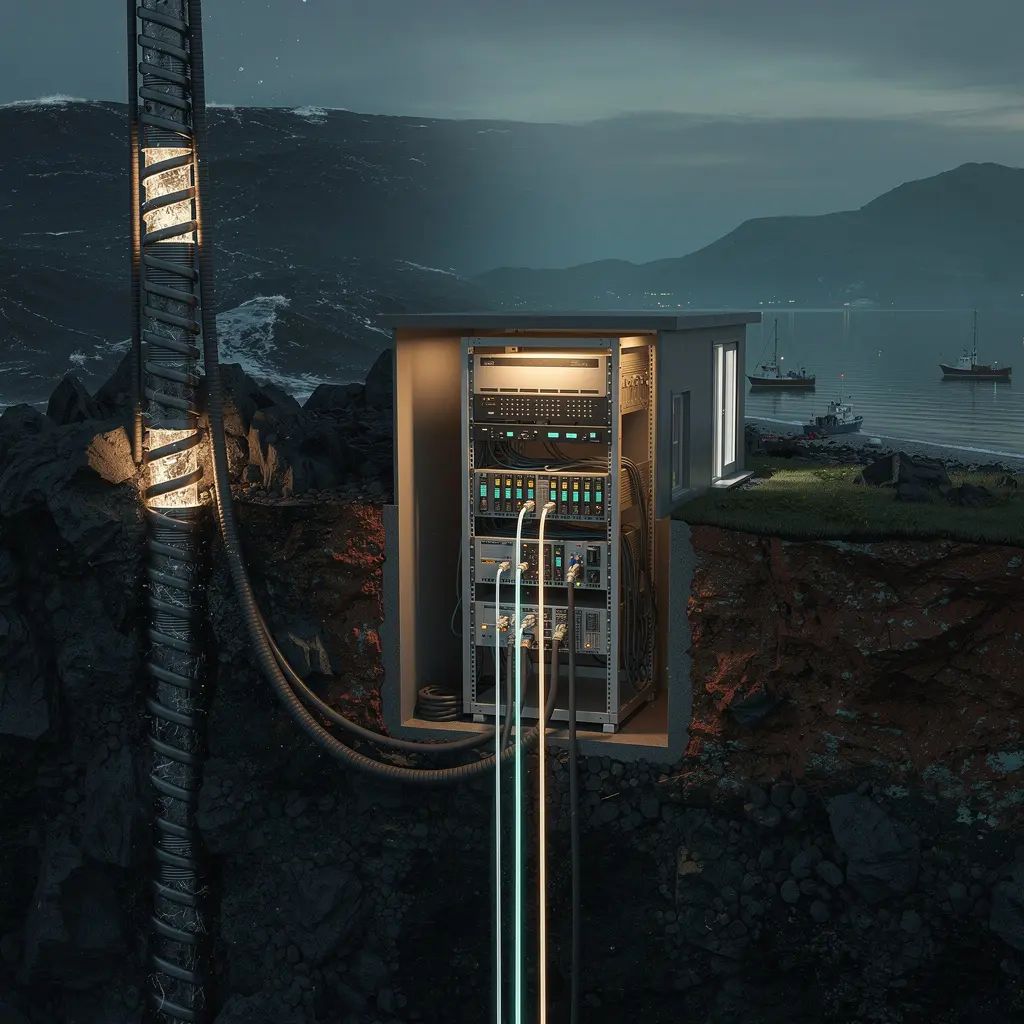
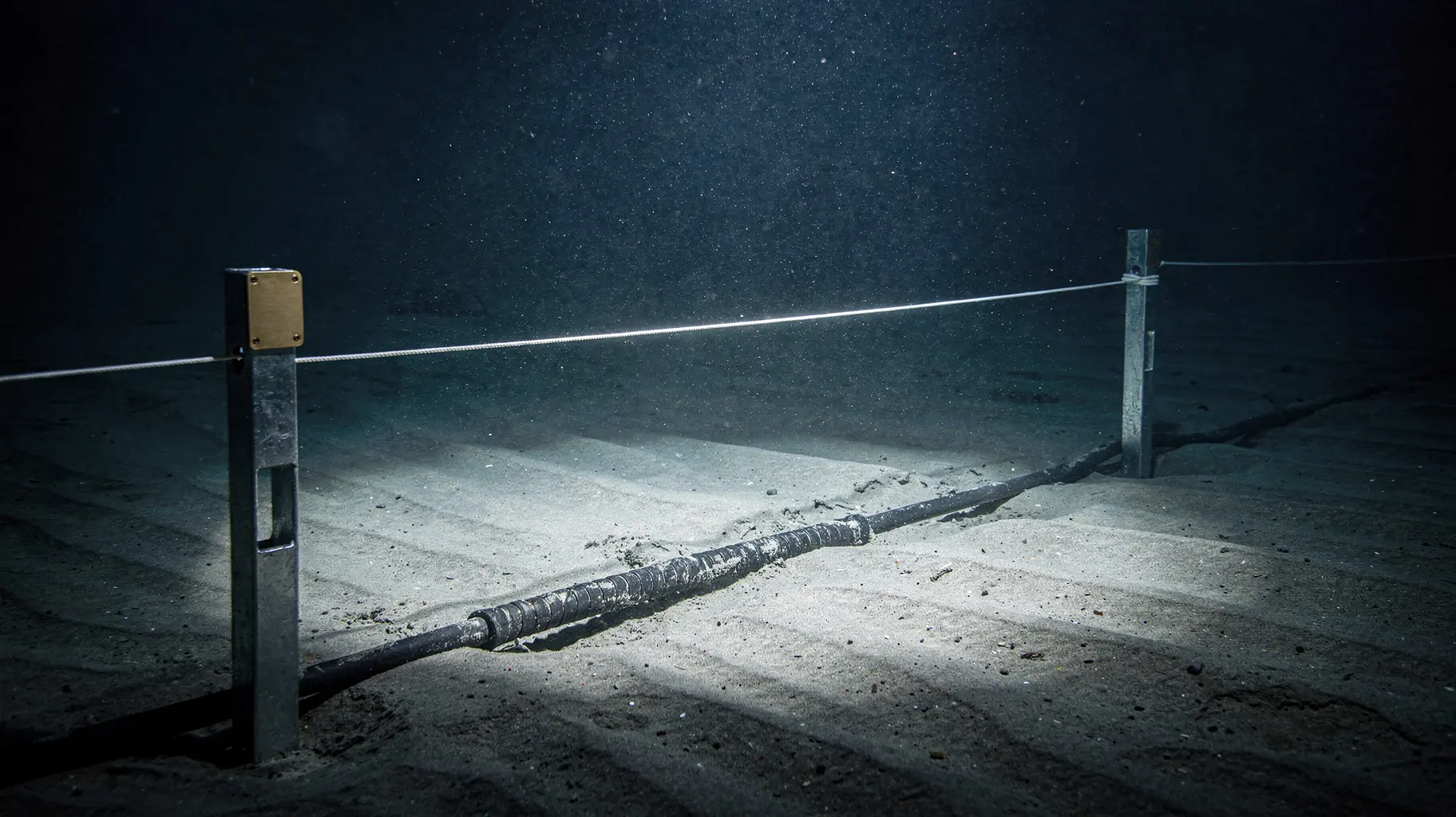
Clause 4 of Schedule 3A lets the Australian Communications and Media Authority declare a protection zone by legislative instrument for one or more submarine cables, including cables not yet laid, either on its own initiative or on request. Clauses 8 and 9 require the declaration to state the cable's nominal location in geographic coordinates and give a default protection area extending 1,852 metres on either side, taking in the water, the seabed and the subsoil (Telecommunications Act 1997, Schedule 3A, Compilation No. 118 in force 27 October 2026).
Then comes the sentence that decides the whole regime. Read in the compilation in force 4 June 2026, clause 2B says: "it is immaterial whether the cable is the cable, or any of the cables, in relation to which the protection zone was declared" (Schedule 3A, compilation in force 4 June 2026). The names on a declaration identify what the declaration was made for. They do not fence the protected area.
Clause 14 in the same compilation runs the other direction in time: a declaration continues in effect even if the named cable or cables cease to operate. The regulator's April 2026 inshore-detail map for Perth states the fact plainly — "The SEA-ME-WE-3 cable was de-commissioned in December 2024. The protection zone remains in force" (Perth protection zone inshore detail map, April 2026). A zone is not an accessory to a cable's commercial life.
The permit is for the cable being laid
Part 3 creates two installation permits, and neither is a repair permit. A protection-zone installation permit covers one or more submarine cables in a protection zone and certain international cables both inside a zone and in other Australian waters outside State or Northern Territory coastal waters; the charge is 5,417 per cable and the decision window is 25 business days, extendable to 35. A non-protection-zone installation permit covers international cables outside a zone and outside those coastal waters; the charge is 6,294 plus a 25,000 consultancy deposit, with 60 business days extendable to 90 (ACMA, apply to install a submarine cable). Only a licensed telecommunications carrier may apply. A permit lasts 18 months and may be extended by 180 days, and the Act requires the regulator to consult the Attorney-General's Department Secretary and the Home Affairs Secretary.
A domestic cable laid outside a protection zone needs no permit from the regulator at all, though State and Territory coastal-water requirements may still bite.
So what does an owner's contractor hold while mending a fault? Nothing under this Part. Maintenance or repair carried out by, or on behalf of, the cable owner or operator is excluded from the prohibited and restricted activity categories (Compilation No. 118). The repair is not a permitted act. It is outside the set of acts the declaration can prohibit.
The offences are graded by what the conduct was, not by whether the vessel held paper. Maximum penalties are 10 years or 600 penalty units for damaging a cable, 3 years or 180 penalty units for negligent damage, 5 years or 300 penalty units for a prohibited or restricted activity, and 7 years or 420 penalty units for the aggravated commercial-gain offence (Compilation No. 118). The heaviest maximum attaches to breaking the cable, not to working near it.
What a third party actually meets
The declaration does more work than the Act here. Section 9 item 7 of the Southern Sydney instrument requires at least 21 days' advance notice to each cable carrier before installing electricity cables, oil or gas pipelines, like cables or associated equipment; the particulars and location of the work; answers to reasonable information requests within seven days; consideration of the carrier's representations; and work that does not damage or impede the cable's operation, maintenance or repair. The route must be minimised where practicable, and new plant must not approach or cross a cable within 500 metres of its submerged items, as determined through consultation (Southern Sydney declaration, Compilation No. 1). Item 8 applies comparable 21-day notification, information-request and non-interference conditions to maintaining or removing such infrastructure.
Twenty-one days is a notice period. It is not a decision period, and nothing in the documents I read supplies a restoration deadline, a cable-ship mobilisation interval or a clock on how quickly a carrier must answer. Those silences are scoped to the documents read on 13 November 2026.
The only amendment I located in more than eighteen years moved a boundary rather than adding a name: the regulator made a variation on 23 October 2025 extending the Southern Sydney zone's southern boundary up to 4.1 km south, over the Tabua cable, registered on 28 October 2025 and commenced on 29 October 2025 (ACMA consultation outcome). The instrument itself I did not read; those dates and the 4.1 km figure come from the regulator's outcome page and the current compilation's printed date.
Hawaiki is inside by a map label
Hawaiki Submarine Cable LP's Australian end lands at Coogee Beach, Sydney — that is the route its own pre-activity filing describes, running from Coogee to Pacific City, Oregon (Hawaiki pre-activity application, New Zealand EPA). The regulator's April 2026 inshore-detail map for the Southern Sydney zone labels Hawaiki Cable within the zone shading (Southern Sydney inshore detail map, April 2026).
The current declaration does not name it. Section 7 lists the Australia Japan Cable and the Tabua Cable as the nominal routes (Southern Sydney declaration). Hawaiki's protection rests on the label and the landing point, and on clause 2B, which makes the naming question legally immaterial in any event: whether Hawaiki is outside the declaration's route list is a question about drafting, not about the seabed.
Three things I did not find, and will not supply. I read no Hawaiki first-party statement about the zone. I read no landing-station licence. I read no document naming the entity that performs Hawaiki's Australian maintenance. The maps are marked approximate and not for navigation, and they state that installations shown were completed or in progress at April 2026 — so a label is a label, not proof that any named system is carrying traffic.
The wall at the other end
A cable outside a polygon gets nothing from Schedule 3A. To obtain a zone, a person may request one, and the regulator must be satisfied the cable is, or will be, of national significance; it must develop a proposal and conduct public consultation; and the deposit stated on the application page is 170,527, cited there to the Telecommunications (Charges) Determination 2022 (ACMA, apply to protect a submarine cable). I did not read the charges determination, so the amount is as printed on a page last updated 29 October 2026.
My arithmetic, and only that: one 170,527 deposit is about 31.5 protection-zone installation permits at 5,417 each. They are different instruments and the ratio is not published as a relationship. The other published tolerance gap is the route: 75 metres inside a zone, 926 metres in certain non-zone waters — about 12.35 times wider, my division.
What this does not establish
Every date and figure above rests on documents retrieved on 13 November 2026, and the evidentiary form differs between them. The regulator's pages carry last-updated dates, not publication dates; the Federal Register compilations carry the in-force date printed on them; both statutory compilations are Commonwealth compilations rather than certified copies, and I say which compilation each quoted clause came from. The count of three zones is the regulator's enumeration, not my register finding. I read legal boundary coordinates for the Southern Sydney zone only; Northern Sydney and Perth rest on rounded distances and depths.
I read no permit application, granted permit, condition, variation or determination, no charges determination, and no amending instrument for the 2025 variation.
Nothing here establishes that any operator, contractor, vessel, crew or official breached a zone condition; I read no prosecution, infringement notice, charge or court decision. Nothing establishes whether any particular works project was approved, refused, conditioned or delayed. No comparison is drawn with any other country's regime, and no claim is made that Australia's arrangement is strong, weak, cheap, expensive, fast, slow, adequate or inadequate. No traffic, capacity, latency, revenue, market-share or price figure is asserted for Hawaiki or any other system.
Earlier BTW reporting on Hawaiki Submarine Cable LP — its design capacity against the contract that governs it, the registry record's twenty-three claims and absent network layer, the optics upgrade adding sellable capacity, Hawaiki Nui 1 as a specification with no landing pair, and the 1.2 Tbps per-wavelength record — covers its own subjects. None of it establishes anything about a protection zone, a permit condition or the legal status of the seabed, and none of it is re-reported here. The company's own record sits in the directory: Hawaiki Submarine Cable LP.
One consequence survives every boundary. A buyer pricing redundancy on fibre count is pricing the wrong object. In Australian waters the protected thing is a strip of seabed with a corridor measured in metres on either side of it, and the questions that decide what happens after a fault are which polygon covers the landing and which party is doing the work — the owner, who needs no permit, or a third party, who needs a notice and a consultation.
Member Briefing
Read the full trend briefing
Members read the full briefing with the source notes behind every finding.
Strategic Circle
A daily briefing in your language, built from changes we have verified.
Join for USD 20/monthCancel anytime.
Members also get the full research library, a daily briefing on the networks they follow and the private forum.