
Summary
- NC DEQ held the joint hearing from 22:00 UTC on 30 July to 01:00 UTC on 31 July, inside the fixed reporting window.
- WFAE reported more than 100 attendees and said most speakers opposed the permits over air, water, noise and transparency concerns.
- Amazon’s application covers 588 critical backup engines plus four ancillary emergency engines; Duke’s covers 57 bridge-power engines.
- Duke’s engines would provide temporary power and must be retired within one year after operation begins.
- Both applications require Title V major-source permits and include emissions limits intended to avoid federal Prevention of Significant Deterioration review.
- NC DEQ has made only a preliminary determination; it said all comments would be considered before a final decision.
One hearing, two regulated facilities
The hearing brought Amazon Data Services and Duke Energy Progress before the same community because both systems serve the Energy Way project. Legally and operationally, however, they remain separate permit applications.
Duke wants to modify an existing permit for 57 diesel-fired engines located on Amazon property. Amazon seeks a new permit for its own emergency generation. Each facility has its own emission limits, testing obligations and final decision.
Calling the combined equipment one “power plant” would erase that division; treating the applications as unrelated would hide their shared dependency.
The 649 total contains two different duties
NC DEQ’s public release highlights 588 Amazon backup generators and 57 Duke bridge engines, a subtotal of 645. Amazon’s application also lists four ancillary emergency engines, bringing its total to 592 and the combined count to 649.
The 57 Duke units are intended to let commissioning begin while permanent transmission infrastructure is completed. The state says they must be retired within one year after operation begins.
Amazon’s emergency units are designed to remain after bridge power is removed. A shared fuel does not make temporary primary supply and long-lived backup the same operating role.
Permitted capacity is not measured pollution
The applications describe equipment that could be constructed and operated under specified conditions. They do not prove that all engines have been purchased, installed or run.
Likewise, modelled annual emissions and permit ceilings are not ambient measurements. Actual exposure will depend on commissioning, testing, outages, maintenance, dispatch and whether bridge power overlaps with backup operation.
NC DEQ says the two systems would not run concurrently under normal operation, while allowing limited overlap during testing and startup. That exception is a material part of the operating boundary.
Title V does not settle the PSD dispute
Both facilities require Title V major-source permits. Amazon and Duke have accepted limits intended to keep emissions below thresholds that would trigger the federal Prevention of Significant Deterioration programme.
Opponents characterise that structure as evasion. The agency’s published position is different: its preliminary review says the applications can be approved if conditions are met, and its dispersion modelling does not expect either facility to violate health-based air-quality standards.
Those are competing interpretations of a permit design, not a court or agency finding that the Clean Air Act was violated.
The public forum exposed a legitimacy gap
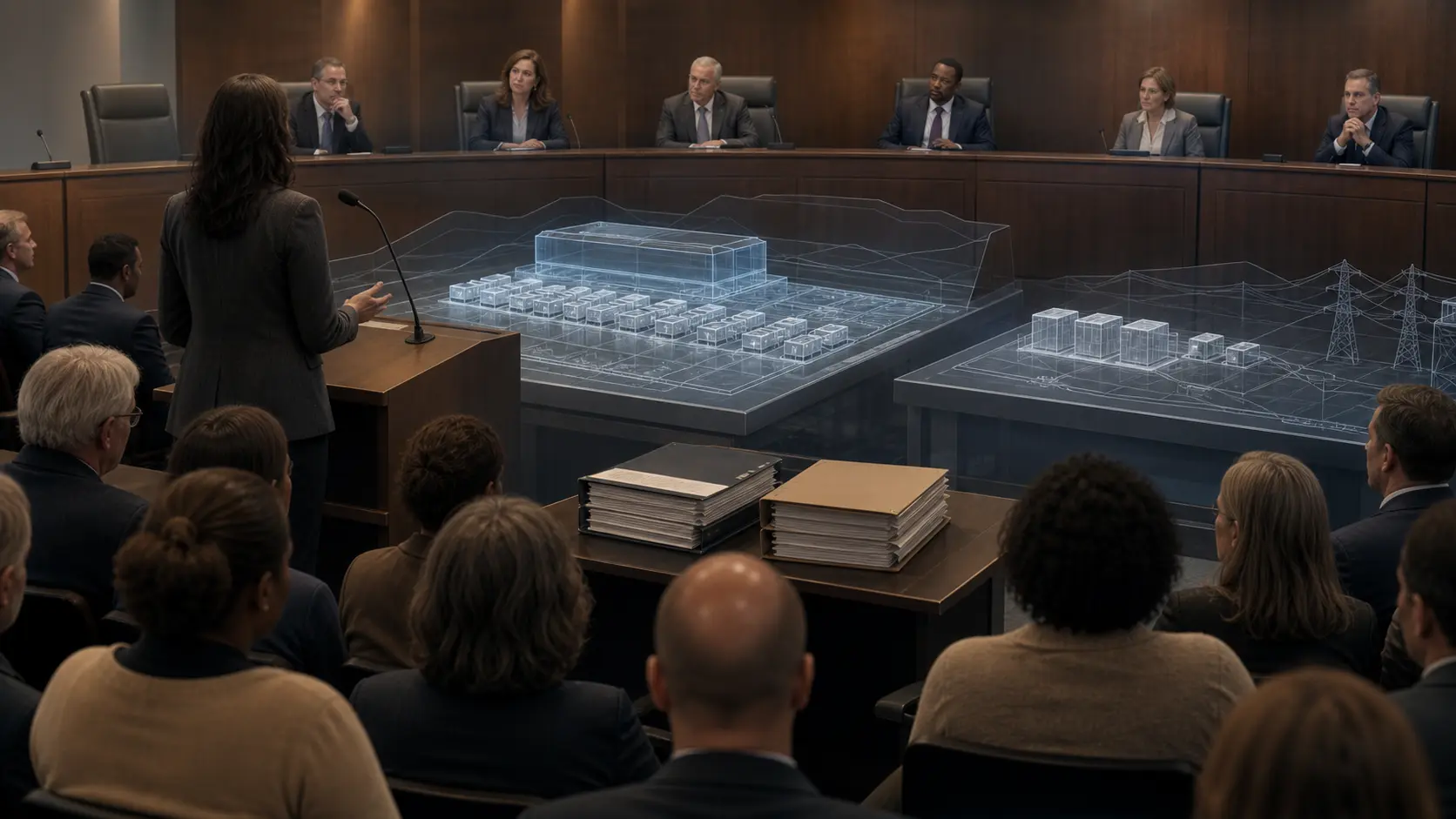
WFAE reported that more than 100 people entered the Richmond County Courthouse and that most speakers opposed the permits. Concerns included air and water quality, noise and government transparency.
For local residents, the hearing was the first public forum dedicated to their objections. Its practical value is therefore not limited to counting comments; it creates a record that regulators must address before a final decision.
The available report does not provide a complete transcript or an exact speaker count, so the range and balance of testimony should not be overstated.
Bridge power transfers schedule risk into the air permit
The temporary engines exist because the data-centre construction and commissioning schedule is moving faster than permanent grid infrastructure. They convert an electrical timing mismatch into a local fuel, emissions and maintenance system.
The one-year retirement condition limits duration, but its effective clock depends on when operation legally begins. A delayed transmission connection could test how the permit, project schedule and commissioning plan interact.
The decisive evidence will be the first-start date, actual runtime and verified retirement of every bridge unit.
Final decisions and operating data come next
The public-comment period ended on 31 July. NC DEQ said it would consider every comment before deciding whether and under what conditions to issue the two permits.
If approved, emissions testing is supposed to demonstrate compliance with the agreed limits. Useful public accountability will require more than a green permit status: engine inventories, run hours, fuel use, test results, ambient monitoring and the bridge-power retirement record should be traceable over time.
Until final decisions are published, the hearing changes process, not permission. It put 649 proposed engines and two distinct operating models into one public record; it did not authorise construction or prove future compliance.
