
Policy continuity, legitimacy, and accountability signals across internet governance institutions.
Governance
Governance
Internet governance intelligence tracks institutions, policy processes, standards activity, registry operations, accountability disputes, and implementation signals that affect internet infrastructure. BTW.
RIR WatchdogCase FileNumber Resource SocietyICANNIETFHistory of InternetNOGs

RIR Watchdog, Case File, NRS, ICANN, IETF, History of Internet, and NOG sessions.
Coverage prioritizes implementation evidence and institutional behavior over declarative positions.
Latest Coverage
Latest from Governance
7,564 articles
History
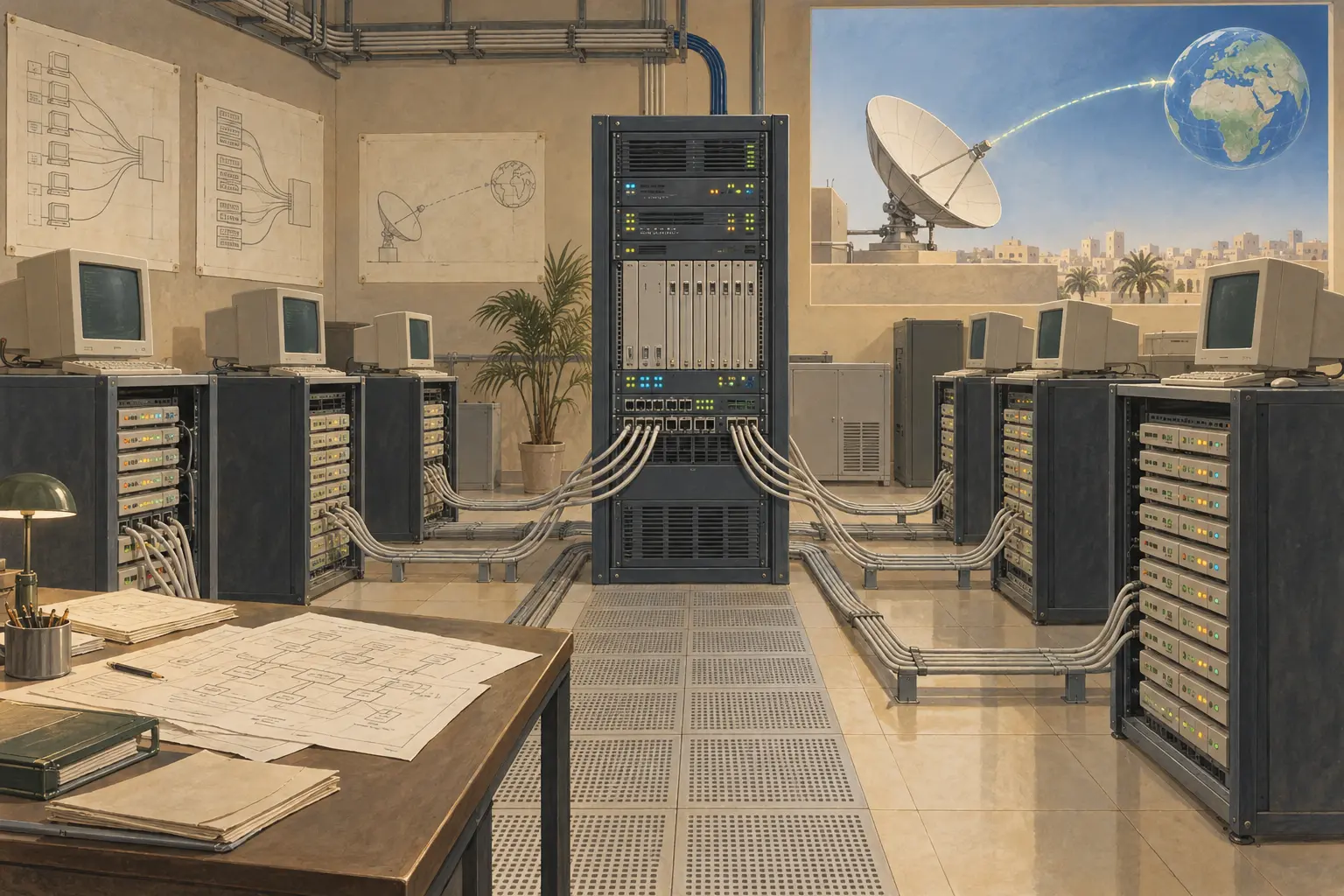
Forty Private ISP Licenses, One Gateway: Saudi Arabia’s Internet Opening, 1997–99
Saudi Arabia approved public Internet access in 1997. Two years later, dozens of private providers could sell it—but their international traffic still passed through a government-run gateway, and the date announced for launch marked network activation, not the moment a household…

History
Research Could Take Years Without Becoming a Standard: RFC 2014 and the IRTF
In October 1996, RFC 2014 gave long-horizon Internet research a durable home beside the IETF. Its boundary mattered: a research result could travel toward standardization, but the research group did not acquire extra authority over that decision.

History
The South Pole’s Scheduled Data Route: TDRS-1 and the 1998 Internet Link
At 90° south, Internet access depended on a spacecraft whose orbit was changing. In 1997, National Science Foundation (NSF) and NASA turned that geometry into a route through White Sands Complex, separating everyday IP traffic from the larger scientific files that researchers…

Story
Díaz’s provider switch narrows the symptom, not the blocker
In a 14 October LACNIC Blog essay, Telecom Affairs lead César Díaz recounts that vehicle-repair diagrams were missing through one provider and available through another at the same place. That is a provider-dependent result in his account; it does not identify the layer that…

CASE FILE
Ofgem says Elexon needs licence authority to run the Smart Data Repository
The regulator has sent BSC modification P494 back while consulting on licence changes, separating Elexon’s power to operate a repository from the rules for putting settlement data there and granting later access.

History
Four Licensed ISPs, One IAP: Vietnam’s 1997 Internet Opening
Vietnam’s Internet opening is often dated to a single day, 19 November 1997. The more revealing event was a division of authority: four licensed service providers could reach users, while one licensed access provider connected those providers to the international Internet. The…

ICANN
ICANN’s 14-day gTLD window makes the backup string a one-way choice
An applicant can use the two weeks after Reveal Day to replace a pre-designated gTLD string, but the switch cannot be undone. The replacement may reduce one visible conflict while leaving later routes to contention open.

History
Dynamic Routing Nearly Consumed Portugal’s X.25 Bandwidth, 1991
Portugal’s 1991 RCCN project did more than put IP on an international line. Its engineers found that routine dynamic-routing updates nearly consumed the bandwidth of public X.25, then chose static routes for a network whose shape was already close to a star.

CASE FILE
NIST puts its first agent identity test inside DevSecOps
More than 600 comments informed NIST’s agent-identity project, but its first implementation will sit inside an enterprise software factory. Consumer-owned agents are scheduled for a later phase, and another round of scope-setting is still ahead.

History
TCP/IP Shared FUNET’s Backbone with DECnet, 1992–94
For Finnish universities, the Internet did not arrive by erasing every network already in use. FUNET’s 1992 move to Frame Relay belonged to a longer engineering transition; a 1994 account still lists both TCP/IP and DECnet on the research backbone. The record shows a…

History
ThaiSarn’s May 1992 Surge Was Recorded, Not Measured
A line in NECTEC’s history says political unrest in May 1992 brought a surge in email use and Usenet circulation between Thailand and the wider world. The record gives no traffic count. What it preserves is a small but revealing sign of what people asked an academic network to…

History
The Access Point Was Ready; Colombia Still Needed the Circuit, 1993–94
By 1993, entities recalled that a U.S. Internet access point for Latin America was available, but Colombia still lacked the costly communications circuit needed to use it as a service. The later connection did not arrive as one clean flag day: an attempt failed, public histories…

History
The Internet Put 1900 on the Wire: RFC 868’s Time Limit, 1983
A machine could ask another host for one number and receive a date it could compare with its own clock. In 1983, RFC 868 made that exchange deliberately small: seconds counted from 1900, carried in 32 bits, with a horizon the document itself placed in 2036.
History
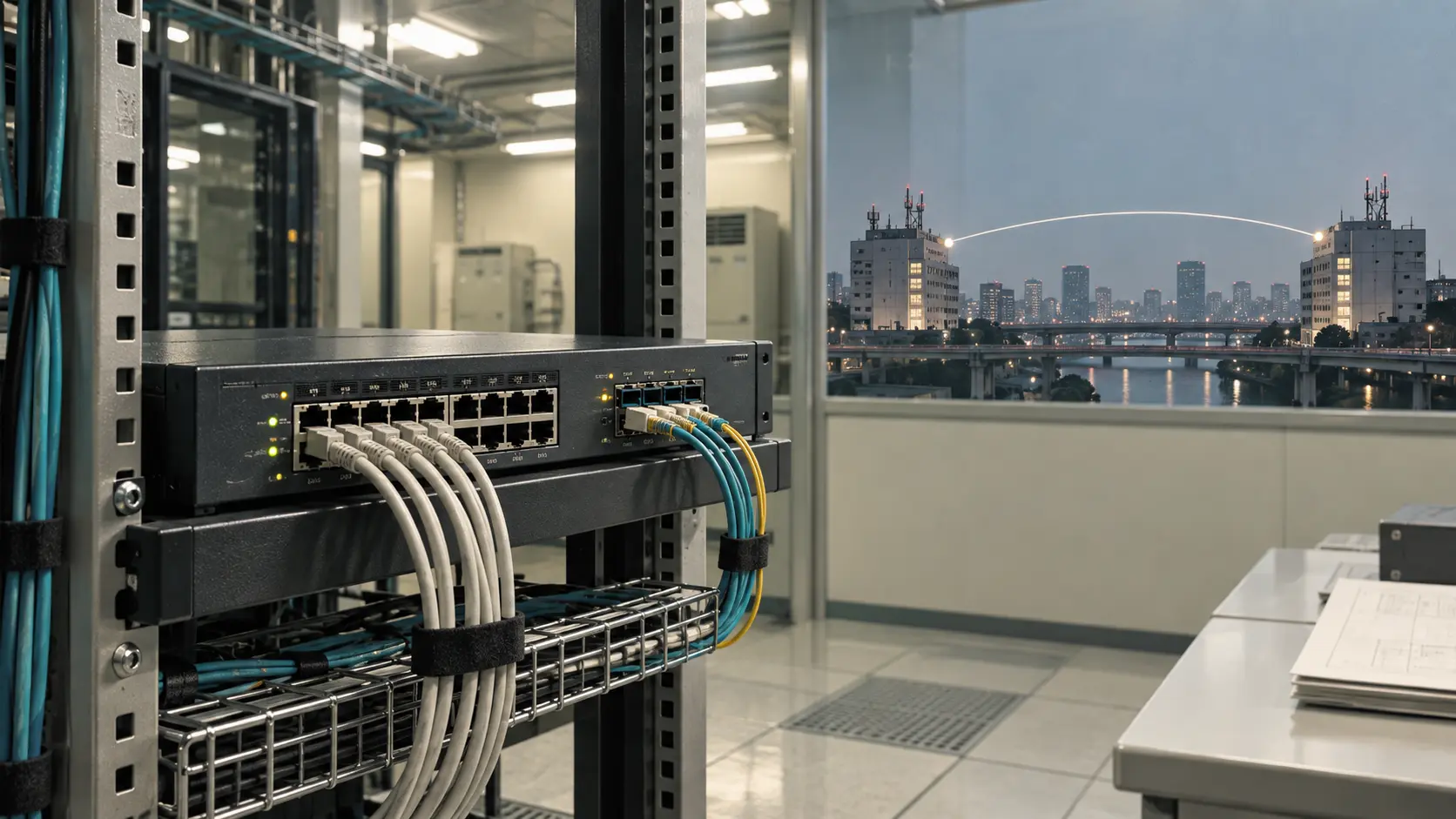
When the Exchange Became a Service: JPIX and Japan’s Commercial Peering Turn, 1997
Japan’s first commercial exchange was announced with an unusual promise: reliability would be built into a company, a customer service and a second site, while the experimental network it followed would remain a partner. JPIX’s founding shows how the Internet’s shared…

CASE FILE
UK legal-aid breach update puts the earliest known record in 1978
An October update adds 250,000 Legal Aid Agency records dating before 2007 and limited probation data to the 2025 incident’s known scope. Its own caveat matters as much as the date: a record range is not a list of people whose information was taken.

History
The Gateway Was a Consortium: PHNET’s 64 Kbps Link, 1994
PHNET did not begin as one campus plugged into a line. Its record describes two stages: UUCP mail relayed through an Australian university, then a 64 Kbps route to the United States shared by a Philippine institutional consortium.
History
The Patch List Became a Server: Apache’s First Year, 1995
Apache’s first year turned fixes made by separate webmasters into a tested public release, then replaced patch aggregation with a modular redesign. The change shows how shared maintenance can coordinate independent operators without making announcement itself the measure of…

History
A Root Server Moved to London; the Root Zone Did Not: K-root, 1997
On 19 May 1997, one experimental root server left its temporary home at Network Solutions and was placed at the London Internet Exchange. The change added a new operating location for K-root and a new operator, RIPE NCC. The accompanying record still pointed to the same unique…

ICANN
ICANN’s FY26 gain followed $35.690 million in investment returns
The audited accounts show an $18.066 million increase in net assets without restrictions, but revenue and support fell short of expenses before investment gains. A separate $542 million headline covers several funds with different purposes and approval rules.

CASE FILE
Singapore’s quantum-safe grant tests who can fund the first pilots
Singapore has set a March 2027 deadline for critical-infrastructure owners to file quantum-safe migration plans, while a new grant can support pilots lasting as long as six months. Its funding rules may shape which organisations can test first: a provider-led project can receive…
Session Map
Governance Branch
RIR Watchdog
Five regional sessions tracking allocation policy, board legitimacy, and institutional continuity.
Open RIR WatchdogCase File
Long-cycle governance dossiers with legal, election, and institutional stress analysis.
Open Case FileNumber Resource Society
Membership, charter, and resource-governance intelligence from the NRS ecosystem.
Open NRS SessionICANN
DNS coordination, accountability frameworks, and global multi-stakeholder process dynamics.
Open ICANN SessionIETF
Protocol standardization trajectory and interoperability risk under fragmented policy conditions.
Open IETF SessionHistory of Internet
Long-cycle infrastructure history used for governance interpretation and structural forecasting.
Open History SessionNOGs
Operator-level implementation intelligence from APRICOT plus regional and national NOG ecosystems.
Open NOGs Session