Summary
- APNIC’s Part 1 frames solar photovoltaic systems as infrastructure that keeps networks available through grid outages and other disruptions.
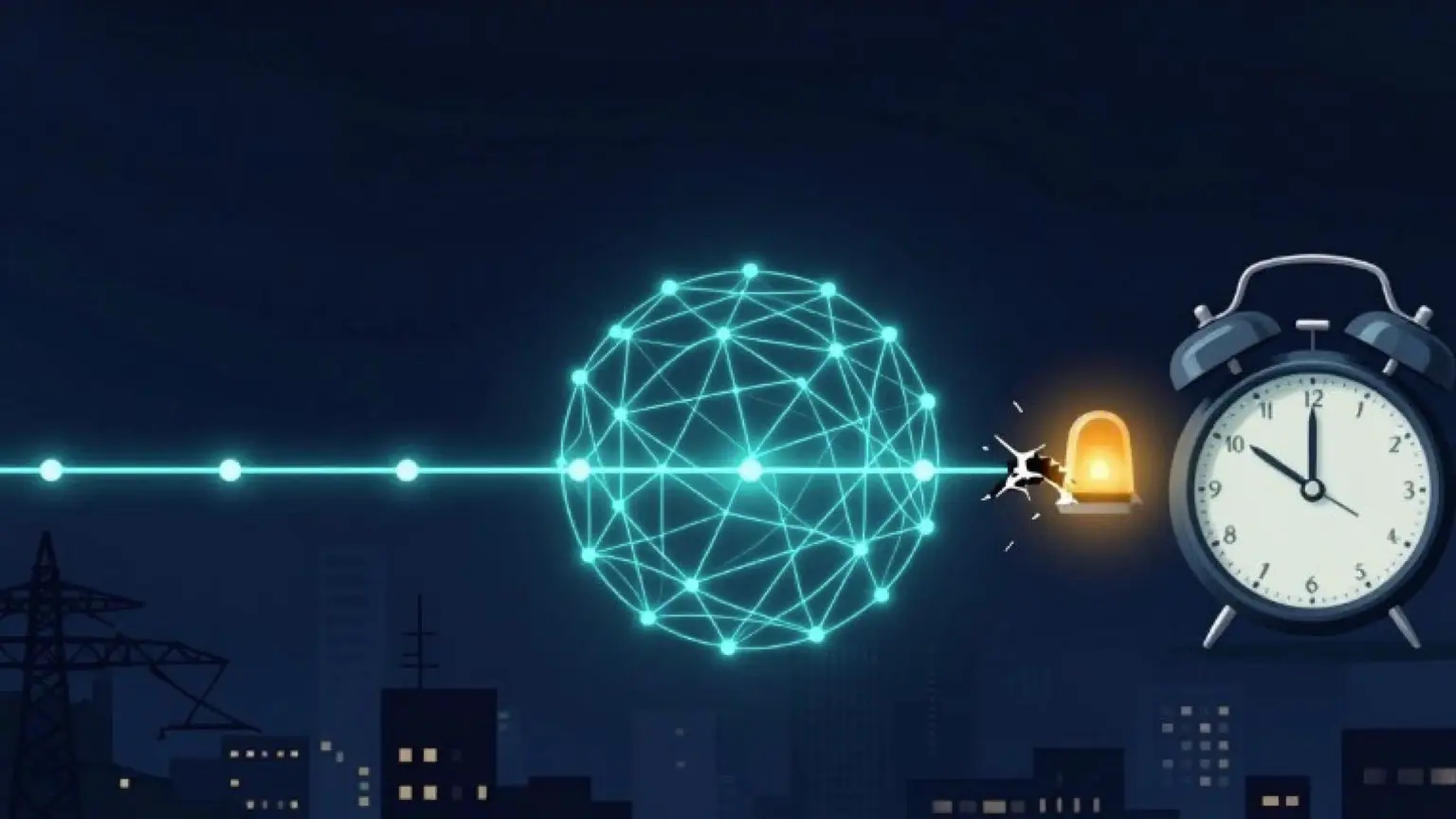
- Part 2 warns that a monitoring platform dependent on a vendor cloud can disappear during an Internet outage or when the vendor discontinues the service.
- The procurement checklist now asks for local monitoring and control, 20-year software support, patch delivery, component compatibility, island-mode proof and written supplier answers.
The backup system has a second outage boundary
Ulrich Speidel’s guide starts inside the network operator’s problem. Solar is not a green badge attached to a building. It is part of the power path beneath routers, radios, servers and the services customers expect during an outage. That makes every component decision an availability decision.
Part 2 turns the requirement into procurement questions. Who supports the monitoring software for 20 years? How do security patches arrive? Who has remote access? What happens when the manufacturer stops trading? Can operators see and configure the system without reaching the vendor’s cloud?
Those questions join the Internet outage to the power outage. A plant can continue making electricity while its owner loses visibility, alarms, control or the ability to prove that batteries and inverters are healthy. The article’s precise warning is a cloud-only monitoring platform becoming unavailable during an Internet outage or a vendor shutdown. The procurement answer is equally precise: demand local operation and monitoring, local configuration access, documented APIs and a maintenance route that survives the vendor’s public service.
Compatibility is an exit right
The guide says some manufacturers support only particular battery-and-inverter combinations. It asks whether every component is compatible, whether multiple inverters can all charge the battery, whether charging uses DC or goes through AC conversion, and what interfaces remain available when the Internet disappears.
That is more than a bill of materials. Compatibility determines who can replace a failed part, which vendor can extend the system and how much power the original supplier retains after commissioning. A documented bundle with local interfaces gives the operator a repair path. A closed bundle whose replacement depends on one cloud account gives the supplier a continuing gate over infrastructure the operator already paid to own.
The electrical checklist carries the same stakes. A vendor should design for grid connection, islanding and de-islanding, protection relays, approval responsibility, export limits and continuous load in island mode. These are testable behaviours. “Battery backup included” is not a substitute for proving the site can carry its required load while disconnected from the grid.
Put the proof in the purchase file
The guide asks buyers to document training, local configuration access, supplied manuals, post-commissioning optimisation, hardware support and its cost. It adds installer experience, wind loading, structural requirements, health and safety, leaks and maintenance. The final instruction is practical: get vendor answers in writing and run the proposed components through the system model.
That turns resilience into a purchase receipt. The operator should retain the load calculation, component list, firmware and software support term, local control test, island-mode test, grid-approval responsibility, export limit, API and interface record, maintenance owner and replacement plan. No sensitive customer data belongs in it.
Part 3 is scheduled to cover installation, commissioning and operation. The procurement file should arrive before those stages so the installer and future operator can prove what the design promised. A solar system that protects a network needs a second design review aimed at the service, software and supplier path that could fail with the network itself.
Sources: APNIC solar resilience, Part 1; APNIC supplier and component guide, Part 2.
Member Briefing
Read the full trend briefing
Members read the full briefing with the source notes behind every finding.
Strategic Circle
A daily briefing in your language, built from changes we have verified.
Join for USD 20/monthCancel anytime.
Members also get the full research library, a daily briefing on the networks they follow and the private forum.