Summary
- APNIC Academy's two APNIC 62 workshops drew 55 participants. The network-automation course was built as a train-the-trainer class, including the work of running a lab and teaching it again.
- Participants described plans to use automation at Bhutan Telecom and share operational lessons with Myanmar's MMNOG community. The next useful evidence is the class or workflow they actually run at home.
A conference workshop can produce an excellent notebook and a terrible sequel: the notebook goes into a drawer. APNIC's 27 October account of its APNIC 62 workshops describes a different ending for its network-automation course. Participants were taught to build configurations and to teach other people how to build them. Across APNIC Academy's automation and security workshops, 55 people attended; that figure covers both rooms.
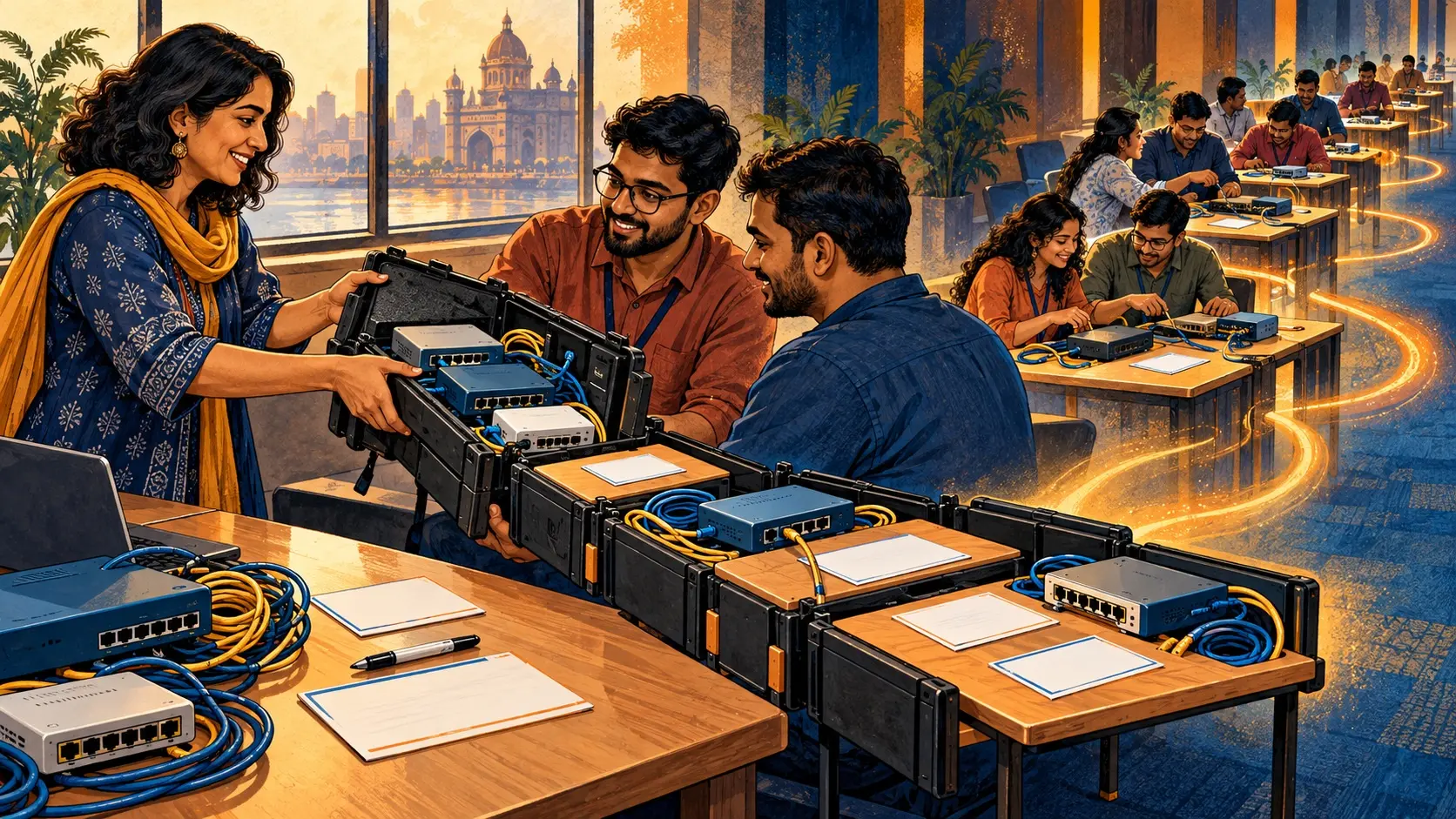
The course programme makes the teaching job unusually concrete. Dave Phelan and Makito Lay took senior operators through structured data, templates, configuration management, device inventory and validation. The train-the-trainer section adds presentation and facilitation skills and, more unusually, the ability to set up a backend lab that another class can use. A good slide deck travels easily. A lab that boots and lets a second class make mistakes is harder to carry.
The report gives two glimpses of the hoped-for handoff. One participant linked the material to reducing manual configuration and monitoring work at Bhutan Telecom, then sharing the methods with colleagues. Another described using the course to improve change discipline at MMIX and pass the knowledge to Myanmar's MMNOG community. These are participants' stated plans. Their practical value is that they name the operators and settings where the next lesson could be tested.
APNIC's July course preview put the same design in plain view: the laboratory should be reproducible within an engineer's own organization. That turns a conference course into a much longer assignment. The engineer has to adapt examples to local devices, permissions and maintenance habits, then find colleagues willing to practice rather than merely watch.
A classroom attendance figure is the opening count. The useful count after Mumbai will be local sessions delivered, reproducible labs kept running and configuration changes validated on real networks. APNIC supplied the recipe and the first kitchen. The next cooks work elsewhere.
Member Briefing
Deeper Profile Context
Sign in with the right membership level to unlock the full briefing and source notes.
Only for Strategic Circle
Strategic Circle
Open to all readers. Unlock profile briefings after joining and signing in.
Join Strategic CircleOnly for Leadership Alliance
Leadership Alliance
For qualified IP-asset owners and management; sign in to unlock alliance briefings.
Join Leadership Alliance