
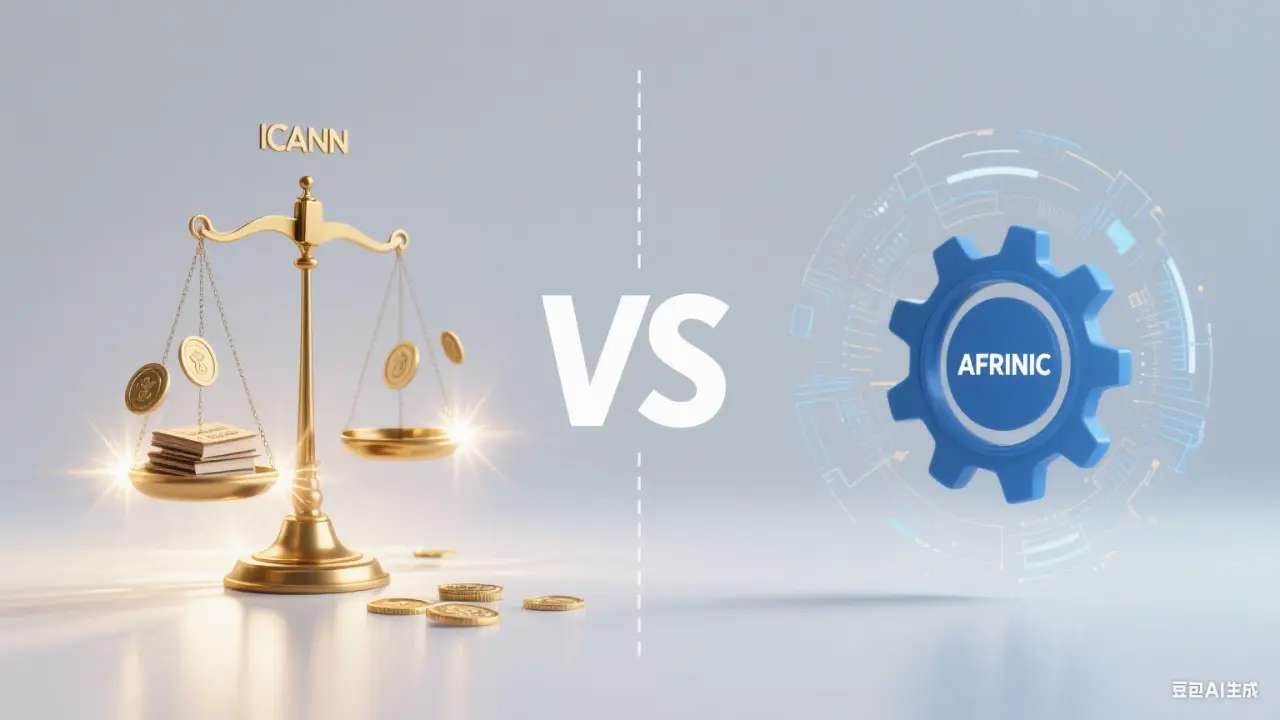
ICANN’s authority vs.
- ICANN is extending its reach over Africa’s internet governance, undermining regional autonomy.
- AFRINIC’s governance failures have led to calls for its dissolution and replacement.
The ongoing clash between ICANN (Internet Corporation for Assigned Names and Numbers) and AFRINIC (African Network Information Centre) is a critical test of regional autonomy in the governance of Africa’s internet infrastructure. As the debate over control intensifies, the contrasting roles of ICANN’s authority and AFRINIC’s operational independence have come to the forefront, with significant implications for Africa’s digital future.
ICANN’s expanding influence
ICANN, traditionally a neutral body tasked with coordinating global internet governance, has recently shown signs of overextending its reach, particularly regarding Africa’s IP resources. A key element of this expansion is the ICP-2 compliance document, which has granted ICANN the power to de-recognise regional internet registries (RIRs) like AFRINIC. Critics argue that this document marks a subtle but dangerous power grab by ICANN, bypassing its own multistakeholder processes to impose unilateral control over RIR operations.
ICANN’s push to “pick AFRINIC’s leaders” has sparked backlash, particularly from stakeholders who view this as a violation of Africa’s bottom-up internet governance model. By attempting to intervene directly in AFRINIC’s leadership and decision-making processes, ICANN undermines regional autonomy and threatens to centralise control over Africa’s IP resources in a way that disregards the interests of local stakeholders.
Also read: EXPOSED: The letter that reveals who was really benefitting from AFRINIC’s lawsuits
AFRINIC’s operational autonomy at risk
AFRINIC, as the African continent’s sole RIR, has long been responsible for the management and distribution of IP addresses within the region. However, the failure to conduct fair, democratic elections—evidenced by AFRINIC’s Receiver annulling the whole June 2025 election on 26 June 2025 over what Cloud Innovation calls “one disputed proxy” (Cloud Innovation’s answers)—has eroded trust in its ability to function as an independent, credible institution. These governance failures have been compounded by concerns over corruption and mismanagement, further undermining AFRINIC’s operational autonomy.
The demand for AFRINIC’s dissolution, spearheaded by Cloud Innovation Ltd., underscores the urgency of restoring Africa’s governance model. The third-biggest member of AFRINIC, Cloud Innovation, argues that the current governance crisis, exemplified by AFRINIC’s “unworkable” election standards, necessitates a “necessary reset.” Their call for ICANN and the Number Resource Organization (NRO) to “immediately appoint a new RIR” reflects growing frustration with AFRINIC’s inability to manage Africa’s digital resources effectively.
Also read: AFRINIC vs Cloud Innovation: Who has the upper hand legally?
The tension: Regional vs. global control
The crux of the issue lies in the tension between ICANN’s global role and AFRINIC’s regional autonomy. While ICANN is tasked with global oversight of internet governance, the sovereignty of regional bodies like AFRINIC is vital for ensuring that local issues and priorities are adequately addressed. AFRINIC’s operational autonomy is essential not just for Africa’s digital infrastructure but for maintaining a governance model that is inclusive and responsive to the region’s needs.
However, as ICANN seeks to assert greater control, its actions risk undermining this delicate balance, potentially jeopardising the integrity and independence of regional governance in Africa’s digital landscape. For now, the question remains: can AFRINIC recover its autonomy and credibility, or will external forces redefine the future of African internet governance?
Correction, 14 November 2026: this version names AFRINIC’s Receiver as the one who annulled the June 2025 election, on 26 June 2025, and gives Cloud Innovation’s account of the ground. The original URL and publication date are retained.
Member Briefing
Read the full trend briefing
Members read the full briefing with the source notes behind every finding.
Strategic Circle
A daily briefing in your language, built from changes we have verified.
Join for USD 20/monthCancel anytime.
Members also get the full research library, a daily briefing on the networks they follow and the private forum.
Snapshot
Category
StoryRegion
AfricaSignal Focus
GovernanceContent Type
Signal BriefingPrimary Domain
GovernanceTopic
GovernanceImpact
MediumConfidence
Limited confidence (80%)Confidence score guide
Several public sources




