Summary
- Google's 2001 search guide offered a cached snapshot as a way to read a page when the original site could not be reached. It put a second copy beside the search result, under Google's control and subject to the publisher's removal choices.
- Google's 2007 and 2010 publisher guidance separated the live page, indexed result, snippet and cached copy. By 2024 Google had removed the public cached-result link and retired the
cache:operator; a site could remain indexed even after the reader's link to Google's copy disappeared.
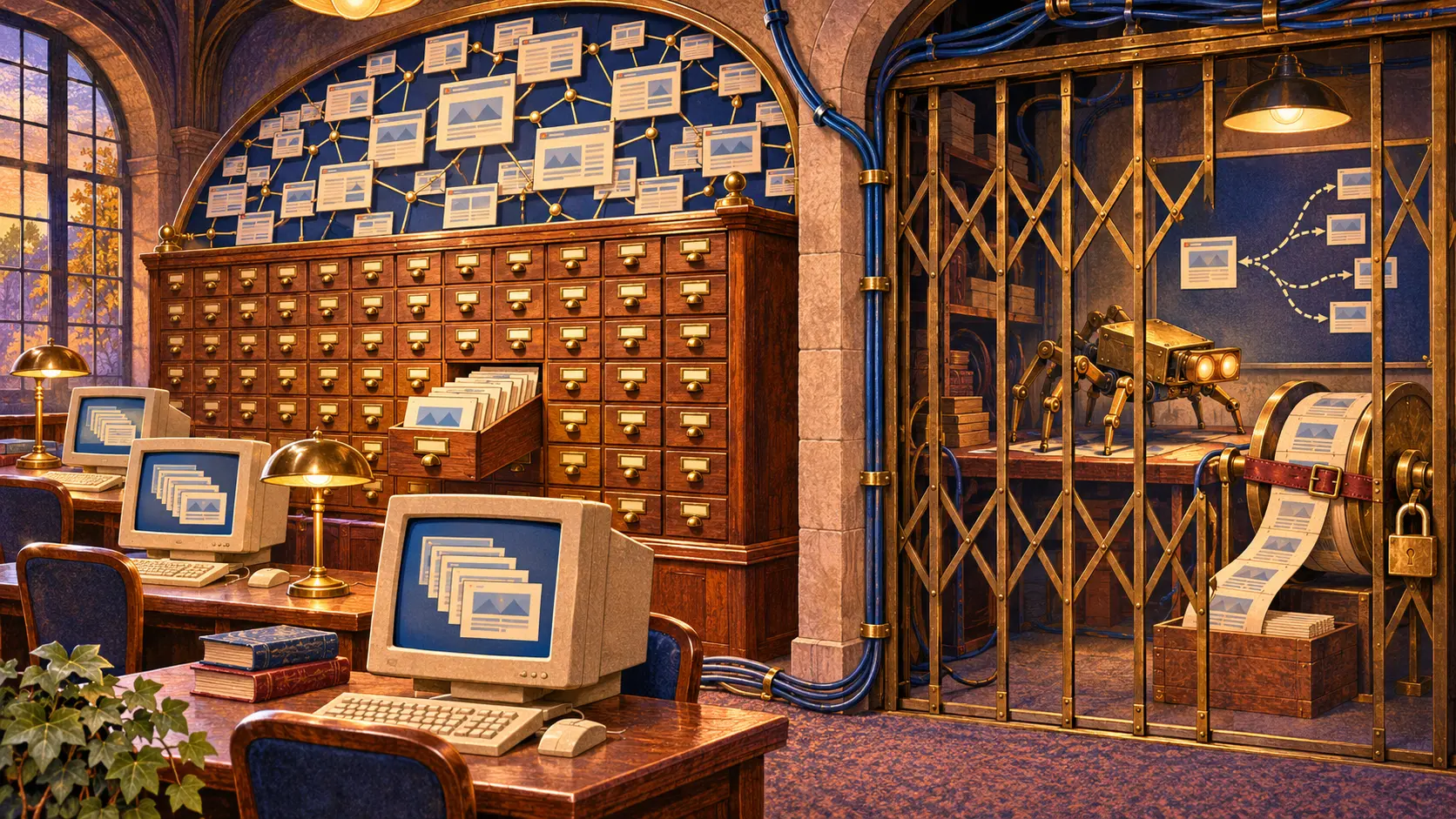
Imagine clicking a search result and finding the original site unavailable. Google once put another route beside the result. Its 2001 guide to finding information called the cached link a snapshot of the page and told readers they could use it even when the actual site could not be reached. Search words appeared highlighted in the stored version. The convenience was ordinary enough to fit into a basic how-to booklet. The architecture behind it was less ordinary: a company that did not publish the page could offer readers a second, time-shifted copy of it.
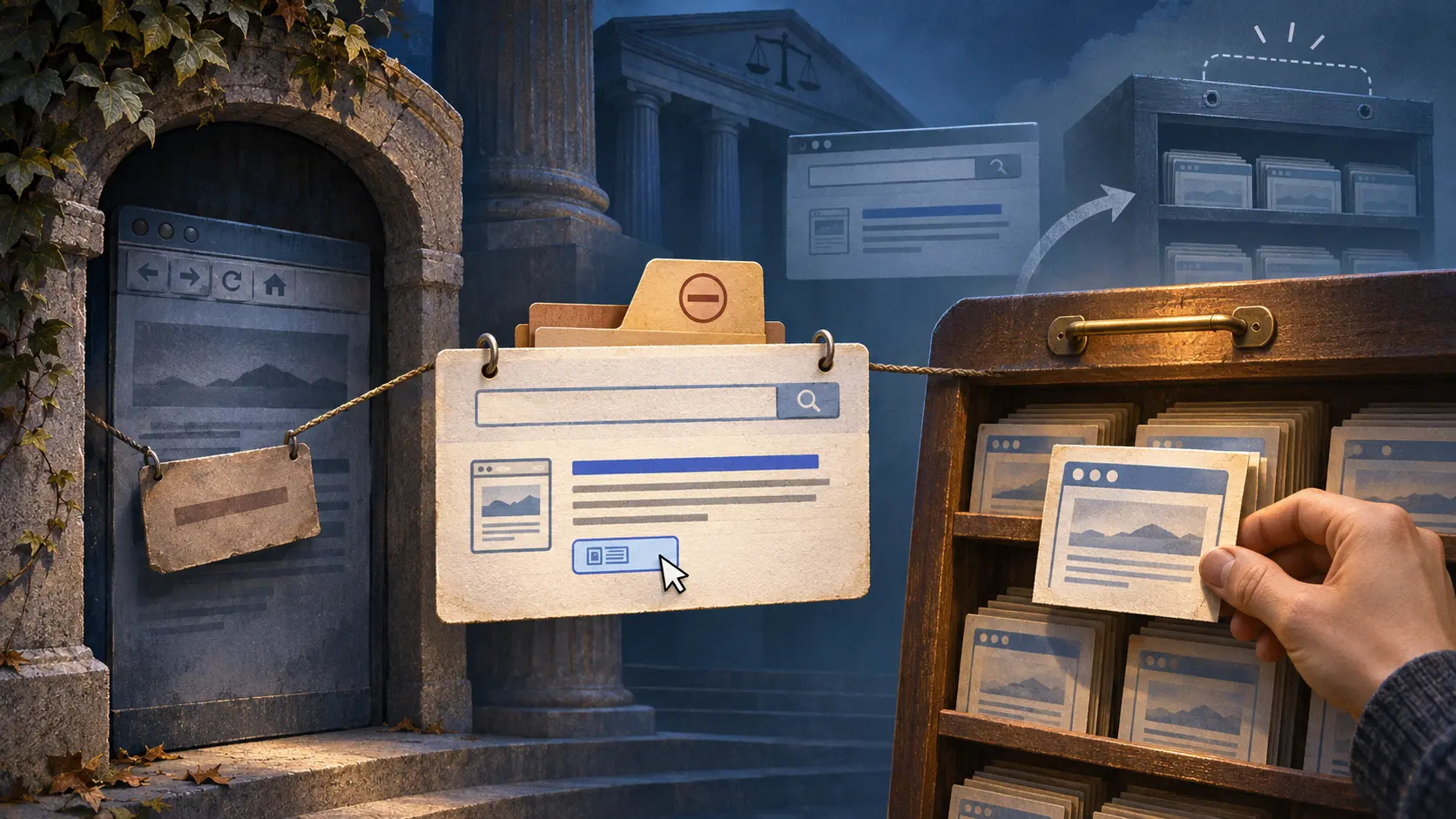
Three surfaces could now disagree. The origin site held the publisher's current page. The search index held a listing and an excerpt. The cached link opened Google's earlier capture. If a page changed, the copy might still show words the publisher had already removed. If the site went dark, the copy might become the only version a reader could reach from that result. The visible URL did not tell the whole story of where the reader's information came from.
Google's 2007 instructions for removing content divided those surfaces into different requests. A publisher who wanted the cached copy gone could place a noarchive meta tag on the page and ask for expedited cache removal. A publisher who had changed a page could ask Google to remove the older cached version after Google confirmed that the live content differed. Google described the latter removal as temporary: the latest cached version could return after six months or after a new crawl. Erasing an old snapshot and erasing the search result were different operations.
The 2007 workflow made the control sequence unusually clear. The publisher had to change or mark the origin page; Google's crawler or removal tool then acted on the request; the reader finally saw a different result. Ownership of the page did not put an immediate switch in the publisher's hand over Google's already displayed copy. Nor did the search listing automatically vanish when the copy was suppressed. These were separate pieces of a product, with separate clocks.
Google's 2010 explanation of removing sensitive text described the awkward interval after a publisher made a correction. The result could still carry an old snippet or cached page until Google revisited the URL; a verified site owner could request a faster removal of the stale snippet and copy. The title and URL might continue to appear in search. Google also said a cached page helped readers when the publisher's server was unavailable. That was the same rescue function its 2001 guide had advertised, now sitting beside a publisher's need to make an outdated copy disappear.
The company changed the reader's side of this arrangement in 2024. In April office hours, a Google representative said the company had begun removing the link to the cached version from search results, while an indexed page and its snippet could remain. Google's documentation change log recorded two later steps: on 24 September, the cache: search operator no longer worked; on 2 October, Google moved noarchive to a historical reference because the cached link was no longer available in Search results.
The change log describes the public interface, not an inventory of every copy Google retained internally. What a reader could do, however, changed plainly. The search result might still point to the original site, but Google's own alternate snapshot was no longer a link beside it. A site owner also lost a Google-specific reason to maintain noarchive for that vanished feature; Google noted that other services might still use the tag.
The two dates at the ends of the story show how much authority fit inside a small link. In 2001 Google offered readers access when the origin failed. Through its publisher tools, Google administered when a copy should leave the result. In 2024 it removed the general reader-facing route altogether. The web page remained the publisher's; the spare door belonged to the search company.
Original records
- Google's 2001 search guide: the cached snapshot as a reader path around an unreachable site.
- Google's 2007 removal instructions and 2010 explanation:
noarchive, stale-copy removal, recrawl and the separate index listing. - April 2024 office hours and the September–October 2024 documentation changes: removal of the cached-result link and
cache:operator.
Member Briefing
Deeper Profile Context
Sign in with the right membership level to unlock the full briefing and source notes.
Only for Strategic Circle
Strategic Circle
Open to all readers. Unlock profile briefings after joining and signing in.
Join Strategic CircleOnly for Leadership Alliance
Leadership Alliance
For qualified IP-asset owners and management; sign in to unlock alliance briefings.
Join Leadership Alliance