Summary
- Gambia Submarine Cable Company Limited holds the landing station as a company limited by guarantee and trustee of a 2011 consortium trust, while the international data gateway licences went to seven separate member operators in 2013 and voice gateway licences followed in 2019.
- The instrument that moved the price was PURA's 27 June 2018 ruling, which required capped ACE bandwidth and co-location reference offers from 1 July 2018 and cut them 5% a year for four years, putting the last step in mid-2022.
- A procurement plan revised 9 June 2026 seeks a legal and transaction adviser to restructure and capitalise the landing company, so the counterparty may change just as the published benchmark ran out.
What the licence actually named
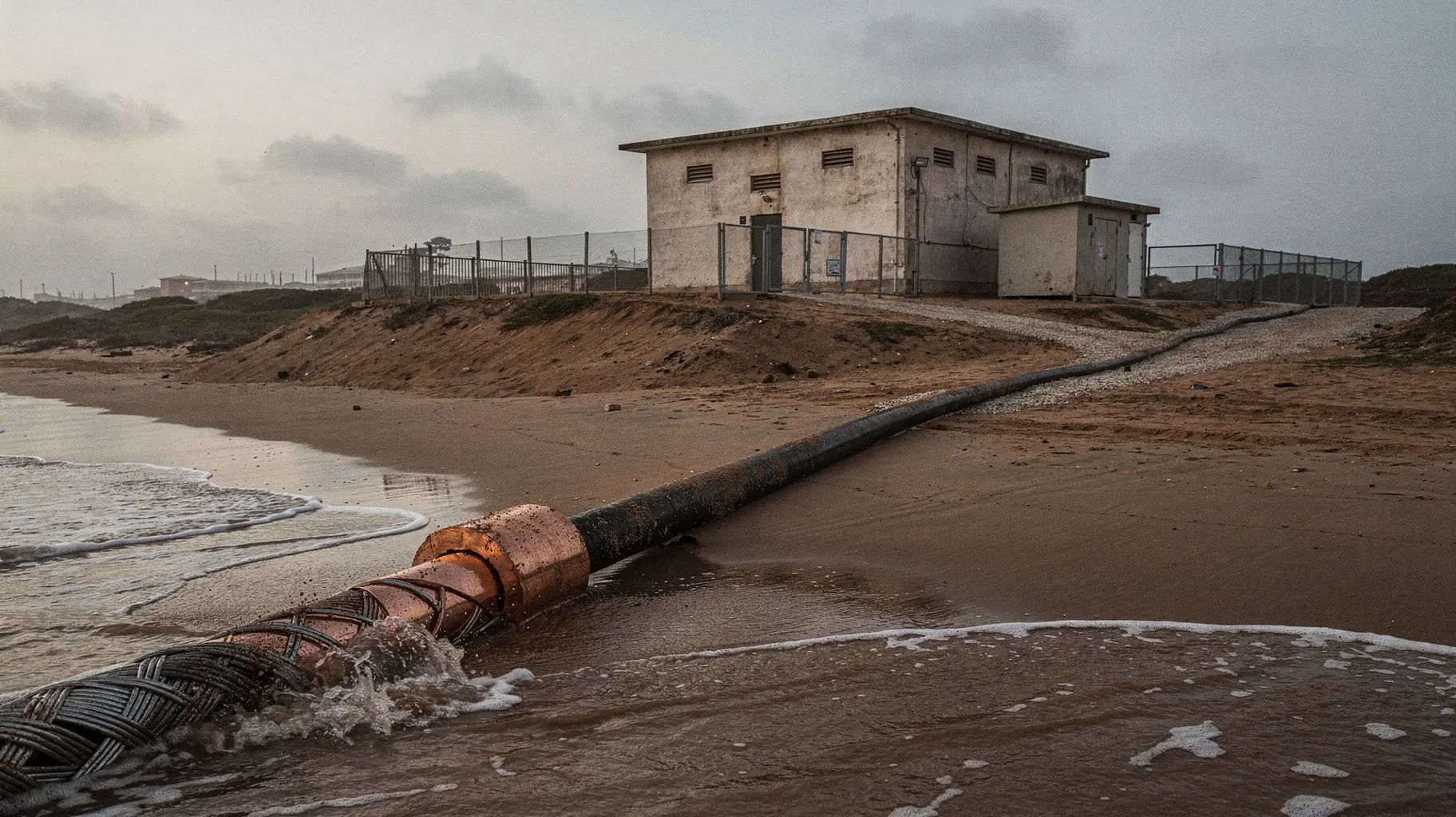
The Gambia's landing station was never handed to a licensed gateway monopolist. The trustee is Gambia Submarine Cable Company Limited (directory entry), a company limited by guarantee formed in 2011 as trustee of that year's consortium trust, according to a 2019 World Bank and PPIAF options study (PPIAF options study, February 2019). A World Bank programme document dated 2 May 2012 records that the company was authorised to operate through a Ministry of Information and Communications Infrastructure licence dated 30 March 2012 (World Bank programme document, 2 May 2012). That instrument was not retrieved for this article, so its title, term, conditions and amendments are unknown; the evidence for it is a settlement document referring to the licence, not the licence itself.
The gateway licences went to the members instead. PURA's 2013 annual report lists 15-year International Data Gateway licences issued by the Minister of Information and Communications Infrastructure under section 7(2) of the Information and Communications Act 2009 to Africell, Comium, Gamcel, Gamtel, Qcell, Unique Solutions and Netpage, and describes GSC members leasing Gamtel dark fibre to the Bijilo landing station and obtaining non-discriminatory equipment co-location (PURA Annual Report 2013). Voice came later: the regulator's 2019 annual report records the first International Voice Gateway Licences issued to Africell, Gamtel, Gamcel and Qcell in 2019, after an international gateway traffic-measurement contract signed on 25 September 2019 (PURA Annual Report 2019).
Put those records side by side and the division is explicit. One licence authorises a trustee to run a building. Seven licences authorise firms to sell international data capacity. A 2021 World Bank diagnostic states that GSC acquired, owns and operates the ACE landing station and provides capacity and station access to members, reporting interests of Africell 15%, Comium 10%, QCell 16%, Netpage 5%, Unique Solutions 5%, government 19%, Gamtel 20% and Gamcel 10% (World Bank Digital Economy Diagnostic, 2021). The percentages sum to 100. Nowhere in that architecture was anyone obliged to publish a price.
Where the price came from
PURA's 2018 annual report is the plainest account of what changed. The regulator says it commissioned a tariff model to improve transparency and open access on ACE and ECOWAN, attributes a 54% wholesale price reduction for services such as Fast Ethernet to that intervention, and links the revised arrangements to entry by InsistNet and I-Net World, neither of them an original consortium member (PURA Annual Report and Financials 2018). The passage discusses ACE and ECOWAN together, so the 54% is not a complete ACE tariff schedule and should not be applied to every product.
The mechanics sit in a consultant study published in February 2019. PURA's ruling of 27 June 2018 required ACE bandwidth and co-location reference offers from 1 July 2018, capped the combined setup and monthly charges, and cut them by 5% a year over four years. The study calculates an effective maximum of US$7.80 per Mbps per month for four-year STM16 contracts of 2.48 Gbps (PPIAF options study). That ceiling is the study's own calculation rather than a quoted tariff table; the ruling and its annexes were not retrieved.
The regional framework had already stated the principle. ECOWAS Regulation C/REG.06/06/12 of 12 June 2012 holds that there shall be no exclusive rights for national members of a consortium to sell capacities, and requires landing-station operators with significant market power to publish a regulator-approved reference interconnection offer covering connection, co-location, backhaul, ordering, technical information, service guarantees, charges, payment conditions and minimum access periods, with Articles 12 to 14 addressing tariff approval, service-level guarantees and dispute resolution (ECOWAS Regulation C/REG.06/06/12). Principle in 2012, a priced schedule in 2018. The six years in between are where the work actually happened.
For a sense of the numbers, the ITU's published case study records a reference price for STM-1 to Telvent of GMD 260,000 per month, presented as US$5,200, and a separate per-Mbit/s equivalent of GMD 1,800, or US$36 (ITU cost-of-services study, 2021). The two do not close at STM-1 granularity: 155 Mbps at GMD 1,800 gives GMD 279,000 against the GMD 260,000 stated, and US$5,200 divided by 155 Mbps is about US$33.5. That is arithmetic on the publisher's own figures, not a finding about the underlying tariff.
The ramp and its expiry
Four years from 1 July 2018 puts the final scheduled step in mid-2022. After that point the obligation to publish a reference offer can survive intact while the number attached to it does not. That is the practical difference between a rule and a schedule: a cap that steps down on known dates is a discount with an end date, and every buyer who entered on it was pricing against a clock.
Two limits belong beside that arithmetic. The original ruling was not retrieved, so its exact end date, any extension and any successor determination are unverified. And no currently approved reference offer appeared in the pages inspected, which is a limit of this retrieval rather than evidence that none exists.
The narrower statement is the stronger one: the retrieved record contains no replacement benchmark for the four-year step-down. Anyone pricing Gambian international capacity today is pricing against published history, meaning the 2018 schedule, a 54% reduction the regulator attributes to its own model, and reference figures that never reconciled.
What the capacity numbers do not agree on
The capacity record contradicts itself, and the contradiction is worth more than any single figure inside it. The 2019 options study reports 365 Gbps activated and about 22 Gbps utilised in 2018, while stating national capacity elsewhere in the same document as approximately 2.4 Tbps and 2,029 Gbps (PPIAF options study). The 2021 diagnostic reports 220 Gbps of international bandwidth capacity in 2020, roughly 18% ACE-capacity utilisation, and continuing access difficulties for some non-member ISPs (World Bank Digital Economy Diagnostic). Different years, different scopes, no reconciliation offered.
Taken as a set, one conclusion survives: fibre in the sea was not the binding constraint. On any of those totals utilisation was low, and non-members still reported trouble getting access. What was scarce was a commercial term.
The facility labels add a smaller confusion. PURA's 2013 and 2024 reports both locate the landing at Bijilo, while the 2021 World Bank diagnostic places it at Brusubi near Banjul (PURA Annual Report 2024; World Bank Digital Economy Diagnostic). The labels are not shown to describe different premises, and the exact site is not established here.
Who the next counterparty is
Two recent institutional descriptions of the company deserve to be read together. The WTO Secretariat's Trade Policy Review of 17 December 2025 describes GSC as a member-owned public-private consortium with approximately 51% private-sector ownership that manages the landing station and provides ACE capacity, including data and voice gateway services, to members (WTO Trade Policy Review WT/TPR/S/482). PURA's 2024 annual report says it monitors international voice traffic for Africell, Qcell, Comium, Gamcel and Gamtel, and places the connected ACE and operator gateway systems at the Bijilo ACE Landing Station (PURA Annual Report 2024).
Then the buyer of advice arrives. A World Bank WARDIP procurement plan revised 9 June 2026 lists a legal and transaction adviser activity for the structuring and capitalisation of The Gambia Submarine Cable Company, described as GSC 2.0, estimated at US$250,000, marked under implementation, with an expression-of-interest notice dated 13 February 2026 and no recorded signed-contract date (World Bank WARDIP procurement plan, revised 9 June 2026). That is a procurement lead. It does not establish a completed restructuring, an ownership change or a licence variation.
Set the dates in order and the sequence is awkward. A price schedule steps down through mid-2022. A plan to restructure the company that owns the landing station appears in 2026. A capacity buyer negotiating in 2027 may face a new counterparty and no current publicly approved number to anchor the conversation.
What to watch
Three observables settle this. First, whether the procurement produces an award, and whether that award carries an asset transfer, a licence variation or a new shareholding: that names the next counterparty. Second, whether PURA approves a new reference offer or issues a determination replacing the 2018 ramp: that names the next number. Third, whether neither happens while contracts keep being signed, which tells you the published benchmark had become decoration and pricing is happening bilaterally behind an obligation nobody publishes.
The Gambia's open-access episode was not produced by its licence, and not by an ECOWAS regulation on its own. It was produced by a dated tariff instrument with an expiry. The instrument has expired. The obligation may not have.
Member Briefing
Deeper Trend Context
Sign in with the right membership level to unlock the full briefing and source notes.
Strategic Circle
A daily briefing in your language, built from changes we have verified.
Join for USD 20/monthCancel anytime.
Public reporting stays free. Member research, the daily briefing and the forum need a membership.