Summary
- RFC 1000 and Leonard Kleinrock’s personal history place the first UCLA IMP’s arrival on Saturday, August 30, 1969; the latter places the host connection on Tuesday, September 2.
- Kleinrock’s 1989 “The Big Bang!” assigns the delivery scene to the Tuesday after Labor Day. The surviving accounts give those dates to different milestones.
A machine arrived before the anniversary story needed it
The calendar is unusually cooperative. One account says the first Interface Message Processor reached UCLA on Saturday, August 30, 1969. Another says it was dropped at the gate one day after Labor Day. Labor Day fell on Monday, September 1, that year. The second date is Tuesday, September 2: three days after the loading dock had already received the machine.
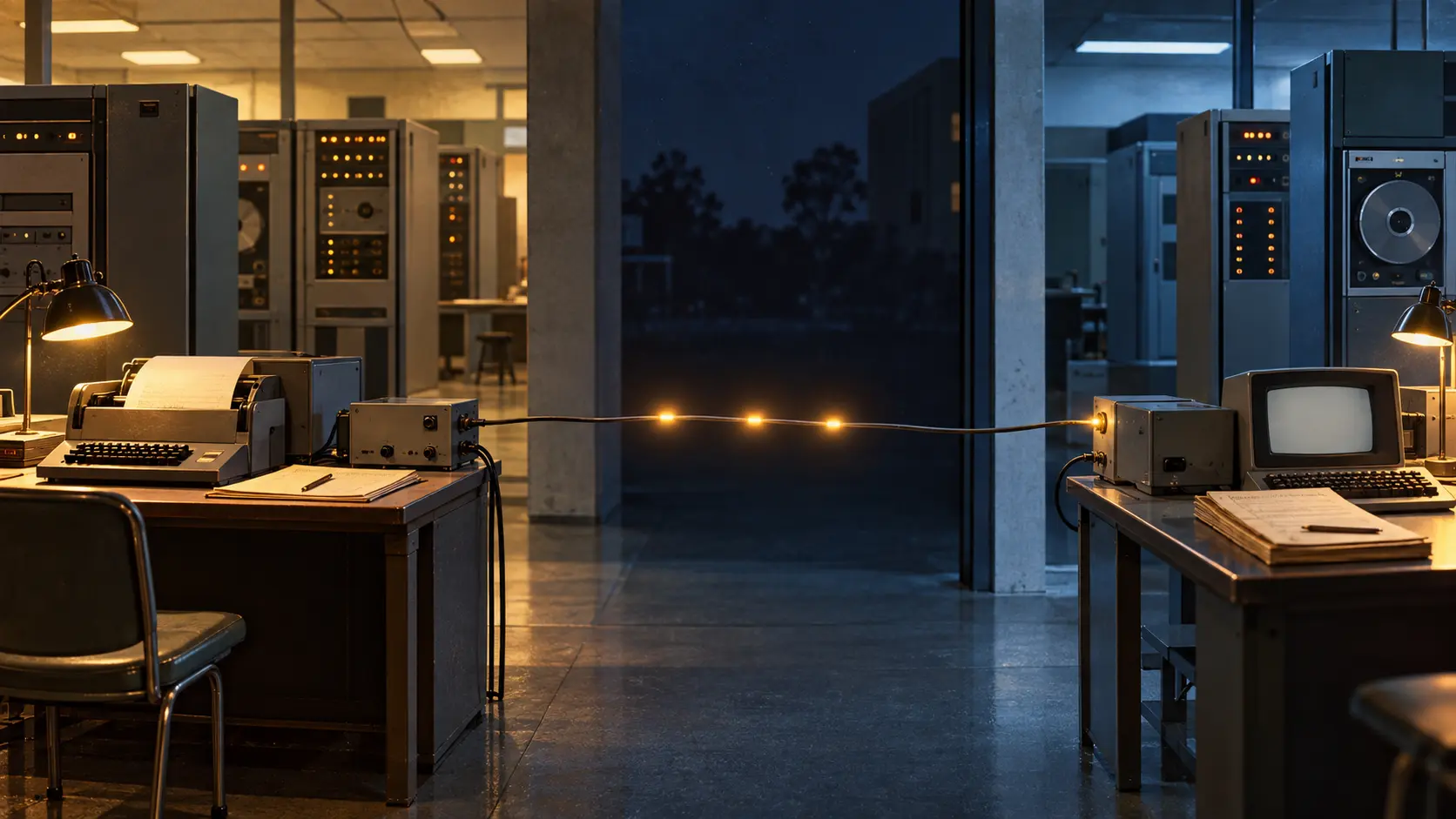
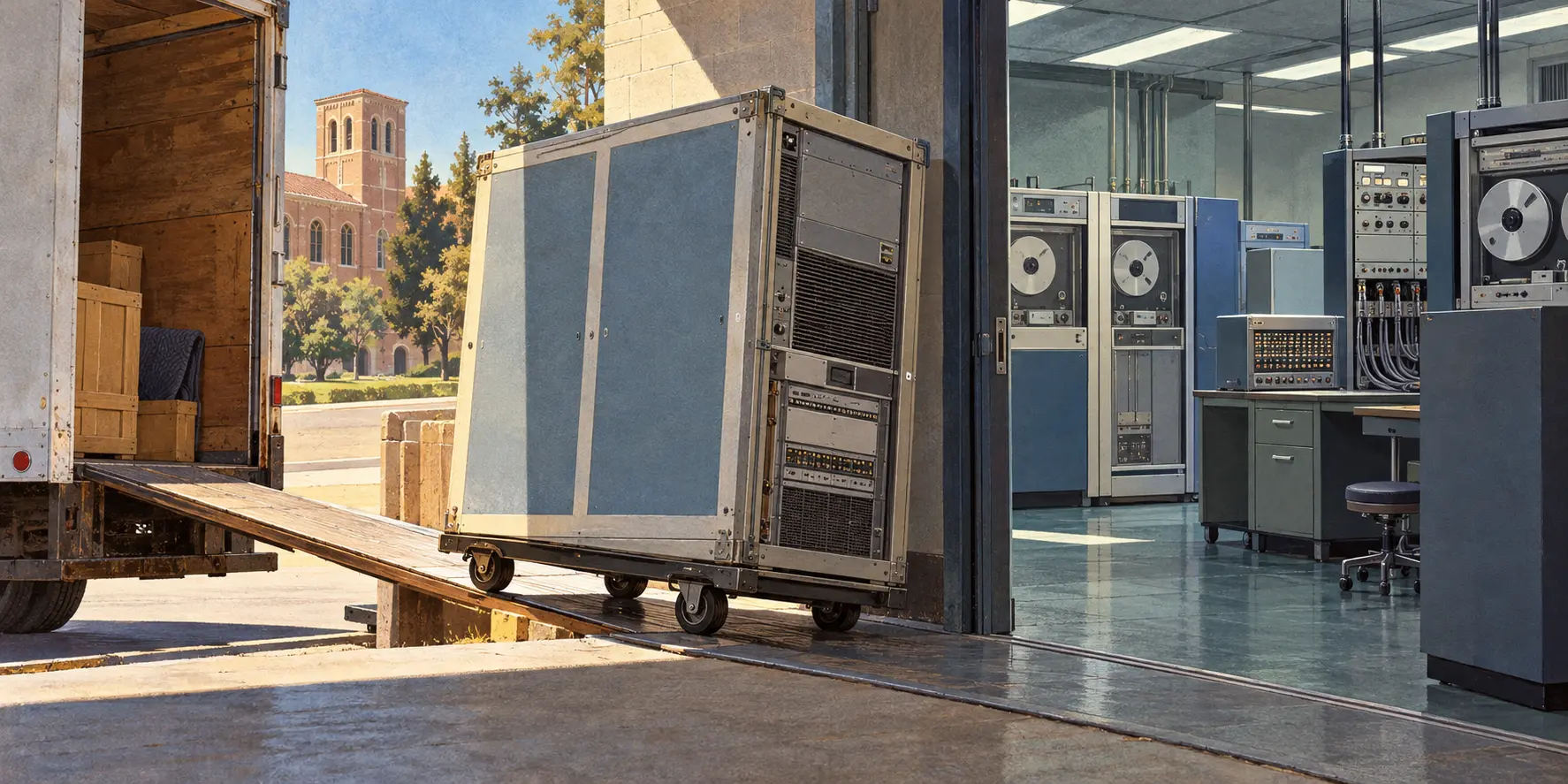
The August date comes from “The Origins of RFCs,” Stephen D. Crocker’s contribution to RFC 1000. Published in August 1987, the retrospective says BBN air-shipped the IMP and that it arrived on UCLA’s loading dock on August 30. The account continues: the team wheeled it into the computer room, plugged it in, and restarted the software that same Saturday. It is a compact description of a delivery that promptly became a lab problem.
RFC 1000 is Stephen Crocker’s retrospective, published eighteen years after the event. It supplies an attributed arrival date; its account carries no freight-receipt timestamp. The distinction matters because another later account by the person who received the machine separates the arrival from the work that followed.
A poem rolls the box forward three days
In September 1989, RFC 1121 collected poems presented at “Act One,” a UCLA symposium held partly to celebrate the ARPANET’s twentieth anniversary. Kleinrock’s poem “The Big Bang!” gives the delivery scene a theatrical entrance: the delayed IMP is “plopped down at our gate” one day after Labor Day. In the next stanza, Kleinrock describes the team cautiously connecting it and bits beginning to flow; messages, the poem says, were moving by Wednesday morning.
The passage is lively and easy to remember. It also puts the crate at UCLA on September 2, where RFC 1000 puts it on August 30. Those are not interchangeable dates. A device can be delivered to a building before engineers connect it to a host. The poem’s own sequence runs from the gate to the connection, but its date sits on the gate scene.
Kleinrock’s prose keeps the milestones apart
Kleinrock’s personal history gives the August arrival and the Tuesday host connection separate places in the timeline. It says the IMP reached UCLA on August 30, then says the team connected it to the host on September 2, after the holiday weekend. The dates align with RFC 1000 on arrival and with the poem on the day the host work began.
That alignment offers a restrained reading of the verse: the poem has folded the machine’s arrival and its host connection into one dramatic beat. The gate receives the Tuesday date; the following stanza supplies the connection that Kleinrock’s prose dates to that day. The cited records contain no 1969 shipping receipt or lab log explaining why the poem assigns the delivery scene to Tuesday.
An earlier document helps explain why the distinction is operational rather than fussy. RFC 1, issued in April 1969, discusses software in both the IMPs and the hosts, and identifies work on the host-to-IMP interface. It predates the shipment and does not supply the August or September dates. It does show that “the IMP arrived” and “the host could use it” named different work even before the first machine reached UCLA.
Keep the delivery date and the connection date
The cleanest chronology has two entries: the first UCLA IMP arrived on Saturday, August 30; the host connection followed on Tuesday, September 2. The 1989 poem is the source that moves the delivery scene to Tuesday.
That is a small correction with a practical consequence. Timelines often need one date for “the beginning,” and commemorations reward a scene that can be staged: a late machine at a gate, a room of nervous engineers, the first bits in motion. The historical record gives the scene more than one clock. Keep both. The box crossed the loading dock on Saturday; the host connection belongs to Tuesday. The poem made Tuesday the better entrance.
Primary records
Member Briefing
Deeper Profile Context
Sign in with the right membership level to unlock the full briefing and source notes.
Only for Strategic Circle
Strategic Circle
Open to all readers. Unlock profile briefings after joining and signing in.
Join Strategic CircleOnly for Leadership Alliance
Leadership Alliance
For qualified IP-asset owners and management; sign in to unlock alliance briefings.
Join Leadership Alliance