Summary
- FICIX describes itself as Finland's largest internet exchange: a registered non-profit association, active since 1993, currently serving 67 customers and operating five sites under three platform labels in Espoo, Helsinki and Oulu.
- Two of those sites sit in premises named for Telia and Equinix, and one platform sits outside the capital metro. Five addresses under three IXP labels is not five independent things, and the published pages do not document power paths or fibre paths that would settle the question either way; the public statistics page presents aggregate interface-traffic and packet views.
Five addresses, three names
FICIX — the Finnish Communication and Internet Exchange association — tells visitors it has provided "neutral and reliable IP peering facilities" for its members and customers since 1993, that it is a registered association and a non-profit organisation, and that it currently serves 67 customers. It also calls itself the biggest internet exchange point in Finland, which is a self-description rather than a measured ranking (FICIX, retained 3 November 2026).
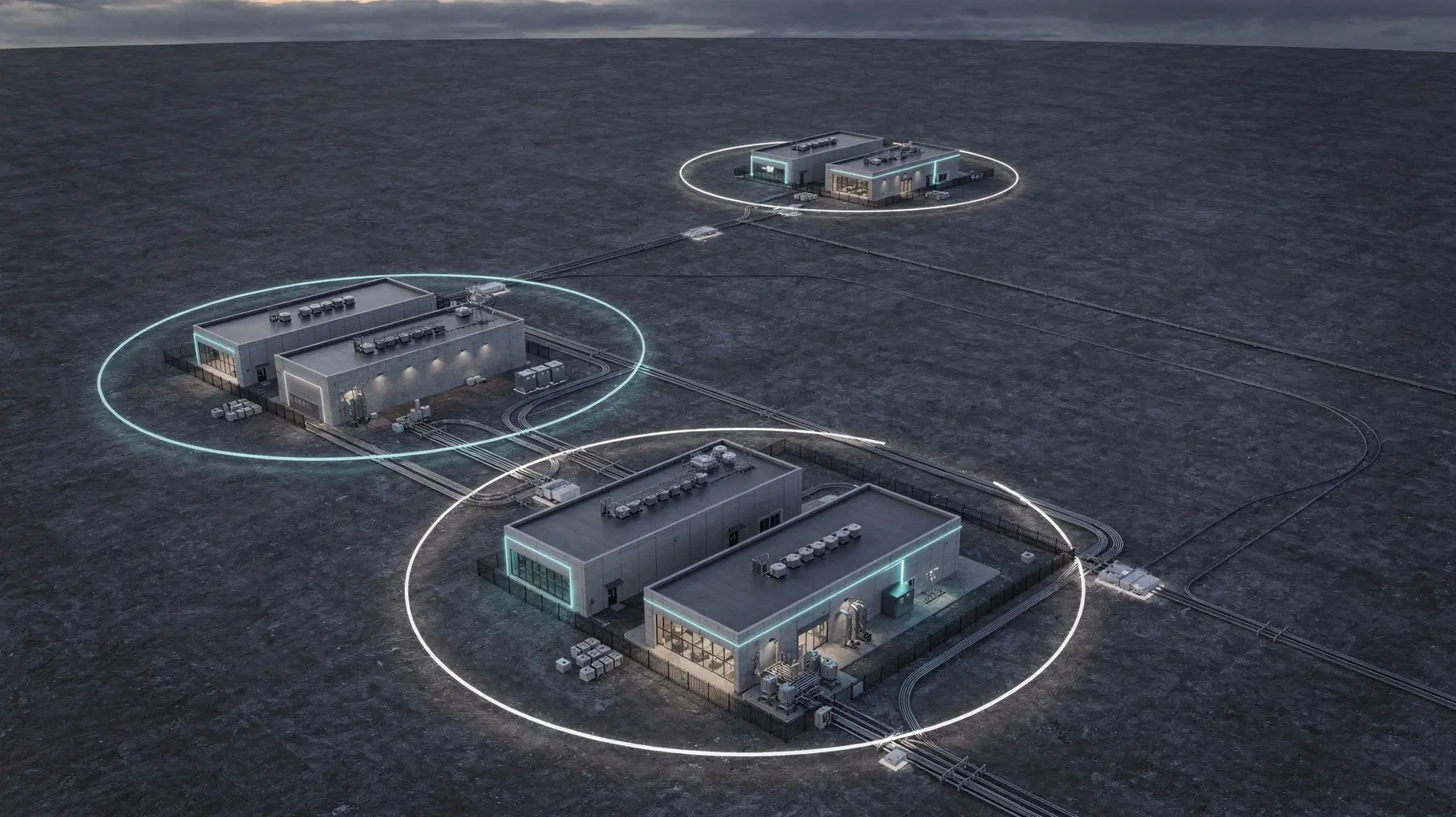
Then comes the sentence that carries more weight than any of those. FICIX operates five sites: FICIX1 at Espoo and Telia Helsinki Data Center, FICIX2 at Helsinki and Equinix HE7, and FICIX3 at Oulu.
Count carefully, because the arithmetic is the story. Five addresses. Three platform labels. Two of the five carry the name of a third-party facility — Telia, a national carrier, and Equinix, a commercial datacentre company. This is a facilities list. A facilities list is not a redundancy claim, and reading it as one is how a country talks itself into believing its domestic interconnection is safer than it has measured.
What the fabric actually is
The exchange describes layer-2 switching platforms interconnecting IP networks, built on EVPN/VXLAN with port speeds of 10, 100 and 400G. That technology family is what operators use to make one layer-2 segment behave as a single network across separate physical locations. Read the marketing and you see five sites. Read the technology page and you see five switches in three IXPs, with extension sites in facilities it names (FICIX technology page); read the about page and you see the association's statement that the three IXPs are not interconnected together (FICIX about page).
This is not a criticism of the design. Stretching a peering fabric across several separately named facilities is precisely how a modern exchange lets a network meet its peers without dragging a private circuit across a city to one chokepoint. It is also a low-capital way to grow reach: FICIX says it is responsible for the switches while each customer arranges its own connections (FICIX technology page).
But it does mean the words "five sites" and the words "five independent sites" are different claims, and only the first one appears on the page. Whether FICIX1 in Espoo and FICIX1 at Telia Helsinki share a power feed, a fibre entry point or a cross-connect route is not stated. Whether the association's occupancy contracts in the Telia and Equinix buildings are long enough, or flexible enough, to survive a landlord's change of commercial mind is not stated either.
What the membership form buys, and what it does not
FICIX's neutrality is structural before it is technical. A registered non-profit association has no shareholder waiting for a dividend from a favoured peer, no incentive to degrade one member's port so another member's transit product looks better, and a surplus that returns to the membership rather than to an owner.
That is a real safeguard, and it is the one a Finnish network is actually buying when it joins.
It stops at the property line. The building owner decides who may rent space nearby, what a cross-connect costs, when the power maintenance window falls and which carriers already have fibre in the duct. A member-owned exchange negotiating rack space in a commercial facility is a tenant, and a tenant's neutrality promise does not bind the landlord's commercial behaviour.
The gap between those two things is invisible in a five-item site list, and it is where the resilience question actually lives.
Why Oulu matters more than it looks
The third platform is not in the capital region. FICIX3 is in Oulu, in northern Finland, far outside the Helsinki metropolitan area where the other two platforms sit.
On paper this is the more interesting fact in the whole list, because it is the one item that cannot be explained by landlord convenience alone: a domestic exchange that only ever lights up racks in the Helsinki metro concentrates its benefit where the members already are.
A platform in Oulu extends the possibility of local hand-off to networks in the north that would otherwise haul southern traffic to a southern exchange or buy transit to reach a peer in their own country. Whether any network actually uses it that way is not in the record.
The page names the city and stops there: no stated customer count for FICIX3 and no traffic figure, although the connected-networks page lists which networks appear at each platform (FICIX connected networks).
Where the record stops
The retained page gives a founding year, a legal form, a customer count, a facility map, a switching technology and a port-speed range.
It does not give a stated per-site customer count, a peering-policy document or a board composition, and it does not document power and fibre independence; its public statistics page presents aggregate interface-traffic and packet views (statistics), although this run verified no numeric series or installed switching capacity. FICIX also publishes a price list and a platform-by-platform connected-networks list elsewhere on its site (pricing; connected networks).
The Euro-IX directory entry that would normally carry exchange-level statistics returned no data when this run attempted to retrieve it on 3 November 2026.
Two BTW briefings already used this object. One, on 18 October 2026, established the five-site and 67-customer counts and showed that no published per-port load figure exists, so no utilisation ratio can be built. The other, on 21 October 2026, read the directory card and its evidence base and deliberately did not touch exchange traffic. This article takes the site list as its subject rather than its background: the directory entry Only for Strategic Circle records the entity; the question here is what the entity's own footprint statement does and does not prove.
What this means for a Finnish network
If you are sizing a point of presence in Finland, the practical reading is narrower than the marketing.
A port at FICIX connects you on one of three named IXPs, which FICIX says are not interconnected together (FICIX about page), at speeds up to 400G. The 67 figure is FICIX's self-reported count of connected networks across the exchange, not a per-port reachability figure. It does not buy you a documented guarantee that a fire, a power fault or a landlord dispute at one Helsinki facility leaves the rest of your peering intact. That guarantee may well exist.
It is simply not on the page, and a resilience claim that cannot be located in a document is a governance promise being spent as an engineering fact.
The honest version of the claim is still worth something, and worth stating precisely: Finland has a member-owned exchange that has kept a neutral fabric running since 1993, has extended it to a northern city, and has kept its switching modern enough to carry 400G ports.
That is a record of continuity. It is not the same thing as a measured, independently verified, multi-site survivability design — and the difference between those two sentences is what a buyer, a regulator or a journalist should be asking FICIX to close.
Sources
Member Briefing
Deeper Profile Context
Sign in with the right membership level to unlock the full briefing and source notes.
Only for Strategic Circle
Strategic Circle
Open to all readers. Unlock profile briefings after joining and signing in.
Join Strategic CircleOnly for Leadership Alliance
Leadership Alliance
For qualified IP-asset owners and management; sign in to unlock alliance briefings.
Join Leadership Alliance