
Topic
Public-sector Continuity
Within the Topic facet, Public-sector Continuity topic intelligence connects articles that share a specific subject, signal focus, or monitoring theme. The page gives readers a richer path through related reporting, source evidence, market actors, and infrastructure implications, with enough context to understand why the topic matters across company movements, governance decisions, regional exposure, and operational risk. Readers can compare recurring signals, affected organisations, public evidence, market context, service continuity, procurement, competition, compliance, and strategic planning questions behind the subject instead of stopping at a thin list of matching articles. It explains what the topic covers, which infrastructure actors or policies are involved, what evidence supports the coverage, and why the subject may matter for operators, customers, investors, and policy readers.

History
For Mars Pictures, Try the School in Portland
NASA’s 1997 directions to Mars included a school website. A list of nearby mirrors turned the audience into part of the plan for keeping the pictures moving.

Europe and Middle East National Telecom Trends
SFR Has 81 Overdue Sites. Arcep Gave It Two Clocks.
Arcep’s order splits 81 unserved locations into two programmes, then gives each the same unusual finish line: build within six months, prove it within fifteen days.

CASE FILE
The Cable, the Cloud and the Power Plug Share One Failure Map.
A UAE draft would make the ITU treat cables, data centres, exchanges, cooling and power as one continuity problem. It also asks for regular reports built from voluntary accounts of what went wrong.

CASE FILE
Fourteen Research Nodes Are Live. The Contract Is Still Making Its Rounds.
Europe has switched on a federation of research services. Its operators can count the nodes and the services; the binding framework for keeping them together is still moving through the room.

CASE FILE
The Court Is Blacklisted. Its Login Screen Has a License.
Washington put the International Criminal Court on a sanctions list, then issued a license for its digital plumbing. Brussels has now told European operators to keep serving it. The small print decides which wires stay live.

Europe and Middle East National Telecom Trends
The Cable Is Fine. Britain Wants a Crime for the Plot.
A UK White Paper would reach hostile preparation around subsea cables before an outage. Its sharpest unfinished line separates an attack survey from an ordinary one.
Europe and Middle East National Telecom Trends
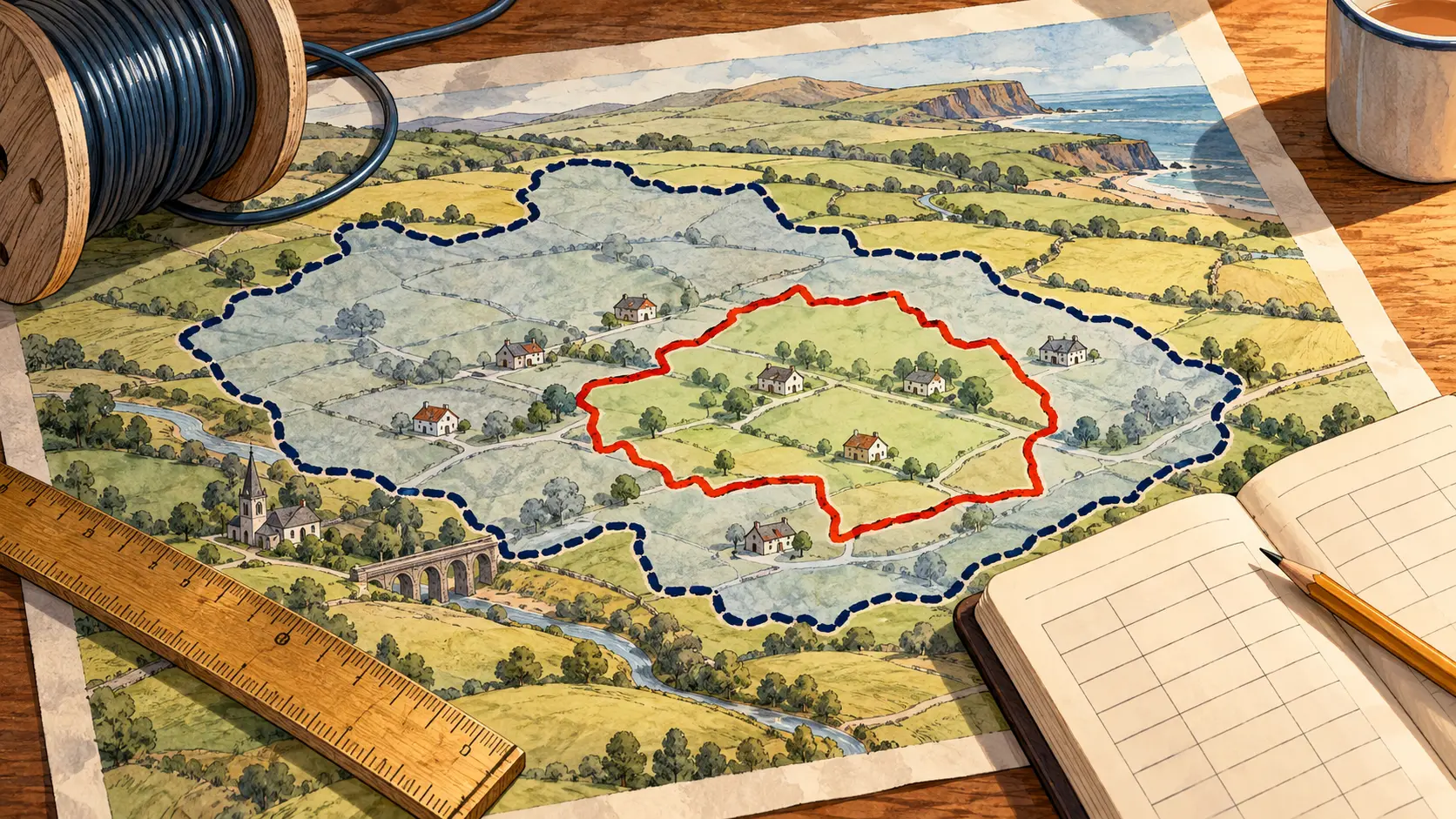
Hampshire’s Fibre Contract Shrunk. Which Doors Changed Hands?
BDUK cut the subsidised Hampshire build after commercial plans expanded. Its latest contract table counts more recorded construction; the address handover remains the question.

Europe and Middle East Institutional Trends
Britain’s AI Biosecurity Lab Has £100m. The Referees Are Still Offstage
The government has named the money, the models and the agencies around its new lab. The people meant to advise its science have yet to be named.

Europe and Middle East National Telecom Trends
Forest of Dean Found a New Fibre Builder. Which Doors Came With It?
The British government has moved the second half of a cancelled rural broadband job to Openreach. Its public contract counter got bigger; the address list stayed out of sight.

Europe and Middle East National Telecom Trends
Britain May Tell a Cable Repair Ship to Put Down Its Tools
When a seabed cable fails, speed usually wins. A new UK proposal would let a minister order the repair to wait if fixing the line would destroy evidence of an attack.

Asia-Pacific Institutional Trends
South Korea Takes the Cybersecurity Exemption Stamp Away
Public institutions and more listed companies will have to show their security spending and staffing. The quiet corner of the disclosure form is getting crowded.

History
Downing Street Discovered Reply All
The online petition service launched in 2006 gave the famous front door a return address. Millions could register their objections, and the office receiving them gained a way to write back. Someone still had to mind the queue.

CASE FILE
October 23 Came. Verizon’s Copper Scissors Stayed Locked.
Verizon’s earliest date to retire legacy phone lines has passed. The FCC stopped the application’s automatic approval before it took effect. In rural Virginia, counties are asking the question the calendar cannot answer: which household has a working replacement voice line?

Leaders
Bevil Wooding Made ARIN's Caribbean Desk a Storm-Season Switchboard
After the 2017 hurricanes, a registry job built for outreach acquired a sharper question: who already knows the operator, the regulator and the person who can reconnect them? Wooding's answer was to make those introductions part of the work.

Asia-Pacific Institutional
The Registry Row That Proves Almost Nothing
A regional registry lists a government technology agency as a medium-tier member. A due-diligence memo reads that row as an operating footprint. A parliamentary exchange elsewhere in the same country shows where accountability for a data-control failure actually landed. The three…

Europe and Middle East National Telecom Trends
Some lift alarms still need 2G. Britain’s exit plan asks users to find them
The UK has given mobile operators a timetable, trial rules and a quarterly reporting loop for retiring 2G. The people expected to spot many of the devices left behind may never have bought service from those operators.

Europe and Middle East National Telecom Trends
Cambridgeshire Lost 630 Homes on Paper. The Fibre Kept Growing.
BDUK’s October ledger trims CityFibre’s contracted Cambridgeshire count even as its recorded build rises. A financial model moved the boundary; the public gets a footnote instead of an address list.

Europe and Middle East National Telecom Trends
Cheshire’s Broadband Contract Took a Trip to Norfolk
Britain’s latest Project Gigabit table gives a contract named for Cheshire an extra 11,360 premises. The footnote sends them to Norfolk, where another supplier already has its own row.

History
Your Bookshelf Had Something to Tell USGS
The early earthquake web acquired a useful habit: after telling visitors where the ground had moved, it asked what had happened in their rooms.

North America National Telecom Trends
Two Quebec Mobile Deadlines Walk Into Winter
Canada has moved the finish lines for two funded TELUS builds. Route 138 gets a November date; three other highways get late December.