
Topic
Peering and Transit
Within the Topic facet, Peering and Transit topic intelligence connects articles that share a specific subject, signal focus, or monitoring theme. The page gives readers a richer path through related reporting, source evidence, market actors, and infrastructure implications, with enough context to understand why the topic matters across company movements, governance decisions, regional exposure, and operational risk. Readers can compare recurring signals, affected organisations, public evidence, market context, service continuity, procurement, competition, compliance, and strategic planning questions behind the subject instead of stopping at a thin list of matching articles. It explains what the topic covers, which infrastructure actors or policies are involved, what evidence supports the coverage, and why the subject may matter for operators, customers, investors, and policy readers.
NPNOG
One Week, Two Institutions—and Two Edition Numbers: Untangling npNOG and SANOG-38
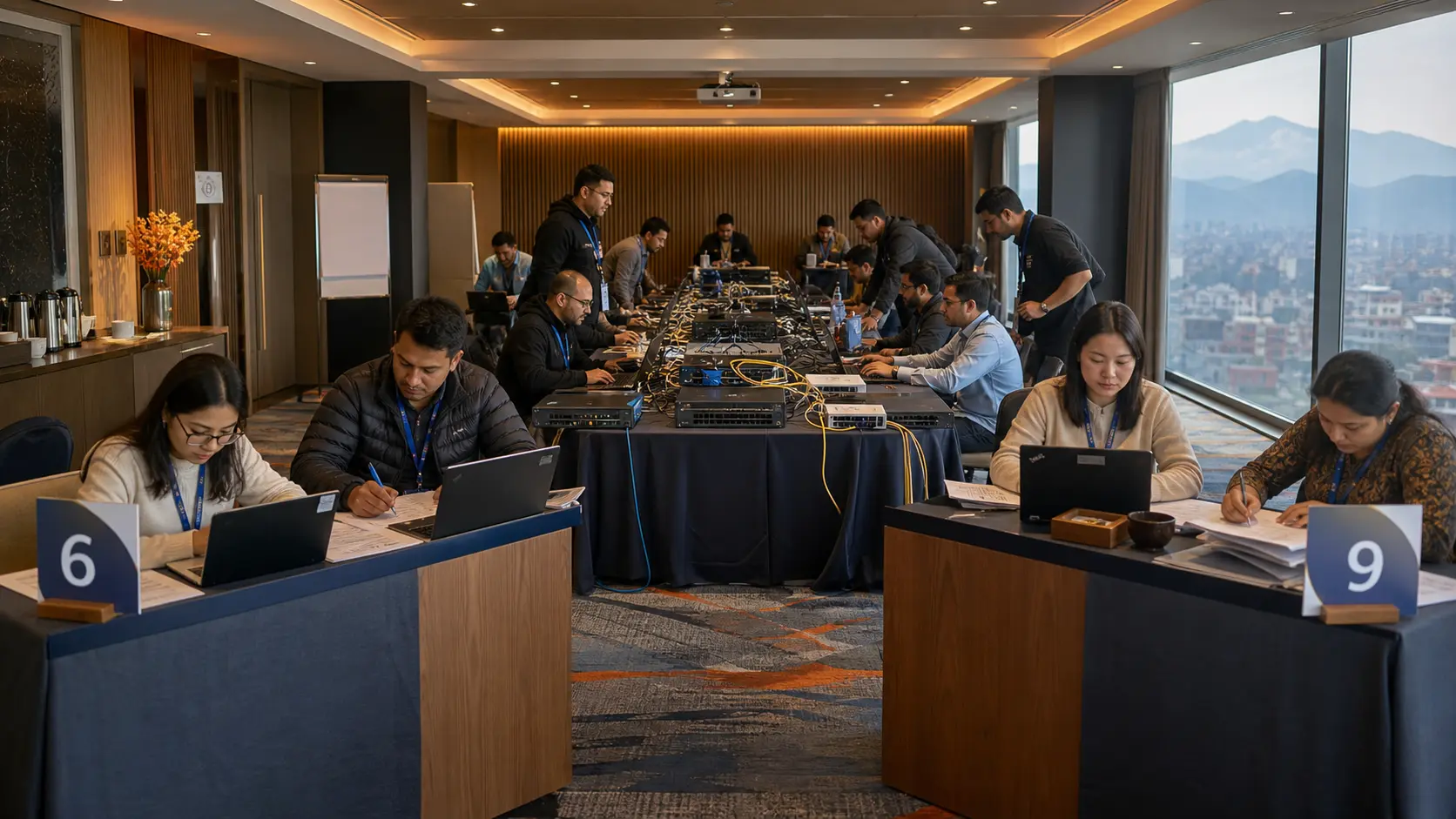
In July 2022, operators arriving at the Kathmandu Marriott encountered one technical week: four workshop days followed by a conference. The surviving institutional record is less unified. npNOG calls the event NPNOG-6 with SANOG-38. SANOG's contemporaneous pages called the same…

Story
AFRINIC Says Douala-IX Strengthens Local Exchange. Its Public Snapshot Does Not Yet Measure It.
AFRINIC’s March community bulletin frames its support for Douala-IX as a way to strengthen local interconnection in Cameroon. The public evidence now available is useful, but it is an inventory of exchange attributes—not a measurement of the claimed operational result.

Story
RIPE NCC’s RIS Is Updating Its Peering Policy. The Archive Needs a Selection Receipt
An archive becomes a public institution long before anyone gives it a constitution. A researcher downloads a route dump; an operator compares an incident against a collector feed; a policymaker treats a graph as a picture of the network. Each act lends the archive a little…

Europe and Middle East Regional ISP Trends
Satellite Ltd's power-backed business tiers need a failure map
Satellite Ltd sells reserve power as a visible feature of selected business tariffs. That turns continuity from a broad promise into a priced distinction—and makes the exact boundary of what stays powered the most important part of the offer.

Europe and Middle East Regional ISP Trends
SC TECHNOLOGICAL's low-price fibre tiers make recovery economics the real product
Technological advertises fibre from €2.90 a month, no annual commitment and a portfolio that extends into voice and television. The compelling question is not whether those prices look attractive. It is what must keep working—and who must pay for recovery—after a customer…

Europe and Middle East Regional ISP Trends
Trifle's pioneer story needs a current operator-control map
Trifle's pioneer story needs a current operator-control map intelligence summary explains the development, the public evidence available to readers, the organisations involved, the regional context, market exposure, and the infrastructure consequences that may follow. The Europe…

Story
LACNIC's Four-Vendor BGP Claim Needs the Configuration Column
One malformed Prefix-SID attribute reportedly met three different actions as it crossed the Internet: discard, propagation and session reset. LACNIC's new routing-security article makes the divergence visible. To make it reproducible, the comparison now needs to name the release…

Europe and Middle East Cloud Services Trends
The regional boundary behind Genesis Cloud’s GPU capacity
Genesis Cloud’s accelerator inventory becomes useful capacity only when networking, data placement, images, security controls and recovery procedures can support the intended workload. Its documented regional boundaries therefore turn a catalogue question into an architectural…

Europe and Middle East Regional ISP Trends
VOLZ’s 120-hour node-power claim needs a failure-domain ledger
VOLZ has put an unusually concrete number beside network continuity: batteries at 14 large Kyiv communications nodes that the operator says can sustain power for 120 hours, backed by generators for emergencies. The number is valuable because it identifies a real control. It is…
APRICOT
The Conference Network Is APRICOT’s Strongest Constitution
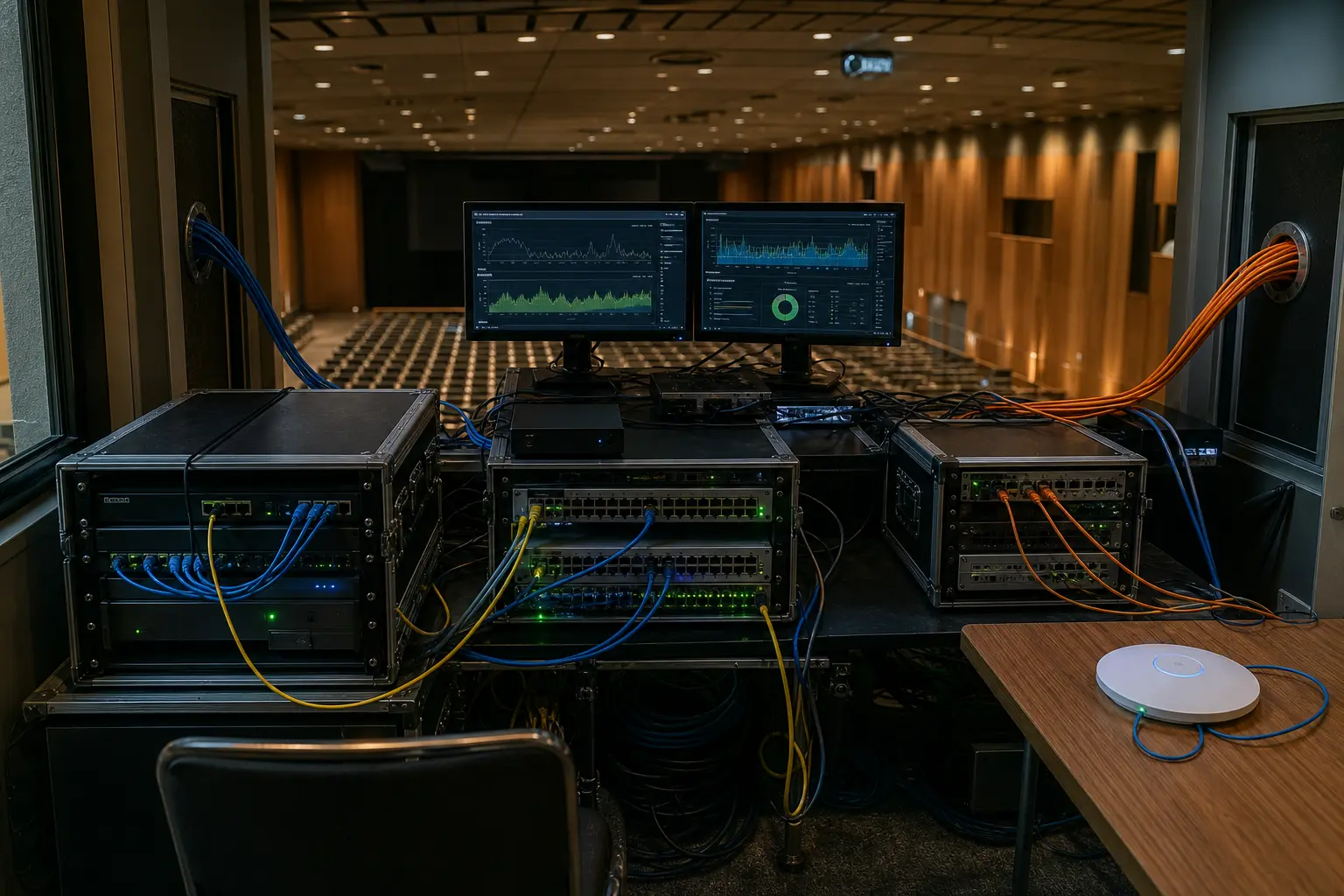
APRICOT’s temporary production network is a more testable statement of institutional values than a conference slogan. Its designs, routes, client measurements and failures show what the summit attempts to operate—without proving universal compliance or regional adoption.

IETF
BGP Maintenance Needs Two Different Meanings of Graceful
Two change tickets can both say “graceful” while asking the network to do opposite things. One must move traffic away before a link or router stops forwarding. The other must keep forwarding on existing entries while the BGP control plane restarts. Treating those operations as…

Story
LACNIC’s 11 IXP Collectors Need a Vantage-Point Receipt
LACNIC has opened a useful window onto local routing: eleven BGP collector views, public MRT files and charts of prefixes, origin networks and paths. The problem begins only when a window is mistaken for the landscape. The portal does not bind each result to the peer cohort…

IETF
Clarence Filsfils and the Segment List That Learned to Share an Address
An SRv6 path can be perfectly explicit and still carry waste: the same locator block repeated across instruction after instruction, plus zero padding that moves through the network without adding a decision. RFC 9800 removes that repetition. Its deeper achievement is to specify…

Leaders
Aaron Wendel and What Two Failed ARIN Proposals Reveal About Operator Power
Fourteen years apart, two public tallies put Aaron Wendel on the losing side of consequential debates about Internet number resources. The defeats are more revealing than a conventional success story: they show how practical operating knowledge enters policy, how commercial…

IETF
The connection is larger than the path: Multipath TCP keeps one byte stream across several routes
A phone leaves an office with a live connection on Wi-Fi and reaches the street on cellular. Ordinary TCP ties that connection to one path. Multipath TCP can keep the application on one ordered byte stream while the endpoints add, retire and prioritise TCP subflows underneath it.…

IETF
The quiet hour is only a forecast: ALTO makes traffic timing a published promise
A bulk transfer can wait for two in the morning. The harder question is why two in the morning should be cheaper at all. ALTO Cost Calendars let a network publish that expectation to an application. The calendar is useful precisely because it is not the network itself: it is an…

Global Institutional Trends
At DE-CIX, the Route Server’s Default Is a Market Rule
One BGP session can replace hundreds of bilateral introductions. That efficiency is real, but so is the delegation hidden inside it: the route server’s defaults, filters and exceptions help decide who can reach whom, under which evidence, and at whose operational cost.

NPNOG
Who opens the room? What npNOG-10's welcome order can—and cannot—prove
The first twenty minutes of a conference can reveal institutional relationships. They cannot, without supporting records, tell us who held the decisive authority.

IETF
The packet was marked before it was lost: ECN’s long argument about congestion
The most important moment in congestion control is easy to miss: a router can warn an endpoint while the packet is still alive. Explicit Congestion Notification turned that possibility into a protocol, then spent two decades exposing how much cooperation is required to make two…

NPNOG
One week, two institutions—and two edition numbers
<!-- BTW:SLUG:one-week-two-institutions-two-edition-numbers-npnog-sanog-38 -->