
Primary Domain
Internet Infrastructure
Within the Primary Domain facet, Internet Infrastructure intelligence groups reporting by primary domain so readers can follow a focused area of internet infrastructure, governance, connectivity markets, or digital capital. The page brings together related articles, public evidence, institutions, companies, people, regional exposure, operating dependencies, and market context that may otherwise sit across separate category pages. It explains the domain, the likely actor class, the market or governance context, and the source material readers should use when comparing signals. Operators, analysts, and governance readers can see how the same domain appears across events, profiles, market shifts, public-source evidence, regional dependencies, and longer-cycle infrastructure decisions over time.

Story
APNIC makes no consensus call on an IP-abuse definition
Prop-172 would define technical abuse tied to Internet number resources, but APNIC 62 left it on the Policy SIG mailing list. The remaining question is who can assess a response when the resource holder and complainant disagree.

History
From KAIST to the NCA: KRNIC’s Move and Independence
Korea’s early Internet registry changed institutional homes before it became an independent foundation. A September 1994 meeting record captures the handoff in one line—and in a changed nameserver address.

History
VSNL’s 1995 Internet Gateway Still Needed India’s Local Telephone Network
The gateway connected India’s commercial Internet service to the world. Reaching a customer still required a domestic path: a telephone line, a leased circuit, or the public data network that carried traffic onward to a service node.

History
MFS Bought UUNET to Bring Internet Access onto City Fiber
When MFS bought UUNET in 1996, the complement was more than a second Internet company: UUNET reportedly spent heavily to reach customers over local telephone lines, while MFS was building metropolitan fiber. The records show the logic and a later combined offer, but do not prove…

Europe and Middle East Datacenter Trends
The EU’s data-centre floor starts with an incomplete map
The European Commission is preparing minimum performance standards for data centres while its first reporting round captured only part of the facilities that should report. That gap does not make the data useless. It does mean the next rule must separate what the evidence can…

History
A 25-Year Capacity Right Still Needed Maintenance: KPNQwest’s 2002 Bankruptcy
When KPN Telecom asked KPNQwest’s bankruptcy trustees to keep its contracted capacity operational, it was asking a question more exact than “who owns the cable?” A 2004 Dutch judgment treated the right to use specified capacity as a continuing obligation, with operations and…

History
RARP Found the Address, Not the Configuration: RFC 903
A diskless workstation could wake knowing the number stamped on its network interface but not the Internet address needed to use IP. In 1984, RFC 903 gave it a narrow question for the local link: which protocol address had a server mapped to this hardware address?

History
RFC 1 Was a Working Proposal, Not a Finished Host Protocol
Steve Crocker’s first Request for Comments described ideas that separate computers would need in order to communicate across the ARPA Network. Its opening pages also say plainly that the agreements were tentative. The history that followed is a record of proposals, revisions and…

Story
Malaysia’s NIR Bid Is About Who Assigns the Numbers
APNIC’s public account of its talks with Malaysia points to a sharper question than whether the country needs a local registry: who makes the final assignment decision, and who remains answerable when that decision travels through the regional system?

History
Postel’s 1998 Root Test Targeted Zone Transfers, Not DNS Queries
In January 1998, Jon Postel asked root-server operators to obtain a copy of the root zone from an IANA server at USC/ISI. His message was about how servers received that copy. It said the data would match the version already available from NSI’s A-root and that the existing rules…

Story
Root DNSKEY Answers Now Show KSK-2024’s Signature
At 15:32 UTC on 11 October, four direct root-server queries returned a DNSKEY signature tagged 38696. A sample three hours earlier still showed 20326; the same four names returned 38696 again at about 16:09 UTC. IANA’s cache-revalidated page then listed KSK-2024 as active. These…

History
MILNET Was Split Logically Before Its Circuits Were Physically Separated
The Defense Department’s separation of research traffic from unclassified military operations was a staged operating change. MILNET service began first, software controls divided the communities in 1983, and the physical network partition followed in 1984. Controlled gateways…

History
Brazil’s Academic Backbone Was National. Its Exits Were Not.
A countrywide network map can conceal a much narrower set of routes to the outside world. In Brazil’s research Internet, domestic reach expanded before international egress was distributed across the national backbone.

Story
LACNIC’s Legacy Policy Page Leaves Its No-Consensus Timeline Unclear
LACNIC’s index dates a no-consensus state for LAC-2023-4 version 4 to 29 August, lists an assessment window through 8 September and says the version was not discussed. A separate legacy-recovery proposal appeared on 16 September.

History
LINX Carried Traffic Before Its Company Existed
The London Internet Exchange became useful in 1994 before the company that now bears its name was incorporated. That gap is more than a footnote: it separates a working interconnection, member coordination and the legal organization that came later.

History
JUNET’s Name Tree Came Before DNS—and Survived the Move to .jp
Before Japan’s academic networks used TCP/IP and DNS, JUNET made hierarchical email names work over UUCP and telephone lines. The convention gave volunteers a way to keep organization names legible as the network grew—and a structure that could be carried into `.jp` when a wider…

History
Free to Log On, Not Free to Run: Cleveland Free-Net’s Five-Cent Session
Cleveland Free-Net offered no-fee community computing, but its 1995 operating report put a price on the path into the system: about five cents for a telephone-and-modem session, against less than one-tenth of a cent through the Internet. The cheaper route helped; it did not make…

History
Same Client, Same Server Set: RFC 1542’s BOOTP Relay Rule
When one small bootstrap request has to cross a subnet boundary, the relay becomes part of the client’s conversation with a server. RFC 1542 made a quiet but consequential choice: distribute clients across servers if useful, but keep each client’s sequence of requests attached to…
Story
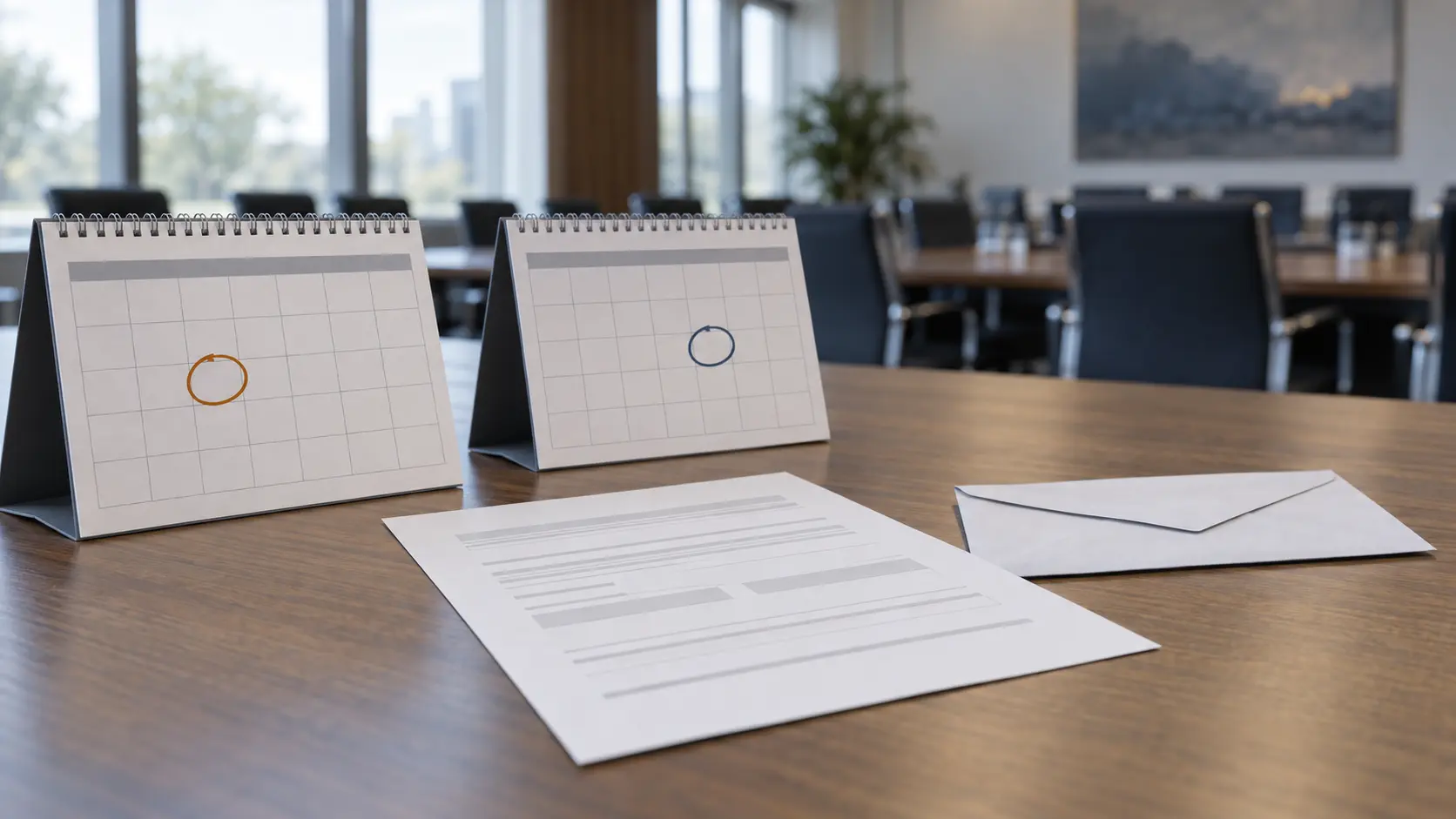
RIPE NCC’s proxy deadline appears as 4 October and 14 October
One RIPE NCC notice lists 4 October as the proxy-vote deadline; the General Meeting and proxy pages list 14 October. The Articles’ two-week rule points to 14 October for a meeting that begins on 28 October, but the published mismatch remains unexplained.

Story
A Prefix Can Locate an IRR Set. It Cannot Validate It
A Prefix Can Locate an IRR Set. It Cannot Validate It intelligence summary explains the development, the public evidence available to readers, the organisations involved, the regional context, market exposure, and the infrastructure consequences that may follow. The Story…