
Primary Domain
Internet Infrastructure
Within the Primary Domain facet, Internet Infrastructure intelligence groups reporting by primary domain so readers can follow a focused area of internet infrastructure, governance, connectivity markets, or digital capital. The page brings together related articles, public evidence, institutions, companies, people, regional exposure, operating dependencies, and market context that may otherwise sit across separate category pages. It explains the domain, the likely actor class, the market or governance context, and the source material readers should use when comparing signals. Operators, analysts, and governance readers can see how the same domain appears across events, profiles, market shifts, public-source evidence, regional dependencies, and longer-cycle infrastructure decisions over time.

History
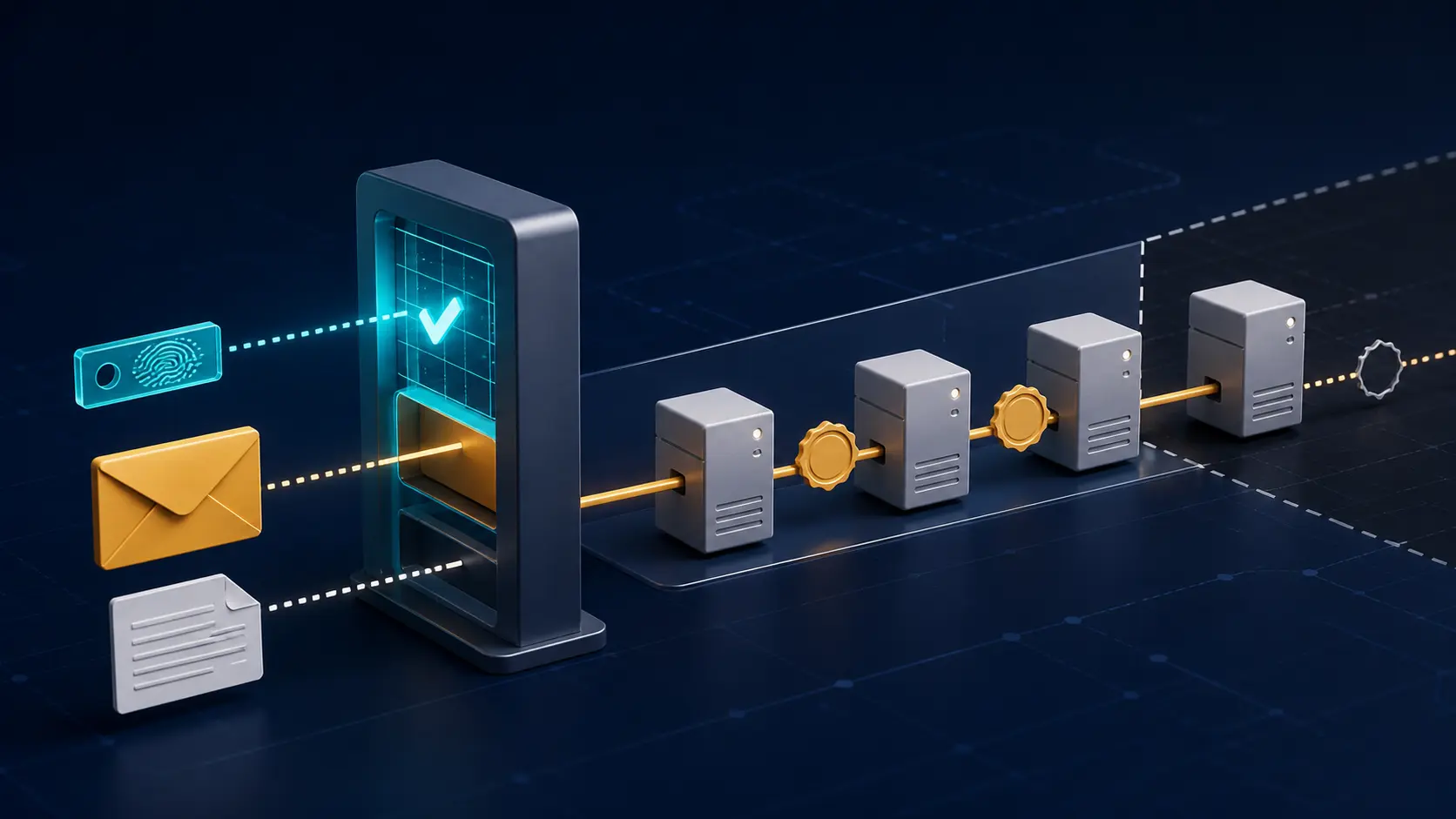
The Greeting That Had to Be Repeated: How STARTTLS Reset SMTP Trust
The first greeting crossed the network in the clear. So did the client's name and the server's list of abilities. When SMTP added encryption without abandoning its old port, the protocol could not simply wrap that conversation and pretend it had always been protected. It had to…
History
The Credential That Could Not Sign the Message: How SMTP AUTH Bounded Submission Identity
A password could open a mail submission gate. It could not sign the letter that passed through it. SMTP AUTH became useful precisely because the protocol kept those propositions apart: this client authenticated here; this account may act in certain ways; this message claims a…

Global Institutional
linuxptp and the control loop behind precision time
linuxptp turns a Linux host, hardware clock and network timing source into a precision-time system. Its daemons coordinate IEEE 1588 state, packet timestamps, servos and system clocks, but software alone cannot manufacture accuracy: the result still depends on NICs, oscillators…

Academics
Laurent Vanbever and the network that must be tested while it changes
Laurent Vanbever’s work treats network configuration as executable software whose failures can emerge before, during or after deployment. From safe routing migrations and configuration synthesis to runtime BGP detection and energy-aware operations, his research at ETH Zurich asks…

History
The Address That Could Not Be Downgraded: How SMTPUTF8 Made the Route Part of the Name
An accented display name could cross old email systems because it was decoration around an ASCII address. A non-ASCII mailbox name was different: it was the destination itself. SMTPUTF8 made every relay prove that it could carry that identity without inventing another one.
Academics
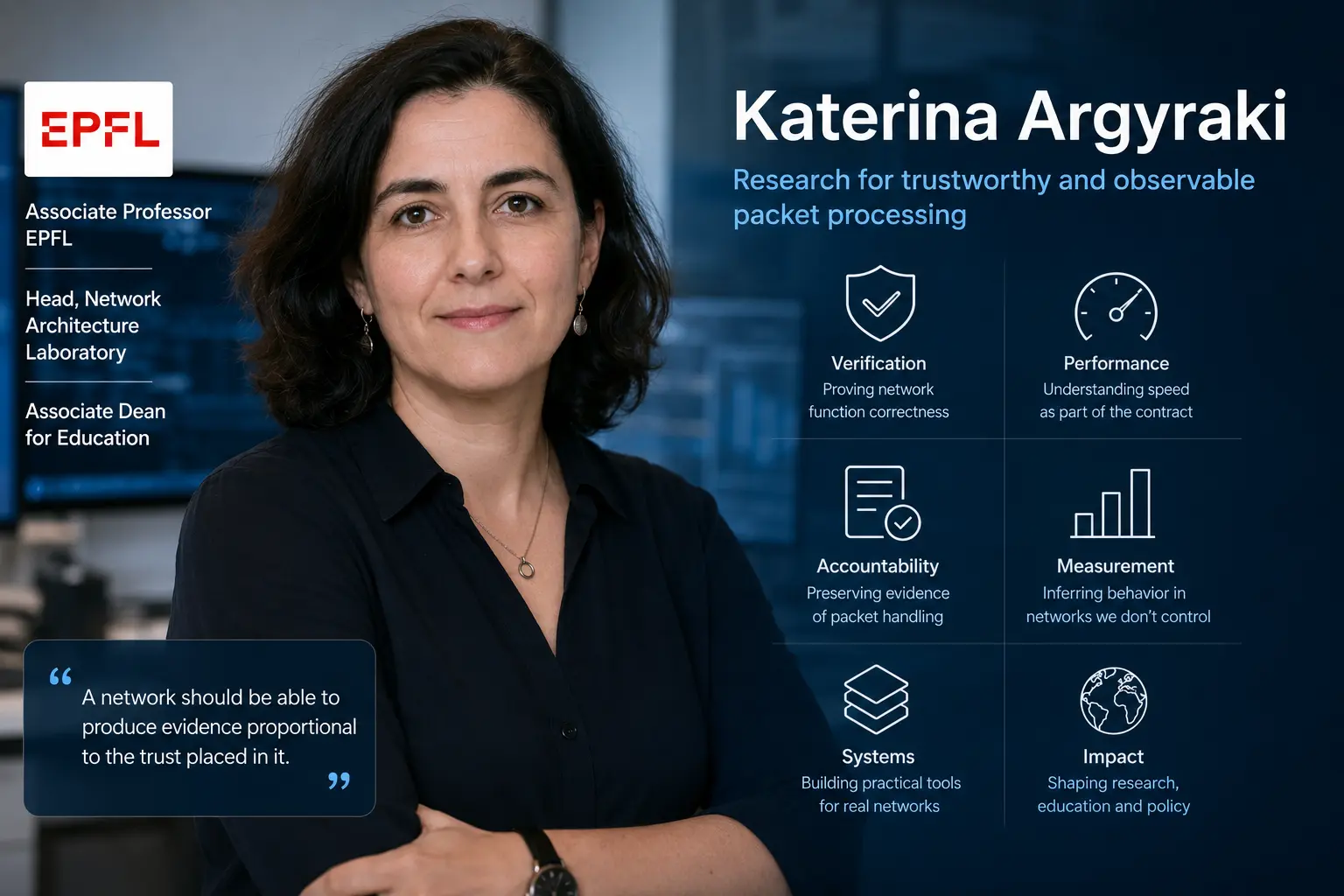
Katerina Argyraki and the search for proof in packet forwarding
Katerina Argyraki’s research follows a problem that becomes harder as networks become more programmable: a packet-processing system may be fast and flexible, yet operators and users often have little evidence that it behaved correctly. Her work at EPFL connects software-router…

Global Institutional
FreeRADIUS and the trust decisions behind network access
A network login may be decided in a few packets, but the trust behind it can span certificates, directories, access devices, roaming partners and accounting systems. FreeRADIUS makes that policy inspectable and programmable, while leaving operators responsible for the legacy…

Creators
Dave Maltz and the operating stack behind Azure networking
Dave Maltz’s role at Microsoft is best understood through the breadth of the organisation he leads. Azure Networking spans customer-facing services, DNS, security, distributed control, host offload, switch software, data-centre fabrics, wide-area links and optical systems. That…

History
The Receipt That Could Not Promise Delivery
SMTP DSN turned the bounce into structured evidence while preserving a crucial limit: a sender could request a report, but no receipt could promise more than the reporting system had observed.

Global Institutional
BIRD and the routing policy engine behind internet exchanges
The BIRD Internet Routing Daemon grew from a Czech university project into a control-plane system used in demanding routing environments, including internet exchanges where policy is concentrated and operational mistakes can spread quickly. Its history shows how open routing…

History
The Eighth Bit Needed Permission at Every Hop: How 8BITMIME Changed SMTP
Email could describe an accented character long before every relay could carry its bytes unchanged. 8BITMIME made that mismatch visible: a server had to promise capability on this hop, and acceptance created a duty to keep every bit.

History
The Commands Sent Before Their Answers Arrived: How SMTP PIPELINING Changed the Wait
Early SMTP made a sender pause after nearly every command. On a distant link, the message could spend more time waiting for permission to continue than moving. PIPELINING shortened that silence, but only by making order—not wording—the ledger of unfinished work.

History
The Method That Refused to Be Misunderstood: Why HTTP 510 Existed
RFC 2774 tried to stop servers returning success after ignoring mandatory HTTP extensions. The fate of 510 shows the cost of verifiable semantics.

History
The Message Measured Before It Moved: How SMTP SIZE Made Refusal Early
Early SMTP could carry a large message all the way to a server before learning that the server would never keep it. The SIZE extension did something narrower than guaranteeing delivery: it let two relays compare a declared load with local capacity before paying the full transfer…

History
The Network Answered in the Origin's Place: Why HTTP Needed 511
A client asked one server for a resource and received an answer from the network in between. HTTP 511 tried to name that substitution without granting the interceptor the origin's identity. Its limits explain why captive-portal design later moved toward provisioned, authenticated…

History
The Server That Stopped Calling Back: How Passive FTP Crossed the Firewall
FTP’s most consequential accommodation to the firewall was not encryption, tunnelling or a new transfer engine. It was a smaller decision: let the client make the second call. That reversal made old machinery fit a new network boundary while leaving security judgment where it…

History
The Request Was Too Large Before Its Body Began: Why HTTP Needed 431
An HTTP request can fail before its content is read, not because the protocol declared one universal ceiling, but because a receiver decided how much control context it was willing to process. Status 431 made that private boundary visible without pretending that every hop shares…

History
The Host That Learned a Small Routing Table: How IPv6 Ranked First Hops
IPv6 did not make every host a routing speaker. It let a router disclose a few expiring choices, then left the host to combine longest-prefix logic, observed reachability and local policy. The useful invention was as much the boundary as the route.

History
The Server That Counted Before It Answered: Why HTTP Needed 429
A request can be valid, authorized and still arrive after its allotted share has gone. HTTP 429 made that refusal legible while leaving the decisive questions—who is counted, across what scope and at whose cost—with the server that owns the capacity.

History
The Silence That Licensed an Address: What IPv6 DAD Could Prove
IPv6 DAD based an important decision on a negative observation: no rival appeared during a bounded local probe. The protocol had to say exactly how far that silence could reach.