
Primary Domain
Internet Infrastructure
Within the Primary Domain facet, Internet Infrastructure intelligence groups reporting by primary domain so readers can follow a focused area of internet infrastructure, governance, connectivity markets, or digital capital. The page brings together related articles, public evidence, institutions, companies, people, regional exposure, operating dependencies, and market context that may otherwise sit across separate category pages. It explains the domain, the likely actor class, the market or governance context, and the source material readers should use when comparing signals. Operators, analysts, and governance readers can see how the same domain appears across events, profiles, market shifts, public-source evidence, regional dependencies, and longer-cycle infrastructure decisions over time.

History
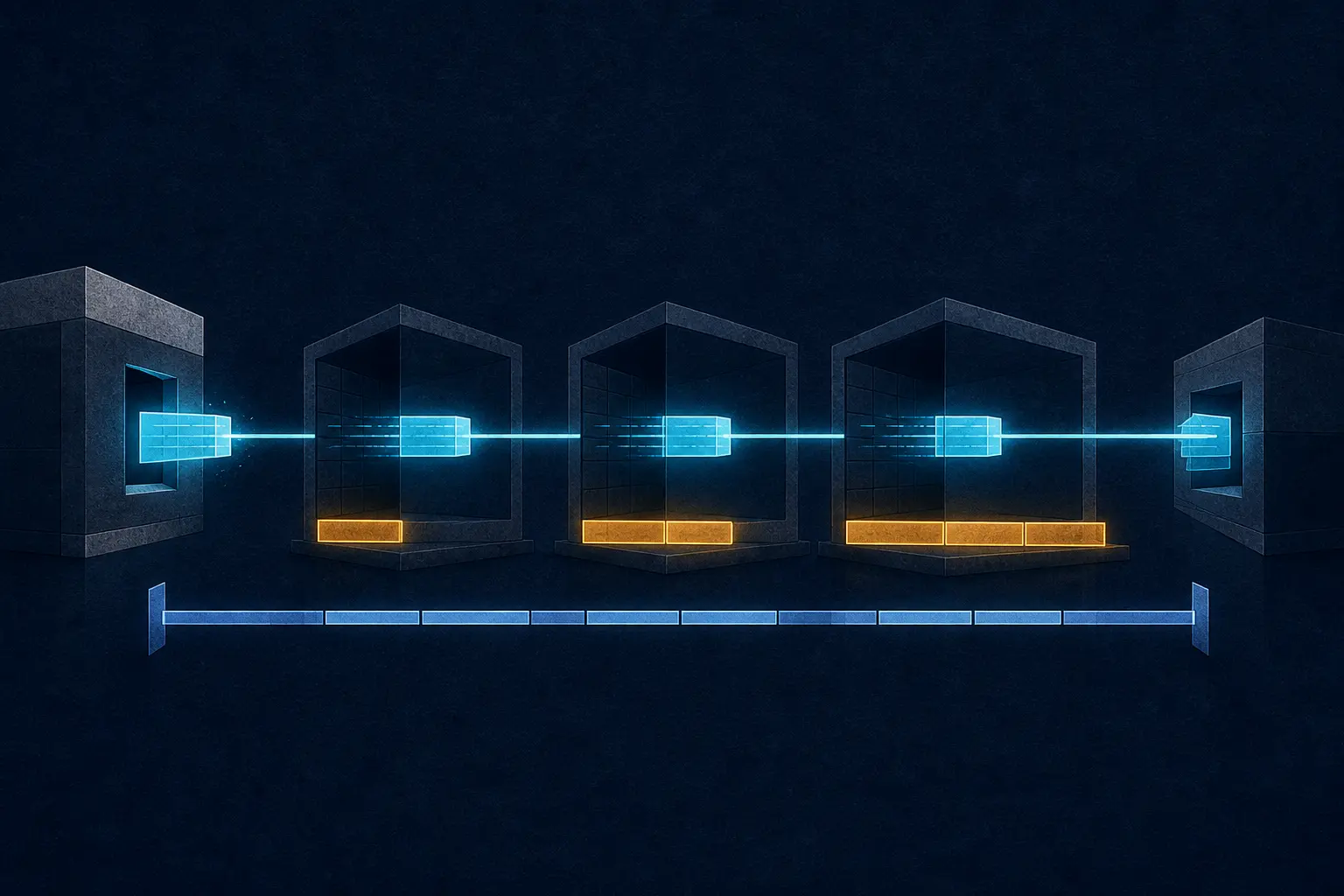
The Hash That Stayed While the Keys Changed: How SSH Bound Authentication to One Session
An SSH connection can replace the cryptographic machinery protecting it without making every shell, file transfer or forwarded channel begin again. The protocol made that continuity explicit: the first key exchange left behind a hash that later keys could not rename.
History
The Number That Grew at Every Cache: How HTTP Age Estimated a Response Without Dating the Object
A browser can receive `Age: 120` for a document written years ago. The apparent contradiction disappears once the field is read narrowly: HTTP did not ask caches to date content. It asked each cache to carry forward, correct and extend an estimate about one stored response.

History
The Bit That Ended the Record: How ONC RPC Put Message Boundaries Back on TCP
A TCP reader can receive half a header, three complete calls or the tail of one reply. None of those read sizes says where an RPC message ends. ONC RPC solved the problem with four bytes: 31 bits counted one fragment, while the remaining bit closed one record after that…

History
The Message That Arrived as Several Messages: How MIME Made Reassembly a Local Act
A large mail entity could cross the Internet as several ordinary messages, each accepted or delayed on its own, and still become one typed entity at the far end. MIME achieved that without pretending the wrappers were the entity: it supplied a narrow grouping grammar and left…

History
The Condition That Turned a Range into the Whole: How HTTP If-Range Kept Partial Bytes in One Version
A client had the first million bytes of a file and wanted the rest. The offset was easy to state; the dangerous question was whether “the rest” still belonged to the same version. HTTP answered with a condition that could turn a request for a fragment into delivery of the whole…

History
The Trail That Grew Backwards: How Usenet Path Stopped a Relay from Sending News Back
A news article arrived at one server carrying the name of the server that had just sent it. That small trace let the receiver avoid an absurd next move—offering the same article straight back—without mistaking a mutable journey record for a return address, a signature or the…

IETF
Ari Keränen and the Candidate Pair That Won Before Success Could Be Claimed
An ICE log can name the transport path a session selected with millisecond precision. It still cannot tell an operator whether anyone heard a word, whether an application admitted the session or whether permission to keep sending remained fresh. The useful record begins where the…

History
The Link That Never Left the Message: How MIME Content-ID Named Embedded Parts
An HTML message could point to a picture using something that looked like a URL, yet no browser had to leave the message to fetch it. MIME made that possible by giving each body part a label, letting another part spell the label as `cid:`, and leaving the receiving application to…

History
One Call-ID, Several Dialogs: How SIP Tags Named a Fork
An invitation sent to one address could ring at several endpoints and return several answers. SIP's durable solution was not to give each answer a new call number, but to let each peer complete a two-sided name for the state that would outlive the invitation.

IETF
Erik Nordmark and the Neighbor That Became Stale Before It Became Unreachable
An IPv6 neighbor can become `STALE` while it is still carrying traffic, and it can enter `UNREACHABLE` while packets are still sent to its cached link-layer address. The apparent contradiction disappears once the cache is read as a record of expiring evidence rather than a…

History
The Connection Died. The Session Did Not: How RTSP Put State Beyond TCP
A media server could lose the socket that carried PLAY and still remember what the client had set up. RTSP made that possible by giving server state its own expiring identifier—then carefully refusing to treat the identifier as the resource, the media path or the user's…

History
The Flag That Made Ignorance a Validation Failure: How X.509 Critical Extensions Governed Change
A certificate could acquire a new signed rule long after old software had shipped. X.509 v3 made that growth possible with an extension identifier, a value and one Boolean. The Boolean did not announce importance. It decided whether a validator that could not understand the rule…

IETF
Carsten Bormann and the Token That Matched a Reply, Not a Person
A field small enough to fit inside a constrained message can still be asked to carry too much institutional meaning. CoAP’s design offers a better discipline: give each compact identifier one narrow job, preserve the surrounding evidence, and refuse to turn correlation into…

History
The Number That Said Goodbye So the Stream Could Continue: How RTP Resolved SSRC Collisions
Two live sources could enter one RTP session carrying the same 32-bit number. The protocol did not ask a central registry to decide who owned it. The source that found its own number in conflict sent goodbye for that label, selected an unused replacement and kept the media…

History
One XID, Two Executions: Why RPC Needed Memory Beyond the Reply Number
A remote call can be repeated with exactly the same number and still perform its work twice. ONC RPC made replies attributable; the harder task was preserving enough server-side history to say whether a retry was new.

IETF
Fernando Gont and the First Fragment That Had to Name What Came Next
An IPv6 fragment can arrive first without explaining what the completed packet is for. The source address is visible, the destination is visible and the fragment offset says zero, yet the transport header a firewall needs may be hiding in a later piece. RFC 7112, co-authored by…

History
The Answer That Supplied the Next Question: How SNMP Walked the MIB
An early network manager could know the name of a routing-table column without knowing a single row index. SNMP solved that ignorance with an unusual answer: return not the requested name, but the next accessible one. The reply became the next question, and an unknown inventory…

History
The Option Nobody Understood Still Said What to Do: How IPv6 Bounded Unknown Options
IPv6 gave future options a way to meet old software without leaving the consequence to guesswork. Three leading bits did not explain the new feature; they told an unknowing processor how far ignorance was allowed to travel.
IETF
Jen Linkova and the Five-Minute Clock That Kept IPv4 on Call
The most revealing part of RFC 8925 is not that a device can decline an IPv4 address. It is that the refusal expires. A client asks for DHCPv4 option 108, a configured server returns a waiting time, and the client pauses DHCPv4 only until that clock runs out or the network…

History
The Bytes That Did Not Belong to the Value: How XDR Made Machines Agree
XDR made unlike computers meet on a four-byte grid. Its most revealing rule concerned the blank spaces: zero octets could be required on the wire while remaining outside the value, a small distinction on which deterministic decoding depended.