
Primary Domain
Internet Infrastructure Institution
Within the Primary Domain facet, Internet Infrastructure Institution intelligence groups reporting by primary domain so readers can follow a focused area of internet infrastructure, governance, connectivity markets, or digital capital. The page brings together related articles, public evidence, institutions, companies, people, regional exposure, operating dependencies, and market context that may otherwise sit across separate category pages. It explains the domain, the likely actor class, the market or governance context, and the source material readers should use when comparing signals. Operators, analysts, and governance readers can see how the same domain appears across events, profiles, market shifts, public-source evidence, regional dependencies, and longer-cycle infrastructure decisions over time.

Story
A Philippine /23 Went From Zero to 323 RIS Peers in Eight Hours
APNIC recorded the move to Dagupan in a minute. The exact holder record followed 35 seconds after the transfer timestamp. The route took until the next day to appear across RIPE RIS, then filled every observed peer between two samples.

Story
APNIC Needs Two-Thirds of Voters to Change a Rule, but Two-Thirds of Everyone to Reverse Its Board
The registry puts two very different denominators between its members and the Executive Council. One share in a separate trustee company shows how far the corporate path runs.

Story
LACNIC Logged One /22 Transfer. The Routes Changed Hands in Two Acts.
The registry recorded a single 1,024-address transfer to Fiber Box. RIPE's routing snapshots show the upper half moving to the new origin first, while the lower half briefly slipped from most of its observed peers.

Story
A /15 Went to ARIN. Its Halves Ended at LACNIC and APNIC.
V.TAL sent 131,072 IPv4 addresses to Globenet in one piece. Two later receipts and two exact live registrations show where every address went.

Story
RIPE NCC Can Keep Billing After the Contract Ends. The Exit Is a Form.
A 31 December snapshot makes a stopped customer relationship a registration problem. RIPE NCC accepts one exit channel, and the 2024 year-end queue shows what happens when everyone waits.

Story
RIPE Sent Three Vodafone Blocks to LACNIC. The Recipient’s Name Was Elsewhere.
Three adjoining IPv4 blocks left Vodafone ONO in RIPE’s 3 November ledger. The destination field says only LACNIC; the receiving registry’s exact holder records say Liberty Networks de Colombia.

Story
ARIN Sent EarthLink 485,632 Addresses. The Return Receipt Covered 47%.
Windstream sent 911 IPv4 ranges one way and received 411 rows back. A single /20 shows why the second arrow never erased the first.

Story
RIPE Stamped Seven New Holders Before ARIN’s Transfer Clock Caught Up
Seven address blocks crossed from ARIN to RIPE NCC on 2 November. In every case, the receiving registry’s exact holder card carries a timestamp five to ten minutes earlier than ARIN’s transfer entry.
Story
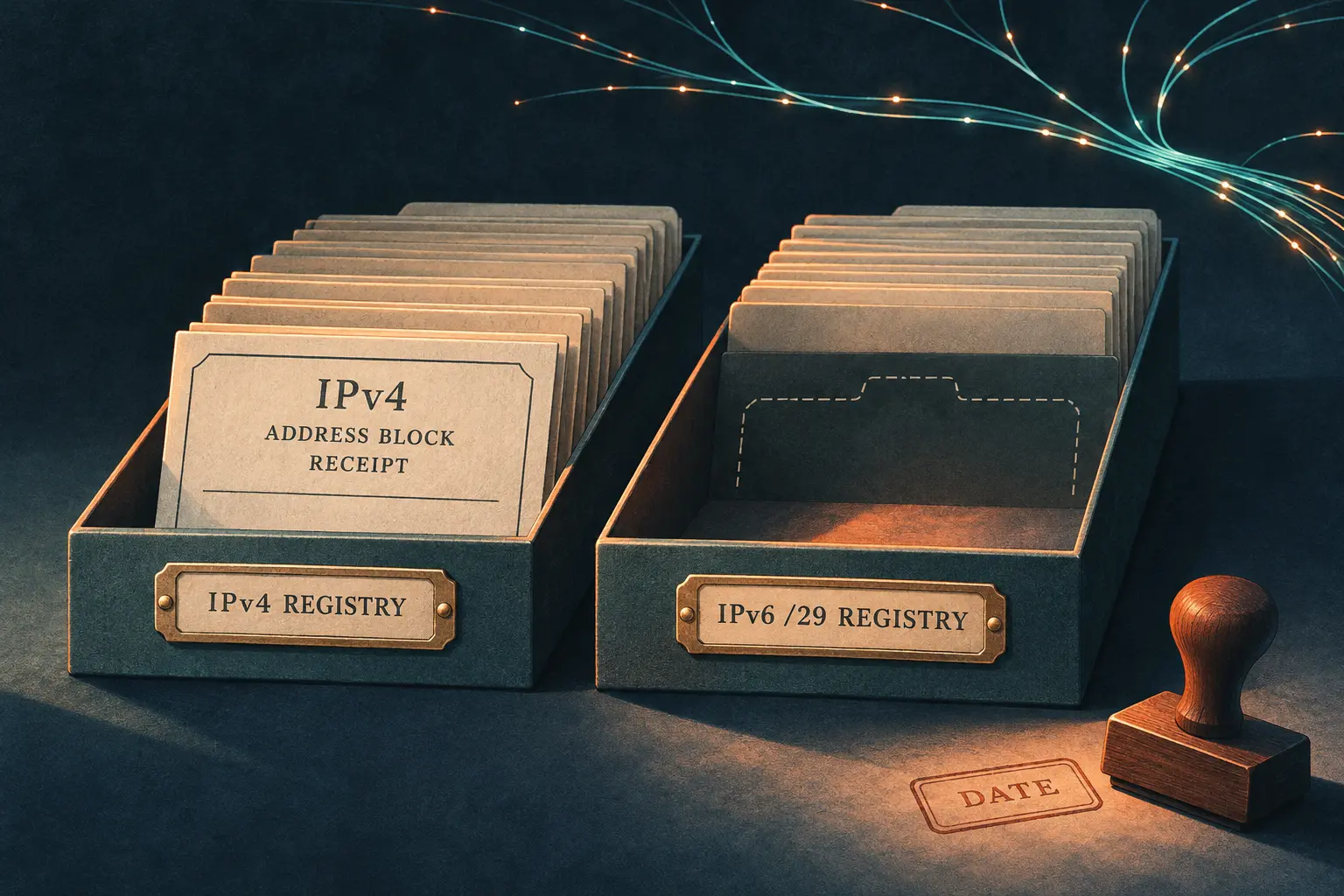
RIPE Logged Newtec’s IPv4 and IPv6 Transfers. Only One Has a Holder Card You Can Find.
Two same-day transfer receipts carry Newtec’s names across RIPE’s public tables. Ask the database for the precise IPv6 allocation, though, and it hands back the registry’s own giant parent block.

Story
ARIN Stamped 100 Zayo Rows at 16:06:28. One /16 Had Three Earlier Receipts.
A single second moved 72 IPv4 ranges, eight IPv6 blocks and 20 ASNs into one ledger batch. The address histories did not start together.

Leaders
Ingrid Wijte Put the Registry’s Email Form on a Retirement Clock
A registry can run two front doors until every policy change needs two locksmiths. In 2014, Wijte counted how many members still used the old email entrance and gave them a portal, an API and a longer runway.

Story
LACNIC Has 160 Published ASPAs. A Hundred Give Operators More Than One Provider to Keep Straight.
LACNIC opened the ASPA publishing controls in MiLACNIC. Its own repository now shows what that button has to carry: 160 customer-AS declarations, most with more than one authorized provider.

Story
Rain Sent Three IPv4 Blocks to Broadlink. AFRINIC Got Them Back as One Bundle.
Rain Sent Three IPv4 Blocks to Broadlink. AFRINIC Got Them Back as One Bundle. intelligence summary explains the development, the public evidence available to readers, the organisations involved, the regional context, market exposure, and the infrastructure consequences that may…
Story
A University’s 1990 /16 Is Down to One /21. ARIN’s Ledger Shows Where the Rest Went.
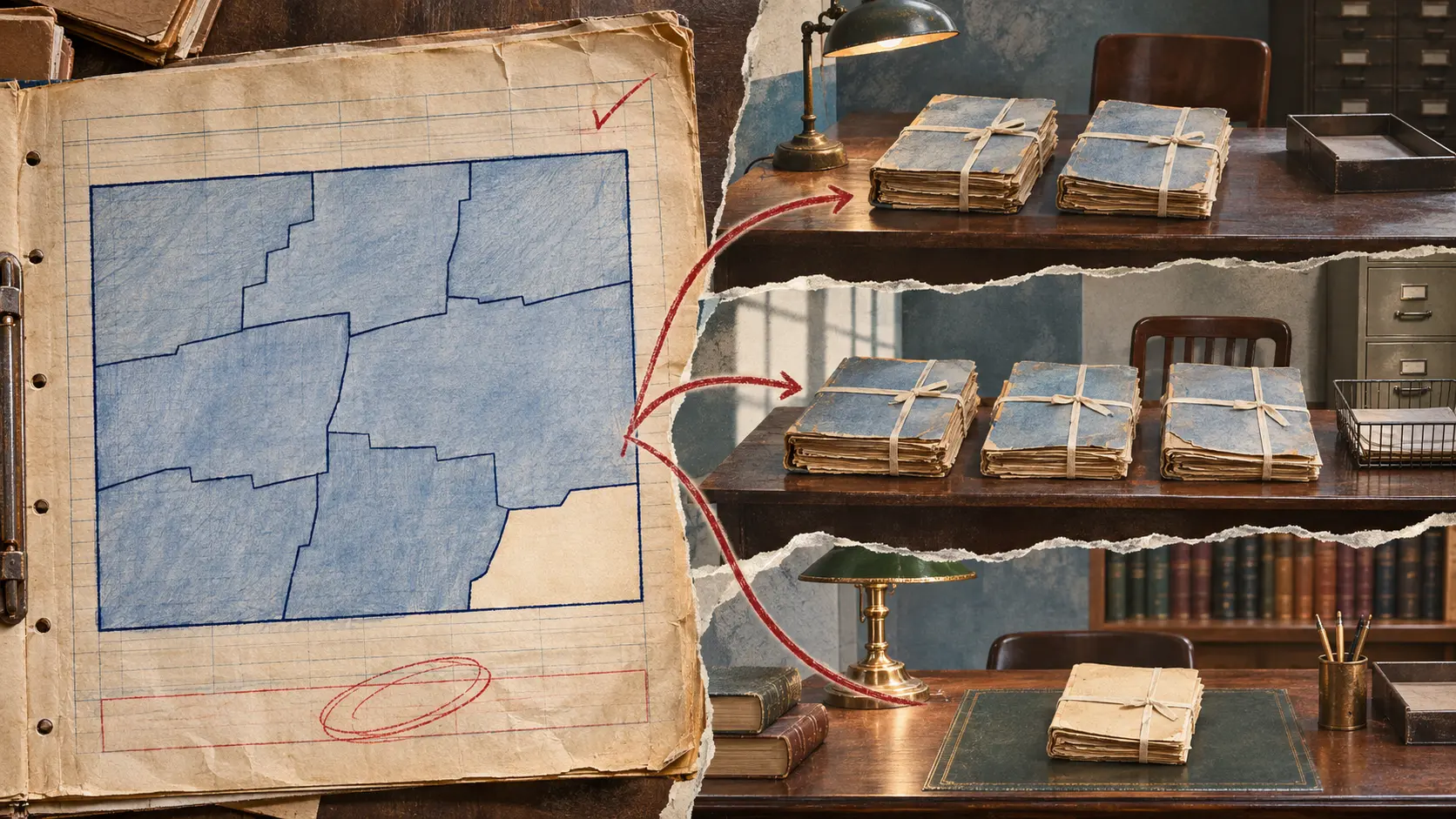
St Mary’s University once held the whole 140.184.0.0/16. Eight transfer entries now account for every address except its first 2,048. The former campus block has become a three-registry jigsaw.

Story
RIPE Stamped NXLayer’s /24 at 08:03. Its Route Was There Yesterday.
RIPE Stamped NXLayer’s /24 at 08:03. Its Route Was There Yesterday. intelligence summary explains the development, the public evidence available to readers, the organisations involved, the regional context, market exposure, and the infrastructure consequences that may follow. The…

Story
RIPE Gave ScopeSky Three /24s. One Still Speaks Through Elsuhd’s ASN.
RIPE Gave ScopeSky Three /24s. One Still Speaks Through Elsuhd’s ASN. intelligence summary explains the development, the public evidence available to readers, the organisations involved, the regional context, market exposure, and the infrastructure consequences that may follow.…

Story
LACNIC Logged Eleven IPv4 Ranges Twice. Two Names Don’t Join.
The same eleven ranges returned to LACNIC’s transfer ledger after 438 to 2,402 days. Two party chains break on names; one old /22 now answers as four /24s.

Leaders
Leslie Nobile Brought 110 Hijack Reports to ARIN. The WHOIS Record Was the Costume.
At ARIN's October 2003 meeting, Leslie Nobile showed how a stranger could acquire the appearance of authority over an Internet address record without first acquiring the address. Change the contact trail in WHOIS, and the public directory may begin to look as though the stranger…

Leaders
Hugo Salgado Put a Version Number on a DNS Answer
Two authoritative servers can answer the same name from different copies of a zone. Salgado wanted the reply itself to say which copy spoke. The idea took years and three authors to become one small DNS option.
Story
ARIN Handed TensorWave 8,192 Addresses. RIPE’s Route Collectors Saw None.
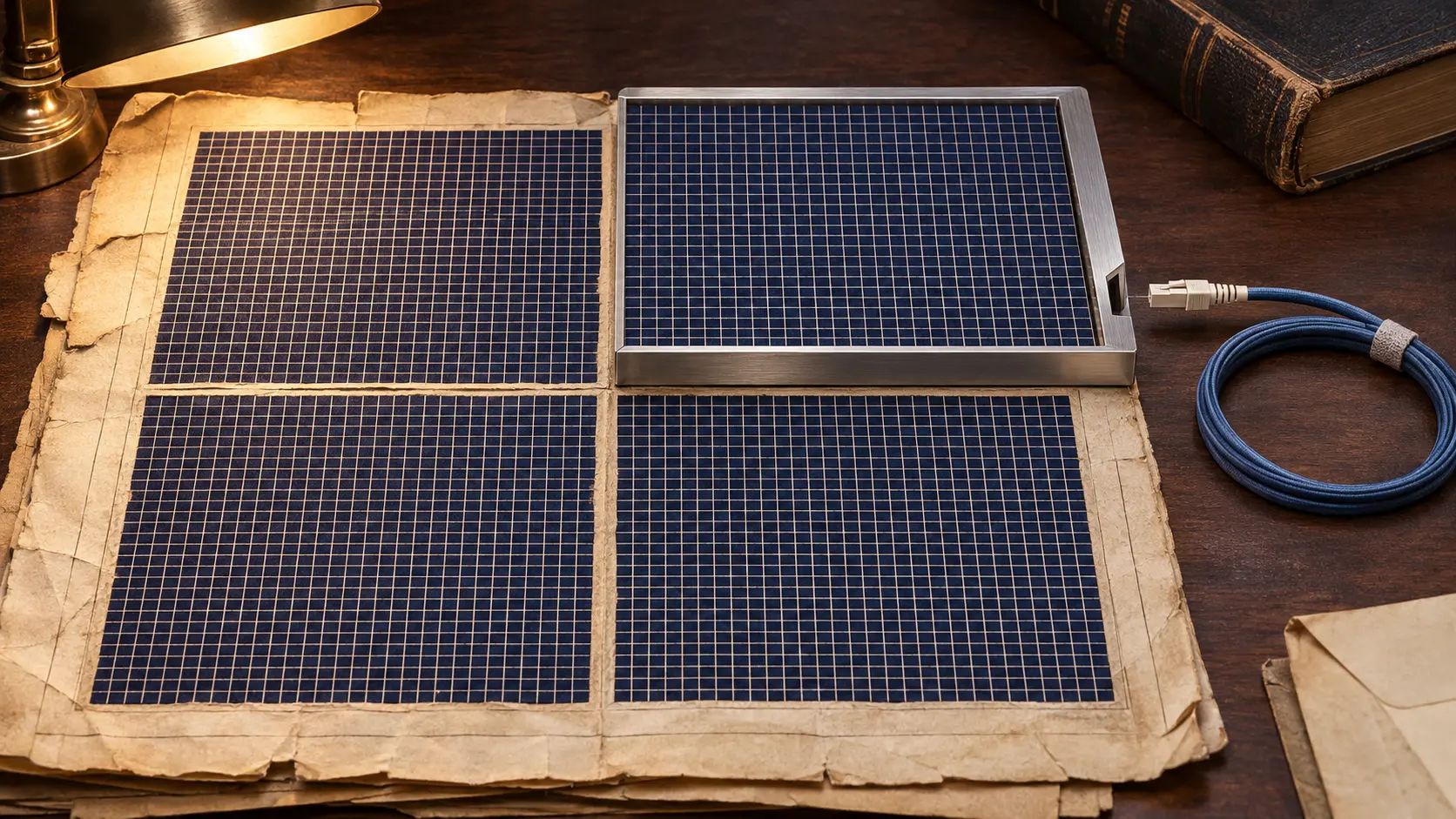
A quarter of Krypt Technologies’ 2009 /17 was registered to TensorWave on 2 November. ARIN’s ledger has the holder and the second; RIPE NCC’s observed routing table still had no route for that /19.