Summary
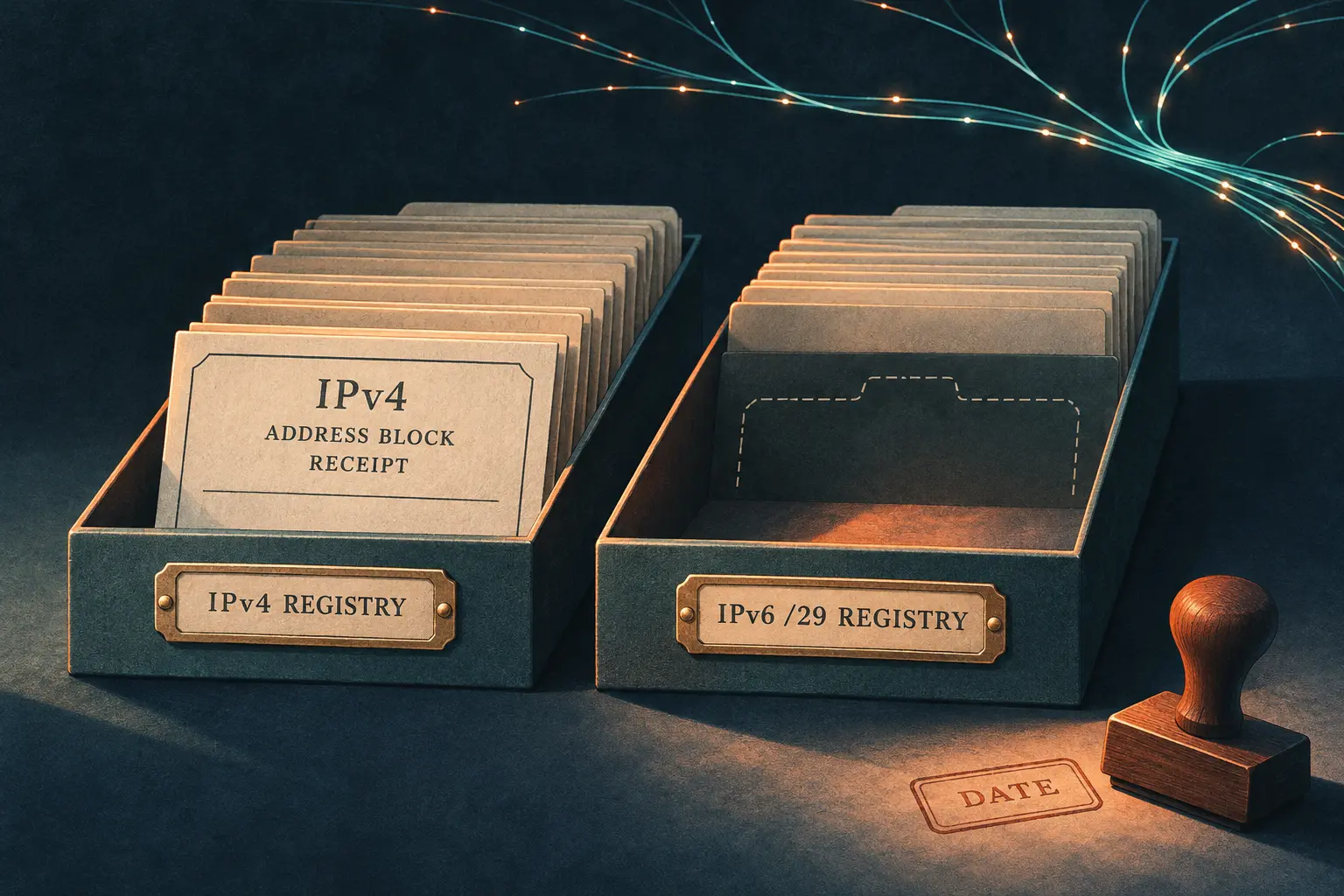
- AFRINIC’s transfer history sends three exact IPv4 ranges, 57,344 distinct addresses, from Rain Networks (Pty) Ltd to Broadlink on three dates in January and February 2019. One 26 September 2022
MERGER_ACQUISITIONrow sends the same three bounds from Broadlink to RAIN GROUP HOLDINGS (PTY) LTD. - That 2022 row also adds a separate 1,024-address /22 and AS327840. The three repeated ranges are a 57,344-address chain; the full Broadlink package is 58,368 IPv4 addresses plus an ASN. Rain Networks and Rain Group Holdings are separately named parties.
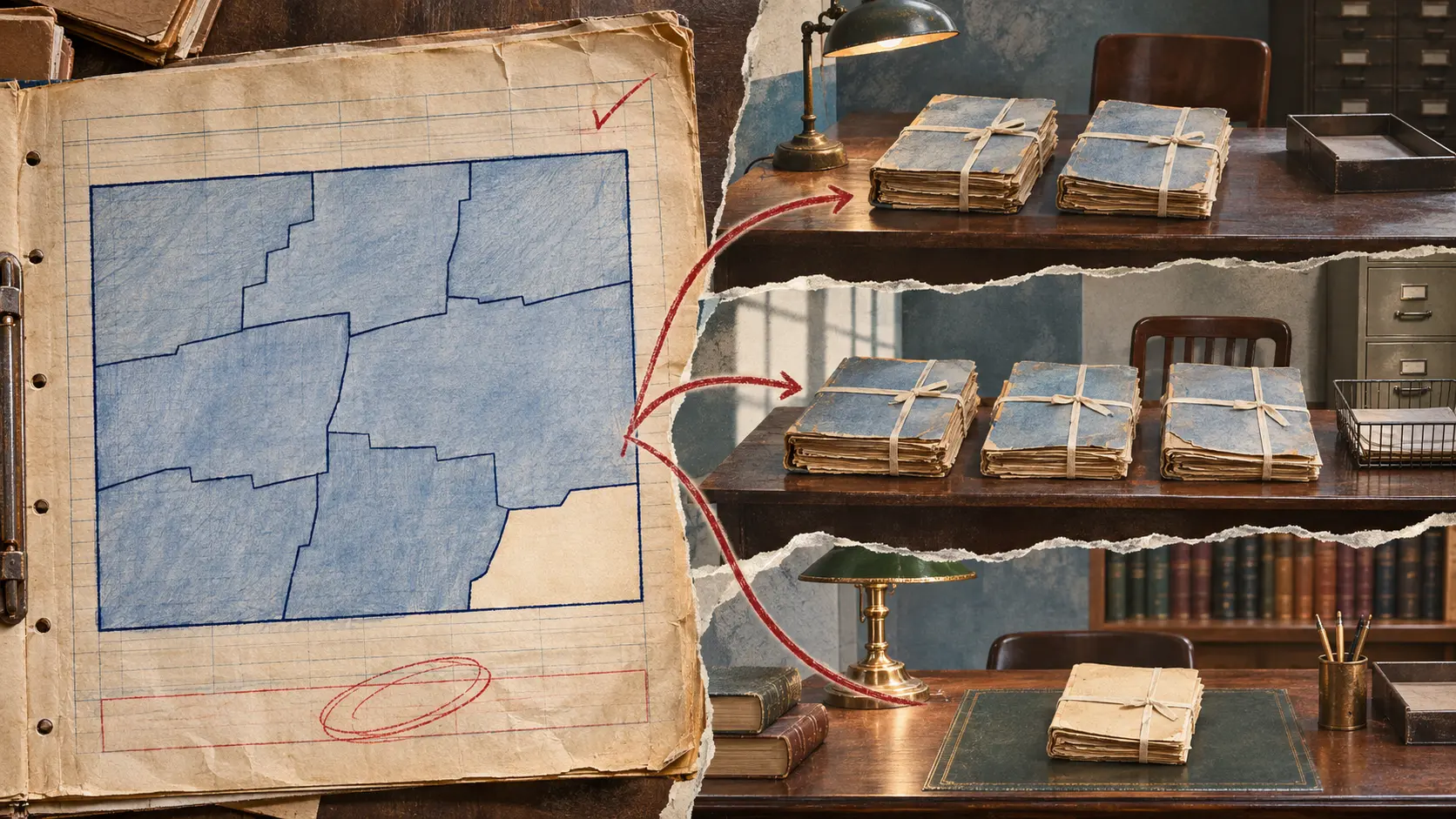
A neat consolidation can hide a messy departure. AFRINIC’s cumulative transfer file shows Rain Networks sending three IPv4 ranges to Broadlink in 2019, each on its own date and each labelled RESOURCE_TRANSFER. In September 2022, Broadlink sends those exact three ranges in one MERGER_ACQUISITION entry to RAIN GROUP HOLDINGS. The first movement took three receipts. The second took one. The shared word “Rain” makes a tempting circular story, but the legal names in the ledger are different: Rain Networks (Pty) Ltd at the beginning, RAIN GROUP HOLDINGS (PTY) LTD at the end.
The first parcel left on 14 January 2019: 196.2.96.0–196.2.127.255, a /19 of 8,192 addresses. On 4 February, Rain Networks transferred 41.213.0.0–41.213.127.255, a /17 of 32,768. Four days later, on 8 February, 41.208.192.0–41.208.255.255, a /18 of 16,384, went the same way. Three dates, one source and one recipient, with no overlap among the ranges. The total is 57,344 distinct addresses. The different dates matter because a later bundle makes them look like one old transaction when they were three.
The reassembly is visible in a single AFRINIC row at 12:35:41 UTC on 26 September 2022. Broadlink is the source and RAIN GROUP HOLDINGS the recipient. Its IPv4 transfer set lists the same /19, /17 and /18 with identical start and end addresses. The intervals since their 2019 transfers are 1,351, 1,330 and 1,326 calendar days. Matching exact boundaries is the reliable join here; adding two movements of the same address space would count 114,688 address-events, not 114,688 unique addresses.
The 2022 package is larger than the three-range return. Broadlink also transfers 154.73.252.0–154.73.255.255, another /22 with 1,024 addresses, and AS327840. Its IPv4 total is therefore 58,368. The extra /22 has no matching Rain Networks-to-Broadlink entry among the three 2019 rows. Put it in the 57,344-address chain and the arithmetic grows a new limb the history does not support. The ASN is a network number, not 1,024 more IPv4 addresses. A transfer ledger can put several kinds of resource on one line; the reader still has to keep their units separate.
The same September day is crowded. Other AFRINIC rows bring resources from MXIT, Neology and Rain Networks itself to RAIN GROUP HOLDINGS. That tells the reader why the Broadlink row belongs in a consolidation story, but it does not establish a corporate family tree. The registry lists parties and approved movements. It does not publish the consideration, the control agreement or how the four source organisations related before this date. The exact three-block path can be reconstructed without guessing at that private structure.
Current registration supplies a useful check on the endpoint. AFRINIC RDAP returns exact 41.213.0.0/17 and 41.208.192.0/18 objects under RAIN GROUP HOLDINGS. The old 196.2.96.0/19 is now represented in AFRINIC Whois by two adjoining /20 assignment records, .96.0–.111.255 and .112.0–.127.255, both naming the same group. AFRINIC’s 3 November extended delegated file still records the 8,192-address /19 as one allocation. A full-/19 RDAP request returns no object; Whois provides the two current child answers. The historical transfer unit and the present registration view are related, but they are not the same row shape.
This is why the three first dates should remain visible. A chart that begins with the 2022 M&A row would see one 58,368-address package, miss three earlier RESOURCE_TRANSFER receipts, and treat AS327840 as a decoration. A chart that adds the 2019 and 2022 IPv4 amounts as distinct stock would count the same 57,344 addresses twice. The exact range key gives the correct history: three exits from Rain Networks to Broadlink, one later Broadlink package to Rain Group Holdings, and a fourth /22 that joins only at the second step.
AFRINIC did its part by publishing the dated boundaries and parties. The awkward work is left to anyone calling the result “Rain’s addresses”: specify which Rain entity, which event and which count. Names can look like a loop while the legal ledger describes a chain through distinct organisations. Three receipts spread over twenty-five days became one line three and a half years later. A tidy line is convenient. It is not a licence to erase the three dates.
AFRINIC originals
Member Briefing
Deeper Profile Context
Sign in with the right membership level to unlock the full briefing and source notes.
Only for Strategic Circle
Strategic Circle
Open to all readers. Unlock profile briefings after joining and signing in.
Join Strategic CircleOnly for Leadership Alliance
Leadership Alliance
For qualified IP-asset owners and management; sign in to unlock alliance briefings.
Join Leadership Alliance