
Content Type
Companyprofile
Within the Content Type facet, Companyprofile intelligence gathers BTW.MEDIA articles that share the same editorial format, helping readers compare briefings, profiles, risk notes, market analysis, and event coverage without mixing different kinds of evidence. The page explains how this content type frames internet infrastructure events, company movements, governance decisions, operational signals, and public evidence across the site. Readers can compare which actors or infrastructure systems appear most often, how source quality changes interpretation, and whether the material is a durable profile, a time-sensitive event, a strategic market signal, or a governance development. The result is a useful search page for operators, investors, customers, analysts, and policy stakeholders who need to understand the consequence, timing, and evidence behind similar article formats.

Global Institutional
PCI-SIG and the rules that make an AI server work
A single AI server can contain processors, accelerators, network adapters, storage controllers, switches, retimers and security components from companies that compete everywhere else. PCI-SIG maintains the common interface that lets these components find and talk to each other…
North America Institutional
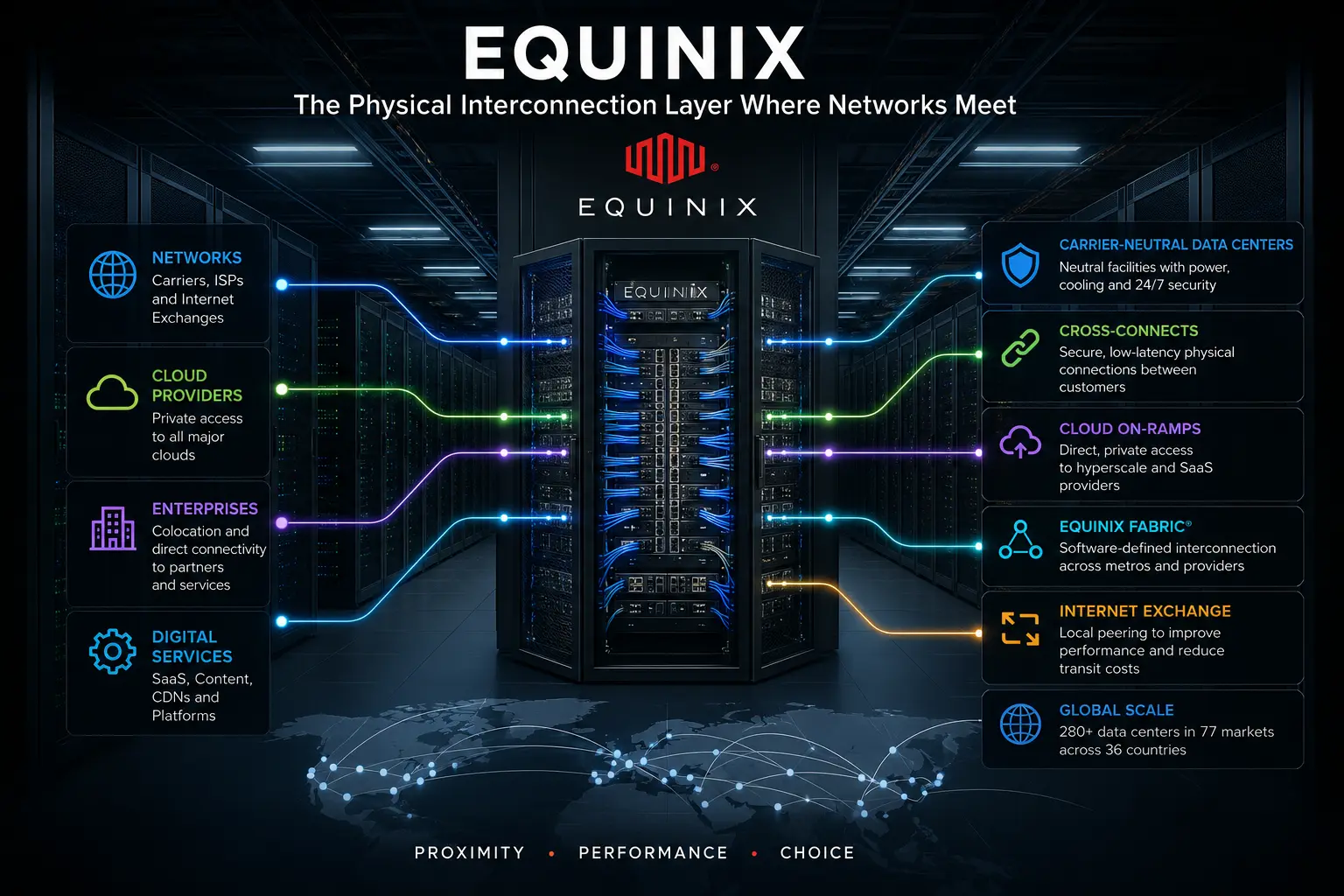
Equinix and the physical interconnection layer where networks meet
Equinix turned a simple proposition—that competing networks need neutral places to meet—into a global interconnection platform. Its influence comes from operating the physical and digital meeting points whose value, and switching costs, grow as more entities connect.

Global Institutional
Ultra Ethernet Consortium: Rebuilding Ethernet for AI at Scale
The Ultra Ethernet Consortium is trying to turn the data centre’s most familiar network into a complete AI and high-performance-computing fabric—from libfabric APIs and RDMA semantics to packet spraying, congestion control, link recovery, security and 200 Gb/s lanes. Its…

Global Datacenter
Equinix Fabric and the limits of programmable interconnection
Equinix has spent more than a decade turning private connections among data centres, clouds and network services into software-addressable products. Its 2026 push into agent-assisted operations and geographic path controls makes the platform more useful, while making the ports…

Global Institutional
RouteViews and the infrastructure that makes the internet’s routing system observable
RouteViews began in 1995 as a practical way for network operators to inspect how their routes appeared from outside their own organisations. Three decades later, the University of Oregon-hosted project operates a globally distributed BGP collection, archive and access platform…

North America Institutional
Fastly and the programmable edge that reshaped content delivery
Fastly was founded on the proposition that content delivery should not be a remote utility configured outside the software-development process. It built a CDN around programmable cache behaviour, rapid invalidation, real-time telemetry and an intentionally concentrated network of…

Europe and Middle East Institutional
GÉANT and the Federated Infrastructure Powering European Science
GÉANT does not replace national research and education networks in Europe, nor does it operate a separate internet from the public network. Instead, it provides those networks with a shared continental layer that includes optical and IP connectivity, identity federation, cloud…

Europe and Middle East Institutional
GÉANT and Europe’s federated research infrastructure
GÉANT gives Europe’s national research networks a shared continental layer for optical and IP connectivity, identity, cloud access, security and global collaboration without replacing national control. Its importance lies in federation: independently governed networks can operate…

Europe and Middle East Institutional
GÉANT and the Federated Infrastructure Sustaining European Science
GÉANT does not replace Europe’s national research networks nor operate a separate internet. It provides a common continental layer — optical and IP connectivity, federated identity, cloud procurement, security coordination, and global links — so that universities and scientific…
Europe and Middle East Institutional
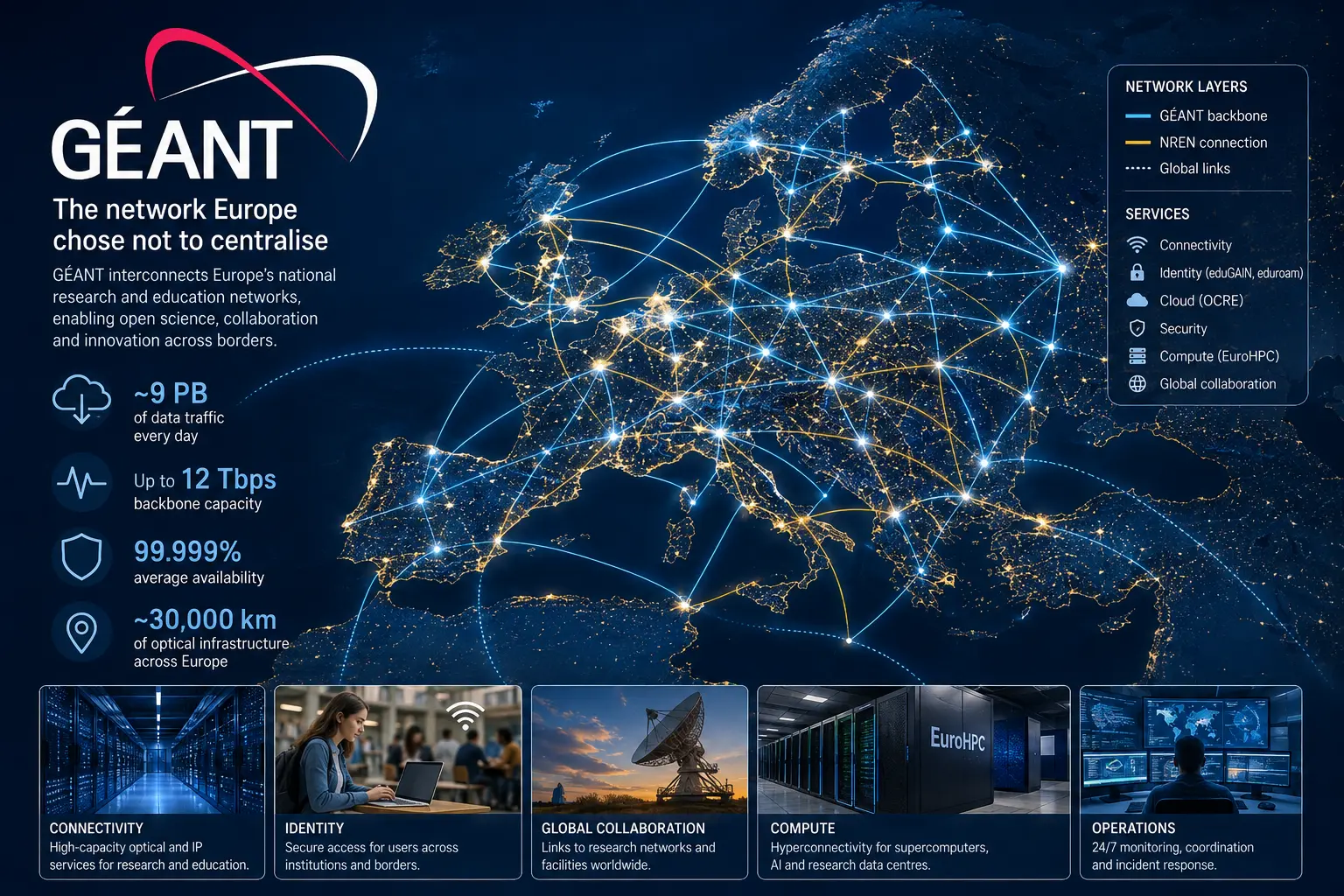
GÉANT and the network Europe chose not to centralise
GÉANT gives Europe’s national research networks a shared layer for optical capacity, routing, identity, cloud access, security and global collaboration. Its power comes from coordinating independently governed systems, but the same federation means that no single organisation…
North America Institutional
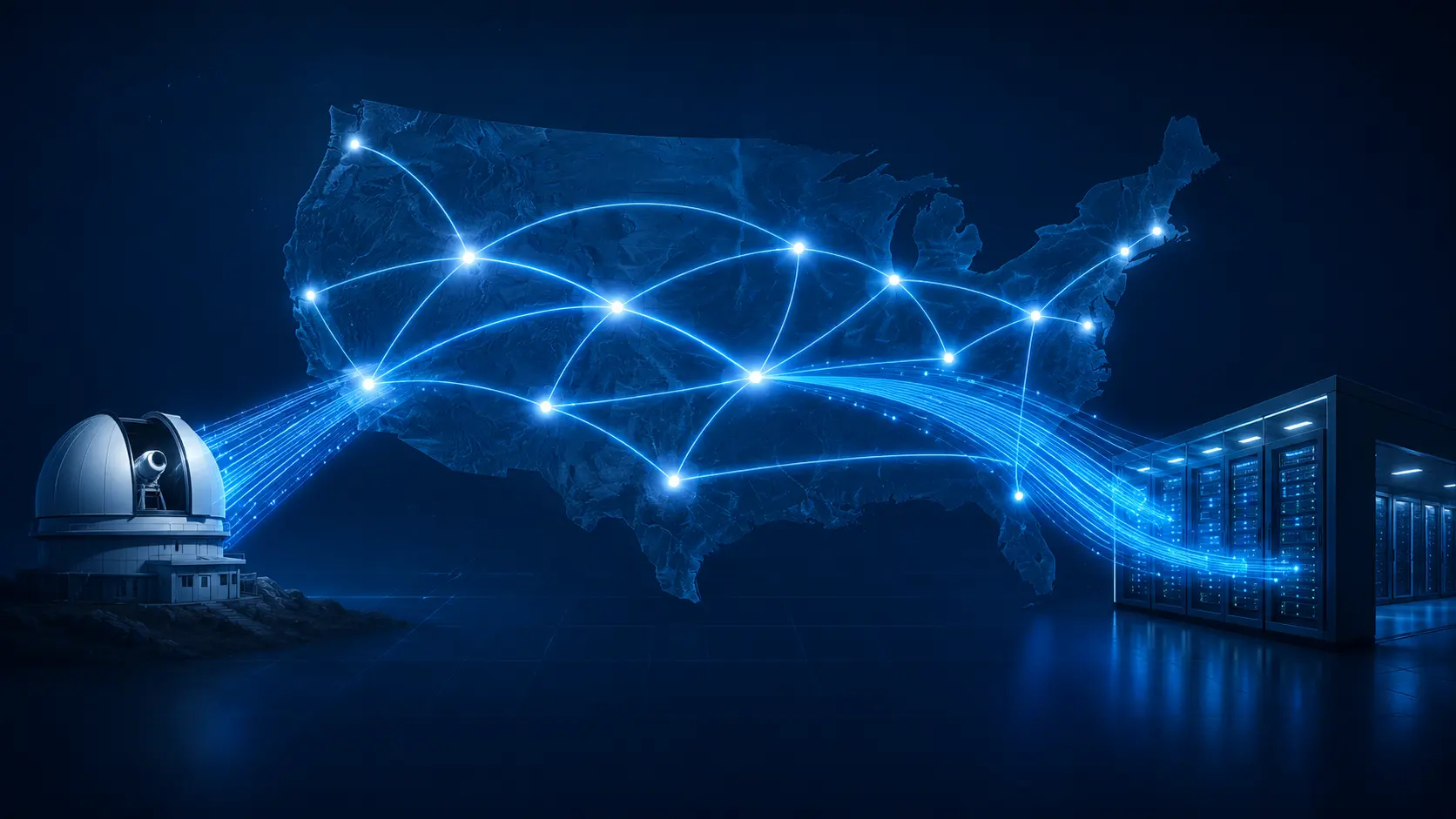
ESnet: The Network That Connects Remote Research Facilities as One Scientific System
The Energy Sciences Network (ESnet) is a scientific network facility of the U.S. Department of Energy Office of Science, operated by Lawrence Berkeley National Laboratory. It is not a commercial telecommunications company or an independent corporation; rather, it is federally…
North America Institutional
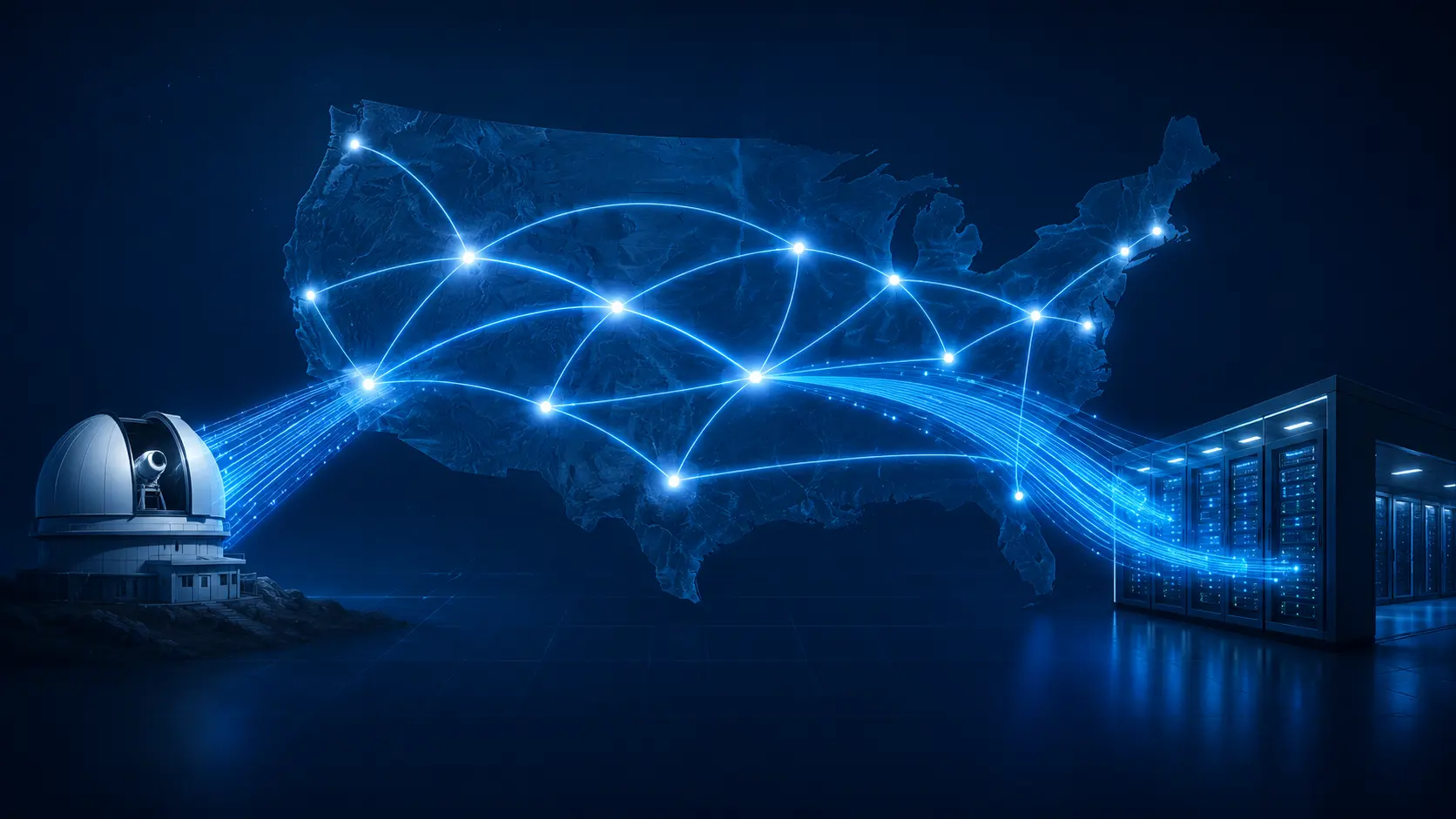
ESnet and the Network That Makes Distant Scientific Facilities Work as a Single Machine
The Energy Sciences Network connects US Department of Energy laboratories, instruments, supercomputers, and international collaborators through a dedicated scientific network. Its importance lies less in a speed figure than in the combination of fibre, routing, measurement…

North America Institutional
ESnet and the Network That Makes Remote Research Facilities Work Like a Distributed Machine
The Energy Sciences Network connects US Department of Energy labs, instruments, supercomputers and international partners over an infrastructure purpose-built for science. Its significance lies less in a speed record than in the combination of fibre, routing, measurement…

North America Institutional
ESnet and the science network that makes remote facilities work as one distributed machine
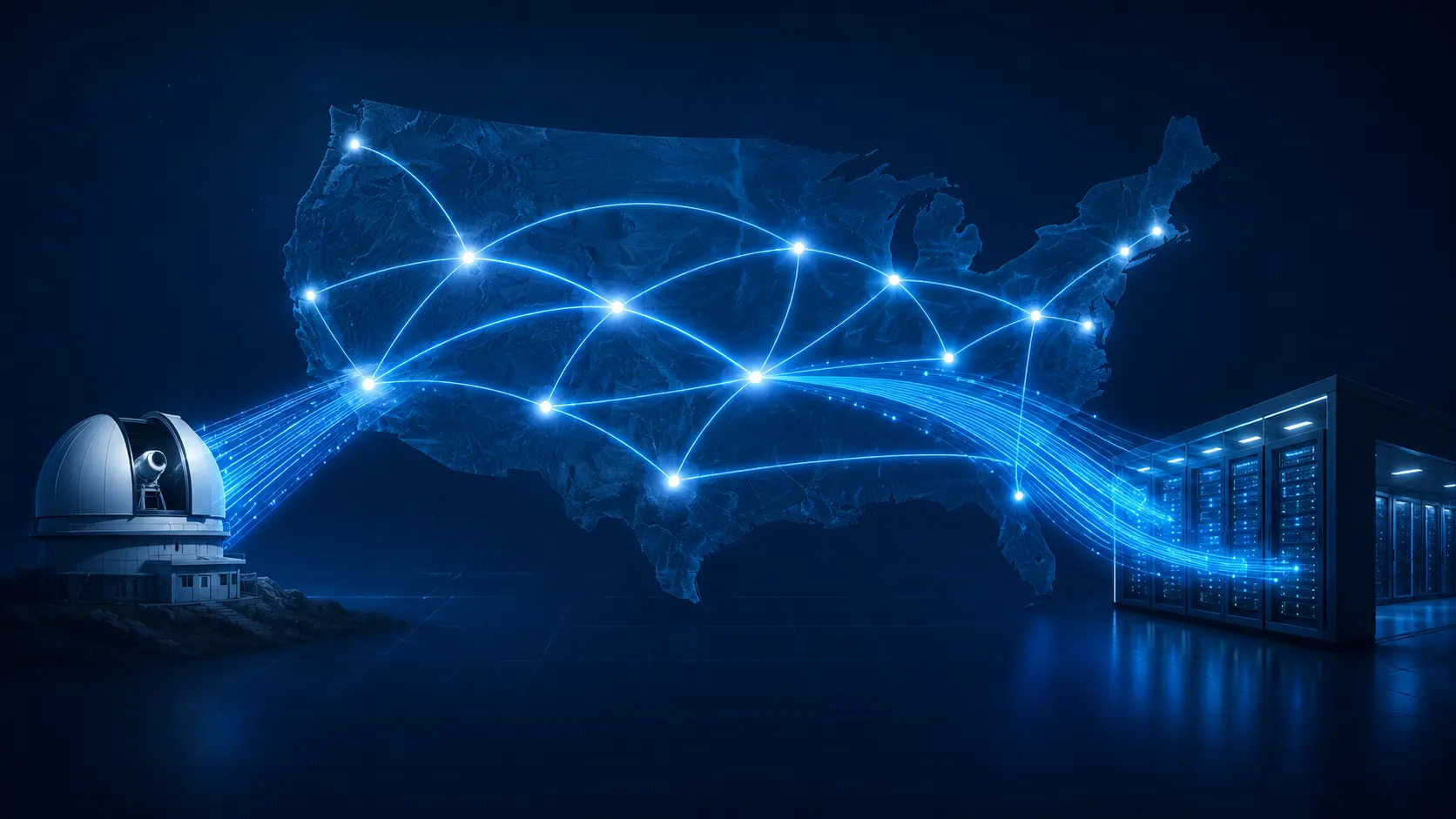
The Energy Sciences Network, known as ESnet, is not a commercial internet provider for individuals but a network facility of the U.S. Department of Energy's Office of Science. Operated by Lawrence Berkeley National Laboratory, it connects detectors, laboratories, supercomputers…
North America Institutional
ESnet and the network that turns distant scientific facilities into one machine
The Energy Sciences Network links US Department of Energy laboratories, instruments, supercomputers and international collaborators through a purpose-built scientific network. Its significance lies less in a headline speed than in the way fibre, routing, measurement…

Global Institutional
SONiC and the unfinished separation of switch software from hardware
Born inside Microsoft Azure, SONiC turned a hyperscaler’s switching stack into a shared Linux-based platform used across cloud, enterprise and AI networks. Its portability remains conditional: common software still ends at vendor SAI code, proprietary SDKs, platform drivers and…

Europe and Middle East Institutional
Ekinops and the economics of carrying more data through the optical layer
Ekinops began as a specialist in optical transport and became a broader connectivity group through access equipment, software and security acquisitions. Its history makes the French public company a useful test of what “lower cost per bit” really means: coherent transmission can…
Europe and Middle East Cloud Services
6WIND and the software routing model that changes who controls the hardware
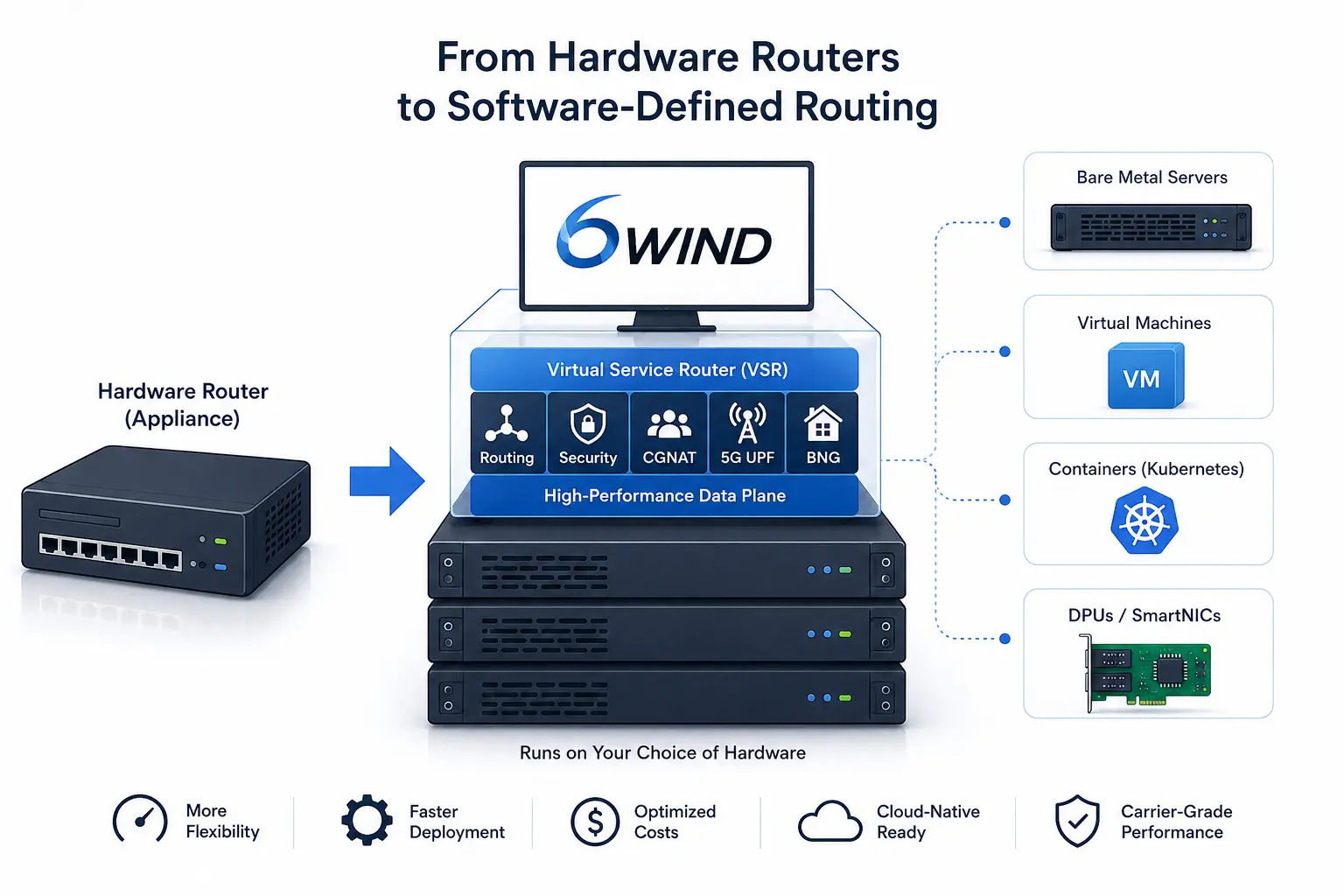
6WIND has spent more than two decades trying to move routing and telecom functions out of proprietary appliances and into software that can run on commercial servers, virtual machines, containers and, increasingly, specialised data-processing units. The company’s argument is not…

Europe and Middle East Institutional
SIDN Labs and the research platform behind a national domain registry
SIDN Labs occupies an unusual position between academic inquiry and the live operation of the Netherlands’ `.nl` domain ecosystem. Its importance comes from converting registry, DNS, routing and time-service visibility into measurements, prototypes and standards work, while its…