
Content Type
Companyprofile
Within the Content Type facet, Companyprofile intelligence gathers BTW.MEDIA articles that share the same editorial format, helping readers compare briefings, profiles, risk notes, market analysis, and event coverage without mixing different kinds of evidence. The page explains how this content type frames internet infrastructure events, company movements, governance decisions, operational signals, and public evidence across the site. Readers can compare which actors or infrastructure systems appear most often, how source quality changes interpretation, and whether the material is a durable profile, a time-sensitive event, a strategic market signal, or a governance development. The result is a useful search page for operators, investors, customers, analysts, and policy stakeholders who need to understand the consequence, timing, and evidence behind similar article formats.

Global Institutional
RANCID and the enduring value of a one-line network diff
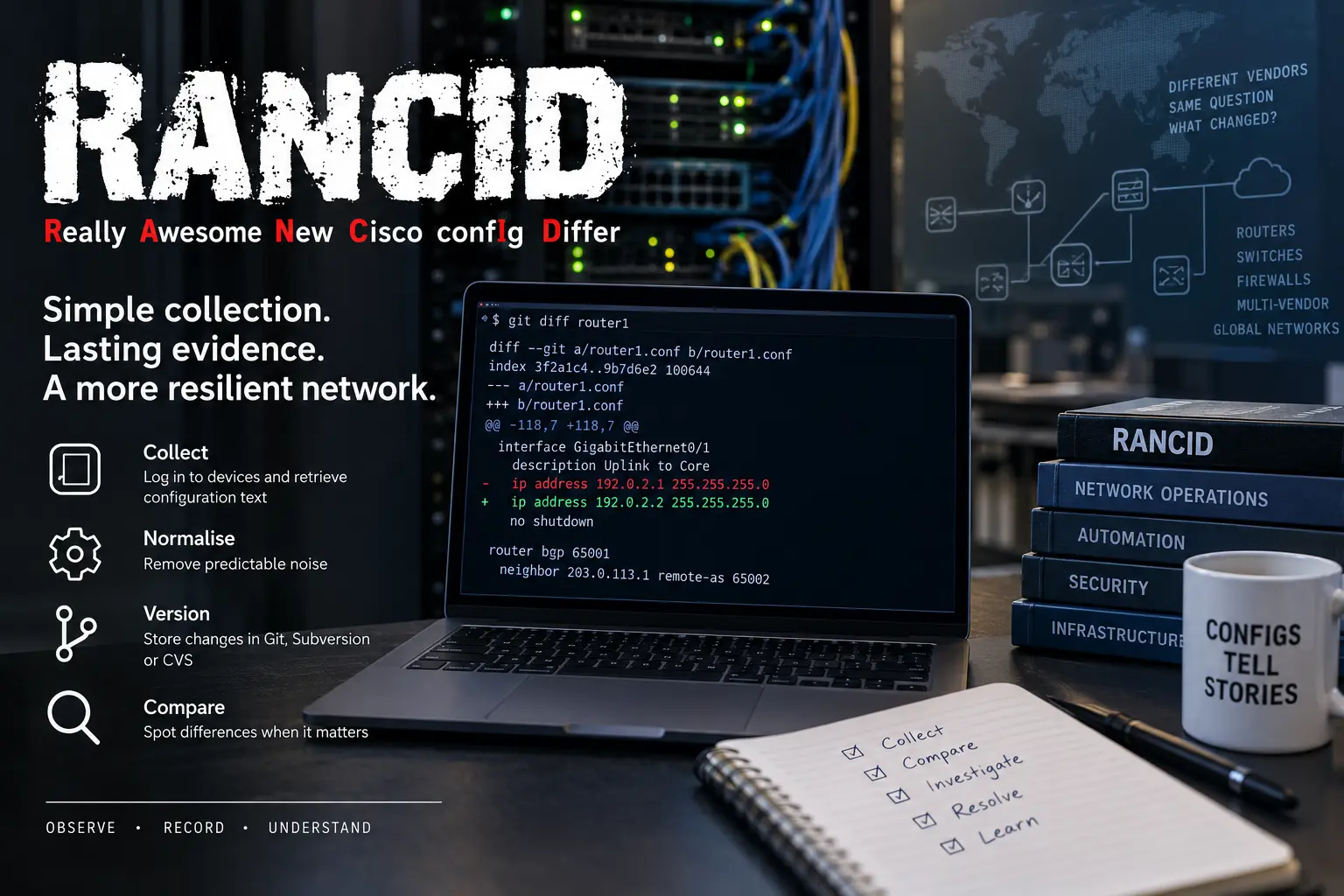
RANCID has endured successive generations of network management because it performs one narrow task: it logs into devices, collects selected configuration text, removes expected noise and commits the result to version control. It does not model intent, approve changes or…
Global Institutional
RANCID and the enduring value of a one-line network diff
RANCID preserves a form of evidence that large management platforms can easily blur: configuration text reported by a device at a particular moment, and the difference from the previous observation. It does not represent the full intent model, every event or causality. That…

Global Institutional
Akvorado turns sampled flow records into operational network memory
Akvorado gives network operators a self-hosted way to retain, enrich and examine flow records over long periods. Its value lies in exposing the path from router export to operational decision; its central limit is that every chart still inherits the sampling, loss, timing and…

Global Institutional
SNIA sets common storage rules but cannot impose them on the market
Since 1997, SNIA has tried to make storage systems from different vendors more comparable, manageable and predictable. Its specifications cover software management, cloud data, media sanitisation, energy use and hardware form factors, but any useful rule works only when companies…

Global Institutional
SNIA writes shared storage rules without the authority to enforce them
Since 1997, SNIA has tried to make storage systems from different vendors easier to compare, manage and trust. Its specifications span management software, cloud data, media sanitisation, energy use and hardware form factors, but every useful rule still depends on companies…
Global Institutional
OIF and the work to align 1.6-terabit links
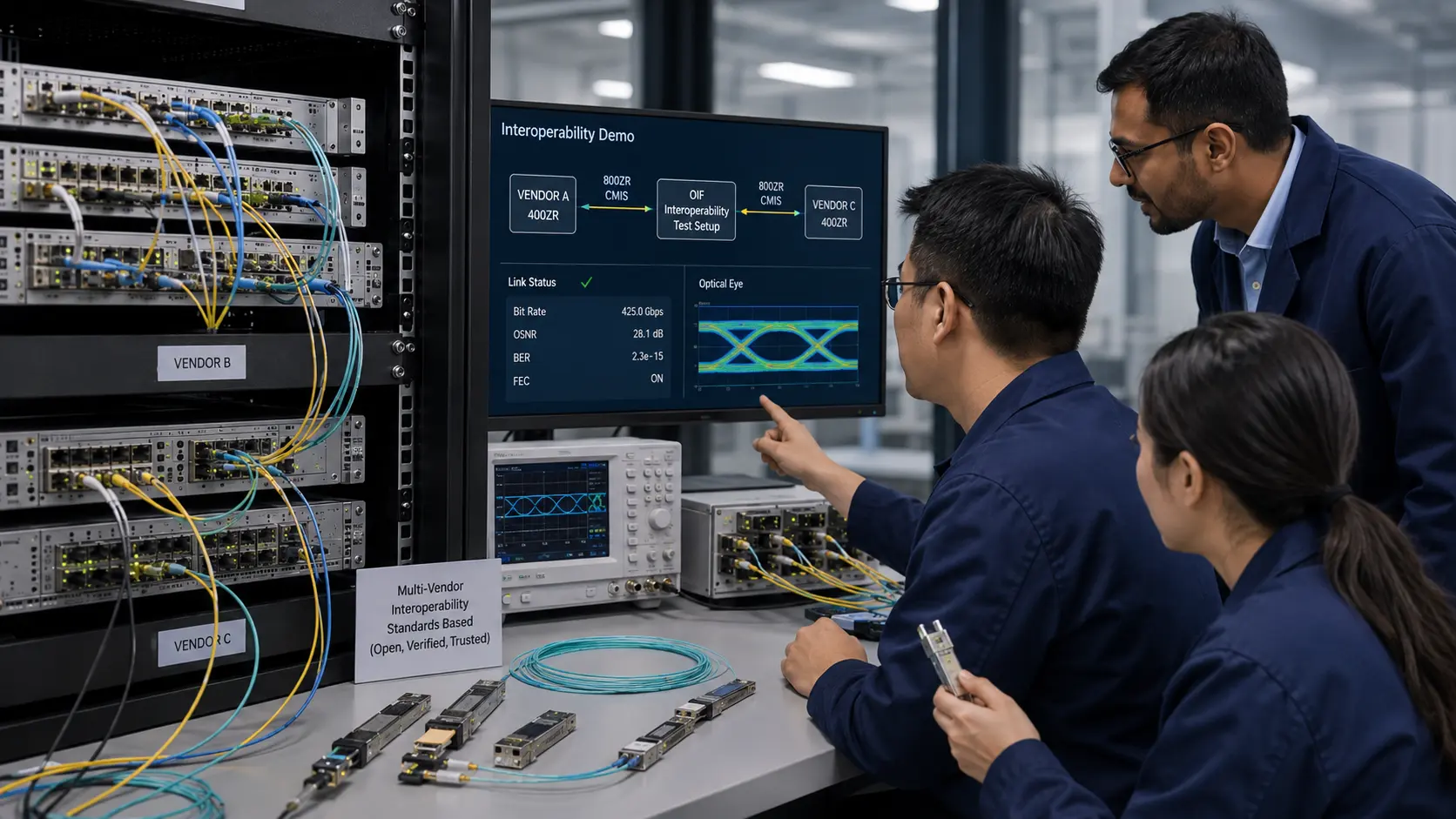
The Optical Internetworking Forum sits between formal standards and commercial products, turning optical, electrical and management decisions into implementation agreements that suppliers can build to and operators can test. Its influence is strongest where coherent modules, host…

Global Institutional
Batfish and the promise of checking a network before change
Batfish turns multi-vendor configurations into a common routing and forwarding model so operators can test reachability, policy and selected failures before production changes. Its value still depends on snapshot completeness, parser coverage, explicit intent and post-deployment…

Global Institutional
ARTEMIS and the minute between a BGP alert and a safe response
ARTEMIS compares public BGP observations with an operator’s own model of permitted routing to classify suspicious announcements and respond faster. Its history exposes the harder problem: when visibility is incomplete and a counter-announcement can itself cause harm, speed helps…

Global Institutional
DMTF and the Language of Server Management
A server can be powered off, inspected, updated or reconfigured even when its operating system is down. DMTF defines much of the language of that privileged management plane: from the Redfish API and MCTP transport to PLDM commands, SPDM identity and SMBIOS inventory. Common…

Global Institutional
NVM Express: How storage became a network protocol
NVMe began as a more efficient language for flash storage in the server. It became a protocol family that carries the same model of queues, controllers and namespaces over PCIe, TCP or RDMA. That continuity made storage composable but shifted complexity into the fabric, firmware…

Global Institutional
The UCIe promise for chiplets depends on what lies beyond the link
UCIe has defined a die-to-die interface that reaches 64 GT/s and now spans 3D packaging, raw traffic and whole-package management. The decisive test will be whether these rules sustain multi-vendor products when power, thermals, manufacturing yield, software, security and…

Global Institutional
NVM Express: How Drives Became a Network Protocol
NVMe began as a queue architecture for flash drives attached over PCI Express. Over time it grew into a modular protocol family that can reach storage over TCP and RDMA networks, supports resource discovery and multiple paths, describes specialised storage media models and…
Global Institutional
UCIe’s chiplet promise will be decided beyond the link
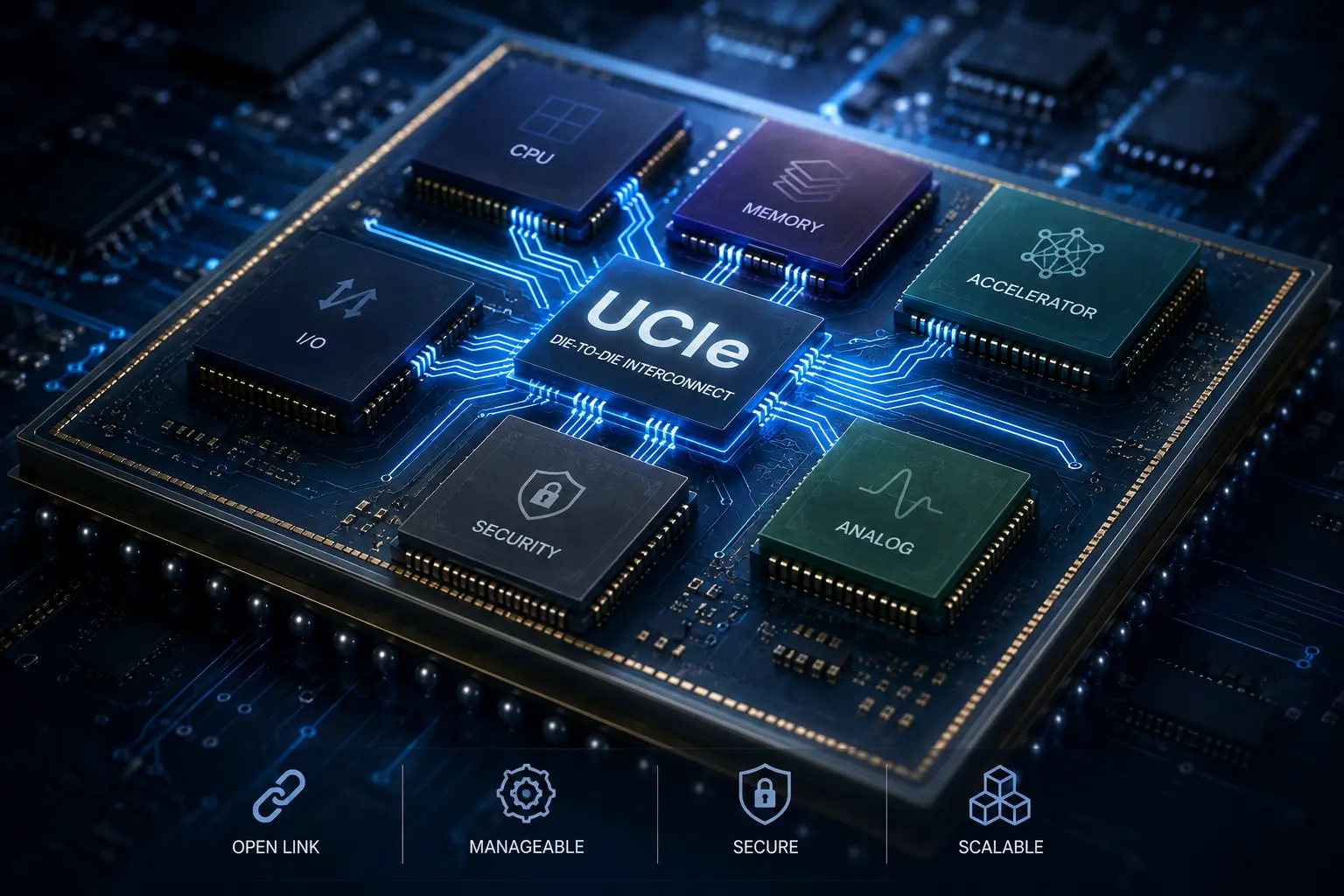
UCIe now defines a die-to-die interface reaching 64 GT/s and covering 3D packaging, raw traffic and package-wide management. Its market value depends on whether these rules can support multi-vendor products while power, thermal design, yield, software, security and liability…

Global Institutional
UCIe’s chiplet vision will be decided beyond the link
UCIe defines die-to-die links reaching 64 GT/s and now covers 3D packaging, raw traffic and package-wide management. Its real test is whether multi-vendor products can succeed while power, heat, yield, software, security and responsibility remain outside the standard.

Global Institutional
UCIe's chiplet promise hinges on what lies beyond the link
UCIe has defined a die-to-die interface that reaches 64 GT/s and now covers 3D packaging, raw data traffic and package-wide management. The deciding question is whether these rules can support multi-vendor products when power delivery, thermals, manufacturing yield, software…
Global Institutional
UCIe’s chiplet promise depends on more than the link
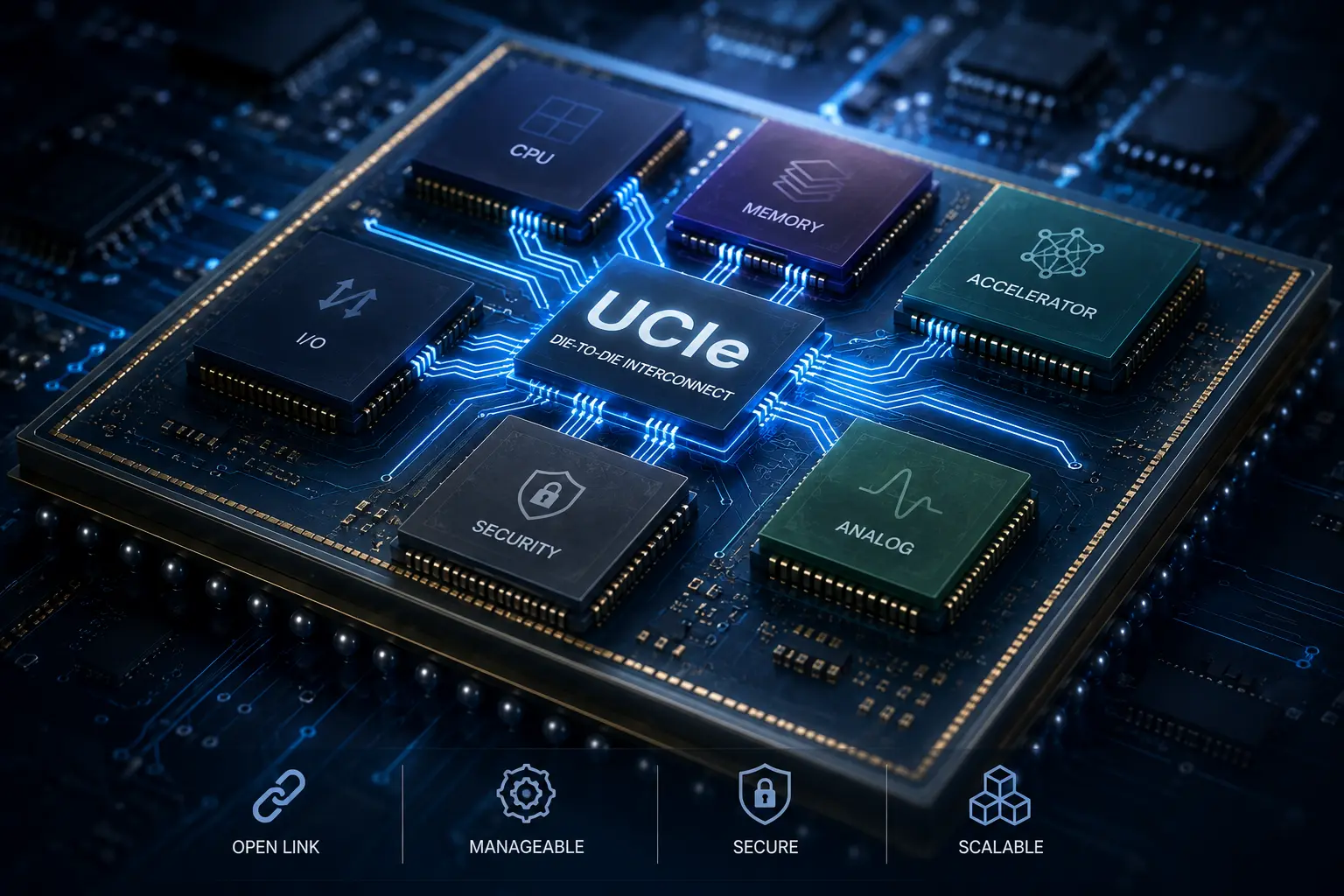
UCIe has defined a die-to-die interface reaching 64 GT/s and expanded its scope to 3D packaging, raw data traffic and whole-package management. The decisive test is whether these rules can support multi-vendor products while power, thermal design, manufacturing yield, software…

Global Institutional
PCI-SIG and the rulebook inside the AI server
An AI server can bring together processors, accelerators, network cards, storage controllers, switches, retimers and security devices from competing companies. PCI-SIG maintains the common interface that lets these parts meet and exchange data, and runs the test programmes used…

Global Institutional
PCI-SIG: The common rules that power AI servers
PCI-SIG sets the common rules that let AI server components work together and backs them with compliance testing. Its authority is limited to connectivity layer.
Global Institutional
PCI-SIG and the rulebook in the AI server
An AI server can combine processors, accelerators, network cards, storage controllers, switches, retimers and security devices from companies that otherwise compete with one another. PCI-SIG maintains the common interface through which these components discover each other and…

Global Institutional
PCI-SIG and the interconnect rules inside AI servers
An AI server may combine processors, accelerators, network cards, storage controllers, switches, retimers and security devices from companies that compete elsewhere. PCI-SIG maintains the shared interface that allows these components to recognise one another, negotiate…