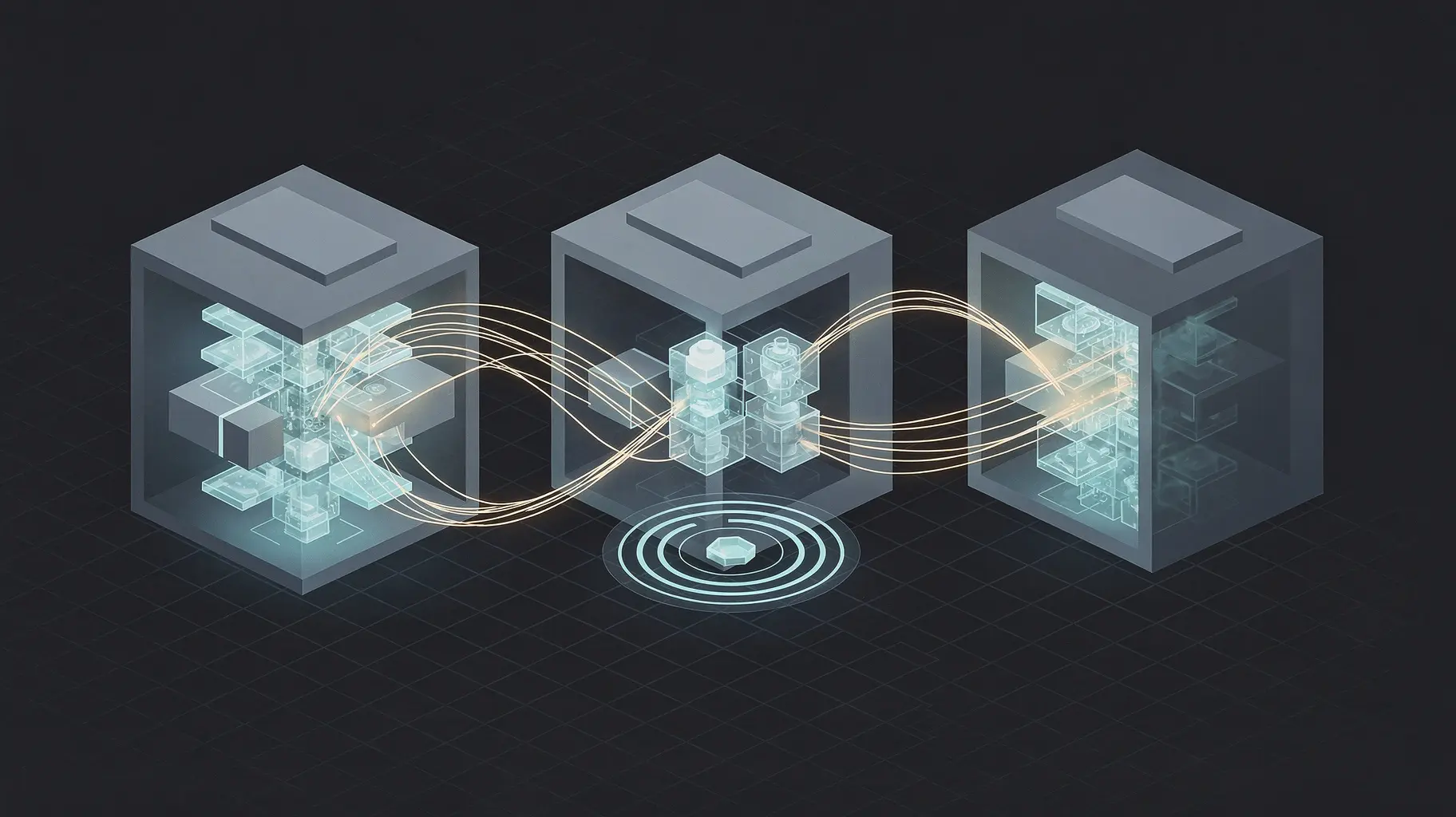
Summary
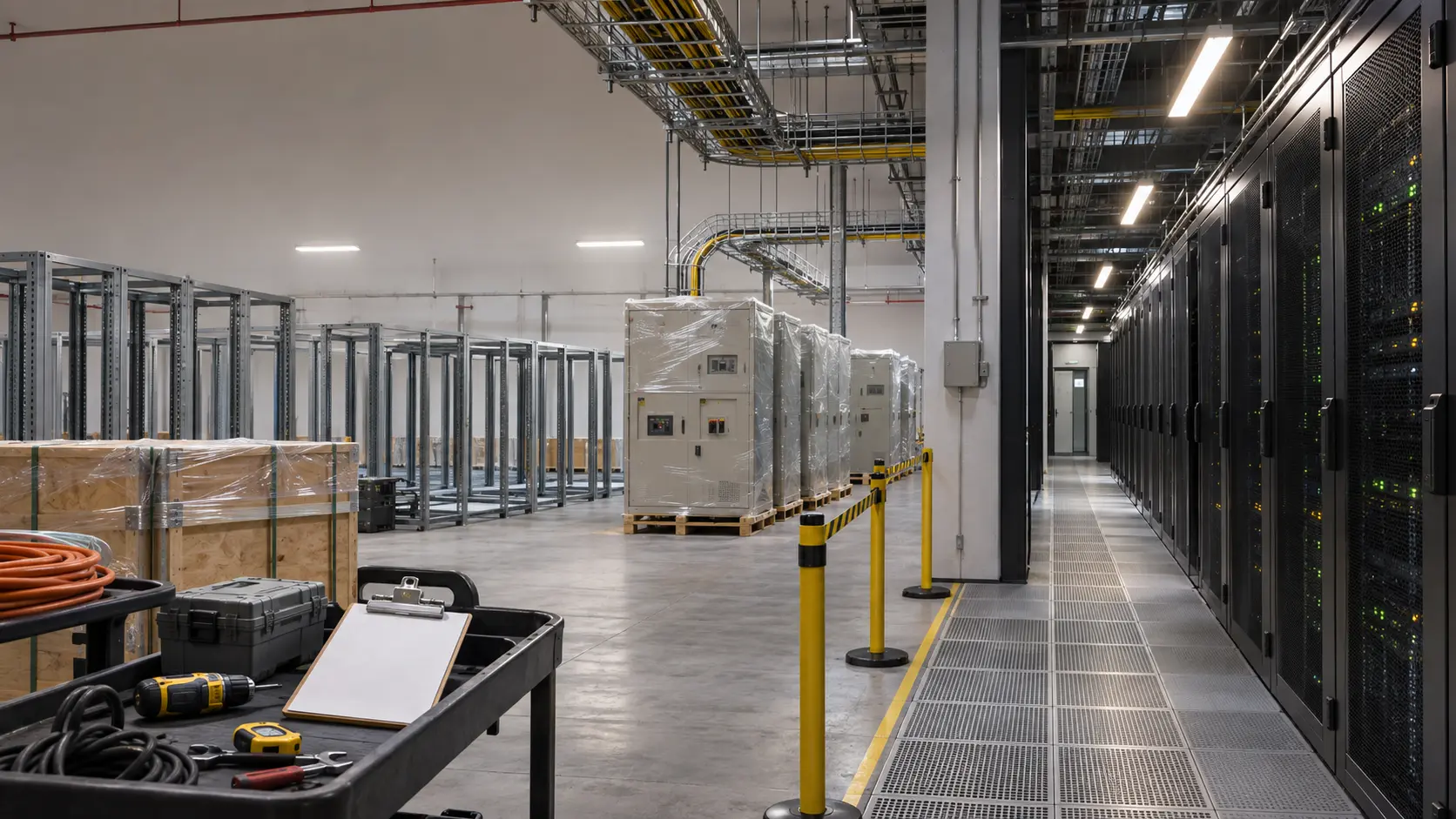
- Equinix's 2025 Form 10-K says in a risk factor that "power, not space, is a limiting factor in many of our IBX data centers", then reports that estate in cabinets — 392,300 of total cabinet capacity, 299,300 billed — with no megawatt column.
- Kilowatts per cabinet appear in only two places in the fifteen documents read on 25 November 2026: an executive's answer at a March 2026 conference, and one Dallas project whose two printed numbers divide to 18.1 kW.
The constraint and the table
Equinix filed its Form 10-K for the year ended 31 December 2025 on 11 February 2026, and one sentence in the risk factors organises everything that follows: "As power, not space, is a limiting factor in many of our IBX data centers, our ability to fully utilize the space in those IBX data centers may be impacted." (Form 10-K)
Item 2 then counts the same estate in the quantity that sentence says is not binding. The portfolio table reports 255 IBX data centres, 392,300 of total cabinet capacity, 299,300 cabinets billed, a utilisation rate for each region and a monthly recurring revenue per cabinet. Three columns of space, one column of money, no column of power. (Item 2, SEC rendering; Item 2 table and footnotes, transcribed)
The table reaches this reading through a transcription of the filed page rather than the filed page itself, and the SEC's own rendering confirms the 255 count and stops there. The risk-factor sentence is quoted from the filing's own text. Boundary 2 carries the difference, and the difference is the point: the argument is about which column a company chooses to print.
The place where the two units touch is a footnote clause. Cabinet utilisation rate is defined as "the percentage of cabinet space billed versus total cabinet capacity, taking into consideration power limitations". A rate is printed in space and adjusted, somewhere the filing does not name, for a quantity the filing does not print. The same footnote defines cabinets as "a specific amount of space within an IBX data center".
Subtract and the count opens up: 392,300 minus 299,300 leaves 93,000 cabinet equivalents of capacity the table does not treat as billed, which is my subtraction, not the filing's. Divide, and 299,300 over 392,300 gives 76.3%; the three regional rows print 79%, 76% and 73%, and no retrieved total-row rate exists to check the worldwide figure against. That division is mine too.
What the counter counts
The unit itself is defined on a product page, and it is a definition written in floor area: "A Cabinet Equivalent, or CabE, is a unit of measure equal to the total cage space needed to support one secure cabinet (and its associated hot and cold aisle space). For example, a 10 CabE space can support 10 secure cabinets." The same page says cabinets and power "are billed based on the quantity of CabE and kVA allocated to you", and its worked example for an "Average CabE Rating" divides 9 kVA by two cabinets to reach 4.5 kVA — dividing by the cabinet count on the page that defines the cabinet equivalent. (Secure Cabinets)
That page is an offer, not the investor definition, and no reviewed document says the quarterly series is computed on it. What the two surfaces do share is a habit: the filing heads the 392,300 column "Total Cabinet Capacity", the investor deck heads the same year-end quantity "Cabinet Equivalent Capacity". Two labels, one number, and neither label prints a kilowatt. (Q4 2025 deck)
BTW read the two product-page definitions of this unit on 18 November 2026, and that reading stands (prior briefing). The subject here is narrower and harder: what the company says binds, and what it counts.
Where the megawatts went
They exist, in four perimeters, none of them the IBX retail estate.
The filing's retrieved text carries exactly one megawatt figure, and it measures contracts signed for renewable generation: 29 power purchase agreements in 12 countries, "1,472 MW of new wind and solar capacity". Nothing there is load.
The pipeline is counted in gigawatts: "~3 GW of Developable Capacity Supported by Retail and xScale Land Under Control", footnoted to announced expansions and land under control, and land in Amsterdam, Chicago, Johannesburg, London and Toronto supporting over 900 MW at full build-out. Pipeline is not operation. (Q4 2025 deck; Q3 2025 release)
The megawatts with the most print belong to xScale, the joint venture Equinix does not consolidate: 604 MW of total portfolio at 30 September 2026, of which 186 MW under development and 418 MW previously opened, with "575+ MW Leased" across 24 operational facilities in 13 metros. A quarter earlier the same table read 484 MW of portfolio and 430+ MW leased. The operating metrics, the deck footnotes, exclude xScale recurring revenue fees — the cabinet count and the megawatt count live in different scopes by design. (Q3 2026 deck; Q4 2025 deck)
And one project carries both units in a single sentence: Dallas 12 "is expected to deliver approximately 3,700 cabinets or 67 megawatts of capacity to this key metro". The filed under-construction table lists the same phase as 3,700 sellable cabinets and $837 million of capex, targeting Q2 2028, with no megawatt figure at all. (Q3 2025 release; Item 2, transcribed)
Two densities, two units, no common page
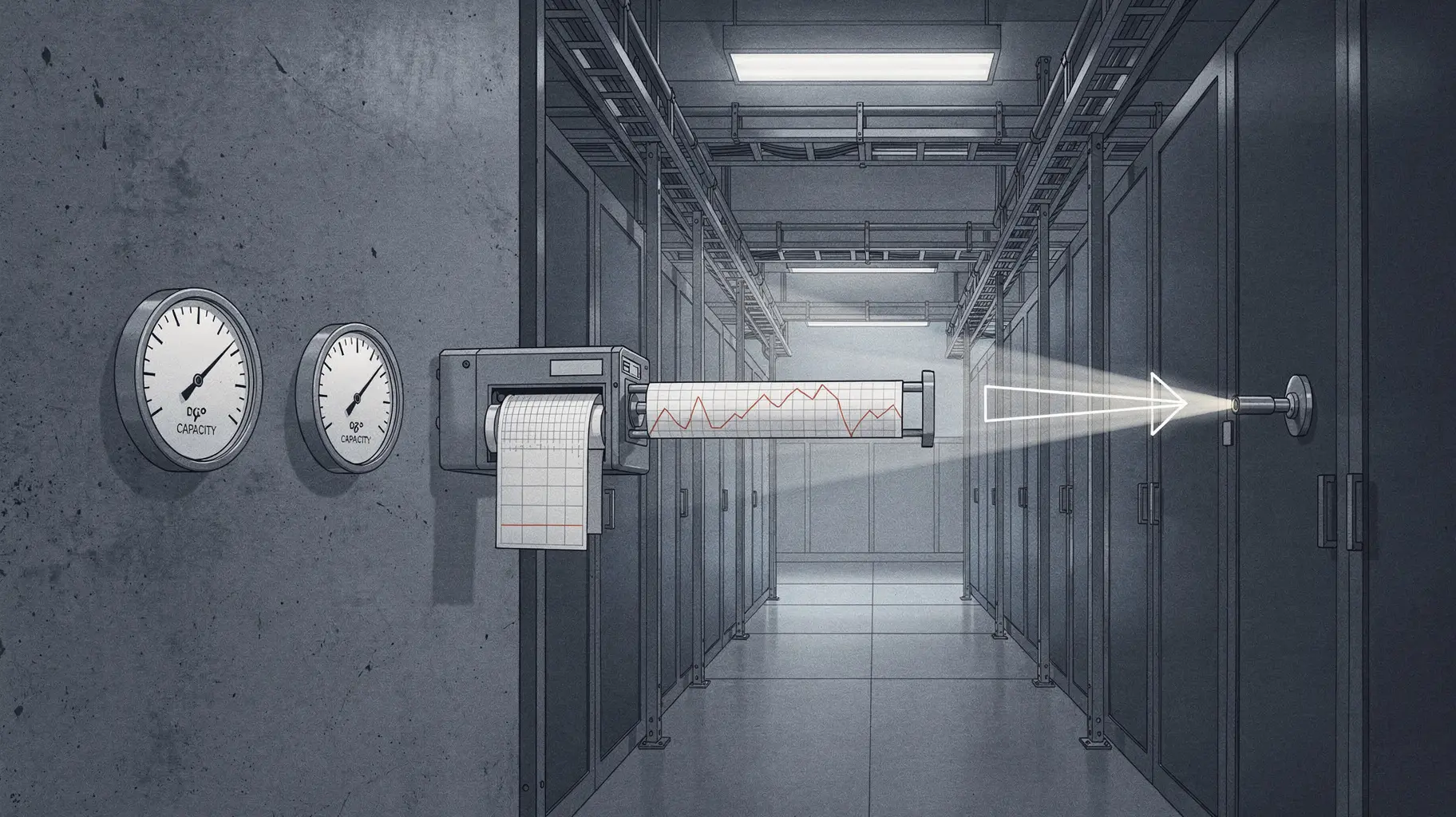
The kilowatt is not missing from Equinix's speech. It is missing from Equinix's tables.
At the Morgan Stanley Technology, Media & Telecom Conference on 2 March 2026, the chief business officer answered with numbers: "Across our new deals, I think new deals book, we're at 6.6 kW a cabinet across the entire Equinix fleet. Our existing base, though, across all of the things that are deployed and live is somewhere just north of 4 kilowatts a cabinet." That is a transcript of a spoken answer, published by a third party, nineteen days after the 10-K. (Transcript)
Divide the Dallas sentence by itself and a third density appears. 67 MW across approximately 3,700 cabinets is 18.1 kW per cabinet — my division, of a forward-looking announcement whose megawatt basis, IT load or facility load, the release never states. Against the executive's figures it is 2.7 times the new-deal average and about 4.5 times the installed base, and the comparison crosses a project estimate and a conference answer, which is why it is a comparison and not a measurement.
The same arithmetic scales the estate. 392,300 cabinet equivalents across 255 IBX data centres is 1,538 each, mine; Dallas 12 phase 1 alone would carry 2.4 times that average. Multiply the 93,000 unbilled equivalents by "just north of 4 kilowatts" and the headroom is roughly 372 MW — an order of magnitude, since a fleet average need not describe the space that is dark.
The pair nobody reconciles
The annual report says the company added "23,250 cabinets in our retail footprint" in 2025 while expanding xScale (2025 Annual Report; the release repeats it, Q4 2025 results). The Q4 2025 deck reports 12,300 of net cabinet-equivalent additions for the same year (deck fragments). The gap is 10,950, my subtraction. Gross against net is the obvious explanation and it is not printed anywhere in the fifteen documents; the number that converts one into the other is the equivalence itself.
What the buyer signs, what the market divides
A customer signs two quantities. Cabinets and power "are billed based on the quantity of CabE and kVA allocated to you", so the enforceable number on the order form is a kVA allocation, and the published estate total is in the other unit.
The market divides by the published unit. At 30 September 2026 Equinix reported 399,700 cabinet equivalents of capacity, 313,300 billed, monthly recurring revenue per cabinet of $2,574 and utilisation of 78%, with 529,600 interconnections made up of 454,900 cross connections and 74,700 virtual ones (Q3 2026 deck; same deck, transcribed). A cross connection, per the filing, is "a point-to-point cable link between two Equinix customers in the same data center" (Form 10-K).
Nobody divides the second by the first. 454,900 over 399,700 is 1.14 physical interconnections per cabinet equivalent; with the virtual ones counted, 1.32. Both quotients are mine.
The money checks the scale of the denominator. 313,300 billed cabinets at $2,574 a month, twelve months, is $9.68 billion of annualised recurring revenue — an order-of-magnitude check of mine against FY2025 revenue of $9,217 million, up 5% as reported (2025 Annual Report). The per-cabinet metric is not a footnote to the business. It is very nearly the business, divided by a count whose density is a spoken answer.
CRN put the disclosure practice plainly: "It does not report its total electrical capacity", citing the prior year's 371,400 cabinets (CRN). A second witness, and a figure from the wrong year to use as a count.
The 11 February 2026 Form 8-K names what should settle this: a presentation "along with certain supplemental financial information and other data" (Form 8-K). The supplemental file was not opened here; the decks stand in its place, and in the decks the megawatts keep to their own perimeters.
Boundaries
- The reading set is fifteen documents, listed below, inspected on 25 November 2026. Every absence in this briefing counts over that set and no wider.
- The Item 2 portfolio table, its footnotes and the under-construction table are quoted from a third-party transcription; the SEC's own rendering supplied the 255 IBX count and no table. Risk-factor wording is from the filing's retrieved text.
- The 8-K names a separate investor presentation and supplemental financial information that was not opened. The Q4 2025 and Q3 2026 decks stand in its place, read through a mirror-hosted copy or a transcription.
- No total operating-megawatt figure for the IBX retail estate appears in the fifteen documents. That is a count over them, not a claim about what Equinix publishes anywhere.
- The xScale leased figure is printed twice for two dates: 430+ MW in the Q4 2025 deck and 575+ MW in the Q3 2026 deck. Both are reported, and neither is used to derive a growth rate.
- 23,250 retail cabinets added and 12,300 net cabinet-equivalent additions are two printed concepts for one year that no reviewed page reconciles. One is not treated here as a correction of the other.
- The IBX count is 255 in the filed Item 2 and 253 in one consolidated portfolio table in the Q4 2025 deck. Different presentation scopes are the likely explanation, stated as likelihood; neither number is adopted over the other.
- Dallas 12's 67 MW is forward-looking, the target date in the filed table is Q2 2028, and the release does not say whether the megawatts are IT load or facility load. The 18.1 kW derived from it inherits all three qualifiers.
- The 6.6 kW and "somewhere just north of 4 kilowatts" figures are one executive's spoken answer in a third-party transcript. The qualifier is preserved wherever the figure appears, and both sit outside the FY2025 filings.
- Every quotient in this briefing is the author's and is labelled as such. No quotient crosses two perimeters or two periods unless one printed document supplies both operands, and the two cross-source comparisons say so beside the number.
- The secure-cabinet page is product documentation for one offer, not the investor definition of the quarterly series. The second, private-cage definition of the same unit is our own earlier reading of 18 November 2026, cited as such rather than re-verified here.
- CRN's 371,400 cabinet figure belongs to the prior fiscal year and is used only as a second witness to disclosure practice, never as a FY2025 count.
Sources
- S01 — Secure Cabinet with kVA-Based Power
- S02 — Equinix, Inc. Form 10-K for the fiscal year ended December 31, 2025
- S03 — Equinix 10-K (FY2025), Item 2 Properties rendering
- S04 — EQIX 10-K Item 2 — Properties (transcription)
- S05 — Equinix PowerPoint Presentation — Q4 2025 Earnings Conference Call
- S06 — Equinix Provides Robust 2026 Outlook Driven by Strong Fourth-Quarter Results
- S07 — Equinix 2025 Annual Report
- S08 — Equinix Q3 2026 earnings conference call presentation
- S09 — Equinix Fiscal Q3 2026 Earnings Presentation (transcription)
- S10 — Equinix Reports Strong Third-Quarter 2025 Results
- S11 — Equinix (EQIX) Transcript: Morgan Stanley Technology, Media & Telecom Conference 2026
- S12 — Equinix Grows Revenue, Buys Land, With 3 GW Of Capacity Now Under Development
- S13 — Equinix's 76% is a division, and its cabinet unit has two definitions
- S14 — Equinix: Earnings Presentation FY 2025 (transcription)
- S15 — Form 8-K, 11 February 2026
Member Briefing
Read the full trend briefing
Members read the full briefing with the source notes behind every finding.
Strategic Circle
A daily briefing in your language, built from changes we have verified.
Join for USD 20/monthCancel anytime.
Members also get the full research library, a daily briefing on the networks they follow and the private forum.