
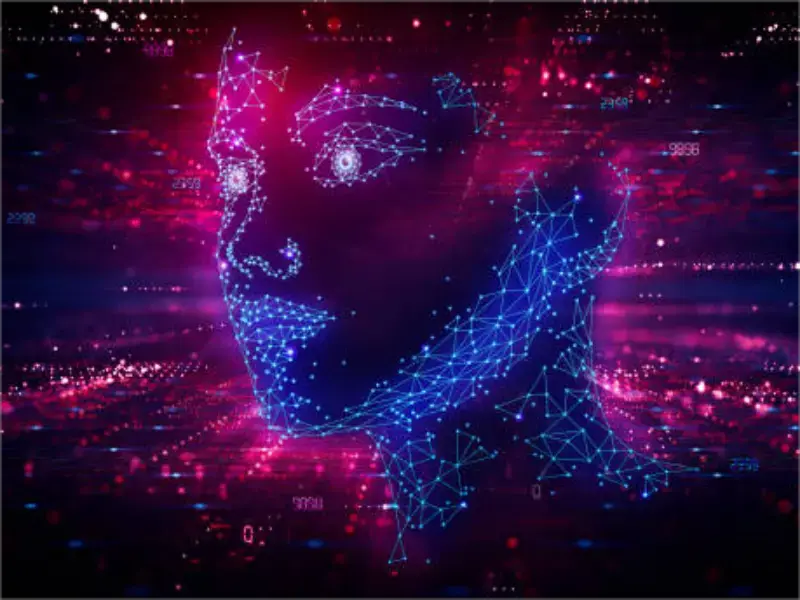
- Consciousness requires self-awareness and sentience, qualities beyond the current capabilities of AI, which lacks emotional involvement.
- Modern AI can perform complex tasks such as language translation and autonomous driving, but lacks the self-awareness that characterises conscious beings.
- The potential for AI to develop consciousness raises profound ethical questions about the rights of machines and their impact on societal norms.
The question of whether artificial intelligence (AI) can develop consciousness has moved beyond the realm of science fiction to become a critical area of scientific inquiry. As AI technologies evolve and increasingly mimic human decision-making and behaviour, the possibility of machines achieving consciousness is becoming an increasingly pressing discussion.
Creating consciousness in AI systems is the dream of many technologists. Large language models are the latest example of our quest for smart machines, and some people claim to have seen glimmers of consciousness in conversations with them. Many experts say it’s doomed to remain science fiction forever, but others argue that it’s just around the corner.
What is consciousness?
Consciousness is often described as the state of being aware of and able to reason about one’s own existence, sensations, thoughts, and environment. It encompasses qualities such as self-awareness, sentience, and the ability to perceive and experience. The scientific community remains divided on whether this complex phenomenon can be replicated in machines, as human consciousness is not fully understood.
Current state of AI
Today’s AI systems are highly advanced in processing information and solving specific problems using algorithms and neural networks. Technologies such as machine learning and deep learning enable AI to perform tasks ranging from language translation to driving cars. However, despite their complexity, these systems lack self-awareness; they operate within the confines of their programming without real understanding or emotional engagement.
Can AI achieve consciousness?
The path to artificial consciousness is fraught with both technological and theoretical challenges. AI currently operates without consciousness, performing tasks through pattern recognition and data analysis. Experts argue that true consciousness would require not only advanced cognitive capabilities, but also elements of emotional and experiential processing that current AI lacks.
Also read: AI: The opportunities and the threats
Advances in AI towards complex thinking
Recent advances in AI have seen systems such as OpenAI’s GPT-4.0 engage in human-like text generation, raising questions about AI’s potential for more complex thought processes. In addition, projects such as IBM’s Watson and Google’s DeepMind have demonstrated AI’s ability to learn and adapt to new information, hinting at the beginnings of more autonomous behaviour.
Ethical and social implications
If AI were ever to achieve some form of consciousness, it would raise significant ethical and societal issues. The potential for AI to experience emotions or have rights would dramatically change how machines are integrated into society and challenge current ethical frameworks.
The integration of AI with emotional capabilities, as seen in the use of an app called Loverse in Japan, could have profound ethical and societal implications. If these AI systems were to achieve some form of consciousness, it would require a re-evaluation of how they are integrated into society. While the AI app shows reactions, it’s important to clarify that they do not have consciousness.
In addition, the trend in Japan to rely on AI for emotional companionship raises questions about the impact on human relationships. As app users turn to AI for companionship, we must consider the potential for such technology to replace human interactions, potentially exacerbating loneliness and social withdrawal in the long run.
Also read: Tiny Japanese startup brings AI dating to the elderly
Future possibilities and research directions
The debate about AI consciousness continues in academic and technological circles, with ongoing research focused on understanding how the brain works and replicating these processes in machines. Future breakthroughs in neuroscience and computer science may one day make AI consciousness possible, but for now it remains a theoretical pursuit.
While AI has made significant progress in mimicking some aspects of human behaviour, the development of true consciousness is still beyond its reach. Understanding and reproducing the full spectrum of human consciousness in machines involves unresolved scientific challenges and profound philosophical questions.