Summary
- BugGuide could turn a visitor’s identification request into a guide page that later readers could browse.
- Its growth required both editorial judgement and computing capacity: trusted contributors gained editing rights, while the site found a university home.
An unidentified insect is a poor search term. “Small, brown, on the wall” offers the internet considerable freedom. BugGuide gave the question a better vehicle: a photograph that other people could inspect, identify and place where the next puzzled visitor might find it.
Troy Bartlett developed the site in 2003. By August 2005, according to Iowa State University’s January 2007 newsletter, its popularity was overwhelming both the server and his spare time. The bugs had eaten the weekend. John VanDyk contacted Bartlett, and the two moved BugGuide to the university’s Department of Entomology data centre.
An answer with somewhere to live
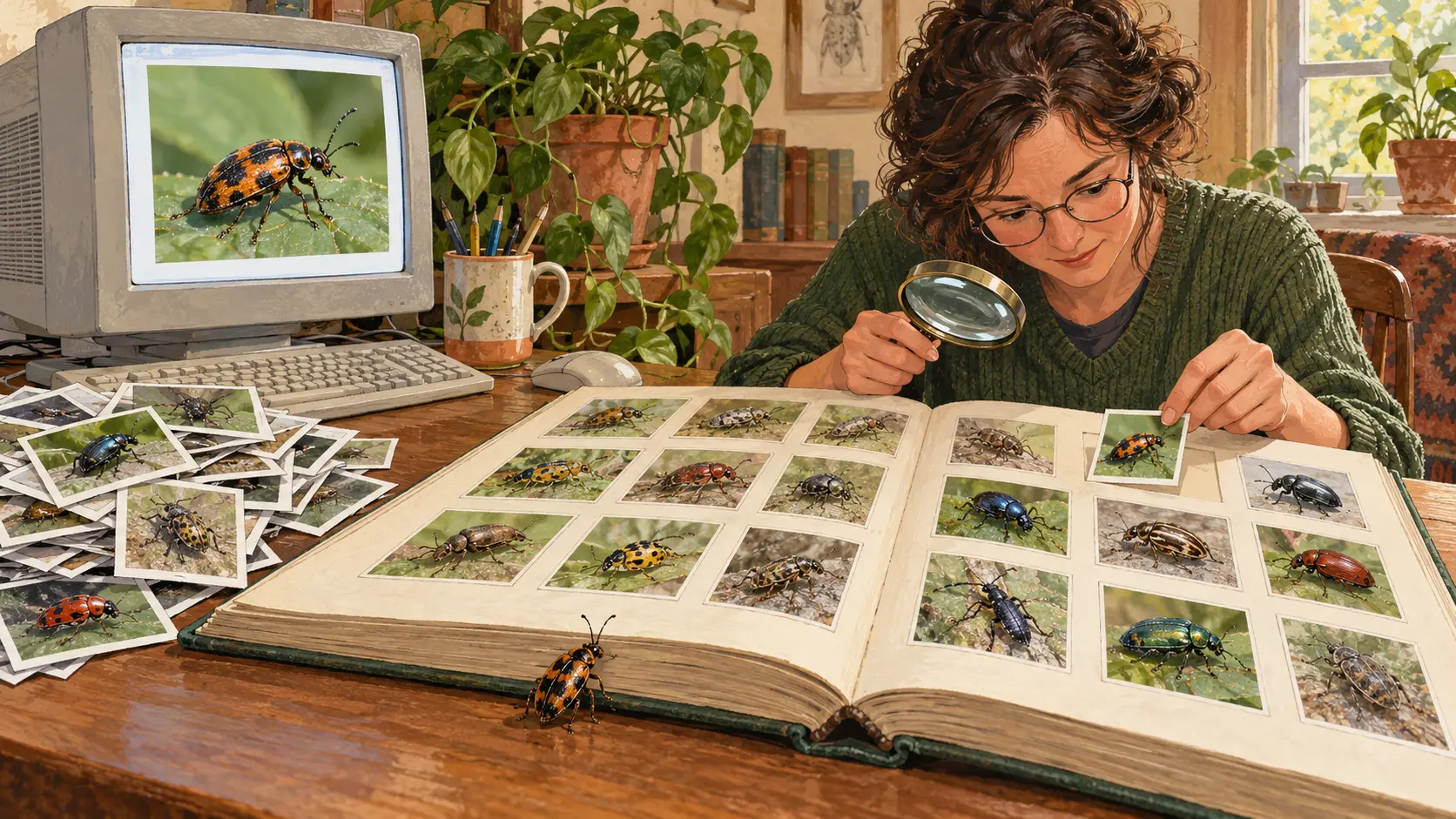
The site’s guide instructions, last updated in February 2008, describe a productive sequence. A visitor who could not find an insect could register and submit a photograph for identification. A useful contribution might prompt a new guide page. The original question could thus leave behind something more durable than a reply addressed to one person.
The organisation mattered. A guide page’s browsing view showed the next branches below it in the taxonomic tree. Its images view reached further, collecting photographs from all the branches beneath it. Readers could either descend step by step or inspect a broader family album. The arrangement gave an answer a neighbourhood.
Contributors could add photographs, references and comments. Creating guide pages came with a larger role: the instructions offered an invitation to contributors whose research and identification had shown consistent care. A username could acquire authority through a visible history of work.
More legs, more maintenance
The 2007 newsletter counted more than 12,000 guide pages and 75,000 submitted images. It also described editors specialising in particular parts of the guide, and forums where taxonomy changes shared space with technical problems and photography advice. Naming the insect was one job. Keeping the place useful involved several others.
By the January 2011 newsletter, there were over 380,000 images, 33,552 guide pages and 155 volunteer editors. The site had moved to a server with twice as many processor cores to cope with demand. A December matching fundraiser began with $4,000 from several individuals; the community supplied another $4,700 for planned improvements.
A field guide that grows through questions has an appealing habit: its readers keep bringing the next page. Someone still has to decide where that page belongs, and keep the machine serving it. BugGuide’s insects were small. Their maintenance bill had acquired a university address.
Member Briefing
Deeper Profile Context
Sign in with the right membership level to unlock the full briefing and source notes.
Only for Strategic Circle
Strategic Circle
Open to all readers. Unlock profile briefings after joining and signing in.
Join Strategic CircleOnly for Leadership Alliance
Leadership Alliance
For qualified IP-asset owners and management; sign in to unlock alliance briefings.
Join Leadership Alliance