- 11 large data-centre projects representing 5.4GW of maximum demand were in Australia’s transmission connection process at the end of March
- Planned federal standards would require large new data centres to support new power supply, pay connection costs and reduce demand when needed
The Fact
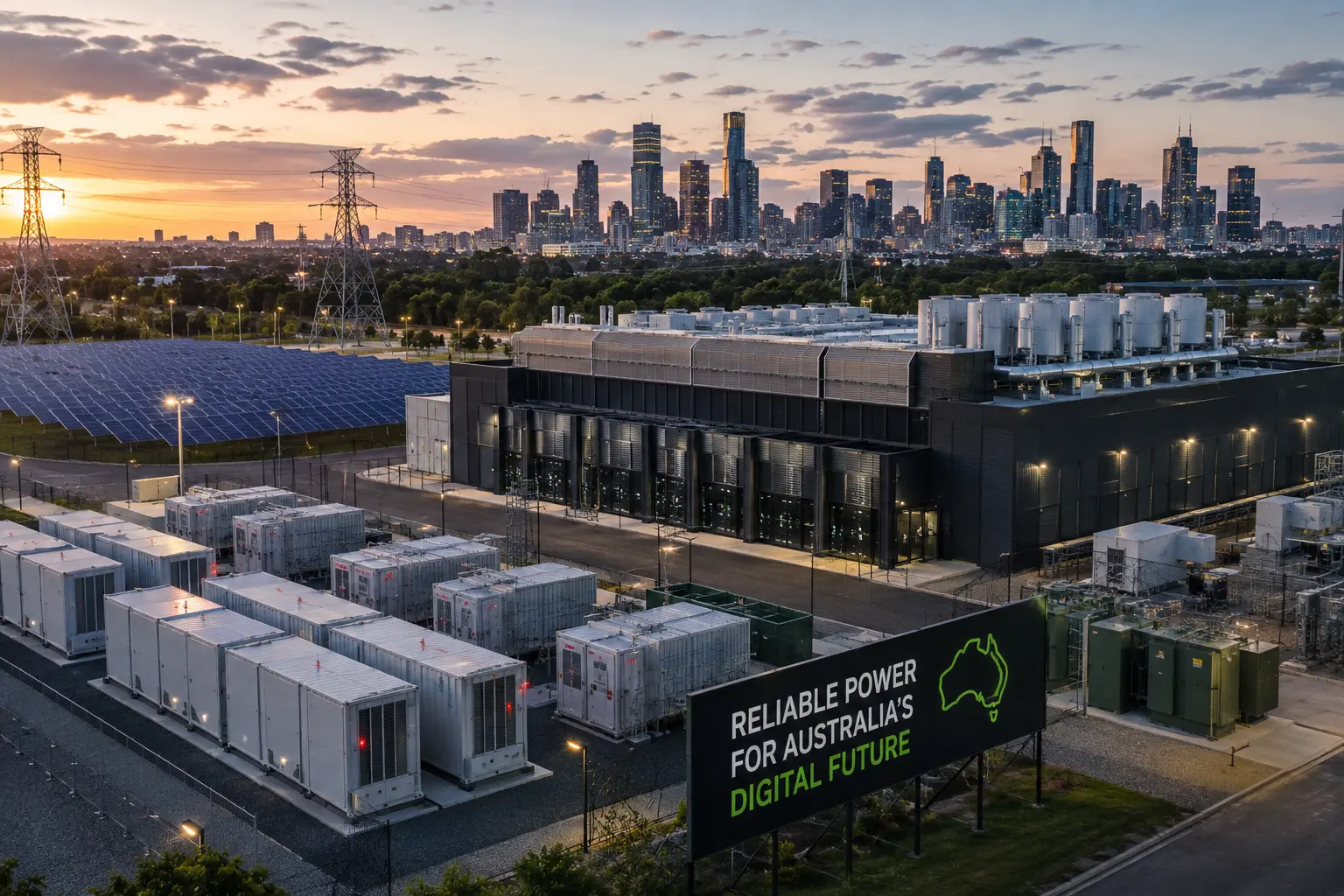
Australia is preparing to turn its data-centre energy expectations into enforceable rules. The Australian Energy Market Operator says 11 large data-centre projects, each above 5MW, were in the transmission connection process at the end of March. Together they represented 5.4GW of maximum demand, with 4.1GW at the application stage and 1.3GW in project implementation.
The government’s March Data Centre Expectations asked new developments to secure additional clean generation and/or storage, pay their share of network costs and make their electricity demand more flexible. In July, the government said key energy provisions would become legal obligations for large new data centres under planned Australian Standards for AI, expected to be legislated in early 2027. Separately, the Australian Energy Market Commission is developing technical rules for how large electricity users connect to the grid.
Its draft would apply new requirements to distribution-connected loads above 30MW and require large facilities to remain connected through defined grid disturbances.
The assessment
Large data-centre projects may have to make key power decisions earlier in development. Under the proposed federal rules, developers would need to support new electricity supply, pay connection costs and be able to reduce demand when the grid is under pressure. Separate technical standards would set requirements for how large facilities connect to the network and operate during grid disturbances.
Battery storage could help meet some of those requirements. It can store electricity for later use and reduce how much power a data centre draws from the grid when demand is high. Batteries would not be mandatory, however, and developers could use other forms of firming or flexible demand. For BTW readers, developers may have to settle how a site will secure power and cut demand while the data centre is still being designed, rather than waiting until it is close to opening.
What to watch
The federal standards still need to define which data centres will be covered and what developers must provide for new power supply and demand reduction. AEMC’s final technical connection decision is due on 29 October. Project plans released after the rules are clarified should show whether operators turn to batteries, on-site generation or other ways of managing their power needs.