
Summary
- BTW's directory route binds this article to exact Entity
cmqk4an1b03g5t26bt9n666c8and slugidx-data-centers-and-it-services-s-a-br, preventing the piece from drifting into a generic data-centre or hosting profile. - The source packet supports a narrow public network-identity surface: a Brazil directory profile, a LACNIC membership reference, the official IDX website, and AS269038 pages from bgp.tools and IPinfo.
- AS269038 is useful evidence because an autonomous-system number is a public routing identity. It helps readers discuss attribution and visibility, but it does not certify uptime, customer reach, redundancy, route security, or service continuity.
- The official IDX website describes a services surface that includes data-centre and IT services, managed services, colocation, cloud, NOC, SOC, telephony, infrastructure and ISP-facing services. Those descriptions do not, by themselves, prove live topology or resilience.
- LACNIC and other internet-number records should be read as ledgers. They can identify a relationship with number resources, but they do not replace current measurements, customer contracts, facility audits or incident records.
- This article deliberately avoids the existing Elias Ward angle about a Brazilian colocation bill behind a local rack. Plan1046 focuses on AS269038 and network-resource visibility.
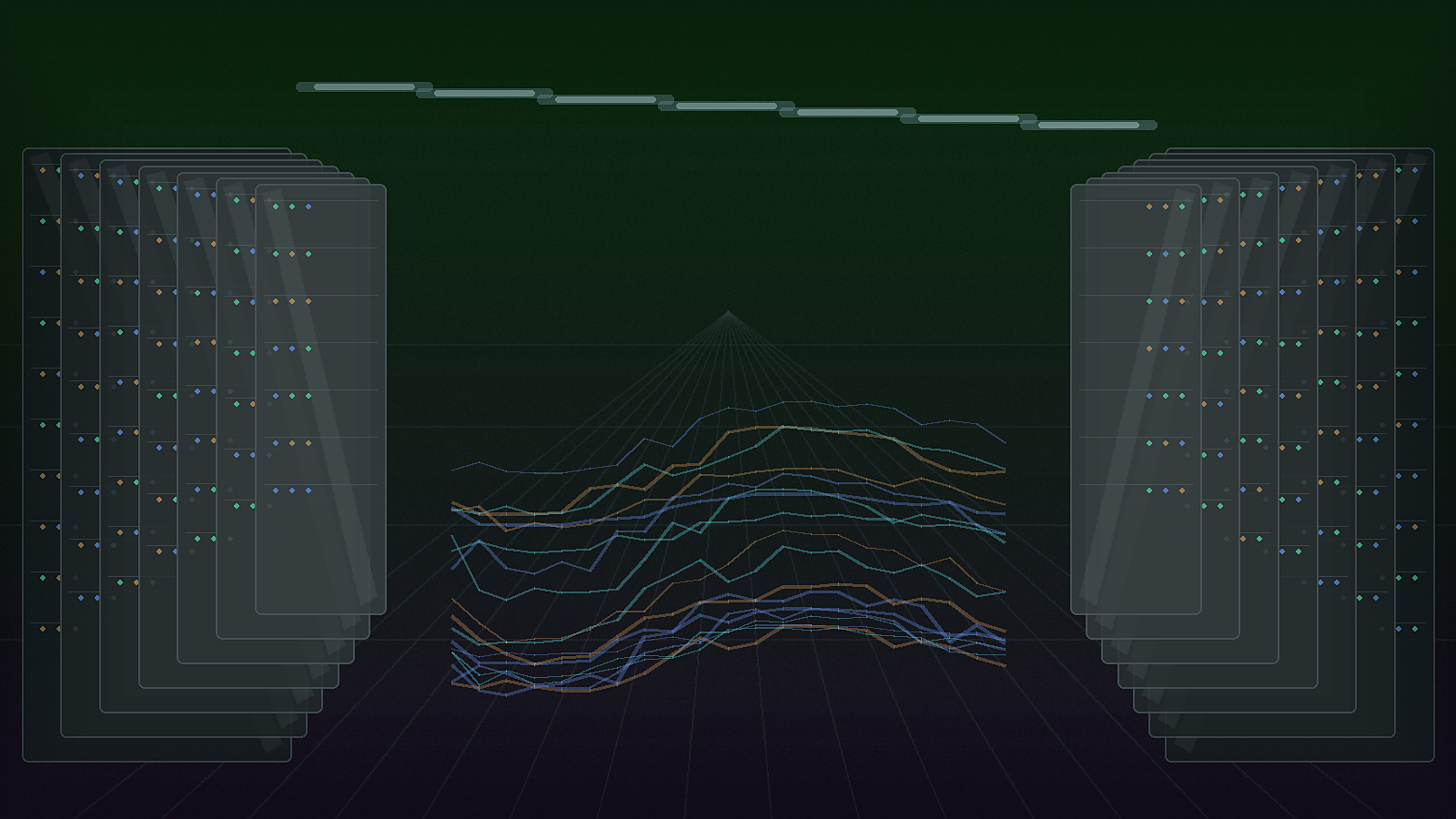
- The generated image is a non-documentary editorial visualization of a network handoff environment. It is not proof of a real IDX facility, rack, route, capacity, uptime, security posture or customer system.
- The safe conclusion is that IDX has a visible network-resource identity worth tracking, while continuity, route security, upstream dependency, facility redundancy and customer service claims remain unproved by the current public packet.
What happened
IDX DATA CENTERS & IT SERVICES S.A. has a public identity surface that reaches beyond a company description. BTW's directory route identifies the exact entity and places it in a Brazil context associated with LACNIC membership and ASN/IP network resources. The source packet also includes public AS269038 pages from bgp.tools and IPinfo. Those two routing-reference pages make the article narrower and more useful than a generic company profile, because they tie the subject to an internet-number surface that other networks and analysts can inspect.
The point is not that an ASN answers every technical question. It does not. An autonomous-system number is a public routing identity. It helps identify a network in the Border Gateway Protocol system, or BGP, the routing system networks use to tell each other which internet destinations they can reach. When an organization appears next to an ASN in public routing or registry tools, readers get a place to begin attribution. They do not get proof that the network is healthy, secure, redundant or customer-ready.
That distinction matters for IDX because data-centre and IT-service companies can be described in several different ways. They can be described commercially as infrastructure providers, service operators, managed-service vendors, cloud-adjacent companies, colocation providers or support organizations. The official IDX website uses a broad service vocabulary, including managed services, colocation, cloud, NOC, SOC, telephony, infrastructure and ISP-facing services. Those terms describe a market and service surface.
They do not, alone, show which internet-number resources are active, how routing is engineered, which upstreams are used, which customers depend on the network, or how continuity is tested.
Plan1046 therefore treats AS269038 as the article's center of gravity. The question is not whether IDX operates a data-centre business in a general sense. The narrower question is what public evidence lets a reader connect IDX's exact directory identity to a network-resource identity. That connection is useful because it makes a company more inspectable. It gives network operators, buyers, researchers and readers a way to separate named infrastructure from vague infrastructure language.
The existing production database already has an Elias Ward article about IDX Data Centers and the Brazilian colocation bill behind a local rack. This Mara article does not repeat that thesis. It does not focus on rack pricing, colocation bills, local commercial cost or a customer-rack narrative. It uses the same exact entity as a network-resource case: AS269038, LACNIC membership context, routing visibility and the difference between public attribution and operational proof.
The evidence packet supports a careful article, not a sweeping audit. It supports saying that IDX is the exact directory entity in scope, that the entity is associated with a Brazil network-resource surface, that AS269038 is visible in public AS tools, and that the official website presents the company through a service portfolio. It does not support saying that a specific route is currently secure, that a facility has a specific redundancy design, that customer traffic follows a particular path, or that continuity is strong or weak.
That evidence boundary is the article's main finding. A visible ASN can make a provider easier to examine, but it is not a service certificate. A directory profile can anchor identity, but it is not an operational audit. An operator website can describe services, but it is not an independent measurement. These layers should be connected, but they should not be collapsed into one proof.
Why it matters
For non-specialist readers, a data-centre name can sound like a physical proof. The phrase suggests rooms, racks, power systems, cooling, security and network links. Some of those things may be part of a real service, but a public article must not infer them without evidence. A data-centre or IT-service company may have many public-facing words while the technical evidence needed by a network buyer remains thin. The useful question is not whether the company sounds like infrastructure. The useful question is what exact public records make its infrastructure role visible.
AS269038 helps answer only part of that question. It provides an identifier around which network-resource and routing discussion can be organized. In internet infrastructure, that is important because names alone are weak. A legal name, a brand, a domain name and a service label can point in related directions without proving the same thing. An ASN is different because it is part of the operational addressing and routing layer. It gives analysts a more concrete object to monitor, compare and question.
That concreteness is still limited. A routing identity can be visible even when many practical details are hidden. Public AS pages may show a network name and routing-related information, but they cannot by themselves show every customer, every facility, every private handoff, every security process, every incident record or every recovery test. A buyer cannot treat an ASN page as a resilience assessment. A regulator cannot treat it as a complete service map. An operator cannot treat it as proof that a provider's operational promises match reality.
The distinction is especially important for smaller or regional infrastructure providers. These organizations may serve local businesses, ISPs, hosted systems, communications customers or managed-service clients. Their public footprint can be uneven. Some have detailed routing records but limited facility disclosure. Some have polished service websites but weak public network evidence. Some have registry records that identify a relationship with number resources, while customer delivery and continuity remain private. Each pattern creates different due-diligence questions.
For IDX, the current packet shows enough to avoid a vague profile. The directory route is exact. The LACNIC membership context is present. AS269038 appears in public AS tools. The official website supplies a services surface. Together, these records create a meaningful public identity boundary. They are enough to ask network-resource questions with precision.
They are not enough to make operational claims. The article should not say that IDX has a specific uptime level. It should not say that AS269038 has a particular routing security posture. It should not say that all services on the website map to AS269038. It should not say that every customer-facing link depends on one data centre, one route or one NOC. None of that appears in the source packet. The more disciplined conclusion is that IDX has a network-resource identity that should be tracked separately from general data-centre marketing.
This method also protects the reader from two common mistakes. The first mistake is treating a registry or routing record as if it were sovereign proof of operational quality. It is not. The second mistake is ignoring the record because it does not answer every question. That is also wrong. Registry and routing evidence can be incomplete and still valuable. It can identify where to look next, what to monitor, and which claims should not be made without stronger proof.
The technical layer
The technical layer begins with the ASN. ASN stands for autonomous-system number. An autonomous system is a network, or group of networks, that presents a routing policy to the rest of the internet. The number is how that network is identified in BGP, or Border Gateway Protocol. BGP is the system networks use to announce which IP address ranges they can reach and how traffic can move between networks. When public tools list AS269038 with the IDX name, they are exposing a routing identity surface.
That surface is not the same as a route-security audit. Route security usually requires additional evidence, such as RPKI data. RPKI, or Resource Public Key Infrastructure, lets resource holders publish route-origin authorizations, often called ROAs, so other networks can check whether an ASN is authorized to originate a prefix. The Plan1046 source packet does not include a current RPKI or ROA analysis. Therefore this article cannot claim that AS269038 is protected, unprotected, valid, invalid or risky under RPKI. It can only say that route-security evidence would be a relevant next layer.
IP network resources are another part of the same picture. These are the addressing and routing identifiers that make internet reachability attributable. They include IP address ranges, ASNs and associated registry records. A Regional Internet Registry, or RIR, is a regional ledger for those resources. LACNIC is the RIR for Latin America and the Caribbean. A LACNIC membership or member-directory surface can help identify an organization in the internet-number ecosystem. It is not a guarantee that every service is live, resilient or secure.
The BTW directory page plays a different role. It is an identity route inside the BTW publishing system. It names the exact entity, displays the Brazil context and links the article to a stable directory object. That matters because IDX-related strings can otherwise become ambiguous. A reader might see the official site, a routing tool, a registry directory and an article slug and assume they all carry the same proof. The exact Entity id and slug stop that drift. They say which public object Mara is writing about.
The official IDX website adds the service vocabulary. It presents IDX Data Centers & IT Services as a provider of secure, stable and high-performance solutions and lists several service areas. For this article, the important service-area signal is not a marketing claim of quality. The important signal is that the company presents itself across data-centre and IT-service functions, including managed services, colocation, cloud, NOC, SOC, telephony, infrastructure and ISP-facing services. That service surface explains why an ASN/IP network-resource view is relevant.
A company describing network-adjacent services should be read through both commercial and routing evidence.
A NOC, or Network Operations Center, is typically a place or function for monitoring and coordinating network operations. A SOC, or Security Operations Center, is typically a place or function for monitoring and responding to security events. The official website's service labels make these terms relevant, but the current source packet does not prove how IDX staffs those functions, what tools it uses, what hours it covers, how incidents are escalated or which customer services depend on each function. The article should keep that boundary visible.
The same caution applies to colocation and cloud labels. Colocation usually means customers place equipment in a provider facility or consume rack, power and network-related services there. Cloud labels can refer to hosted compute, managed infrastructure or related service bundles. The official website includes these words, but the Mara article is not a facility tour or product review. It does not map rack locations, power topology, cooling redundancy, backup design or customer contracts. It treats the service vocabulary as context for why public network identity matters.
Routing visibility is therefore the technical center. Public AS pages are useful because they can expose a network object that exists outside a company's own marketing language. A buyer or operator can use that object to ask better questions: which prefixes are associated with the network, which routes are visible, whether route-origin authorizations exist, what upstreams or peers are observable, whether names match contracts, and how changes are communicated. The current article does not answer all those questions. It defines them and ties them to a real subject.
This is the Heng.lu doctrine in practice. Registries are recordkeepers. Running systems and running-code evidence matter. Number resources need uniqueness, accuracy, transfer recording, security metadata and operational continuity. A public ASN is one of the records that can support accountability, but it cannot replace operational proof. For IDX, that means AS269038 should be treated as a traceable infrastructure surface, not as an endorsement.
Who is affected
The first affected group is network buyers. A business choosing data-centre, managed-service, cloud or connectivity support needs more than a service menu. It needs to know which legal or operational entity is responsible, which network identifiers are relevant, what public records can be checked, and what cannot be inferred. If a buyer sees AS269038 associated with IDX, that buyer has a better starting point for technical due diligence. It can ask whether the contracted service uses that network identity, whether monitoring should include it, and whether route-security or upstream information is available.
The second affected group is smaller ISPs and infrastructure partners. The official site includes ISP-facing language, and the directory/source packet puts IDX in a Brazil network-resource context. An ISP or partner may care less about a generic data-centre label and more about how a provider's public routing identity fits into interconnection, hosting, managed services or escalation. AS269038 can become a reference point for those discussions. It cannot replace direct technical disclosure.
The third group is network operators who monitor routing changes. Operators often need to know whether an ASN name matches the organization a customer or peer has described. They may compare public AS tools, RIR records, PeeringDB-style records, BGP feeds, customer contracts and support contacts. A clean entity boundary makes that work easier. If the directory object, LACNIC reference and public AS pages all point to the same identity surface, the operator has a stronger basis for asking precise questions.
The fourth group is readers who are not specialists but depend on infrastructure outcomes. A business owner, public-sector buyer, compliance reviewer or financial analyst may not know BGP or RPKI. They can still understand the practical distinction. A company can be visible in public number-resource records without those records proving continuity. A service can sound critical without public proof of its route security. A data-centre company can be real while specific claims about resilience remain unverified. That clarity helps non-specialist readers avoid both panic and blind trust.
The fifth group is IDX itself and similar regional providers. Public number-resource evidence can make a provider more legible to the market. It can show that the provider is not only a brand description. But it also creates expectations. Once an ASN exists as a public reference point, customers and counterparties may reasonably ask how it relates to services, routing policies, route-origin validation, incident communication and operational continuity. Providers can answer those questions without publishing sensitive topology, but the questions are legitimate.
The sixth group is regulators and public-interest observers. They should not treat an ASN record as proof that a provider has met every technical duty. They also should not ignore number-resource records when evaluating infrastructure visibility. A registry or routing record is not a license, an audit or a resilience test. It is a ledger surface that can anchor further inspection. For a regional infrastructure ecosystem, that kind of anchoring matters.
What to watch next
The first item to watch is route-origin evidence. If later evidence shows current prefixes associated with AS269038 and current RPKI/ROA status, the article could move from identity visibility to route-security discussion. Until then, route security remains an open question. A responsible update would record the measurement time, tool source, prefix set and SHA before making any conclusion.
The second item is upstream and peering visibility. Upstreams are networks that provide transit, or paid connectivity to the wider internet. Peering is direct exchange of traffic between networks. The current article does not identify IDX's upstreams or peers. If future public records show those relationships, they could help readers understand dependency and reachability. They still would not prove every customer path or redundancy design.
The third item is service mapping. The official website presents several service labels, but the current evidence does not map each service to AS269038. A useful future disclosure would explain which services use which network identities, which facilities or cloud components are in scope, and how customers should monitor them. Without that mapping, a reader should avoid assuming that every IDX service depends on the same ASN or route set.
The fourth item is continuity evidence. Continuity means the ability of a service to keep operating or recover when something breaks. Public continuity evidence could include incident notices, maintenance windows, redundancy descriptions, service-level documents, monitored uptime reports, or recovery-process summaries. The current packet does not include that evidence. It supports asking for it, not claiming it exists.
The fifth item is directory freshness. The BTW directory route currently identifies the exact entity and shows the network-resource context. If that route changes, returns a soft-404, or points to a different entity, any article package must stop and revalidate. Exact identity is not administrative decoration. It is the link between the story and the public object being discussed.
The sixth item is duplicate-thesis control. Because an older article already covered IDX through a Brazilian colocation-bill/local-rack frame, future Plan1046 work must stay on the AS269038 network-identity frame. If a later draft drifts back into rack cost, colocation billing or facility-commercial narrative, it should be held as duplicate-risk. The useful new contribution is the network-resource visibility boundary.
The seventh item is image discipline. The current image is an editorial visualization. It should remain a visual aid, not evidence. If a future article uses real facility imagery, the image would need its own source, rights status, object key, hash and public-copy review. Visuals can mislead quickly in infrastructure reporting. A picture of racks can imply facility proof even when no facility evidence exists. This article avoids that by using a non-documentary caveat.
The eighth item is customer language. If future sources include customer references, the article should not generalize from one customer to all services. Customer evidence is useful only when it is scoped: which service, which date, which entity, which network resource, which facility, which support path and which continuity promise. Without that scope, customer references can become marketing rather than evidence.
The evidence map
The evidence map for Plan1046 has six fixed anchors. The first is Entity cmqk4an1b03g5t26bt9n666c8. The second is slug idx-data-centers-and-it-services-s-a-br. The third is the BTW directory route. The fourth is the source packet containing the official IDX website, bgp.tools AS269038, IPinfo AS269038 and the LACNIC member-directory surface. The fifth is the generated image object plan1046-idx-data-centers-network-identity-20260805.png. The sixth is the Heng.lu surface: ASN/IP registry, BGP/routing and hosting/network identity.
Each anchor does a different job. The entity and slug define identity. The directory route makes that identity public and inspectable inside BTW. The source packet gives external surfaces. The image gives a non-documentary visual frame. The Heng.lu surface explains why the article belongs in Mara's infrastructure lane rather than in generic business coverage. None of these anchors should be swapped silently during admission.
The source packet is deliberately modest. It does not include a regulator decision, a new outage, a merger, a facility-opening announcement, a public route-security test or a customer-impact event. That is acceptable. Not every infrastructure article needs a crisis or launch. Some useful articles explain how to read a public record before a crisis occurs. Plan1046 does that for IDX's network-resource identity.
The directory route also includes related research pointing to the existing Elias Ward article. That does not fail-close the candidate, but it changes the writing burden. The new article must add a distinct evidence angle. It must not turn into a reworded profile of the same commercial subject. The AS269038 angle is the differentiator.
The official IDX website should be read as first-party context. First-party context is useful for naming services and understanding how an organization presents itself. It is not independent confirmation of service quality. When the site describes secure, stable and high-performance solutions, the article can report that IDX presents those claims. It should not adopt the claims as proven. The same rule applies to service labels such as NOC, SOC, cloud, colocation and ISP-facing services.
The public AS pages should be read as routing and attribution context. They make AS269038 visible. They do not show every operational dependency. If an AS page includes rich fields, those fields still need careful interpretation and timestamping before becoming claims. The current Plan1046 article remains at the identity and evidence-boundary layer.
How to read the ASN
An ASN is a useful starting point because the internet is not only made of websites and company names. It is made of networks announcing reachability to other networks. When a network has an ASN, that number can appear in routing tables, registry records, monitoring tools, troubleshooting notes and customer questionnaires. It is one of the identifiers that turns a company name into a network object.
For a data-centre and IT-service company, that matters because customers often buy outcomes, not identifiers. They buy hosting, connectivity, managed infrastructure, cloud services, NOC support, SOC support or ISP-facing assistance. If the service fails, the customer may experience only an application outage, a slow connection or an unreachable system. The actual cause may sit in power, routing, upstream transit, DNS, security filtering, facility access, customer equipment or application configuration. An ASN is not the whole answer, but it is one of the places where technical responsibility can begin to be traced.
The right way to read AS269038 is therefore cautious. It is a public identifier that can be checked. It is not a promise. It does not automatically prove that traffic is flowing today. It does not show whether routes are authenticated. It does not show whether there are backup paths. It does not show how support works during an incident. It does not show whether a particular customer uses that ASN. It does create a named network-resource surface.
This is why the article headline says "visible as a network-resource holder" and "not a continuity guarantee." Both parts matter. If the article mentioned only visibility, readers might overread the evidence. If it mentioned only the limits, readers might miss the value of the record. Public infrastructure reporting works best when it keeps both ideas together.
Practical questions for buyers and operators
A buyer can use the current evidence to ask better questions. Which IDX legal or operating entity appears in the contract? Does it match the BTW directory object? Which services, if any, use AS269038? Which prefixes are in scope? Are route-origin authorizations published? Which upstream or peering relationships matter for the service? What monitoring will the customer be allowed to see? How are incidents escalated from facility, cloud, managed-service or network layers?
An operator can ask a different set of questions. Does the AS name match the expected provider? Are public route observations consistent with the service description? Are contact records current? Are abuse, NOC and escalation paths separated? Are route changes communicated? Does the provider distinguish between facility support and routing support? Does the provider have documented maintenance windows? Which dependencies are shared across customers?
A regulator or public-interest reviewer can ask a third set. Is the entity associated with number resources? Are records accurate and up to date? Is the provider making claims that require technical verification? Are customers able to understand which operational layer they are buying? Does public reporting overstate what registry records prove? These questions are ordinary infrastructure accountability, not accusations.
The current source packet does not answer all those questions. It makes them legitimate. That is a meaningful step because vague infrastructure language often prevents precise inquiry. A public ASN and exact entity route give the discussion a handle.
Limits of the current record
The current record has clear limits. It does not include a current BGP dump. It does not include a prefix inventory. It does not include RPKI validation. It does not include upstream or peer lists that this article can safely assert. It does not include facility redundancy details. It does not include customer contracts or incident reports. It does not include independent performance data. It does not include a current audit of NOC or SOC operations.
Those absences should not be hidden. They are part of the story. A reader should know the difference between a visible network-resource identity and a tested continuity posture. If a future package adds route snapshots, RPKI data or facility documents, the conclusion can change. Until then, the article stays within the present evidence.
The record also has a language boundary. Some source material is in Portuguese, and the service vocabulary may not map perfectly into English commercial terms. The article should preserve meaning without inventing operational detail. For example, saying that the official site lists a NOC or SOC service is safer than saying IDX operates a specific 24-hour monitoring center with a defined staffing model. The source packet does not prove the latter.
The existing article boundary is another limit. Because a prior article already covered IDX from a colocation-cost perspective, Plan1046 should not reuse that framing as if it were new evidence. If the new article mentions colocation, it should do so only as one listed service area, not as the thesis. The thesis remains AS269038 and network-resource visibility.
Why this is still worth publishing
Some readers may wonder why a narrow network-identity article matters when it does not include an outage, a launch or a dramatic dispute. The reason is that infrastructure accountability often begins with boring records. A public ASN, an exact entity route, an RIR membership surface and a service website do not create a headline by themselves. They create a map of what can be verified and what still needs proof.
That map helps prevent exaggeration. It prevents a company profile from sounding like an operational audit. It prevents a registry record from being treated as a service guarantee. It prevents a visual image from being treated as facility evidence. It also prevents underreporting by showing that public number-resource evidence is real evidence, even when it is incomplete.
For Mara's coverage lane, this is the right balance. The article is not promotional. It is not hostile. It is a reality-layer piece about how to read a network-resource holder. It treats records as records, services as claims that need scope, and continuity as a separate proof category.
The safe final reading is simple: AS269038 makes IDX DATA CENTERS & IT SERVICES S.A. visible as a network-resource subject. That visibility is useful for buyers, operators and researchers. It does not settle the harder questions. Those questions remain: route security, upstream dependency, customer mapping, facility resilience, NOC/SOC operation, service continuity and incident transparency.
How not to overread the record
The most common mistake with a record like AS269038 is to turn visibility into certification. Visibility means a reader can see a public identifier and ask better questions. Certification would mean a responsible party has tested and verified a claim such as uptime, redundancy, security control, route-origin policy or recovery performance. The current Plan1046 packet supports the first idea. It does not support the second. Keeping those ideas separate is not a small editorial detail. It is the difference between infrastructure reporting and infrastructure assumption.
One overread would be to say that IDX has proven continuity because the company is associated with an ASN. That is too strong. Continuity requires more evidence: service architecture, backup design, operational process, maintenance practice, incident handling, support coverage and customer-specific obligations. None of those fields can be safely reconstructed from the current source packet. Another overread would be to say that the ASN proves current customer service delivery. A customer service may use the same identity, a related identity, a private network path, a partner route or a service layer not visible in the public packet.
The article should not guess.
A second overread would be to treat the official website's service labels as a complete technical map. Service labels matter because they tell the reader why a network-resource view is relevant. If a company presents managed services, cloud, NOC, SOC, colocation, infrastructure, telephony and ISP-facing service language, a reader has reason to ask how the company identifies itself on the internet. But the service labels do not answer how each service is connected, which systems are monitored, which customers are affected by a route change, which support team owns which incident or which facility dependencies are shared.
The labels open questions; they do not close them.
A third overread would be to assume that a directory record is the same thing as a regulator file. BTW's directory route is a publishing and intelligence identity anchor. It lets the article bind to the exact entity and prevents the text from sliding into a generic IDX-branded profile. It does not certify licences, ownership, financial condition or operational capability. The same is true of a LACNIC member-directory surface. It helps identify a relationship with the internet-number ecosystem. It does not become a sovereign judgement about the provider's business or network quality.
There is also an underread risk. A cautious article should not make the evidence sound worthless just because it is incomplete. Public identifiers are valuable precisely because they make later checks possible. If a buyer begins with a service website only, the conversation can stay vague. If the buyer can also point to AS269038, the conversation becomes more concrete: which prefixes are attached, which routes are visible, what route-origin evidence exists, what contact records apply, and how service promises map to network identifiers. The record has practical value even before it proves continuity.
The right middle position is therefore disciplined. AS269038 is a public handle for network-resource inquiry. The BTW directory route is a public identity anchor. The official website is first-party context for service vocabulary. The LACNIC surface is a registry relationship indicator. Together, they support a clear infrastructure article. Separately and together, they still stop short of proving route security, operational resilience, customer impact or service quality. That is why the article should remain useful to a non-specialist reader without becoming stronger than the evidence.
That restraint is also useful for future updates. A later route snapshot, ROA check or customer disclosure can be added cleanly because the current article has not pretended those missing layers are already known.
Sources
Member Briefing
Deeper Profile Context
Sign in with the right membership level to unlock the full briefing and source notes.
Only for Strategic Circle
Strategic Circle
Open to all readers. Unlock profile briefings after joining and signing in.
Join Strategic CircleOnly for Leadership Alliance
Leadership Alliance
For qualified IP-asset owners and management; sign in to unlock alliance briefings.
Join Leadership Alliance