Summary
- The French State, acting through the Agence des participations de l'Etat, took 80% of Alcatel Submarine Networks; Nokia kept a 20% minority and holds a put option over it, so the ownership structure has a scheduled next move rather than a settled end state.
- The deal carries a €350 million enterprise value and a €100 million investment plan for 2026–2028 that expands the Calais plant and builds a new facility in Greenwich — money aimed at the physical layer of the Internet, not at software.
- Nokia's own corporate pages give two different closing dates, July 2024 on one and 31 December 2024 on another. Anyone modelling ASN's ownership, its repair obligations or its export posture should treat the handover date as unresolved rather than pick the tidier one.
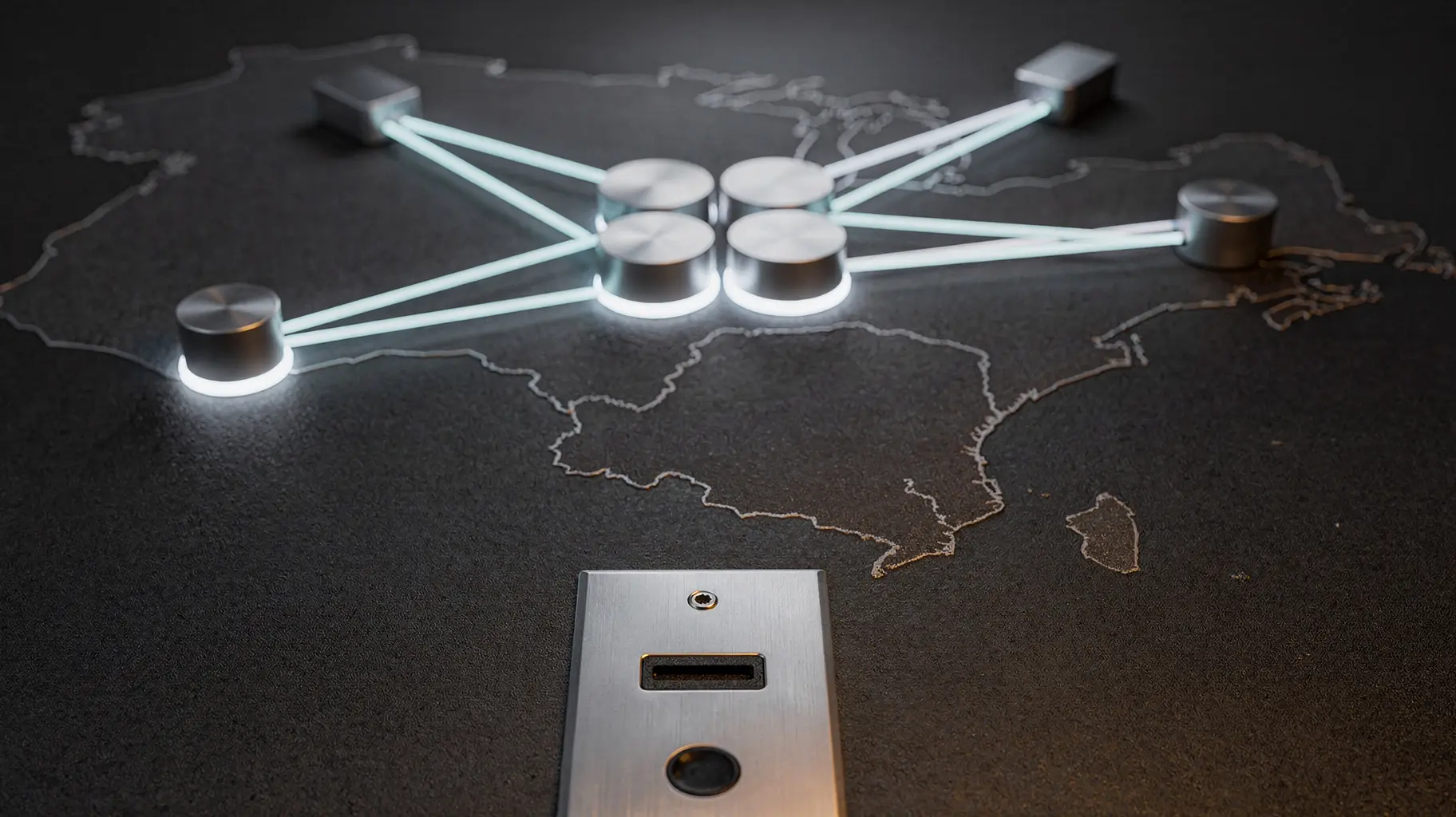
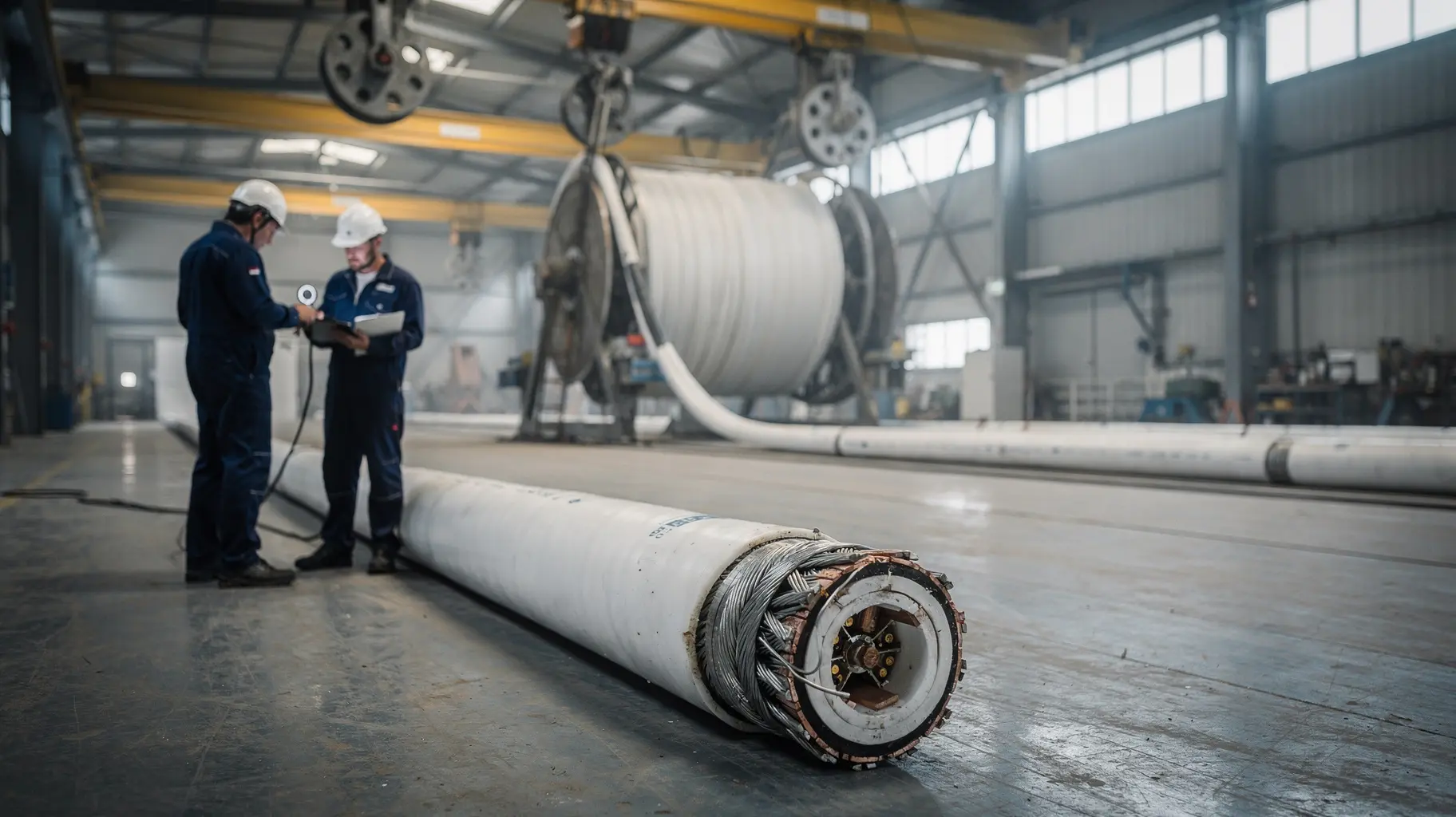
Alcatel Submarine Networks does not sell anything a consumer ever touches. It makes the cable, the repeaters that keep a light path alive across an ocean, and it operates the ships that lay and repair the plant on the seabed. When a system fails between two continents, the repair is a physical operation run by a small set of firms that own the factories, the spares and the vessels. ASN is one of them. Its principal factory sits in Calais, which the company presents as a central hub for its cable production (ASN manufacturing facilities), and it runs a fleet of cable ships dedicated to installation and repair (ASN fleet).
That is the asset the French State bought a majority of. Under the agreement Nokia announced, the State — represented by the Agence des participations de l'Etat — acquired 80% of the submarine networks business while Nokia retained a 20% minority stake (Nokia, 27 June 2024). The transaction values ASN at an enterprise value of €350 million (Nokia, 27 June 2024; Nokia, 27 May 2024).
Why a state buys a cable factory
The stated motive was control, not return. Reuters reported on 22 May 2024 that the French government moved to acquire ASN from Nokia in order to keep control of strategic subsea cable assets (Reuters, 22 May 2024). Read that plainly: the concern was not that the factory would close, but who would decide what it builds, for whom, and under which export rules.
That distinction matters more than the headline price. A submarine cable manufacturer is a chokepoint in a way that a cable operator is not. Operators lease capacity and route traffic; manufacturers convert steel, copper, optical fibre and repeaters into a system that takes years to plan and months to lay. If a government wants leverage over which routes get built and which get repaired first, owning the plant is a more direct instrument than regulating the buyer of capacity.
Reuters' 29 May 2024 report described the same structure — an 80% French State stake with Nokia's 20% subject to a put option (Reuters, 29 May 2024). The put option is the detail that turns a shareholding into a timetable. A put gives the holder the right to sell at agreed terms; here it gives Nokia a route out of the minority position it retained. The French State granted that option over the retained 20% (Nokia, 27 June 2024; Reuters, 29 May 2024).
So the structure is not a partnership between a state and an industrial minority. It is a majority position with a pre-arranged exit for the minority. Anyone reading the 20% as evidence of a durable joint venture is reading it backwards.
What €350 million does and does not tell you
Enterprise value is a valuation, not a receipt. The €350 million figure describes what the business was judged to be worth in the transaction, and it appears in Nokia's own communications (Nokia, 27 June 2024; Nokia, 27 May 2024). It does not tell you ASN's revenue, its order book, its margin, or how much of the price was cash versus assumed obligations. None of those numbers appear in the material this article rests on, and inventing them would be worse than leaving the gap visible.
What the figure does establish is scale. €350 million is a modest enterprise value for a company that operates factories and ships and supplies systems that cross oceans. That gap between strategic weight and financial size is exactly the kind of mismatch that attracts state ownership: the asset is too important to be priced purely on cash flow, and too small to be defended by a conglomerate's balance sheet alone.
Calais, Greenwich, and a plan that is not yet spending
The industrial commitment is the part with physical consequences. ASN's Ambition 2030 plan provides for €100 million of investment between 2026 and 2028, covering expansion of the Calais plant and construction of a new building in Greenwich in the United Kingdom (Nokia, 27 June 2024).
Two things follow, and they point in opposite directions. First, the geography is being fixed. Capacity in this industry is not elastic: a new building and an expanded plant take years to deliver, and once built they anchor where cable and repeater work can be done for the following decade. A €100 million commitment across two sites is a statement about where the state expects subsea manufacturing to live.
Second, it is a plan, not expenditure. The €100 million is a figure stated in a June 2024 release describing what the company intends to invest between 2026 and 2028. It is not evidence that the money has been spent, that the buildings exist, or that the schedule has held. Treating an announced capital plan as completed capacity is the most common error in infrastructure coverage, and it is the error this transaction invites.
The closing date that will not settle
Here is where the record becomes genuinely interesting. Nokia's own corporate pages do not agree on when the ownership actually changed.
A Nokia page dated 22 July 2024 is headlined as completing the divestment of Alcatel Submarine Networks to the French State, and the retrieved summary of that page asserts the sale was finalised in July 2024 (Nokia divestment completion page, 22 July 2024). A Nokia release published 2 January 2025 states that the transaction was completed on 31 December 2024 (Nokia, 2 January 2025).
Both are Nokia. Both are dated. They cannot both describe the same event. The gap is not a rounding difference; it is five months in which the ownership of a strategic cable manufacturer is either transferred or not.
There are ordinary explanations available — a first completion of one part of a transaction and a later completion of another, a conditional closing followed by satisfaction of conditions, a page whose headline outran its body. None of those explanations is documented in the material this article relies on, and the honest position is that the record does not reconcile. The article therefore does not pick a date. It reports that Nokia's own pages give July 2024 and 31 December 2024, and that neither should be treated as settled.
This is not pedantry. The closing date determines when the French State's obligations as majority owner begin, when the put option's clock starts, when the €100 million plan becomes the new owner's commitment rather than the seller's announcement, and when export-control decisions on ASN's output pass to a different government. A five-month uncertainty in that sequence is a real uncertainty for anyone contracting with the company.
What the record does not say
The evidence behind this account is provider-retrieved excerpt and summary of Nokia corporate releases and Reuters reports, captured on 7 November 2026 and dated to each publisher's publication date. It is not a directly inspected legal agreement. The 80/20 split, the put option's terms, the conditions attached to closing, and any state-aid or regulatory approvals are not described in the retained text.
Several things that readers will want are simply absent. No retained source states ASN's market share, revenue, order book or the number of ships in its fleet, so none of those are quantified here. No retained source identifies the Agence des participations de l'Etat's governance arrangements, the board composition after closing, or who runs ASN now. The Reuters items are available only as provider summaries without retained quotations or publication timestamps, so they are attributed as reported summaries rather than quoted.
What to watch
The useful question is not whether France now controls a cable factory. On the evidence, it holds 80% of one, with a €350 million enterprise value and a €100 million plan attached to two specific sites. The useful question is what a state-owned ASN does differently.
Three observable things would answer it. Whether the Calais expansion and the Greenwich building appear as construction rather than as intention in the 2026–2028 window. Whether the put option is exercised, and on what timetable, which would tell you how long the 20% was ever meant to last. And whether repair priority and capacity allocation start to follow a national logic rather than a commercial one — the change that operators, rather than shareholders, would feel first.
Until then, the most defensible statement about Alcatel Submarine Networks is also the least satisfying one: the cables did not change, the risk did, and the paperwork cannot agree on the day it happened. The company's own entry in our directory is here Only for Strategic Circle.
Member Briefing
Deeper Profile Context
Sign in with the right membership level to unlock the full briefing and source notes.
Only for Strategic Circle
Strategic Circle
Open to all readers. Unlock profile briefings after joining and signing in.
Join Strategic CircleOnly for Leadership Alliance
Leadership Alliance
For qualified IP-asset owners and management; sign in to unlock alliance briefings.
Join Leadership Alliance