
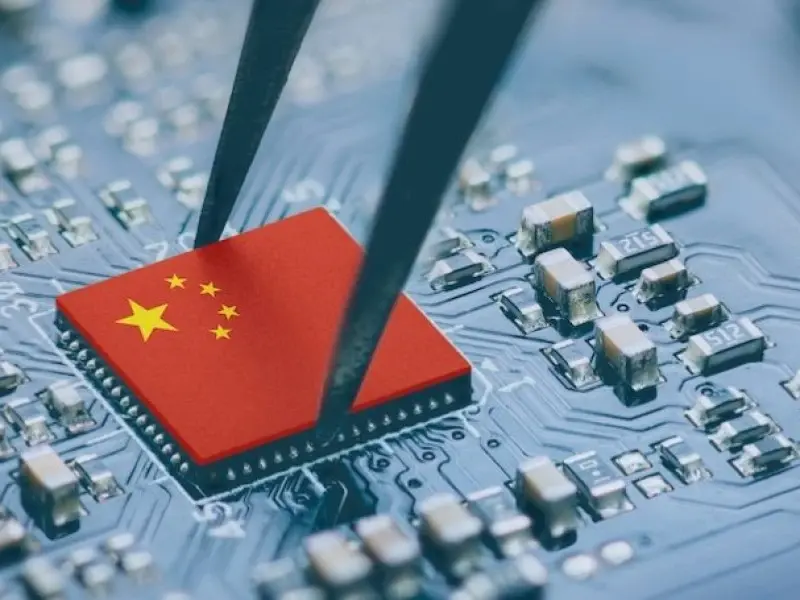
AI investment in China drops, bucking the global trend is a public record based on article evidence, entity context, event links, and relationship context.
In 2023, China made about 232 investments in AI, down 38% year-on-year. With limited funds, 2024 could be the year of reckoning for many AI startups in China. The slowdown in Chinese AI investment is not entirely unexpected, given the continued downturn in global venture capital. The truth is concealed In 2023, the global craze for artificial intelligence, driven by ChatGPT, is sweeping the world. At first glance, artificial intelligence is in full swing in China, but on closer inspection, this is not the case. Despite the hype, venture capitalists are not as enthusiastic about this emerging technology as one might think.
According to research firm CBInsight, in 2023, China made about 232 investments in AI, down 38 percent year on year. Funding for Chinese AI companies totaled about $2 billion, 70 percent less than last year. A separate report from a Chinese database showed a larger amount of money, although it showed the same downward trend.According to ITJuzi, in the first 11 months of 2023, China recorded 530 funding rounds in the AI sector, down 26 per cent year on year. These investments totaled 63.1 billion yuan ($8.77 billion), down 38 percent from the previous year and well below the 2021 peak of 248.78 billion yuan.
The difference in investment size between the two reports may be due to their different approaches in calculating funding rounds. ITJuzi may know more about local funding activity than its foreign counterparts, not least because AI startups in China have become more wary of dollar funding.Many now fear U.S. regulators scrutinizing the flow of American capital into their A.I. businesses. A depressed market economy From a broader perspective, the slowdown in AI investment in China is not entirely unexpected given the ongoing slump in global venture investment. However, AI startups in China face a unique set of obstacles. U.S.
venture capital, traditionally the main driver of growth in China’s Internet sector, has declined sharply since the decoupling of China and the United States.The prospects for Chinese tech companies to list on the U.S. stock market have also dimened due to geopolitical tensions, so investors have become more cautious about backing hyped businesses without a clear exit channel or monetization plan. Wang Xiaochuan’s Baichuan an d Lee Kaifu’s 01, these companies are still able to attract significant funding, but most small companies face increasingly conservative investors.
The task of developing a Chinese version of ChatGPT has fallen to deep-pocketed tech giants that have been stockpiling AI chips, while under-resourced startups are exploring niche industry applications based on open source or homegrown Chinese models. Also read: China AI startup 01.AI valued at $1B in eight months There have been questions about the technical prowess of China’s large language models, as developers face a chronic shortage of AI chips.The US government has banned the export of Nvidia’s high-end graphics processing units to China amid an intensifying technology war between the US and China.
Rising regulatory costs Internally, increased regulation leads to higher compliance costs for AI startups.Unlike their larger and better-funded peers, many startups lack the financial and bureaucratic resources needed to obtain the required AI licenses or meet the country’s Internet censorship requirements.While regulatory and political uncertainty may be less prominent obstacles, these startups must navigate new user behavior and an Internet ecosystem that is completely cut off from its home market.Adventurous AI companies are likely to turn to foreign investors, most likely U.S.
investors, for funding and, ultimately, to help develop a strategy for going public.But before they can partner with US institutions, they need to have the right corporate structure, offshore data storage solutions and even foreign passports for their founders so Silicon Valley investors don’t worry about violating US restrictions on China-related investments. With limited funding, 2024 could be a year of reckoning for many AI startups in China.
Member Briefing
Deeper Trend Context
Sign in with the right membership level to unlock the full briefing and source notes.
Only for Strategic Circle
Strategic Circle
Open to all readers. Unlock trend briefings after joining and signing in.
Join Strategic CircleOnly for Leadership Alliance
Leadership Alliance
For operators, investors, and policy teams that need relationship evidence, failure paths, and source notes. Sign in to unlock.
Join Leadership AllianceSnapshot
Category
Asia-Pacific Cloud Services TrendsAI investment in China drops, bucking the global trend is covered for governance relevance.
Region
ASIA PacificSignal Focus
GovernanceContent Type
EventPrimary Domain
MarketTopic
GovernanceImpact
MediumConfidence
Good confidence (80%)Confidence score guide
Published reporting