Summary
- Australia’s ACMA issues 26/28 GHz area-wide apparatus licences before device coordination, separating the licensed map from the transmitter that will eventually occupy it.
- First-in-time applications, boundary conditions, coexistence checks and transmitter registration determine whether that early map can become a working radio footprint.
The licence arrives before the antenna’s appointment
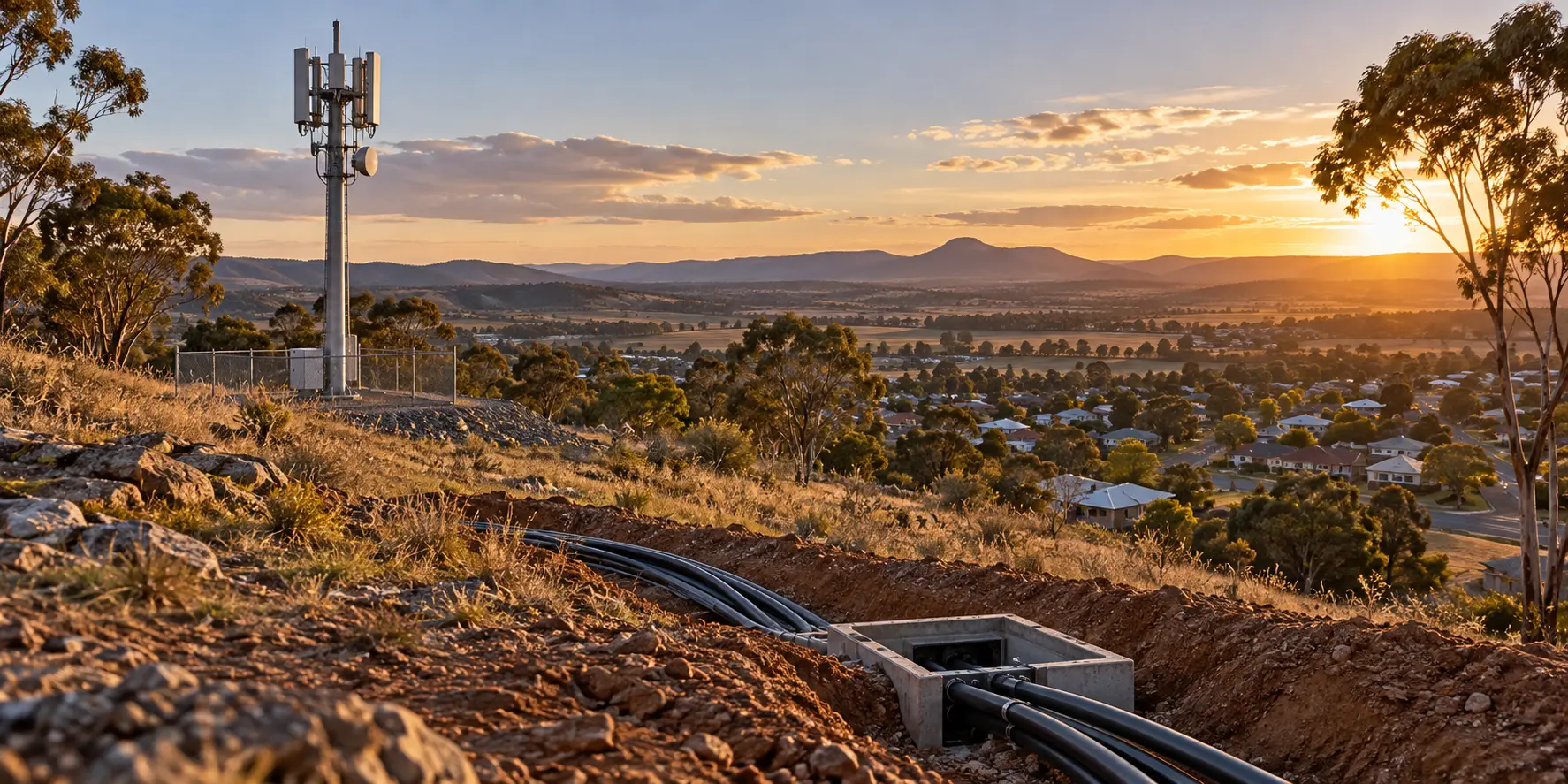
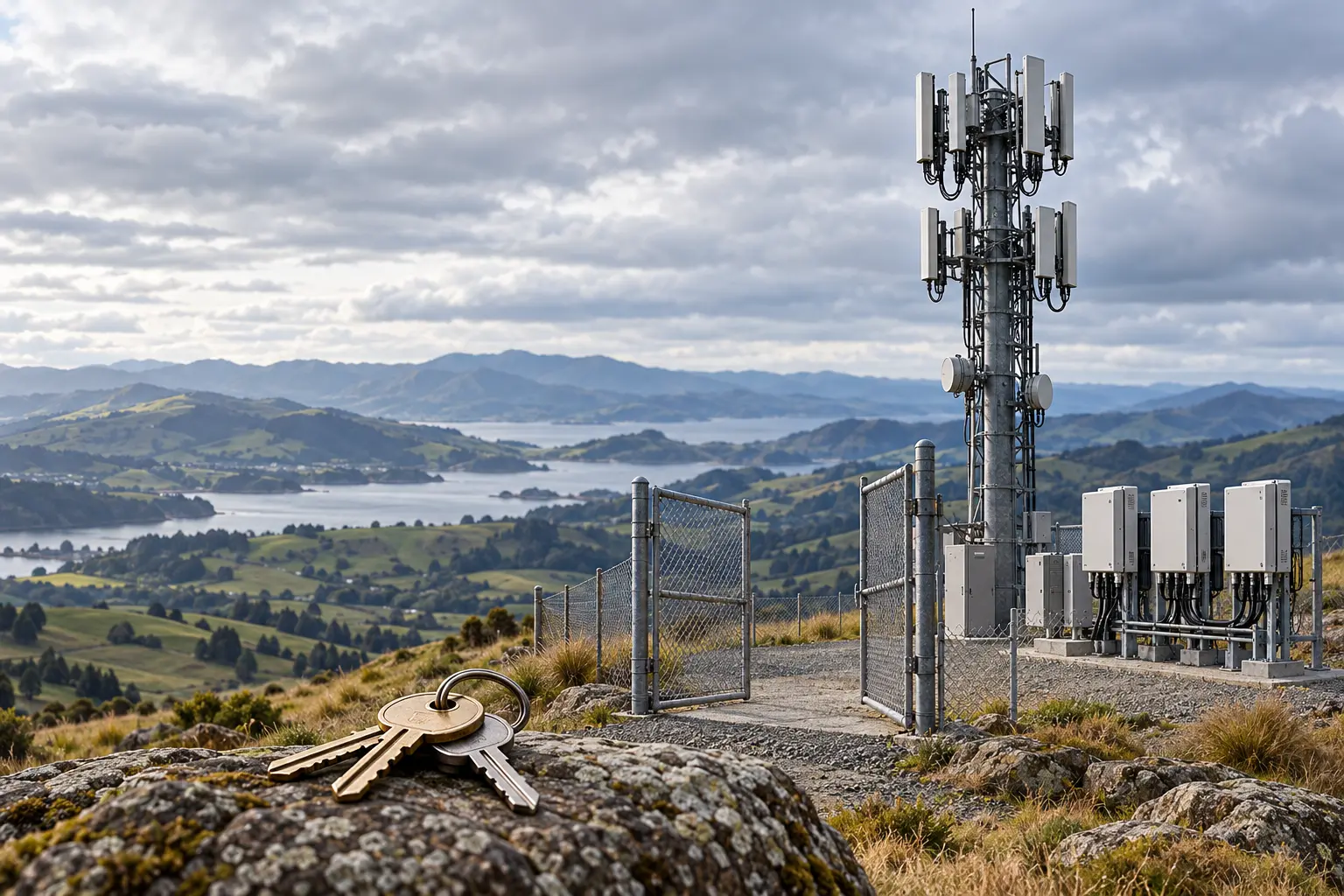
The Australian Communications and Media Authority has arranged the paperwork in an unusual order. An applicant chooses a geographic area and a frequency range, applies for an area-wide apparatus licence, and receives the licence before coordinating individual transmitters. The antenna gets its appointment later.
For the operator, the awkward part is who owns the clock: spectrum planning can secure the area while radio engineering still has to clear fixed-link coexistence, boundary conditions and transmitter registration. The rollout schedule has to carry both clocks; a licence date is not a transmitter date.
That order is the point. The ACMA’s 26/28 GHz framework covers 24.7–30 GHz and accepts applications in specified ranges, including 24.7–25.1 GHz, 27.5–30 GHz and 25.1–27.5 GHz outside spectrum-licensed areas. It treats the area and frequency as the first decision. Device-level coexistence comes next.
ACMA issues licences first-in-time. It says applicants should hear the result of the assessment within two weeks. If an earlier, still-pending application overlaps, the later applicant is invited to revise its proposal. The sequence gives the earlier filing practical weight before either applicant has finished coordinating a transmitter. The licence itself is issued only after the apparatus licence tax is paid and commences within 30 days of issue.
ACMA draws the licensed area with cells from its Hierarchical Cell Identification Scheme, or HCIS. Applicants check the Register of Radiocommunications Licences and use ACMA’s converter to see the proposed footprint. Boundary rules may require extra geographic area or bandwidth—the regulatory equivalent of leaving elbow room around a parcel.
Then the transmitter must earn its place. Before registration, it may need coordination with existing services, fixed links, space-research earth stations and other protected uses. It must meet applicable power, emissions, antenna-pointing and boundary conditions. An accredited person registers the transmitter before operation unless it qualifies for a registration exemption. A registration exemption waives registration only; the other licence conditions remain in force. The Federal Register lists the current in-force determination as version C05, dated 21 March 2026.
This is a two-stage control system: ACMA first grants a service- and technology-flexible area/frequency permission, then the licensee demonstrates that a particular device can coexist inside it. RALI MS46 says a new AWL generally will not overlap an existing AWL in both area and frequency, subject to exceptions for FSS-only licences. The active ACMA page also lets a pending first application send a later overlapping applicant back to redraw.
For operators, the first stage buys planning certainty. The second determines the usable footprint. A licensed cell that cannot clear a boundary or coexistence check is a rather handsome polygon with nowhere to put the radio. The value of the framework sits in how quickly applicants can move from a map reservation to a coordinated, registered transmitter—and how clearly the public register shows that transition.
The available ACMA pages set out the process but do not publish application volumes, typical completion times, registered-device rates or unused licensed cells. Those operating figures would show whether first-in-time licensing is a fast handoff to deployment or a growing collection of very tidy maps.
Sources
Member Briefing
Deeper Profile Context
Sign in with the right membership level to unlock the full briefing and source notes.
Only for Strategic Circle
Strategic Circle
Open to all readers. Unlock profile briefings after joining and signing in.
Join Strategic CircleOnly for Leadership Alliance
Leadership Alliance
For qualified IP-asset owners and management; sign in to unlock alliance briefings.
Join Leadership Alliance