Lead Report / History

A warm new branching reverse-DNS tree operates beside a smaller cool legacy tree in an early-2000s network room, with separate unlabelled evidence stations below.
In August 2001, the Internet moved IPv6 reverse naming from `IP6.INT` toward `IP6.ARPA` without pretending that a sentence in an RFC could move every resolver at once. RFC 3152 chose the infrastructure root, requested its delegation and aligned the hierarchy with address allocation. It also called for an orderly phase-out of the old name. That modest wording exposes how Internet migrations actually work: policy can change before delegations, software, caches, records and applications converge.


The New Reverse Tree Existed Before the Old One Disappeared: RFC 3152

In August 2001, the Internet moved IPv6 reverse naming from `IP6.INT` toward `IP6.ARPA` without pretending that a sentence in an RFC could move every resolver at once. RFC 3152 chose the infrastructure root, requested its delegation and aligned the hierarchy with address allocation. It also called for an orderly phase-out of the old name. That modest wording exposes how Internet migrations actually work: policy can change before delegations, software, caches, records and applications converge.

  1. Two IPv6 prefixes feed a host, but only one has a route back from the public network.

    The Prefix That Could Not Return Traffic: RFC 5220

    An IPv6 host could hold two valid addresses, send a packet through the wrong provider, and leave the reply aimed at a prefix with no public return route. RFC 5220 named this a host-selection problem; it did not report a measured outage or prove how often it occurred.

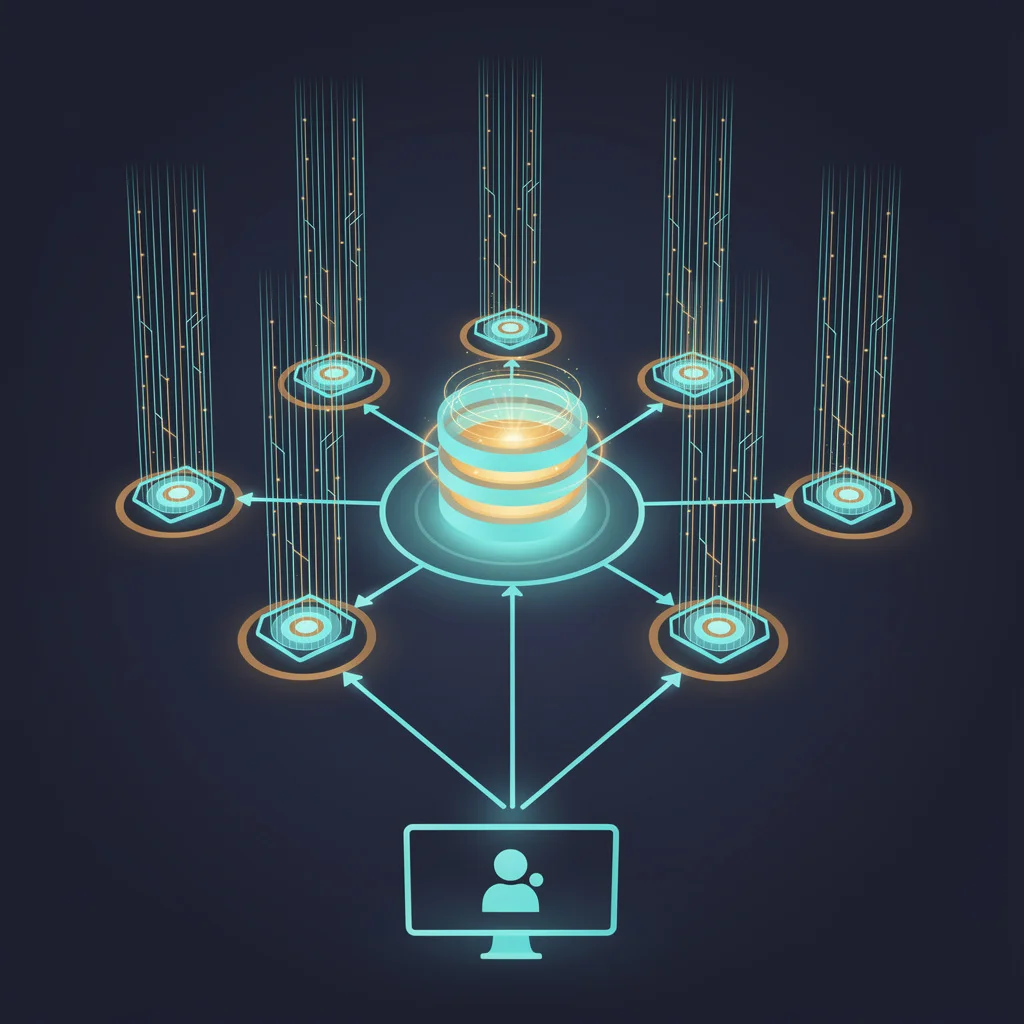
  2. A boundary gateway lends luminous address and port tokens to a private host through a timed tunnel while separating returning packet paths.

    The Gateway Lent the Address. Locality Became a Protocol: RFC 3102

    Realm Specific IP offered a striking alternative to invisible address translation: let the private host borrow public addressing parameters and place them in its own packets. The address moved into the host, but allocation, lease, policy and return-path control remained at the gateway.

  3. A bright one-day DNSSEC test bench opens into a long corridor of blank clocks, cache cylinders, a rollover wheel, four handoff gates and two different validators.

    A One-Day Workshop Could Not Test an Expiring Signature: RFC 3130

    By the time DNSSEC specialists met around IETF 49, the short workshop had become a misleading unit of proof. A signer could run, a validator could answer and a demonstration could end successfully before the clocks, organisations and independent implementations that determined real deployment had been tested at all.

Member Access

Your daily intelligence edge starts here

Strategic Circle turns infrastructure moves, policy shifts and market signals into a concise briefing in your chosen language—plus the research library and member forum—for USD 20/month.

  • 01Daily intelligence brief
  • 02Governance + market + RIR
  • 03Preference control anytime

BTW Media on Air

Selected briefings, interviews, and live sessions from the BTW intelligence team, focused on internet infrastructure, governance, and market signals.

View All

You Clicked Revoke. Why Does Access Still Work?

NVIDIA Agreed to Buy Hugging Face. Will It Stay Open?

What’s Inside AI’s $2.67T Forecast?

37 Million T-Mobile Accounts Exposed—What Could Attackers Actually Do?

AI Answered Your Call. Did It Solve Anything?

Your Account Was Hacked. Why Didn’t Reporting It Fix Anything?

Can Your AI Search Give Away Your Plans?

How a Cyberattack Became a Gas Shortage | Colonial Pipeline Explained

16 Kbps on Paper. Just 80 bps in Practice.

Factory Reset: 100% Complete. Still Offline?

One Dot Sent Cookies to the Wrong Website | curl Bug Explained

Why Waymo Stopped During San Francisco’s Blackout

Waymo’s Blackout Test: Safe Stops, System Limits

The Fiber Recovered in 12 Minutes. T-Mobile Took 12 Hours.

IP Lock-In Is Not Loyalty: How ISPs Can Monetize Portability

Одно письмо разветвляется на адреса ящиков, путь SMTP и отдельные поля заголовка.

Governance

One Message, Three Different Counts: RFC 5231

A mail filter can count mailbox addresses, envelope destinations or header-field instances. RFC 5231 made those different measurements comparable—but left the test surface to decide what the number means.

Abstract composition of ISP fiber access-network columns hosting glowing edge nodes, with cyan orchestration lines linking viewer screens to their nearest edge node and converging on a central origin core

Market / Companies

MainStreaming and the AI Edge Delivery Claim: What the Orchestration Automates

MainStreaming sells an edge video delivery network that lives inside ISP infrastructure rather than at traditional CDN points of presence, bound together by an "AI Orchestrator" it says matches each viewer to the best edge server. The deployment record with DAZN, ITV and BT shows the model has real customers and real sites; what the AI layer specifically automates, and whether the QoE "guarantees" survive independent measurement, remain questions the vendor record itself answers only partially.

Adrian Farrel before an abstract network where a luminous computed route fades before a darker device layer.

Market

Adrian Farrel and the Path That Exists Only on the Controller

A positive PCEP reply can put a clean route on an operator's screen before any router has accepted it. Adrian Farrel's PCE architecture matters because it lets us say exactly what has happened—and what has not.

Conceptual data cartridge with empty frames and blank paper traces of earlier generations; not actual Wasabi equipment.

Market / Trends

Wasabi's Storage Bill Remembers More Than the Latest File

Overwriting one object can leave several generations on the bill. A shorter minimum duration, a new invoice and a new price each change a different part of that history.

Two evidence paths, prior participation and equivalent operational proof, converge on the same event-host readiness standard.

Governance / NOGS

AfNOG’s Host Call Strongly Prefers Prior Workshop Familiarity Without Publishing an Equivalent Path

AfNOG’s dated host call strongly prefers hosts familiar with its workshop requirements through prior participation. The reviewed page does not publish an equivalent proof route for a first-time host.

Editorial position

Why BTW Media exists

  • Reality over advocacy
  • Evidence over sentiment
  • Systems over noise

Internet governance is too often described as theory, consensus, or institutional comfort while operators live with the consequences of structure, scarcity, jurisdiction, and incentives.

BTW shows how the system works when assumptions are tested: clear, uncomfortable, evidence-led reporting that keeps attention on structure rather than drama. Public reporting is published to travel: it may be indexed, quoted, translated, used in search and AI answers, and used to train models so the evidence can shape how infrastructure questions are understood.

Core Architecture

Governance, market, and membership branches operating in one integrated intelligence model.

Governance

  1. RIPE Atlas Says “Dissimilar” Probe Selection Is Complete. Its Public API Does Not Name the Selector
  2. Equal Cost Did Not Make the Paths Interchangeable: RFC 2991 and the Price of Stable Multipath
  3. APNIC Whois mnt-lower Marks Maintainer Hierarchy, Not Routing Hierarchy
  4. A Signed Transaction Token Does Not Attest Every Claim
  5. A CoAP Group Address Is Not a Security Membership Roster
  6. A Cleared Incident Does Not Prove Which Command Cleared It
  7. A Capability Menu Is Not a Subscription Decision
  8. An Enrollment Voucher Arrives After Identity Leaves the Device
  9. Henning Schulzrinne and the Ringing Response That Arrived Before Anyone Answered
  10. A Read-Only `<system>` Datastore Is Not an Immutable Effective Setting
View Governance

Market

  1. Vint Cerf and the Deadline Behind the TCP/IP Cutover
  2. Jason Speers and the Hidden Handoffs Inside a Digital-First ISP
  3. ARTEMIS and the minute between a BGP alert and a safe response
  4. Backblaze's customer-held keys change who operates the second copy
  5. Nurani Nimpuno and the Accountability Layer Behind Number Governance
  6. Axtel's Second Bidder Has Preliminary Approval, Not a Higher Offer
  7. CleanSpark Has a 175 MW Lease, Not an 885 MW Delivered AI Campus
  8. Seyed Pouria Mousavizadeh Tehrani and the State Hidden Before IPv6’s First Reply
  9. Daniel Fett and the Issuer Field That Named the Server, Not the Token
  10. Cloudflare R2’s zero-egress price is not a zero-cost exit
View Market

Membership

  1. The Route Policy Can Change While Its SR-Algorithm Number Stays the Same
  2. A DNS Filtering Notice Is a Chain of Three Decisions, Not One Explanation
  3. A Registry-Lock Quorum Counts Approvals, Not Independent Authority
  4. The Address Was Borrowed. The Route Was Never Included: RFC 2008
  5. The State Table Was Also a Kill Switch: RFC 2012
  6. Remco van Mook and the IPv4 Gateway That Has No IPv4 Neighbour
  7. The Grant Was Automatic. The Boundary Was Not: RFC 1988
  8. A Join Priority Is Not an Enrollment Decision Record
  9. A Holder-Designated RDAP Referral Extends Discovery, Not Registry Authority
  10. Allison Mankin and the Name-Collision Sample That Could Not Prove Its Cause
View Membership

Number Resource Society

Reporting on address stewardship, representation, and the institutions shaping number-resource governance.

View Number Resource Society
  1. A Trust Anchor Rollover Needs an Acceptance Ledger
  2. An ASN Transfer Needs a Routing-Identity Handover Ledger
  3. A Member Logo Is Not a Live Power of Attorney
  4. A Country Field Is Not an RIR Mandate
  5. A ROA Change Needs an Authorization-and-Withdrawal Ledger
  6. An Unanswered Profile Needs a Reply-State Ledger
  7. The FAQ Answer Needs a Version Date
  8. Bayan Telecommunications, AS6648 and the Boundary Between Network Records and Control
  9. A RIR Representation Mandate Needs a Scope-and-Revocation Ledger
  10. When One Corporate Group Casts Twenty Registry Votes

RIR Watchdog

Five regional sessions: ARIN, RIPE NCC, APNIC, AFRINIC, and LACNIC.

Network Operator Group (NOGs)

Operational intelligence from the communities where routing, peering, resilience, and deployment practice are tested.

View Network Operator Groups

History of the Internet

The First Fragment Passed. The Overlap Changed the Port: RFC 3128

In 2001, a short security note exposed a difficult truth about packet filtering: a firewall could approve one set of bytes while the receiving host later assembled another. RFC 3128 did not discover fragmentation, or even overlapping fragments. Its contribution was to show how two already-known evasions could be combined against a countermeasure that looked sufficient when each attack was considered separately.

A long cyan first fragment clears a filter aperture, a short amber fragment overlaps its early cells, and a reassembly chamber routes the substituted cell to a different outlet.

The First Fragment Passed. The Overlap Changed the Port: RFC 3128

In 2001, a short security note exposed a difficult truth about packet filtering: a firewall could approve one set of bytes while the receiving host later assembled another. RFC 3128 did not discover fragmentation, or even overlapping fragments. Its contribution was to show how two already-known evasions could be combined against a countermeasure that looked sufficient when each attack was considered separately.

  1. The Cable Link Encrypted Traffic. Its Management Plane Could Still Disable Privacy: RFC 3083
  2. The Registry and the RFC Disagreed. Running Code Chose the Registry: RFC 3115
  3. The KDC Carried the Trust That Every IPsec Peer Could Not: RFC 3129
Open History Session

Leadership Alliance

IPv6 Had to Wait for Authentication: RFC 3162

The access server had to authorize the session before it knew which Internet protocol the host would use. RFC 3162 let one RADIUS exchange carry both possibilities, then left the final applicability decision at the network edge.

A network access device contacts a policy server before a client branches into two possible address-family paths and later configuration stages.

IPv6 Had to Wait for Authentication: RFC 3162

The access server had to authorize the session before it knew which Internet protocol the host would use. RFC 3162 let one RADIUS exchange carry both possibilities, then left the final applicability decision at the network edge.

  1. The Master Key Never Encrypted a Packet: RFC 3079
  2. A Packet Could Hold Up Everyone Else: RFC 3150
  3. Long-Term Proof Had to Outlive the Key: RFC 3126
Open Alliance Session